Category: *Musings

Reflections on Quality

Several years ago, I used to frequent a popular birding forum in BC. I was new to wildlife photography and at first had less than ideal equipment. I needed all the help I could get! The forum was valuable for a great variety of information, not least of which was access to some excellent images of BC birds. I learned a lot about birds and even more about quality photography — just by observation. No one was anything but supportive of those who posted (a fact that seems to apply to most photographic sites I visit). Sometimes, however, it was pretty obvious that some posts were of substantially higher quality / value than others.

The basics came quickly — the rule of thirds, issues of exposure and colour balance, clarity, capturing motion in a still, and of course, processing (both over and under)…. Besides these considerations, it was obvious that different folks have different tastes and different tolerances for defects. While I’m inclined to be a perfectionist, I’m a failed one who is often far too tolerant of my own “near misses”….

Why I seldom visit Rotary Marsh

This piece is a reflection on shots taken recently at Kelowna’s Waterfront Park, a place I visit only a few times each year. Also know as Rotary Marsh, this spot is a 15-minute-drive from home, all of 6–8 km away, depending upon one’s route choice. Sure, I’ll go in early Spring just to see what’s there, or on Canada Day just to be patriotic. But in late October / early November, on a sunny Second Summer late morning, it’s for the light, and the Gadwalls….

Probably one or two photos would have sufficed to show why I like the place. I’ve chosen, however, to post the near misses as well as the ones that come closest to the quality I had in mind when I pressed the shutter button.

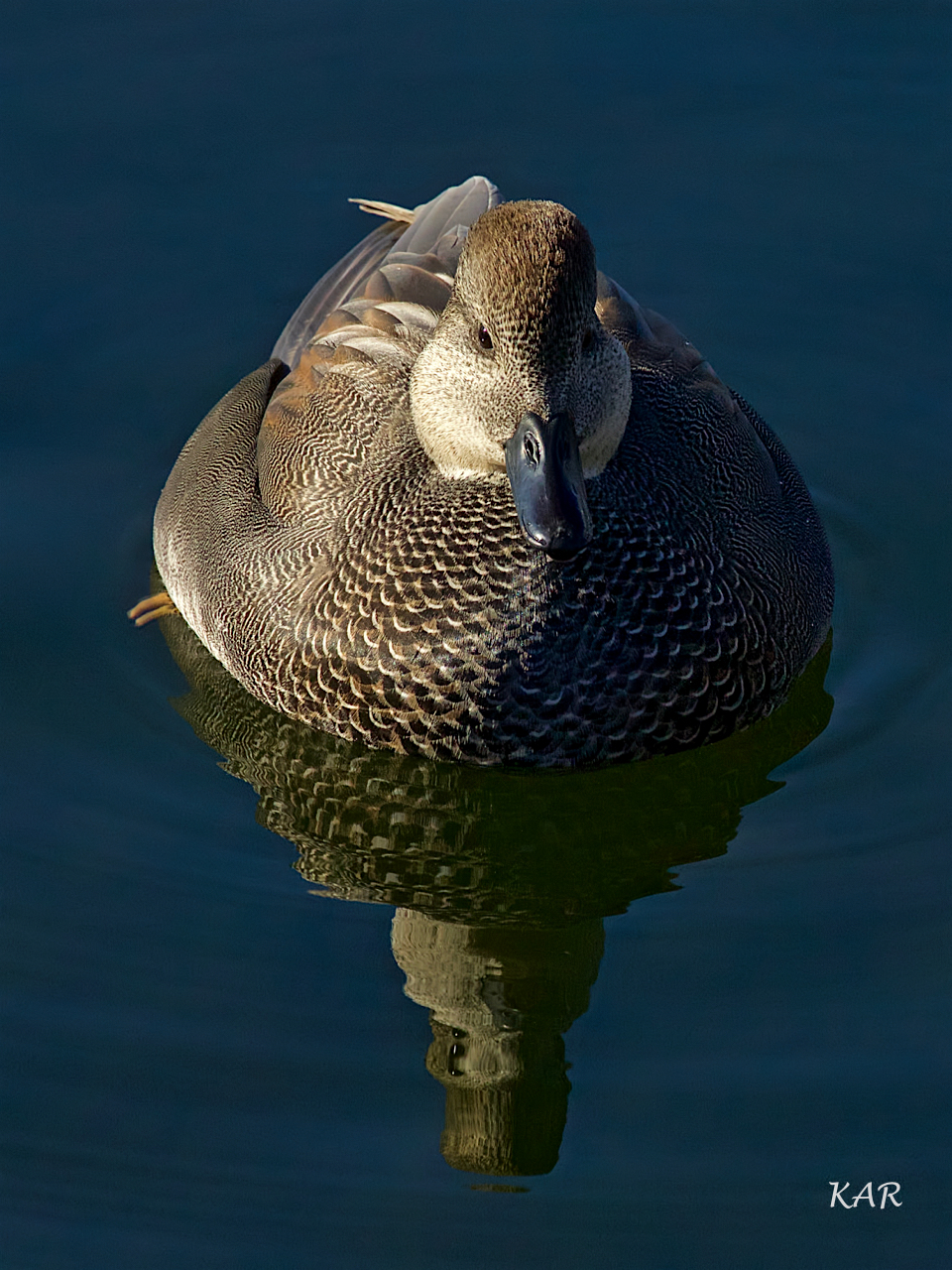
Let’s begin with the best of the bunch, then take a look at others and examine why they don’t work as well:

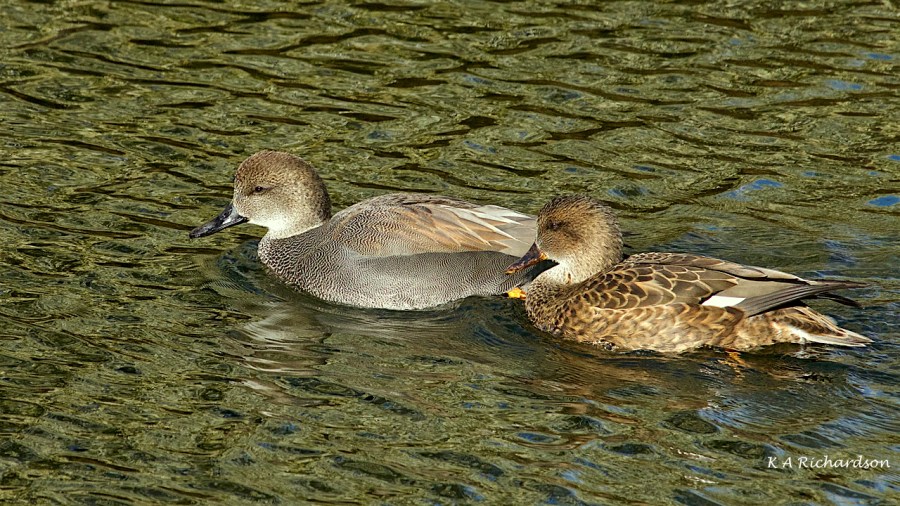
Gadwall drake (Anas strepera) -01.jpeg

I like the way the bird is centred so that it’s half in light and half in shadow.  Even the shaded side, however, offers some detail and trace of light. The reflection on the left tip of the bill is a nice touch. With its saturated tones, we realize that the photographer is aiming for art not merely a record or snapshot. There is effective clarity throughout. The water bokeh is informative but not distracting. Although the duck is not looking directly at the camera, we get a sense that he’s aware of what’s going on.

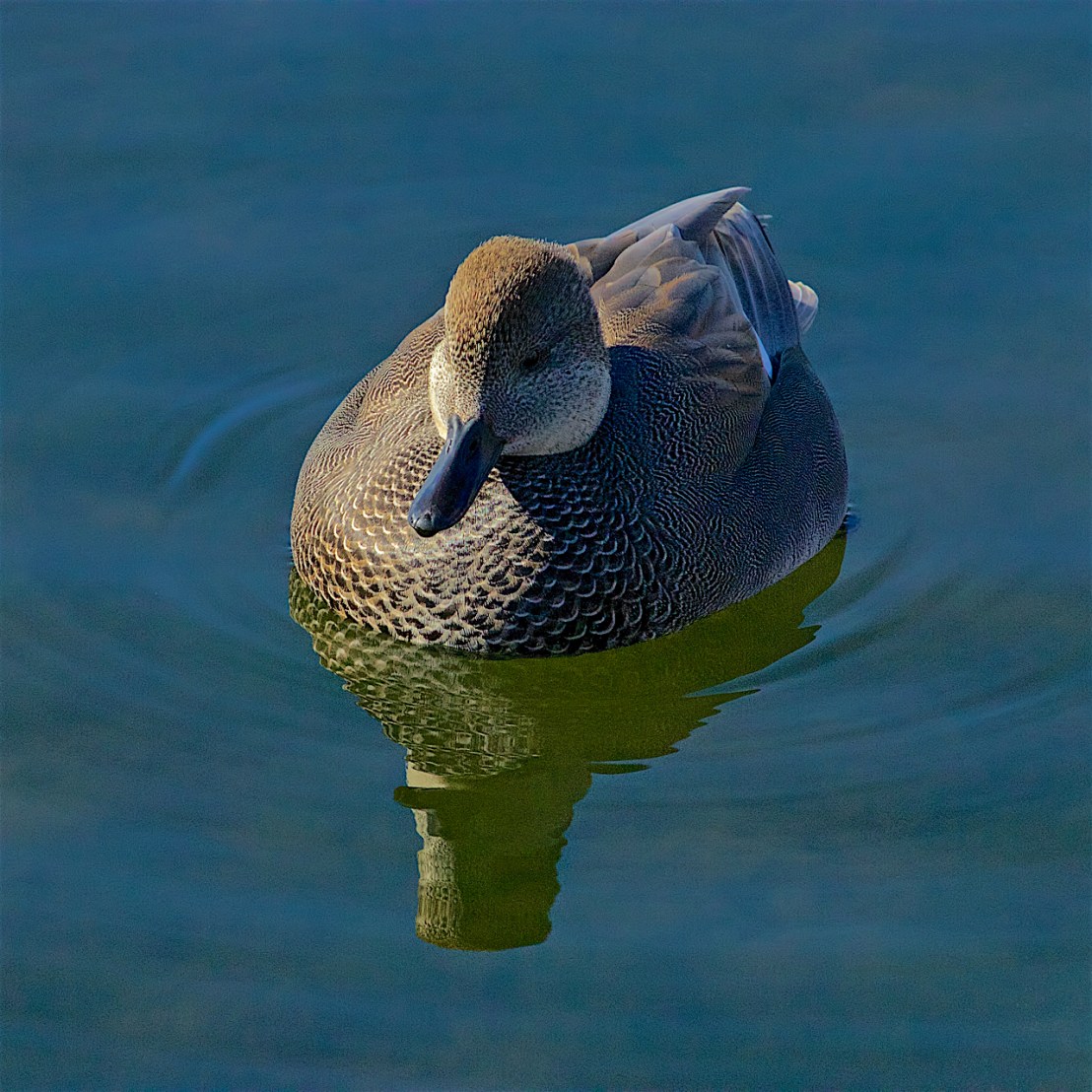
Contrast the shot above with the next two near (or, perhaps, not so near) misses:

Gadwall drake (Anas strepera) -02.jpeg
Can you see the missing quality?
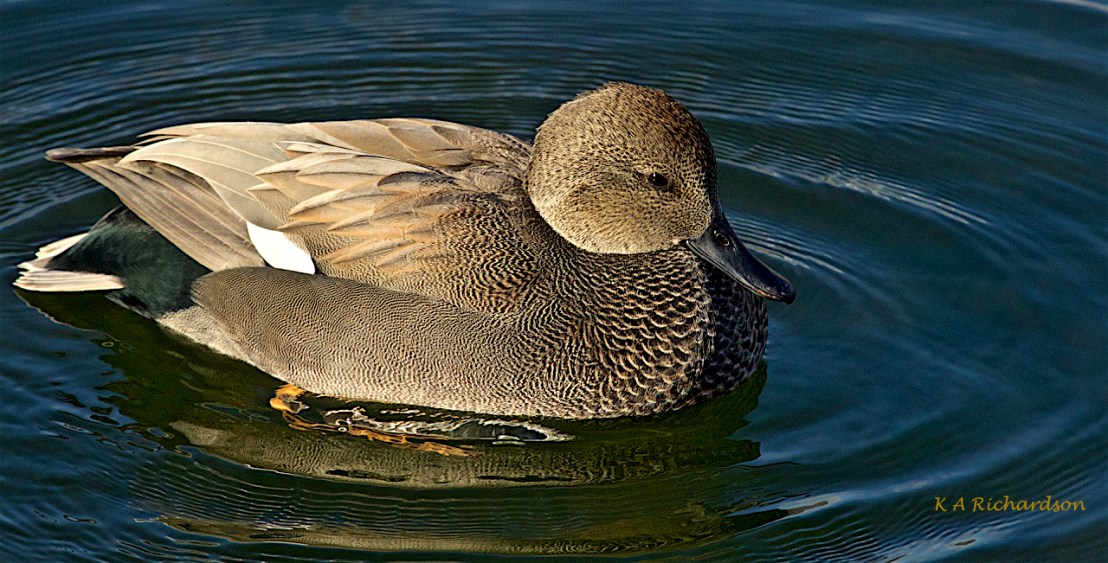
Gadwall drake (Anas strepera) -03.jpeg
If you’re going to show the reflection, make sure you show it!

In the shot just above, the distribution of light and shadow, compared with the image we like, is off target, not 50-50. The plumage detail on the sunlit side is beautiful, but, sadly, we’ve got only halfaduck here!

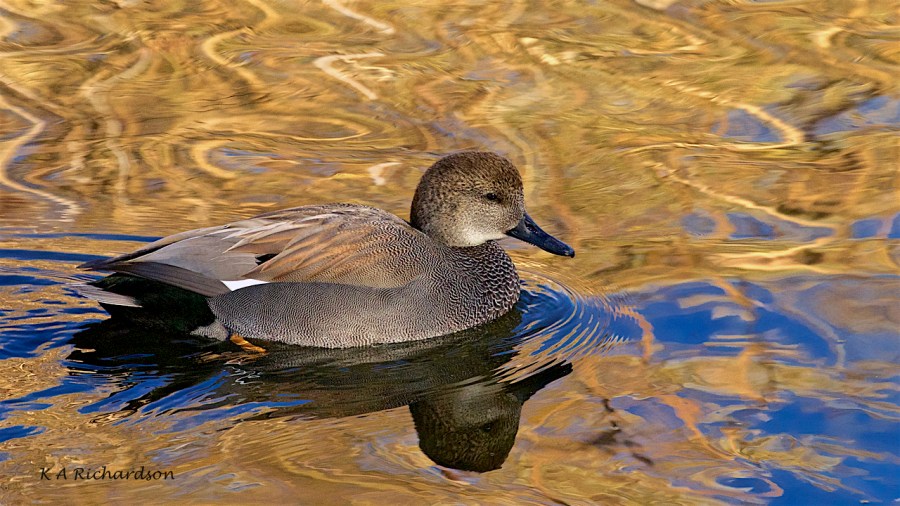
In the set below, viewer preferences will determine” the better shot.” I’ve been quite surprised, sometimes when my peers’ selection of the “quality one” differ from mine.

Gadwall drake (Anas strepera) -04Gadwall drake (Anas strepera) -05

In this set, while both are near misses, in my opinion, each still has some appeal. I like the greater simplicity in the photo on the bottom. I wish the drake didn’t look so sleepy, but that’s a minor consideration for me. The upper photo has an orange tint, the lower one more blue. The water is less distracting in the lower shot. Finally I prefer to see the whole foot rather than its fragmented image.

Yet I have friends who see what I consider defects as positive attributes. Sometimes, it’s simply a case of my being more sensitive to some flaws than others rather than finding certain attributes more resonating than others. Critical vs affirming mental approaches….

One more point about quality and perceptions of it. Since we’re viewing our photographs on monitors, it behooves us to make sure the latter are set for optimal viewing. Back in my consulting days, I saw way too many monitors that needed to be recalibrated — corrected for brightness and colour…. I’m sure that some over-saturated photos I see online were produced on monitors that were too bright, and some diluted-toned images developed on monitors that were too dark….

Finally, two shots below remind us that the photographer is to some degree as much responsible for the way a pond looks as nature is. Change your angle and you’ll change the photo. We all know this, I think, and sometimes, there’s no opportunity to find the optimal shot location — we have to shoot what we’re served. But when we have a choice, make it!

The shots below were taken in the same pond only minutes and metres apart. The outcomes, however, are remarkably different….

Gadwall drake (Anas strepera) -06.jpg
On golden pond? Click photo to enlarge in a new tab.
Gadwall pair (Anas strepera).jpg
Or in another dimension? Click photo to enlarge in a new tab.

So that’s it for the moment. If you’re a young photographer or a neophyte to this genre, I hope you’ve found something worth thinking about. I wish you well.  I hope that you will continue to study, explore, and pursue the best results you can come up with!

Mall-ice aforefoot!

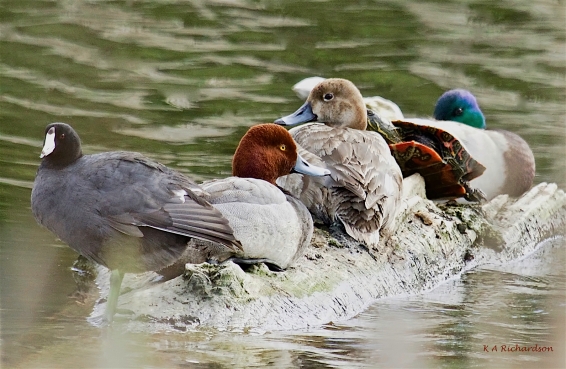
Redheads —special appearance.jpg
Diversity rules! Thomson Marsh, April 28, 2016

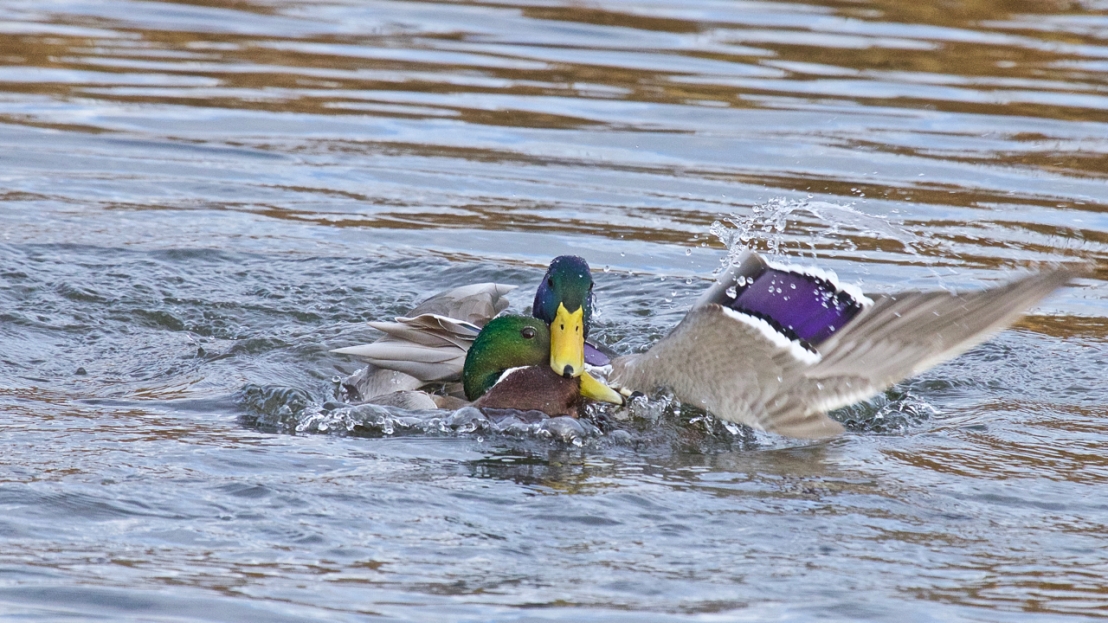
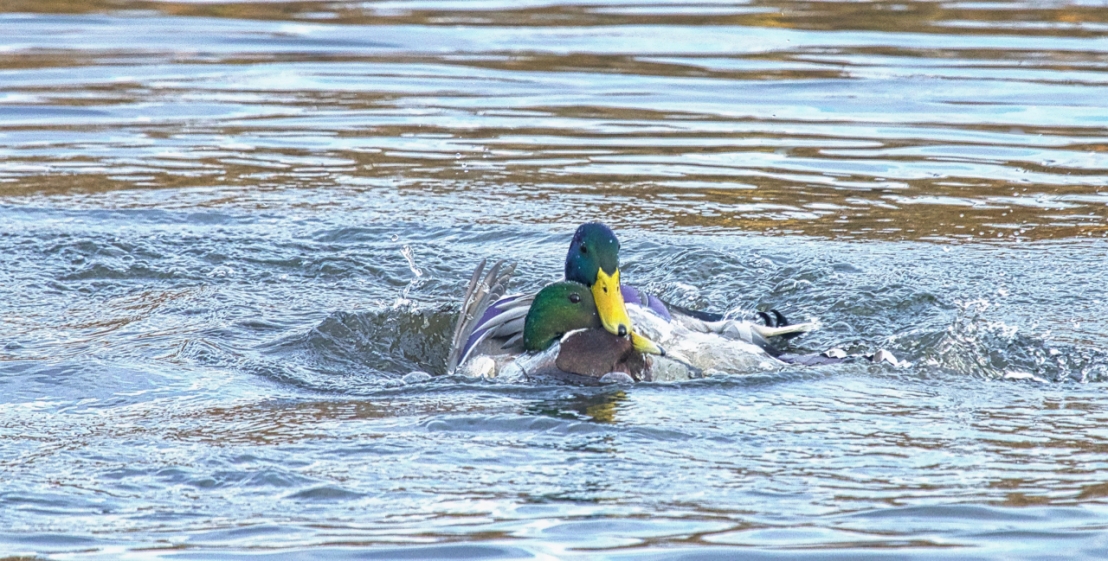
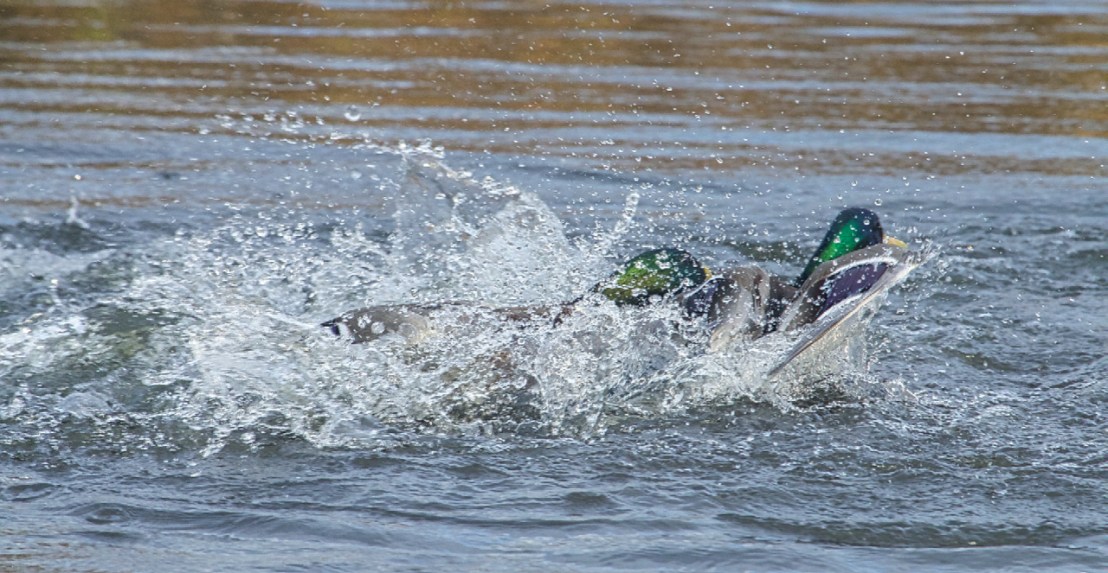
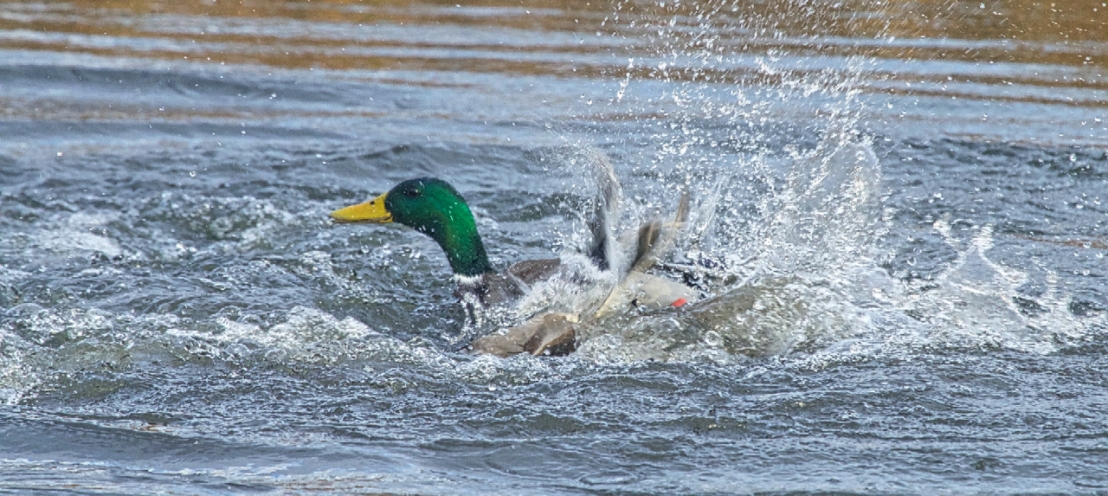
I’ve often remarked on the wonderful cooperation among diverse waterfowl species on a pond. I’ve also noted moments of remarkable conflict, frequently involving Mallard ducks. Usually, we see this in breeding season, often between male and females. Sometimes there are horrible conflicts between hens over whose brood is going to be raised on a particular pond. And, certainly, there plenty of anecdotes about rivalries among drakes.

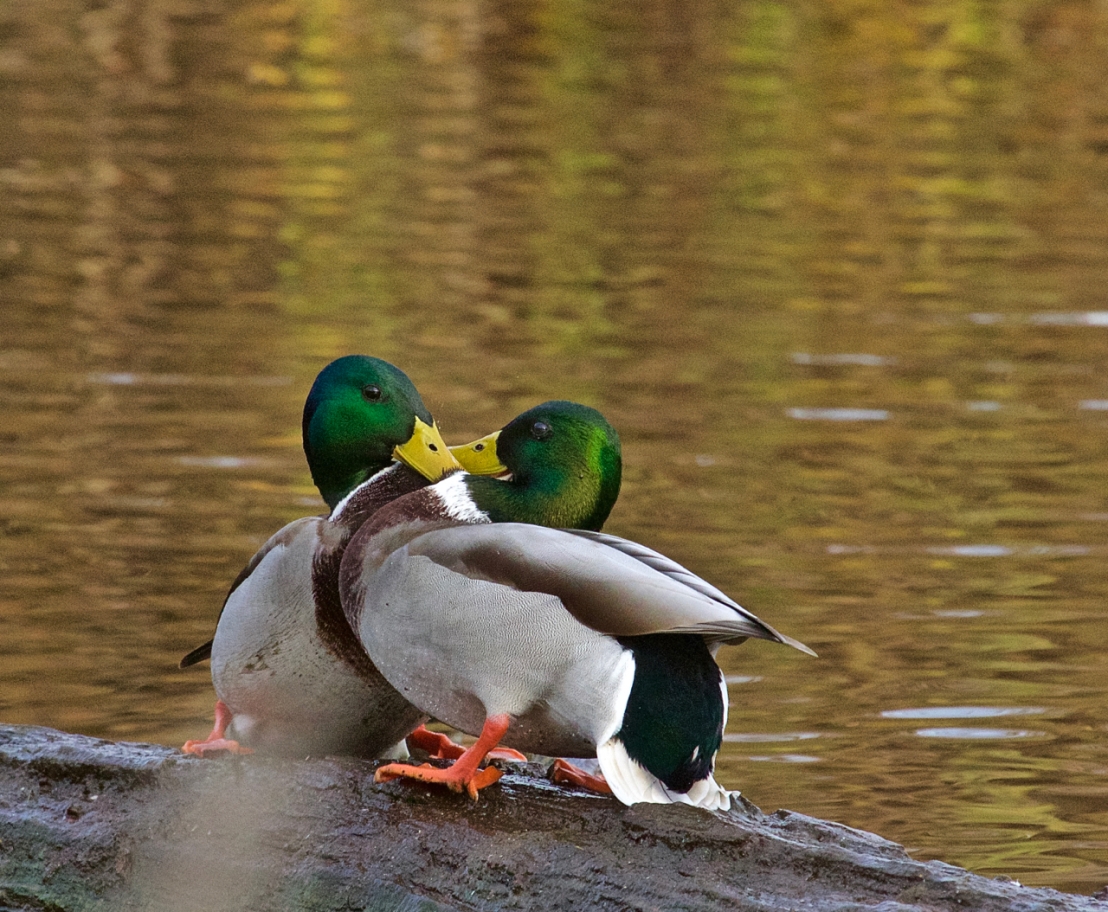
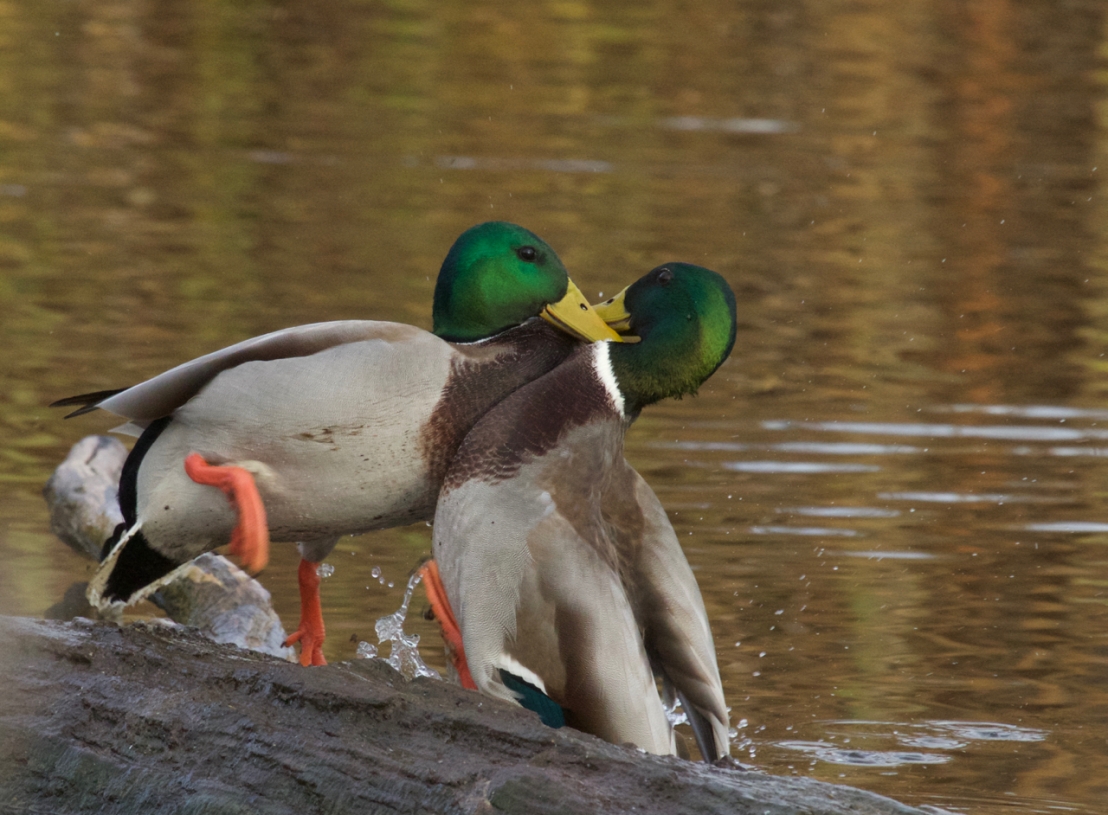
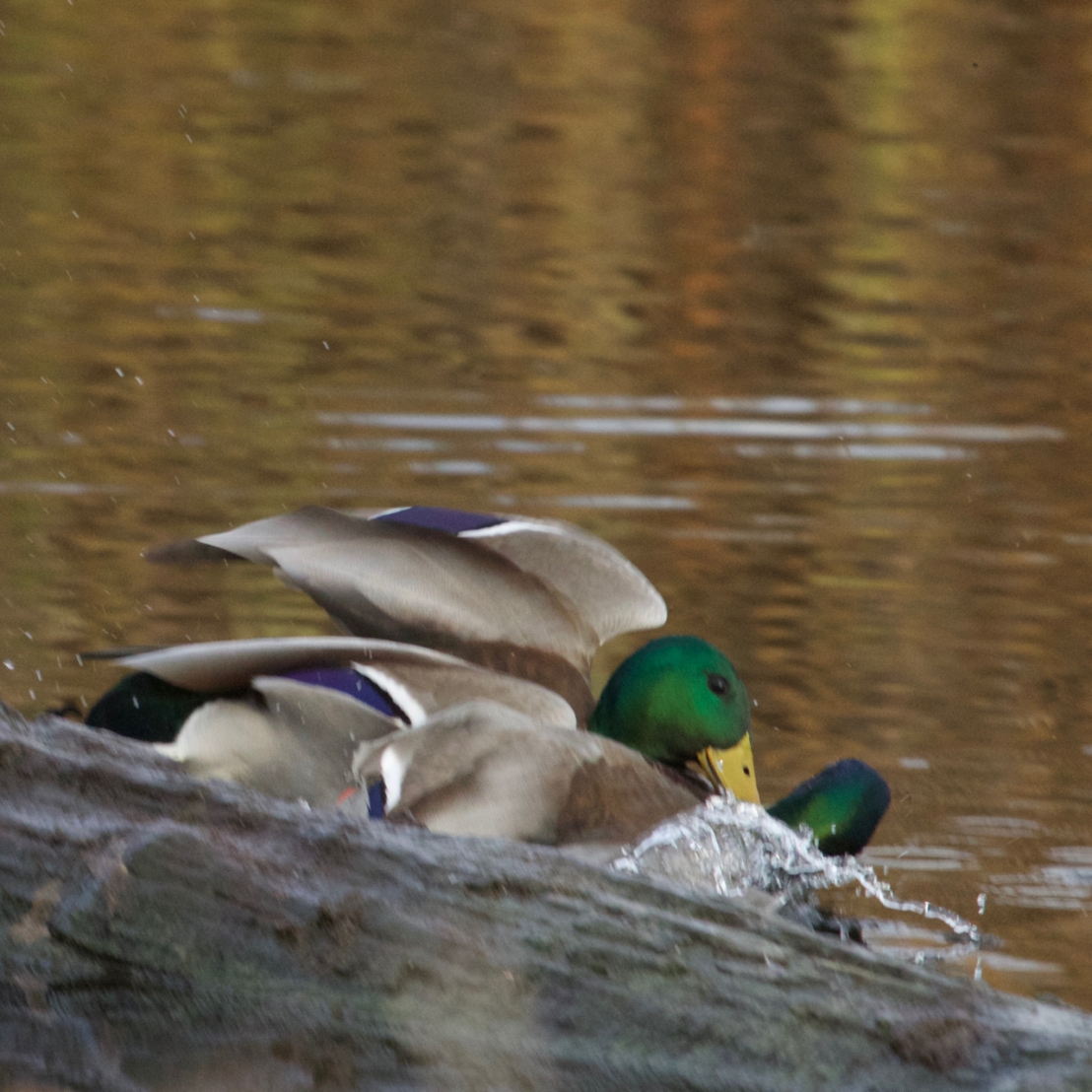
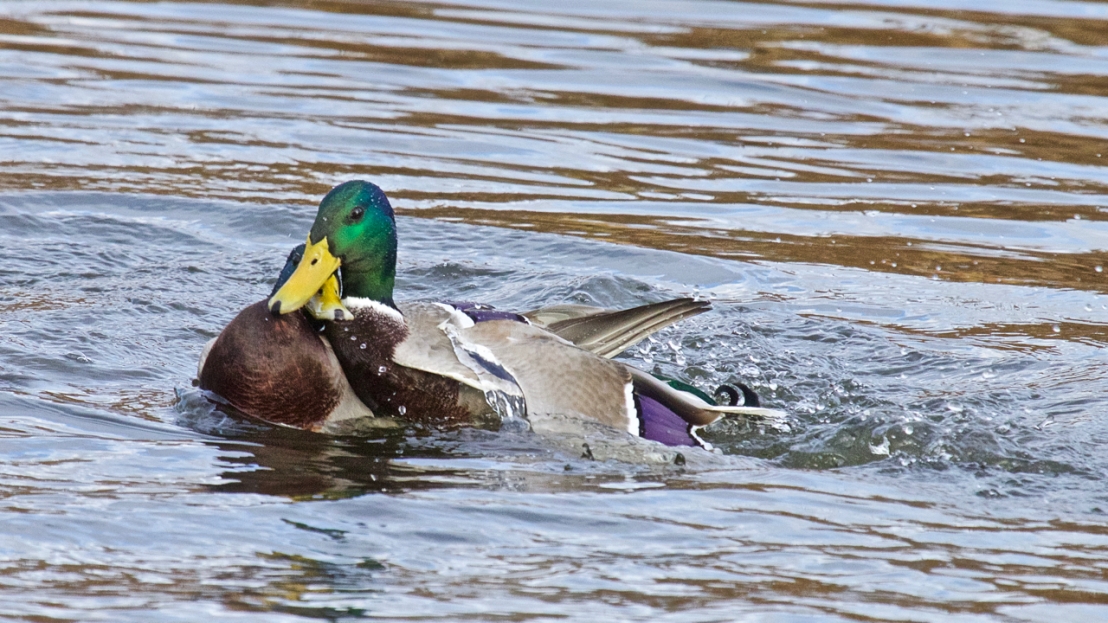
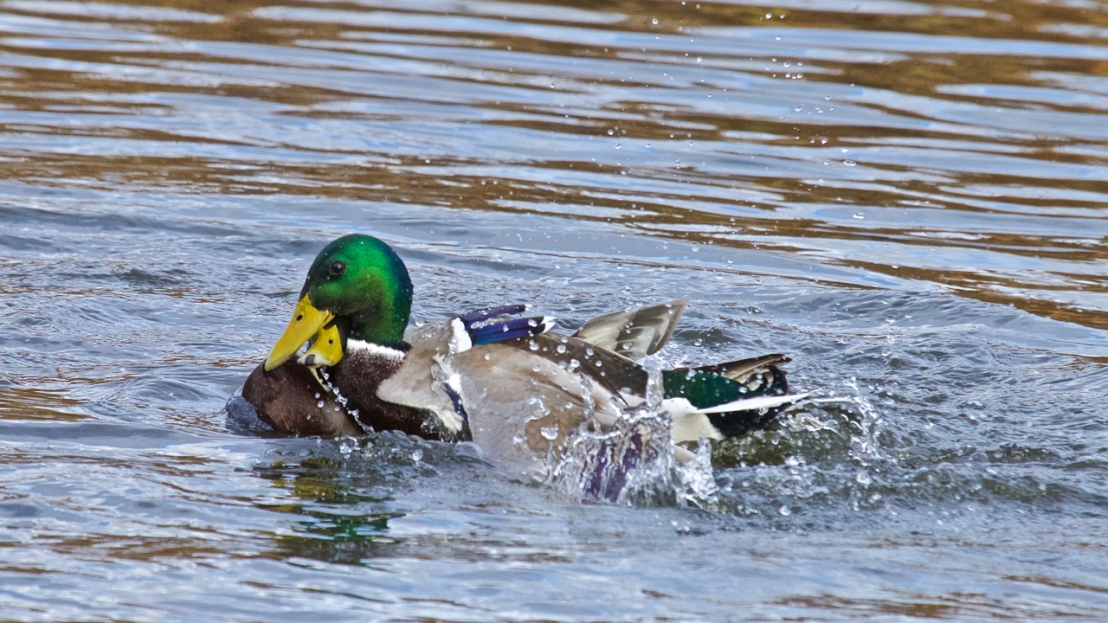
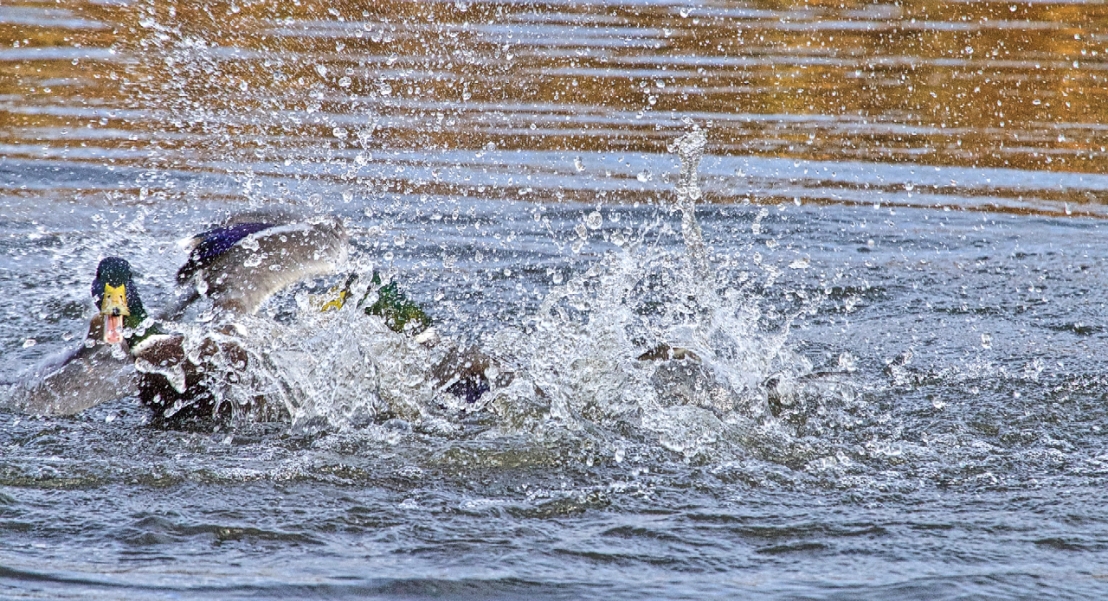
But it’s nearly the end of October, 2018, for goodness sake! What I witnessed the other day at Teal Pond, TMarsh, took me by surprise. A little quarrel rapidly escalated into a probable duckicide. To be sure, in the end, one drake was driven away and a Victor declared, but I have to admit I was holding my breath as I pressed the shutter….

As I hadn’t wanted to disturb the ducks on the log, I wasn’t as close as I could have been. That ghost of a cattail in the lower left of the frame is annoying and should have been avoided. But being too close might have kept the conflict from erupting. I’ll leave it to viewers to decide whether or not I did the best thing….

Duck fight!-03
The aggressor is the drake on the left…. We’ll name him at the end of the series….
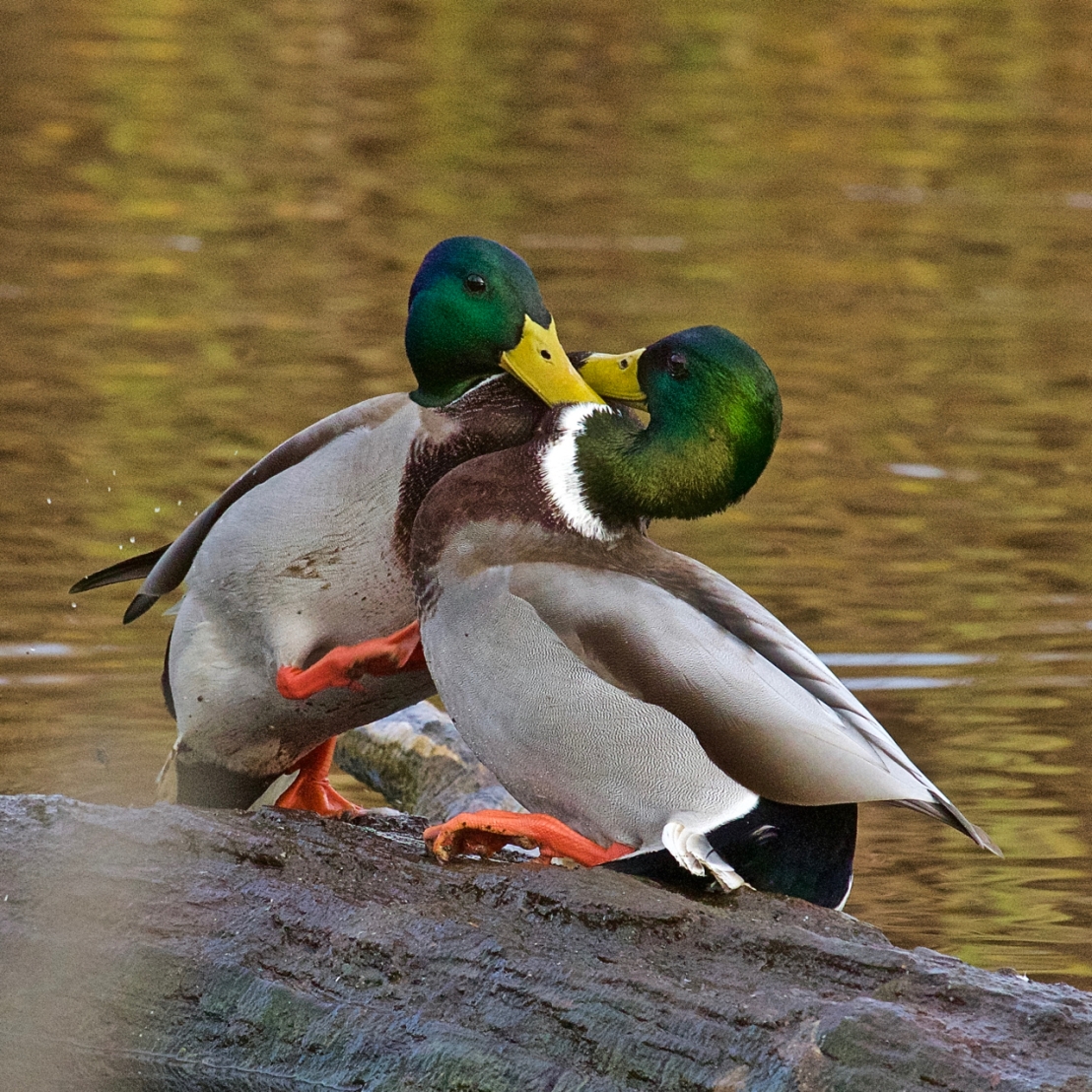
Duck fight!-08
Notice the leverage with both bill and foot…
Duck fight!-11
Over they go….
Duck fight!-12
It’s all a blur! Who’s got the upper bill, so to speak?
Duck fight!-13
The bill-neck clamp hold!
Duck fight!-14
It’s becoming very serious!
Duck fight!-15
Is a drowning about to happen?
Duck fight!-16
No question who’s in control!
Duck fight!-17
The victim makes a break….
Duck fight!-18
The Victor regains control and submerges the victim….
Duck fight!-20
Wild thrashing!
Victor -01
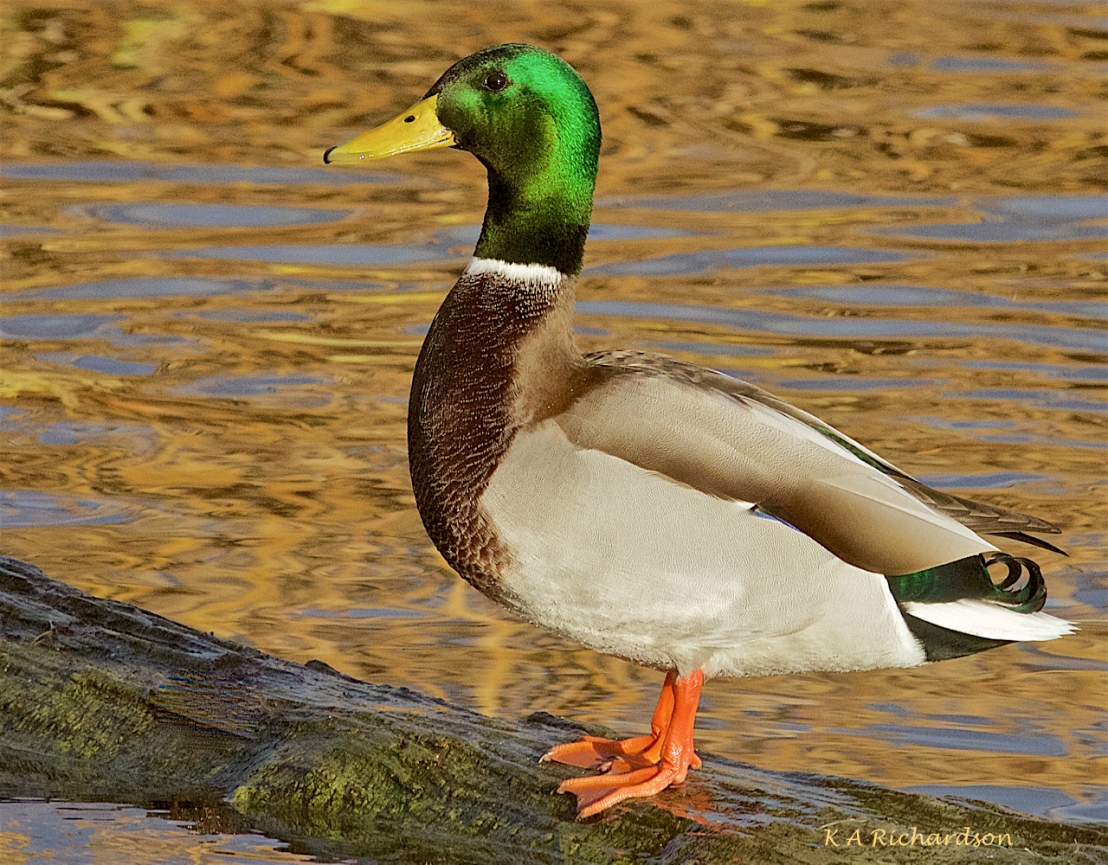
Only a few moments later, Victor poses — revealing no signs of the near carnage just attempted!

Violence and abuse are never the answer!

Thoughts on The US OPEN TENNIS FINAL, September 8, 2018
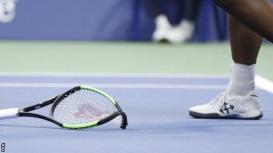
180908_williamsracquet_epa.jpg

To many spectators both at the Billy Jean King National Tennis Center and watching on television, the US Open Women’s Final Match of 2018 was a great disappointment. 

The match should have been historic — the first Japanese-Haitian, 20 year old challenger in her first Grand Slam final, and more importantly, her brilliant play against an opponent widely described as the best-ever women’s tennis champion (who had won her first Grand Slam tournament before her younger opponent’s second birthday) attempting, in the year after her daughter’s birth, to equal the record for most US Open victories by a female. 

Young Naomi Osaka handily won the first set (6-2) against Serena Williams, amazingly back in this final 18 days short of her 37th birthday,. What happened in the second set, however, became historic for unexpected and regrettable reasons. 

The hitherto “distinguished chair umpire,” George Ramos, made questionable choices that interfered with scoring in the match, and threw shade over Osaka’s victory in the minds of Williams’ fanatics. Why the United States Tennis Association chose a male umpire to officiate in this match is a mystery to me. The more significant mystery, however, is why he chose, in a final match, to rule against “coaching from the stands,” which, by the rules of the USTA, is “illegal” but apparently indulged by nearly every player and his/her team and almost never called. This issue has long been debated in the professional tennis community as you can see for yourself with a simple Google check. This online article is very informative: Wimbledon 2015 – Novak Djokovic: yes, I communicate with Boris Becker, but you can’t call it cheating | The Independent

[“In the last five years [2011-2015] 24 fines have been issued to male players at Grand Slam events for on-court coaching. Djokovic has been fined twice – at the 2011 Australian Open and 2013 US Open…

Rafael Nadal has also been fined twice for coaching over the same period. The Spaniard received the biggest coaching fine to be issued since 2010 when he was penalized $4,000 at last year’s Australian Open. Tomas Berdych, David Ferrer and Richard Gasquet are among those who have also fallen foul of the rules.”]

When it was over, Patrick Mouratoglou, Williams’ coach, admitted coaching with a hand gesture. During the match, commentator and former great women’s champion Chris Evert had noted that his action coincided with an adjustment in court position by Serena that helped her game. Evert also mentioned, after the chair umpire ruled that the signal was a “code violation,” that this penalty is rarely called. 

Williams chose to perceive the call as an attack on her honour, protesting that she’s “not a cheater” and that she’d “rather lose than cheat.” It appeared to viewers that while the umpire understood her feeling, he was not about to reverse his decision. He did not, as he could/should have, warn her that a continuing outburst would cost her a game. Perhaps she might have calmed down if he had. Regardless, rather than put the incident behind her, it seemed to me that Williams, fuming, preferred to play the victim. Osaka, meanwhile, undaunted by trailing 3-1 in the second set, battled back brilliantly, and aided by double faults from Williams, broke serve and strove to catch up. She won the fifth game.

At this point, I’ll pick up the narrative from ESPN:

Then, during the changeover at 3-2, the fireworks began. After Osaka broke her in the fifth, Williams smashed her racket and was penalized a point for a second code violation. Before the start of the next game, Williams walked to the chair to plead with Ramos again to tell the crowd she [had not been cheating at the time she was charged with the first code violation].

“I didn’t get coaching. You need to make an announcement that I didn’t get coaching,” Williams said. “I didn’t cheat. How can you say that? I have never cheated in my life. I have a daughter, and I stand for what’s right for her. You owe me an apology.”

At that moment, the boos — which had started after the initial warning — became so deafening they delayed play. On every serve. After a few points, Ramos stopped his attempts to settle the crowd. Through it all, Osaka impressively held her focus and won the next two games. At 4-3, she was two games from the title.

But Williams couldn’t let that earlier warning go. Again, she walked to the chair and exchanged words with Ramos. “You stole a point from me,” she said. “You’re a thief.” Before fans knew what was happening, Ramos called both players to the chair and docked Williams a game penalty for verbal abuse: 5-3 Osaka.

Had Williams let it go — or had Ramos let the match play out — maybe Williams could have forced a third set. The way Osaka was playing, it’s unlikely, but Williams is a 23-time Grand Slam champ for a reason. She knows how to find that next gear. “It’s hard to say, because I always fight ’til the end, and I always try to come back, no matter what,” Williams said after the match. “But [Osaka] was also playing really, really well. She played an amazing match. She deserved credit, she deserved to win. At the end of the day, that’s what it was.”

So what’s my takeaway from this? I agree that the umpire badly miscalculated in his decision to penalize what he perceived as coaching. Although Williams’ coach acknowledged, at the end of the match, that he had been trying to coach his player with a hand gesture, he used the old “everybody does it” excuse. 

I’m even willing to give him the benefit of the doubt on this point. In fact, I think tennis must get rid of the “no coaching” rule that is so difficult to enforce and so blatantly ignored by the top teams in the sport. Tennis purists, who argue that the players should, like gladiators, play their own game with no outside input, are sleep walking. Coaching is allowed, for goodness’ sake, in the qualifying rounds at the US Open. 

I can see that tennis fans don’t really want the kind of spectator “cheering” that’s common at baseball and football and soccer and hockey and rugby games (think Boston or New York!). Tennis is better enjoyed by watchers being able to hear the smack of the racket against the ball, or the ringing of the bell on serves that touch the net. Whether we need to hear the grunts of players is a topic for debate in another time and place. I don’t think we want to hear coaches calling out instructions to the players. I’m sure the players don’t either. But players do look to their coaches between serves either to plead excuses for mistakes or to read silent signals that will help them improve. Allow coaching! 

Second, I applaud Serena for trying at the end of the match not to deprive Naomi of enjoying her historic moment. Although I doubt she’d ever admit it, I think Serena knew deep down that she was being defeated on this day by the better player. Could she have come back? Maybe. After the third violation, Serena won the next game easily (did Osaka let up for that game?) to bring the score to 5–4 with Osaka serving. Osaka’s game winning point, however, was a near ace that Williams just couldn’t handle. At the presentation, Serena did what she couldn’t do during the match — rise above her emotions and put sportspersonship ahead of “winning.” Remember what she said, post-match: “…[Naomi] played an amazing match. She deserved credit, she deserved to win.”

I think, however, it’s time that in all sports, athletes recognize that it’s a privilege to “play” for the outrageous amount of money the “game” provides them, and that displays of “unsportsmanlike conduct” should receive wider sanctions for all — male or female, intensely emotional situations or not. Williams wants to argue that because men “act out” and get away with it, she and all women should, too. Logically, that makes sense. What I want to argue, however, is that violently smashing rackets and angrily calling out referees and umpires should be sanctioned consistently and forcefully in all sports regardless of the players’ genders. Athletes should accept the mantle of leadership that comes with their privilege and try to teach crowds and youngsters watching that abusive behaviour is never justified just because emotions have boiled over — especially in the public arena where a “game” is being played. The ideal of “winning at any cost” should be replaced with “winning with dignity”; we’re talking about a game here, not a war!

So, you ask, what should be done if a player smashes a racket? Should there be a penalty at all, and if so, what should it be? I think that any tennis player, regardless of gender, who “abuses a racket” should have to continue playing with it for the remainder of the game or through the next game, after which they could change to a new one. Rackets could continue to be changed during games only if they were not the result of player induced rage. Of course, most often a player could not hope to play with a racket as mangled as the one Williams picked up after hurling it into the hard court; the effect of the rule would be the forfeit of the game. (“Game,” here, in the tennis sense of game, set, match. Just forfeit the game). In golf, if a player destroys his putter (or any club) during a round, s/he doesn’t get to replace it. Would I like to see similar penalties to other athletes who destroy equipment in fits of pique? Yes! But this is not the time to digress into that morass. This piece is about tennis only.

“Verbal abuse” is a much more difficult matter to determine. Where is the line between an appropriate and sporting objection to a call and verbal abuse of another player or an umpire or line judge? Remember Serena’s outrageous threats against the line judge when she was assessed a “foot fault” at the 2009 US Open semi-final? My solution for this problem would be to make much better use of technology. Reduce the dependency on humans to call “faults” and let the same tech that is currently used to resolve disputes, such as the “Chase review” for line rulings, make every call. We’ll likely still need a chair umpire, but do we still need line judges? How silly would a player look arguing his/her case with a machine?

Some will argue that using technology this way will slow down the game. I disagree. The rulings will be just as quick as the display of service speed on the IBM monitor. The rulings will be called out instantly by a computerized voice without any trace of human emotion. No more half-second-delayed calls while the line judge tries to recall what s/he just saw….

Let’s apply my ideas to the 2018 US Open Women’s final. If coaching were permitted, Williams’ first code violation would have been moot. Serena would not have had a reason to go ballistic towards the umpire. If, after she lost the fifth game, she had smashed her racket in disgust at her own play failures, she would have been penalized one game (or allowed to continue for one game with the damaged one) which would have tied the match at 3-3. We don’t know how Serena would have dealt with her emotions, but if she had acted “unsportspersonlike,” at least she would have had only herself to blame…. Had Naomi continued to play with the cool she displayed throughout the entire match on Saturday — and won, she could have enjoyed her victory with all the honour she was due.

Postscript: As I was writing this piece, I kept expecting someone else to publish a similar response. Just as I thought I was finished (including the further research section below), it arrived — from none other than Martina Navratilova, writing in the Washington Post, September 10, 2018): Her piece echoes my thoughts, although she doesn’t cover all of the remedies I’ve outlined (we do agree on allowing coaching): Here’s the most important excerpt in my opinion:

It’s difficult to know, and debatable, whether Ms. Williams could have gotten away with calling the umpire a thief if she were a male player. But to focus on that, I think, is missing the point. If, in fact, the guys are treated with a different measuring stick for the same transgressions, this needs to be thoroughly examined and must be fixed. But we cannot measure ourselves by what we think we should also be able to get away with. In fact, this is the sort of behaviour that no one should be engaging in on the court ). There have been many times when I was playing that I wanted to break my racket into a thousand pieces. Then I thought about the kids watching. And I grudgingly held on to that racket (my emphasis).

If you’re in a mood for further research, I strongly recommend that you read the article listed below (and others) about The IceBorg, Bjorn Borg, the Swedish tennis superstar who won Wimbledon five times in a row (1976–1980) along with six French Open titles (1974-1981). He never won the US or Australian Opens. 

Except from The silence of Borg that was misunderstood | Sport | The Guardian (2007):

“Borg was called a machine. His detractors, and some of his admirers, said he had no pulse (it was actually recorded at 35 bpm), no fear, no heart. How wrong they were.

His game was built on emotional restraint — an asceticism never since seen on court — and yet he was the most emotional player of them all. While his contemporaries raged and hollered, he internalized. Through his five Wimbledon triumphs and six French Open wins he barely uttered a word, let alone questioned a decision.

If he had not existed, Ingmar Bergman, his fellow countryman, would have had to invent him. There was so much going on in those silences. Out on court he seemed to be groping for the very meaning of life.

You just knew his silences were rooted in some deeper struggle. After he quit he admitted that at the heart of it had been his determination to master a suspect temperament. At 14 he had been punished for racket abuse and shouting. His parents told him he was finished with tennis unless he could control his temper “(emphasis mine).

While much of Borg’s post-tennis life was ‘a mess,’ he is today, at 62, a fine representative of the sport he loved. In December 2014 he was elected Sweden’s top sportsperson of all time by the newspaper Dagens Nyheter…. Arthur Ashe told Sports Illustrated (May 6, 1991) “I think Bjorn could have won the U.S. Open. I think he could have won the Grand Slam, but by the time he left, the historical challenge didn’t mean anything. He was bigger than the game. He was like Elvis or Liz Taylor or somebody. (From Borg’s Wikipedia entry.)

Finally, full disclosure, I have struggled all my life to control my temper — and often failed. That said, I make no excuses for that failing, and as I continue to try to reign in my own emotions, I urge everyone to find appropriate ways to deal with theirs…. 

Violence and abuse are never the answer!

Scroll to the bottom for comments.

Summer brings me back to blogging….

calvin-and-hobbes-writers-block.jpgJust as on Winter’s most miserable days, Summer’s afternoon imitations of Hell send me back to this place to do some writing.

Haven’t posted anything since March! Certainly not because there’s nothing to write about. More because the past three months have been busy enough for Nana and me that writing here was pushed to the bottom of the priorities list.

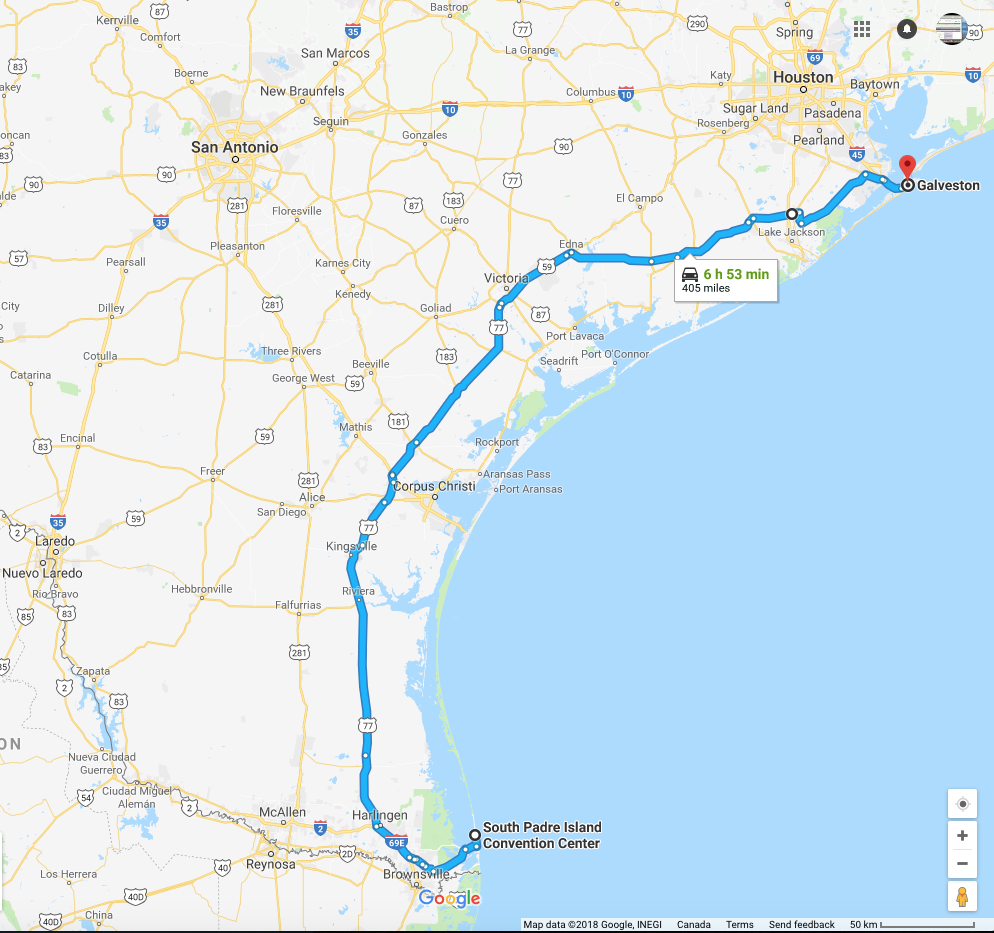
Texas Birding Trip 2018 "Galveston to South Padre Island".png
Click image to open enlarged in a new tab.

In early April when we weren’t planning our trip to Texas, I was out enjoying the return of our first Spring migrants, and Nana was beginning to plan her first garden in Kelowna.

From April 24 to May 8 we were in Texas on the most fabulous birding experience of our lives. The next three weeks I spent sorting and posting (to Flickr) images from our trip. More on this later….

In June we prepared for and enjoyed two weeks with grandchildren from Japan, including our youngest, only seven, in Canada for the very first time. It’s the third time our grandchildren have made the trip over without an accompanying parent. They’re an amazing bunch, for sure!

My three girls.jpg
My three girls…. Click image to open enlarged in a new tab.

After a rather cool and mixed-weather Spring, we’re anticipating another hot, dry summer, and hoping that, as we were spared serious flooding this year, the wildfire season will far less difficult and dangerous than 2017. Last year’s big fires began right around this time….

Flood-and-Fire.jpg

http://armedwithvisions.com/2012/02/09/sasha-paris-flood-and-fire/
(Used without permission)

Iron-gray clouds hang heavy across the sky
Cold rain pours, patters, pours again
Creeks become raging brown torrents
Cascading in white falls of roaring mist
The swollen lake is beige for days

Elsewhere…
Relentless drought withers plants and people alike
Fires race insatiable, unstoppable, turning all to lifeless ruin
Rivers trickle, streams and ponds are but cracked earth
Water is priceless yet pricey, a treasure to kill for
This rain cannot quench that fire
Flood here won’t water crops across mountain or sea.

Here too much
There too little
Balance is gone

Sasha Paris
Beltane 2010 Earth First!

Breeding Season and the Challenges of Understanding Nature….

In the last year or so, I’ve been working at becoming a naturalist — one who studies and attempts to learn from the world of “nature,” which I’ll define as “the phenomena of the physical world collectively, including plants, animals, the landscape, and other features and products of the earth, as opposed to humans or human creations.” (Macintosh Dictionary app).

Like most of you who visit this site, I’m deeply interested in wildlife, especially birds. I enjoy what I perceive as their beauty, and am fascinated with their behaviours, especially interactions with each other, ranging from competitive, even predatory, to cooperative, even symbiotic.

Here we have the first family of Mallard ducklings on Belmont Pond for 2016….

But, like you, I also recognize that not everything in “nature” is pretty or inspiring or even easy to witness, let alone study. In fact, that’s the focus of this post….

It’s impossible not to be tempted to dwell upon wholly “unnatural” interaction between wildlife and civilized humans, which often gives rise to anthropomorphism (“the attribution of human characteristics or behaviour to a god, animal, or object), and which, while it may make for entertaining fantasy, needs to be controlled or even avoided if understanding nature is really the goal….

So, the appearance of new life in Belmont Pond annually raises some interesting internal conflicts in my aging mind. No matter how hard I try to see the sudden appearance of ducklings as a mere “natural phenomenon,” I find myself attaching human attributes to natural creatures and processes that I have no right doing. As a naturalist, I need to strive for an “objective understanding” of the forces at work without being judgmental (definitely not something I’ll ever succeed at—because I don’t believe full objectivity is ever possible! Subjectivity trumps! But that dilemma is for another day…).

This comment from Emily Nagoski, (quoted online at http://www.washingtoncitypaper.com/blogs/sexist/2010/04/22/is-duck-rape-rape-rape/) is one that I’d like readers/viewers to keep in mind as they look at the photos that follow:

“It’s not so easy to avoid imposing human moral standards on [primates like] orangutans (sic) and chimps; they’re so like us, they’re so close to human. But we must avoid it. It’s not appropriate to overlay moral meaning on animal behaviour; chimps commit infanticide, but that’s just part of being a chimp. It’s not immoral or wrong, it’s just…chimpanzeedom.

There’s something in us, some apparently innate tendency, to find lessons and moral standards in nature. This is, in part, the naturalistic fallacy—the conclusion that if something is nature it must be right or good. Just as mistaken is the conclusion that something in nature is bad or wrong because it violates a human moral standard.”

All of which brings me to the issue at hand—the activities on the pond, particularly the breeding behaviours of Mallard ducks….

Mallard family
This image is rare for a couple of reasons: first, the enormity of the brood (14!) and second, the fact that the drake appears to playing an active role in rearing the ducklings. While I have seen this before, as the Wikipedia article below explains, that’s not usually the rule….

From Wikipedia:
“Mallards usually form pairs (in October and November in the Northern hemisphere) only until the female lays eggs at the start of nesting season which is around the beginning of spring, at which time she is left by the male who joins up with other males to await the moulting period which begins in June (in the Northern hemisphere). During the brief time before this, however, the males are still sexually potent and some of them either remain on standby to sire replacement clutches (for female Mallards that have lost or abandoned their previous clutch) or forcibly mate with females that appear to be isolated or unattached regardless of their species and whether or not they have a brood of ducklings….

Mallard family

The drake is nowhere to be seen as the mother duck does her best with the 14 after moving them from the larger pond into this smaller one. To be fair, he did fly in shortly after I took the shot….

“The nesting period can be very stressful for the female since she lays more than half her body weight in eggs. She requires a lot of rest and a feeding/loafing area that is safe from predators. When seeking out a suitable nesting site, the female’s preferences are areas that are well concealed, inaccessible to ground predators, or have few predators nearby. This can include nesting sites in urban areas such as roof gardens, enclosed courtyards, and flower boxes on window ledges and balconies more than one story up, which the ducklings cannot leave safely without human intervention. The clutch is 8–13 eggs [apparently someone forgot to inform the duck in my study—KAR], which are incubated for 27–28 days to hatching with 50–60 days to fledgling. The ducklings are…fully capable of swimming as soon as they hatch. However, filial imprinting compels them to instinctively stay near the mother not only for warmth and protection but also to learn about and remember their habitat as well as how and where to forage for food. When ducklings mature into flight-capable juveniles, they learn about and remember their traditional migratory routes (unless they are born and raised in captivity). After this, the juveniles and the mother may either part or remain together until the breeding season arrives (citation needed).

“During the breeding season, both male and female mallards can become aggressive, driving off competitors to themselves or their mate by charging at them. Males tend to fight more than females, and attack each other by repeatedly pecking at their rival’s chest, ripping out feathers and even skin on rare occasions.” There was one occasion on a pond in New Westminster where human observers witnessed the mother of the first of three broods systematically drown all nine of the second family within the first day of their lives….

“When they pair off with mating partners, often one or several drakes end up left out. This group sometimes targets an isolated female duck, even one of a different species, and proceeds to chase and peck at her until she weakens, at which point the males take turns copulating with the female. Lebret (1961) calls this behaviour ‘Attempted Rape Flight’ and Cramp & Simmons (1977) speak of ‘rape-intent flights’.”

What happened in Belmont Pond….

“Male mallards also occasionally chase other male ducks of a different species, and even each other, in the same way. In one documented case of “homosexual necrophilia”, a male mallard copulated with another male he was chasing after the chased male died upon flying into a glass window. This paper was awarded with an Ig Nobel Prize* in 2003.”

stinker-250.gif
“The Stinker,” the official mascot of the Ig Nobel Prizes.

* The Ig Nobel Prizes honor achievements that make people LAUGH, and then THINK. The prizes are intended to celebrate the unusual, honor the imaginative — and spur people’s interest in science, medicine, and technology. 

Every September, in a gala ceremony in Harvard’s Sanders Theatre, 1100 splendidly eccentric spectators watch the new winners step forward to accept their Prizes.  These are physically handed out by genuinely bemused genuine Nobel Laureates. Thousands more, around the world, watch our live online broadcast. “(https://www.improbable.com/ig/ )

But the question that needs to be asked is whether or not the behaviour I’ve documented is something about which we, as “naturalists,” not simply caring humans, should become emotionally responsive. It’s so hard not to feel that nature is “wrong” when we see animals acting “cruelly” towards one another, but, and you may not like my saying so, I think we have to restrain such sensibilities….

From the previously cited website, again:

“Forced copulation is a regular feature of sexual activity among ducks [especially Mallards]. In the phenomenon known as “rape flight,” several Mallards will aggressively peck at a female duck until she submits to sex (or dies). There’s reason to believe that female ducks very much do NOT enjoy this; the duck vagina has developed in a “rape-specific way” which allows female ducks to prevent pregnancy from this forced sexual contact*. But can we compare this animal behavior to the human conception of rape? Nagoski argues that there’s no such thing as “duck rape” for the same reason that meat isn’t murder—animals are incapable of consenting (or not consenting) to sex….”

Now the site cited below and several others that I looked at go much deeper into this issue than most of us would like to, and I don’t want to upset anyone, let alone ruin their day. Still, as an observer, I want to share with you what so many of us witness around breeding seasons, and if the content only makes you take a moment to think or reflect on a deeper level about “nature” and “human nature,” I’ll be satisfied….

*See this 2007 article from the website New Scientist: https://www.newscientist.com/article/dn11764-female-ducks-fight-back-against-raping-males/

🎶 If I had a heron ♬ —

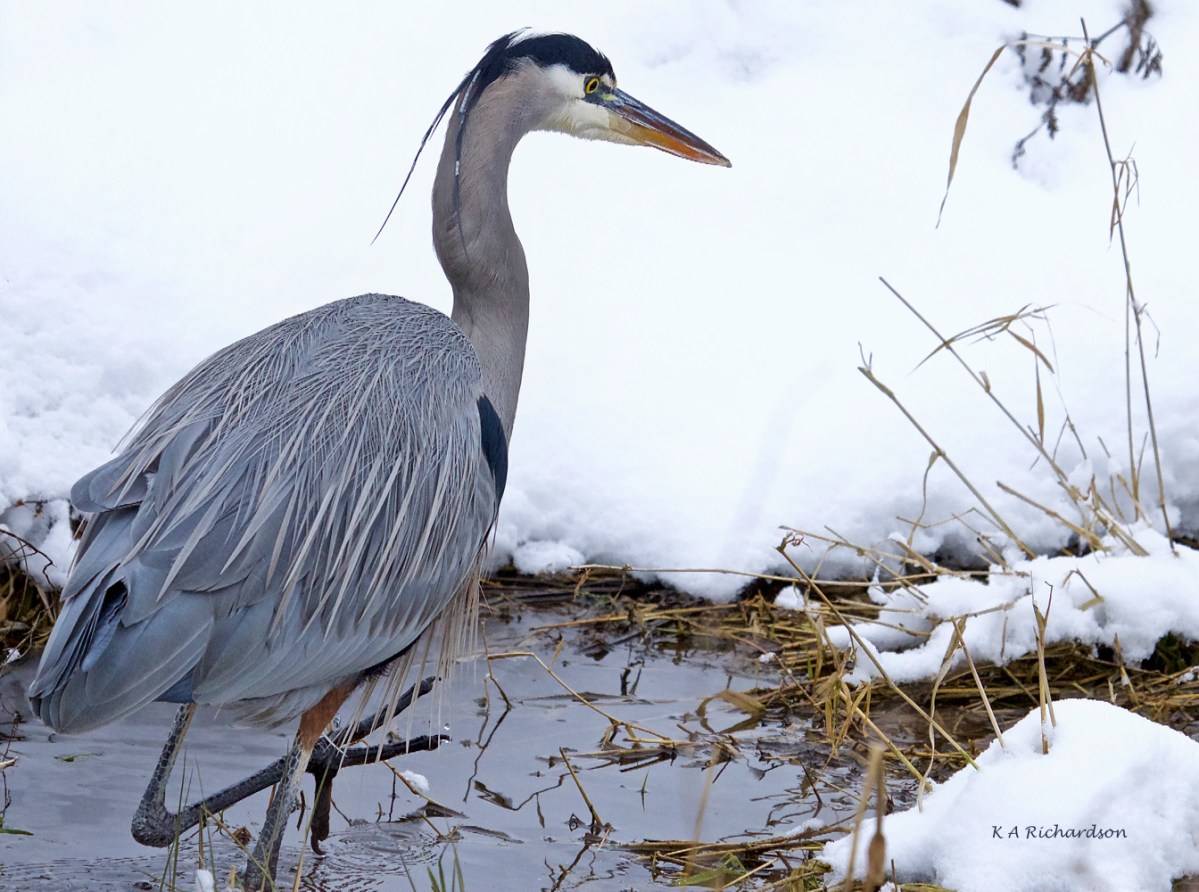
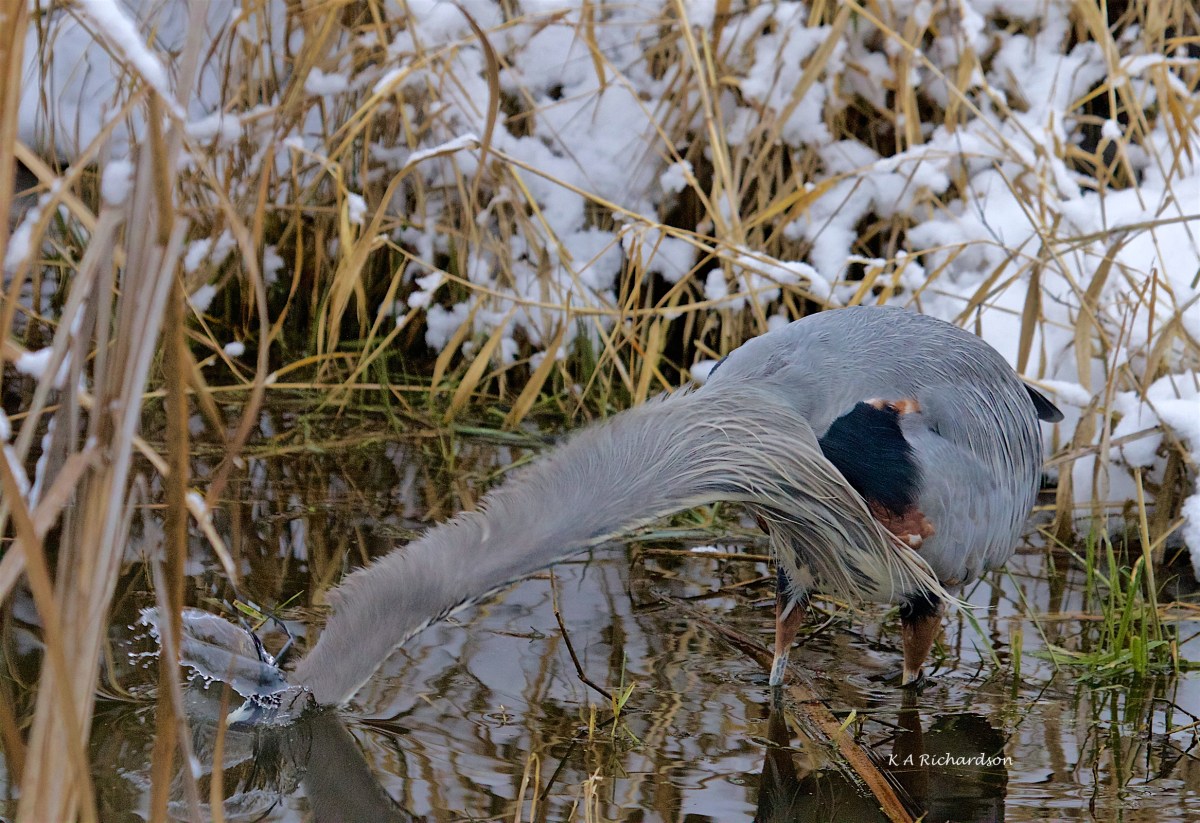
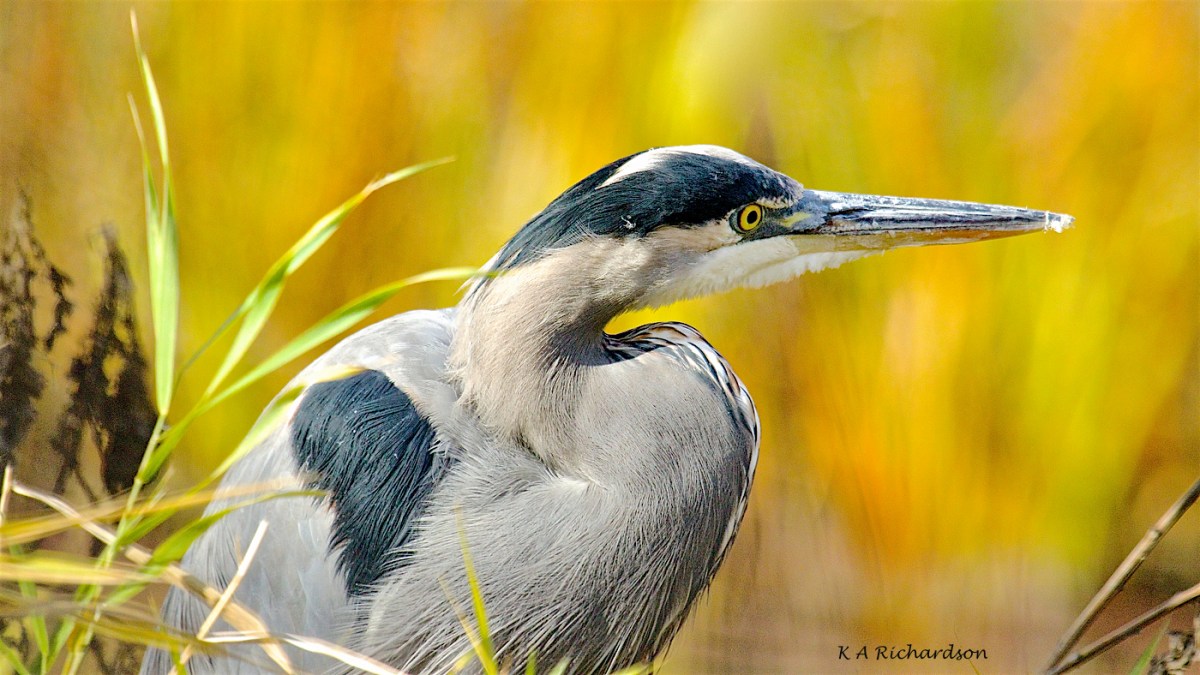
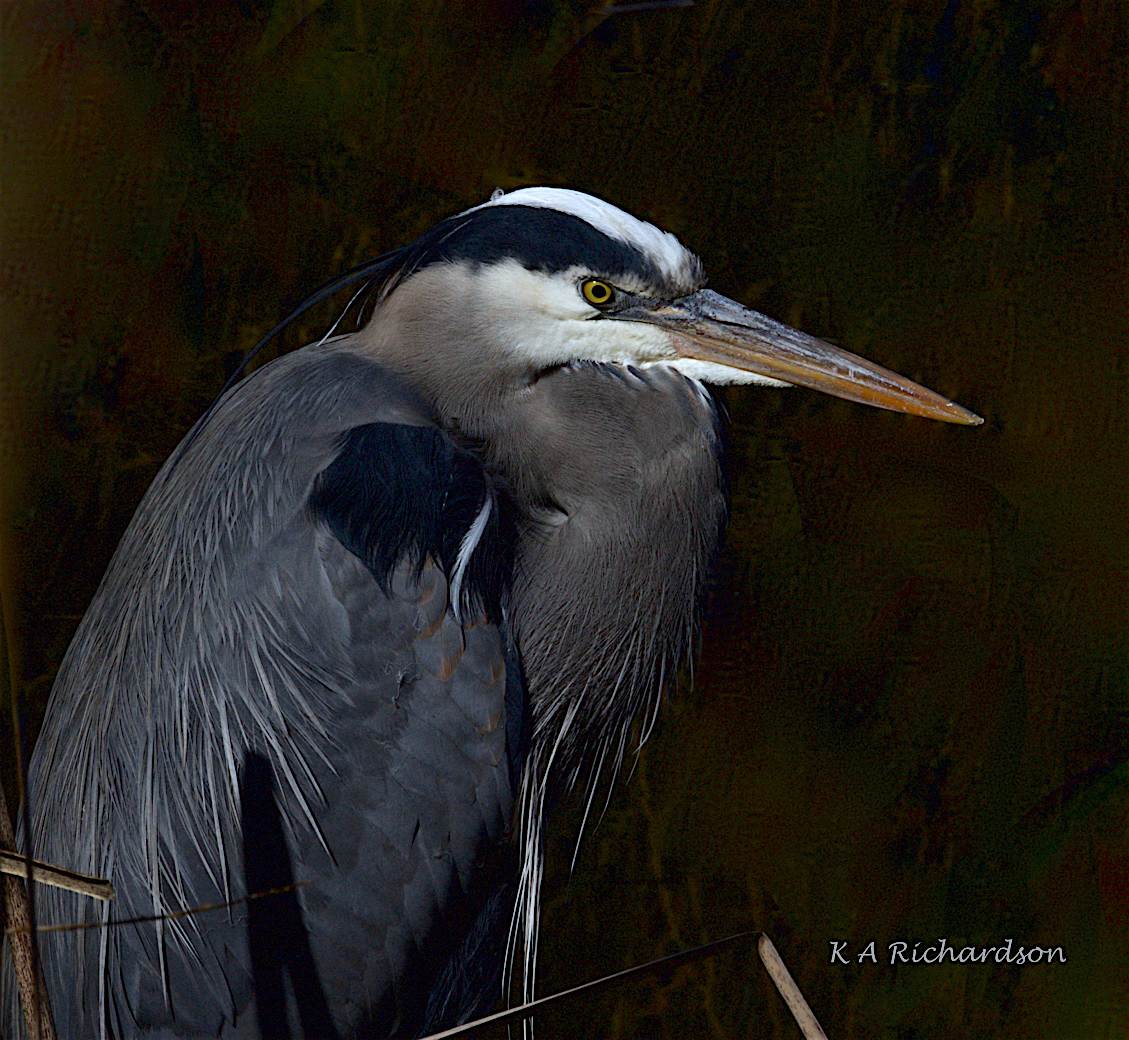
If you’re just looking for information on Great Blue Herons (Ardea herodias), I very much recommend this website: heron conservation — it doesn’t have my photos, of course!

Published December 20, 2017: Sing to “🎶 If I had a hammer…🎵.”  Click here to open a performance in a new tab. Ignore the brief delay while it loads….

Actually, the title should say,
If I had a dollar —  ever’ time some’un asks me—
if I’ve “seen the heron” —,  I’d be able to buy —
t
hat new lens that I covet!” (Repeat.)

But that’s much too long a title, not to mention that someone stuffed the Genie back in the lamp and erased the password!

I wrote about Great Blue Herons (Ardea herodias) in my piece on water birds of 2016. In this post, however, I want to give the GBHEs their own place to shine, with a retrospective of some of the fascinating individuals I’ve been privileged to met….

NOTE: Click any single image to enlarge it in a new tab….

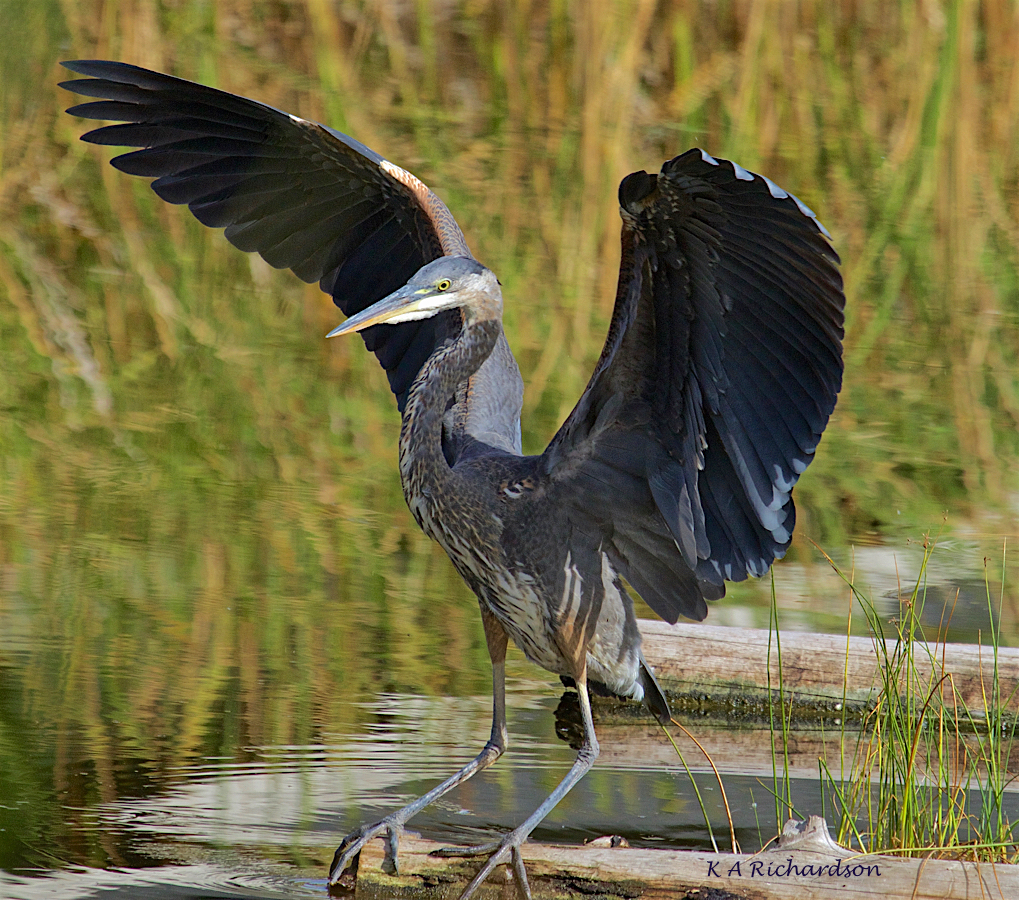
Great Blue Heron
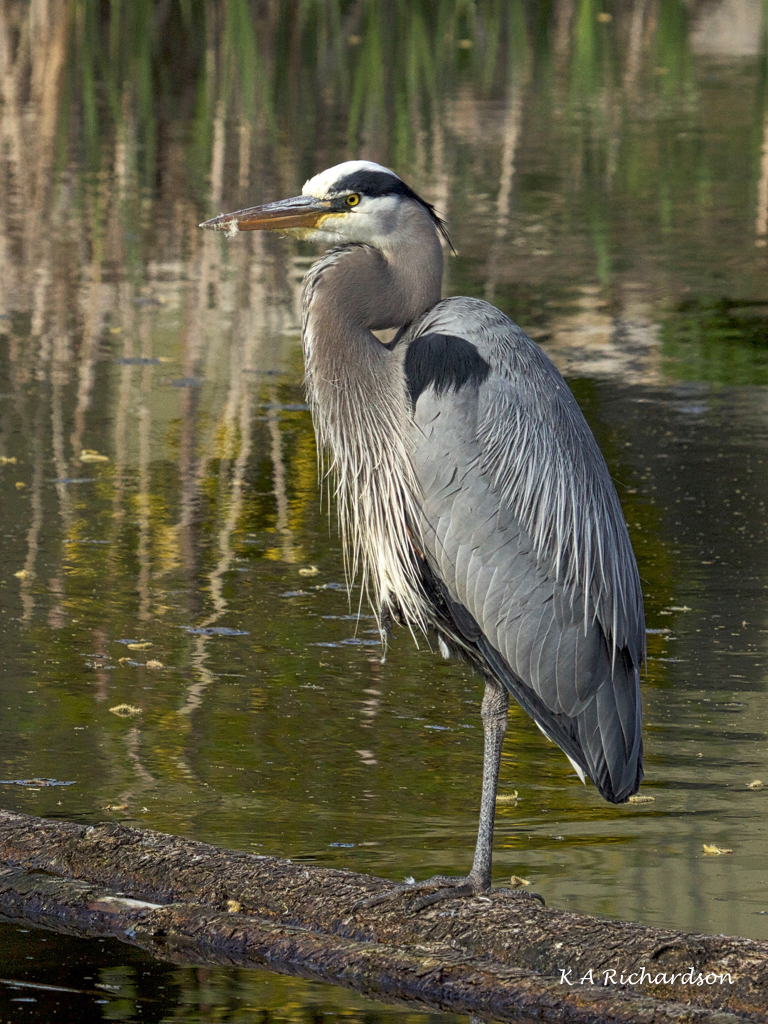
Sir Ralph of Belmont Pond, Kelowna, BC. He also frequents nearby marshes when he’s not here.

On “my beat,” I see numerous GBHEs, many with features of appearance (that can sometimes betray me!) and idiosyncrasies that enable me to recognize them, even, Gob fordib, to name them. The one I know best was already named by the residents on Belmont Pond — “Ralph.” Nobody really knows if he’s a Ralph or a Ralphina, but that’s the burden shared by all herons I know….

My beat - satellite - labelled
My Beat: main heron viewing areas are Belmont Ponds, Michaelbrook Marsh, area west of the RV Parking, Teal Pond, and the area from Raptor Tree Pond west to West Pond. Click image to enlarge in a new tab.

In the three years we’ve been here, I’ve discovered that Ralph is the calmest, most photographable of the GBHEs in the area. I encounter him in other locations besides Belmont Pond, including Thomson Marsh’s West Pond, and Michaelbrook Pond. Other herons also frequent these locations, but regal Ralph stands out, so much so that I’ve taken to calling him Sir Ralph of Belmont.

Great Blue Heron (Ardea herodias) (2).jpg
171116: Sir Ralph among the cattails of West Pond in Thomson Marsh. Notice his full epaulette.

I think this is Ralph, because I’ve watched him move from this location to Belmont and from Belmont to Michaelbrook and from there back to West Pond. Other herons, of course, may share these locations, so then I have to fall back on Ralph’s calm demeanour which sets him apart from most of the others I observe. However, since I don’t want to strain my credibility, I’ll drop the naming aspect and focus on the photos….

So here from my growing, indeed, groaning, Great Blue collection are some favourites marked with the dates (yrmmdd) when I stole their souls:

Herons in Belmont Pond: As long as there’s some open water in either of the two Belmont Ponds (connected by an intermittent stream) we’ll see herons. The young ones sometimes take a while to catch on to the mystery of Hard Water….

Juvenile Great Blue - 151122.jpg
151122: (small Belmont Pond) I’m confused….

Click any of these  photos taken two months later to enlarge them all

The juvenile below photographed in a similar pose to 151122 bird, almost two years later,  — struggling with soft water….

Juvenile Great Blue 170915.jpg
170915: I think I hear a goldfish….

Five days earlier, near the same spot:

Great Blue Heron juvenile (Ardea herodias)-10.jpg
170910 : Making a statement….
Great Blue Heron juvenile (Ardea herodias)-11.jpg
170910: Missed Opportunity

And elsewhere:

The Darkling Heron Bby Lk 140910.....jpg
170910: Burnaby Lake ~ The Darkling Heron
Belmont GBHE 151208 - 08 ed.jpg
151208: Bench Boss waiting for the Belmont Pond team to show up…
"Standing on One Leg" looks grumpy
150902, Large Belmont Pond: Standing-On-One-Leg 
with Western Painted Turtles: Ted, Thurston, and Truman:
Ted: “Ol’ Standing-On-One-Leg looks crabby tonight.”
Thurston: “Where? Where? I can’t see him!”
Truman: “Behind you, bud, but trust me, it ain’t worth turning around for….”
Standing-On-One-Leg: “Hmmmn. Must look up my recipe for ‘Turtle Soup’.
The new guy - 1 Great Blue Heron (Ardea herodias).jpg
171216: Yearling Noogye watching the large Belmont Pond freeze….
The new guy - 2 Great Blue Heron (Ardea herodias).jpg
Noogye closeup….

On high perches and in flight:

Great Blue Heron juvenile 170901-01.jpg
170901 Noogye: Once upon a roof, there was a young heron….

Capturing herons in flight is always a bit of challenge, but rewarding when you succeed….

Click any of these  photos from 150922 to enlarge them all

When gliding towards a landing, or making a short takeoff and landing, GBHEs often stretch their necks out like the ones below:

GBHE gliding 151029-3.jpg
151029 descending into Thomson Marsh near the Raptor Tree….
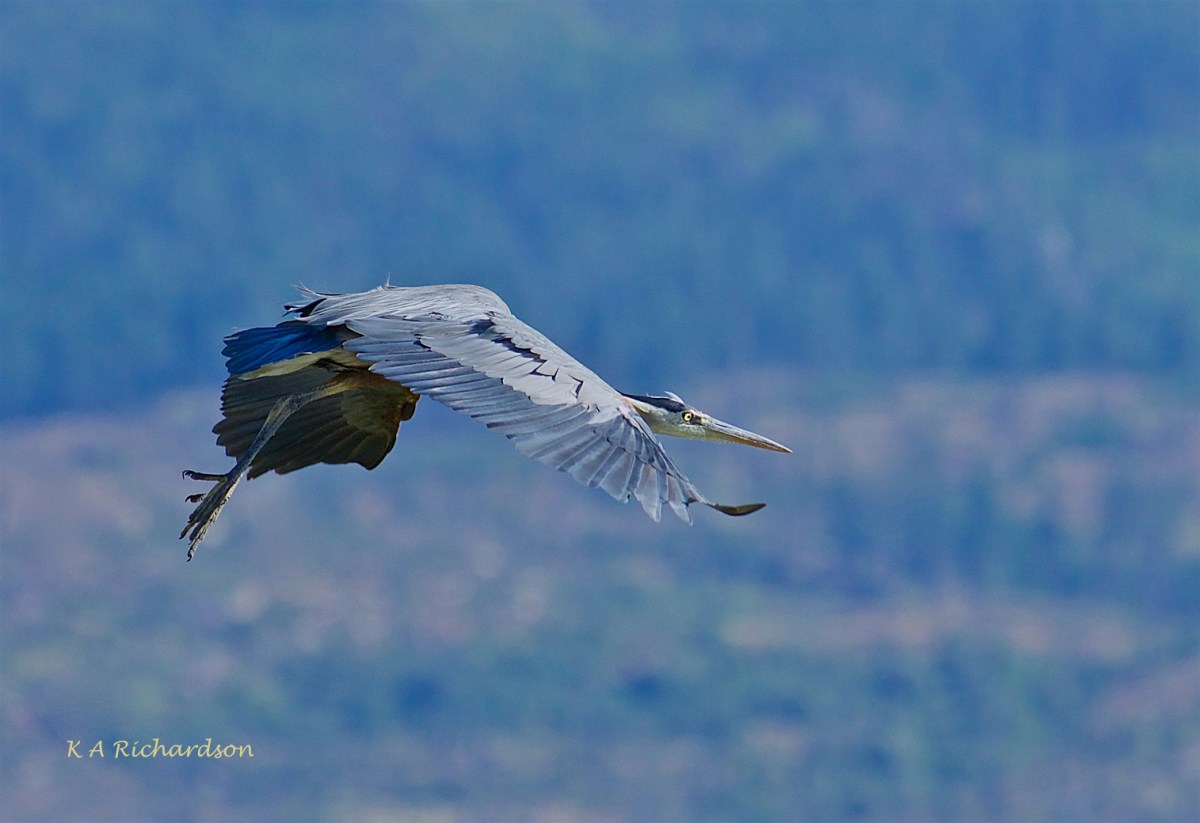
Great Blue Heron 170716 in flight.jpg
170716, Thomson Marsh, a short hop from one pond to the next….
Ralph in his willow
161105: Ralph above small Belmont Pond making a fashion statement.
Ralph in his willow - regal.jpg
161105: Ralph in his regal pose at the top of the small Belmont Pond Willow….
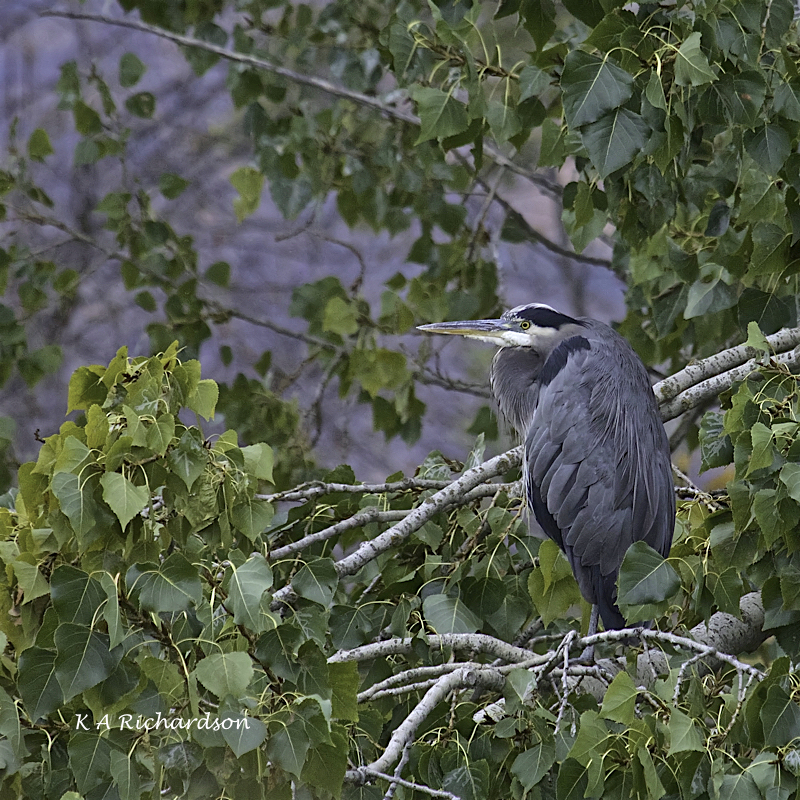
Great Blue Heron (Ardea herodias) -01.jpg
171016: Great Blue, not sure which one, in the Raptor Tree above Thomson Marsh.

Herons waiting:

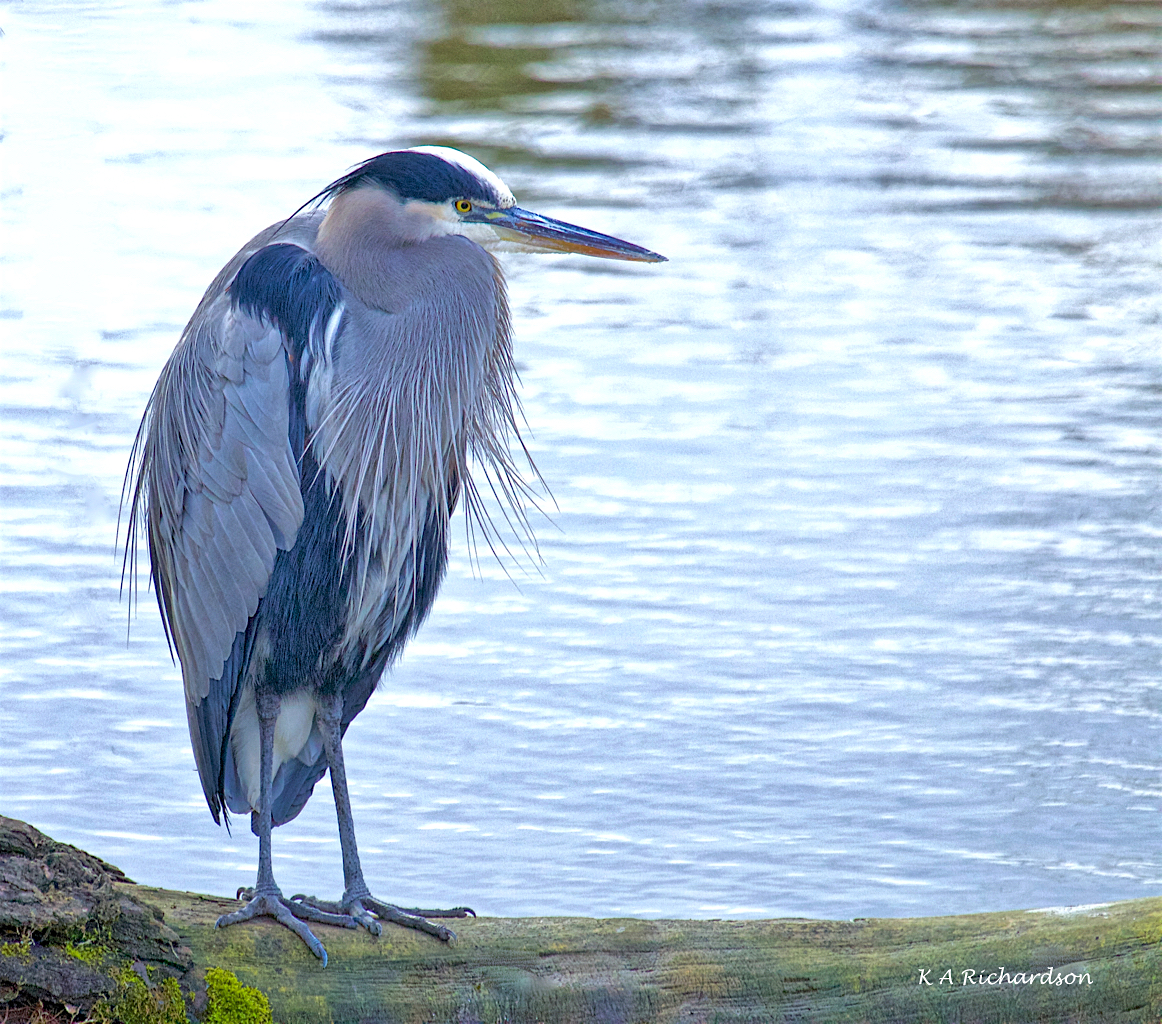
Great Blue Heron - Rotary Marsh
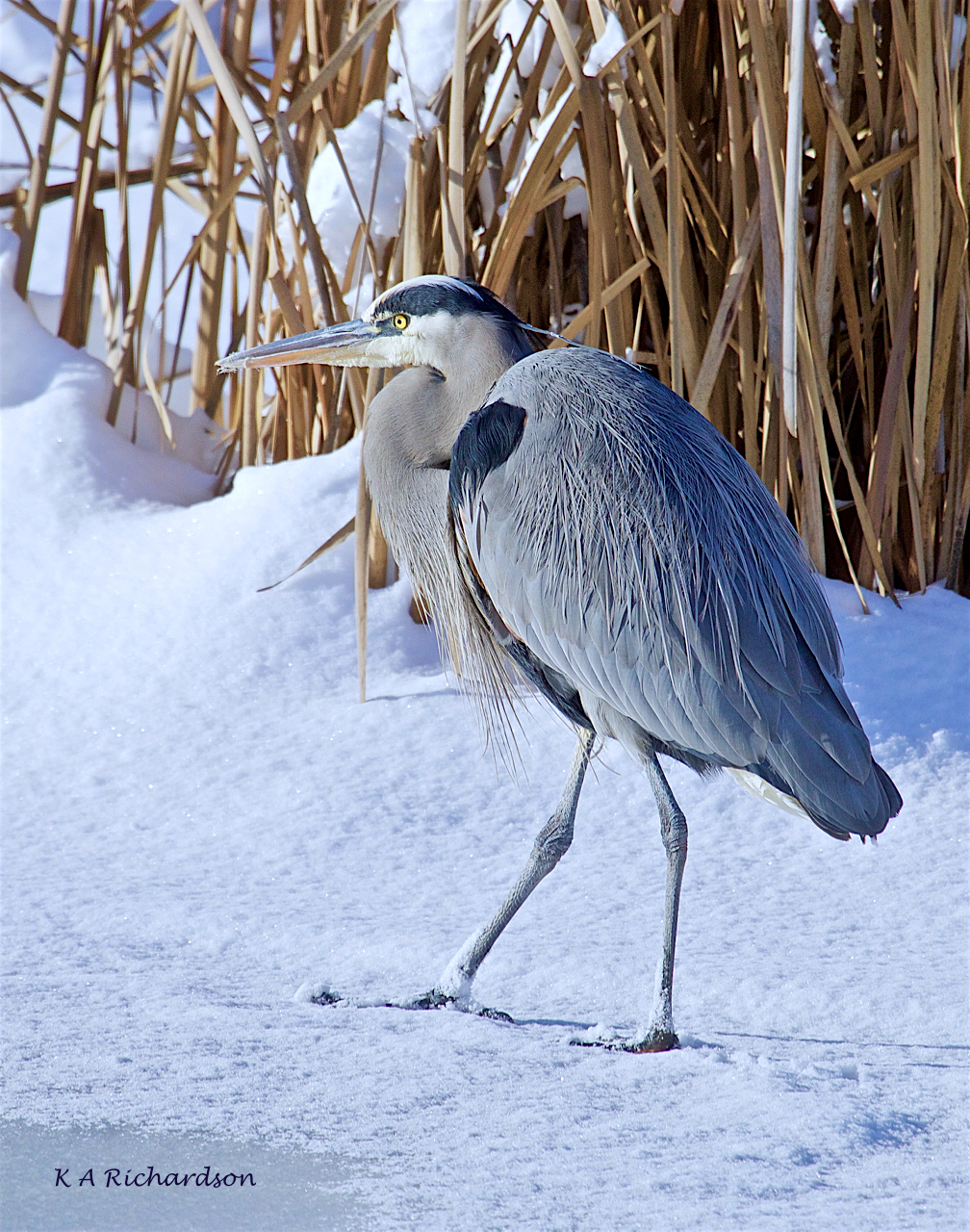
170118: A well wrapped fella at Rotary Marsh, Kelowna. Looks a lot like Ralph, but probably isn’t, as RM is several kms away from Ralph’s domain…

Click any image to enlarge them all and read the full captions….

Herons foraging:

Great Blue Heron
Desperately Seeking Sushi….
Great Blue Heron - Belmont
and finding it!

Winter GBHEs are no less discriminating

Great Blue Heron
Stalking…
Great Blue Heron
Spotting…
Great Blue Heron
Striking…
Great Blue Heron
and Savouring!

And finally (“Whew!” you say), a few portrait shots:

GB Heron juvie - 2
140917: Colony Farm, Coquitlam. Yearling. Note the greenish lore (just in front of the eye), absent in fully mature GBHEs. 
I like the translucence in this image….
Young GB Heron - 13 Bby Lk 140829
140829: Burnaby Lake: another juvenile, detailed. Lots of vinous colour here….
Yearling Great Blue 150921.jpg
150921: Mission Creek, Kelowna. Another juvenile that posed beautifully in very special light.
Great Blue Heron portrait
151027: Michaelbrook Marsh. Full adult, possibly Michael….
Great Blue Heron (Ardea herodias) -02
171028: Thomson Brook North: Young Adult, possibly Michael…. I like the backlighting here….
Ralph, Great Blue Heron (Ardea herodias) -01
171117: West Pond, Thomson Marsh. Also backlit, crest only raised by the breeze….
Great Blue Heron - 7
170327: Small Belmont Pond: Ralph in full adult plumage, so close and still I could almost touch him….

And most recently, from December 30, 2017, in Thomson Marsh, West Pond….

Sir Ralph surveys surfaces -07
171230: Sir Ralph surveys surfaces….

Hope you enjoyed the show….

Part 7 – SE Saskatchewan into SW Manitoba…

Unexpected Surprises (the Good Kind!)

NOTE: If the cursor changes to a hand over any photo, click to enlarge the image in a new tab.

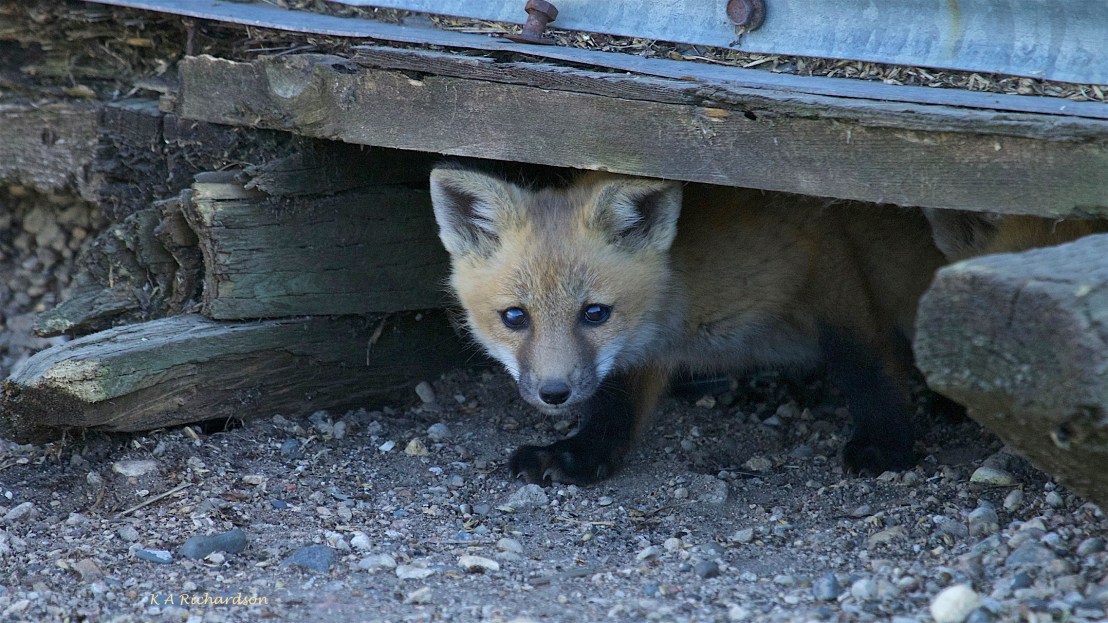
On our very enjoyable visit to my cousin’s farm near (tent-caterpillar-free) Maryfield SK, which I mentioned in Part 3, we also enjoyed a special moment with these little guys:

Red Fox pup
Fox kits under the granary. The one out front was definitely most confident. I dubbed him “Francis.”
Red Fox pup
Although his siblings were curious, only Francis dared to come out….
Red Fox pups
For Francis, it seemed to be a game. If I moved in, he retreated…
Red Fox pup
but not so far that he couldn’t see me….
Red Fox pup
Here he seems bored with the game; either that or he needed a quick nap!

Eventually, I got too close, I guess, and Francis disappeared with the the others. I thought I should have a look around the back side of the granary, and, as I moved carefully in that direction, who should come round the bin, but Francis, as happy to see me as I was him — maybe not, but the backlit shot here is a memory I’ll keep alive as long as can!

Red Fox pup
Surprise!!

It’s hard to say why this felt like such a blessing. Of course, they’re cute, but they can be a pest on a farm or even an urban environment. I often used to see them in Sapporo, where I lived from ’89 to ’02. In the spring of 1990, I’d had a delightful encounter with a family of Hokkaido fox kits near the top of an urban ski hill not far from where I lived.
Since returning to Canada from Japan in 2002, I hadn’t seen any foxes in BC or elsewhere. It was just a coincidence that this summer, my cousin was not keeping chickens as she often does, so she and her husband were enjoying the foxes, too, and told me where to look for them. This is a memory I’ll cherish as long as I’m able to!

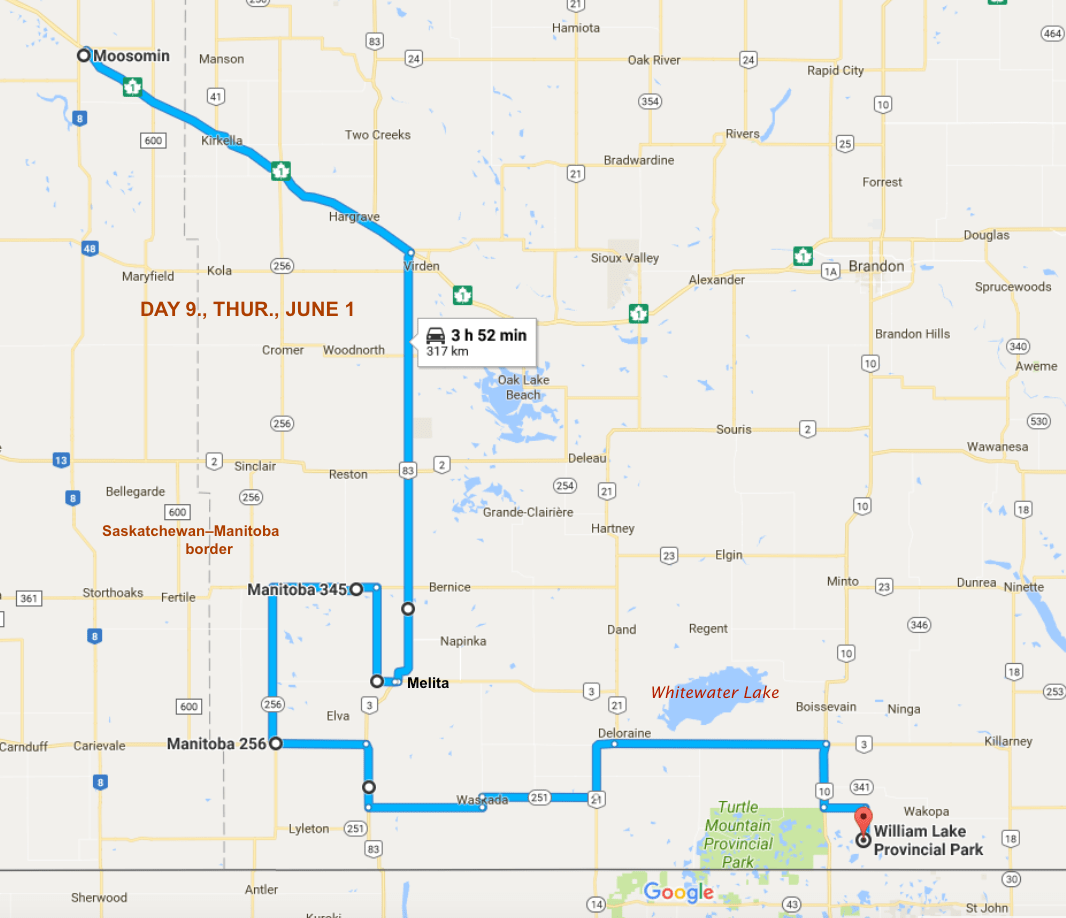
The next day, we pushed on — across the border into Manitoba where we hoped to do some birding around the village of Melita and to camp in the Turtle Mountain Park before visiting Whitewater Lake the next day. Then we’d be on our way to Winnipeg.

Prairies trip Google day 9 to William Lake Prov. Park.png
A short day in terms of distance, but with lots of exploring.
We actually travelled a lot farther than this map shows….

Well, the birding was okay, no caterpillars to contend with. Not fantastic, but okay. Turtle Mountain, however, turned out to be so much less than I’d imagined all through my youth when I looked south from the Trans -Canada Hwy on our regular visits from our home near Winnipeg to Moosomin where my grandmother lived, and the farm which Alec and Iris took over in the 1950s. My research with Google Maps indicated that there was a decent road from west to east through the Park. That did not pan out. So, enough said; what’s a little wasted time?

We headed north to Boissevain, a town I’d long known of but never visited, in hopes that we could camp there. When the campground proved quite unsatisfactory (I’ll spare readers the details), we thought we were stymied. Once again, ended up at Subway for dinner where we enquired of one of the employees as to where we might find a decent camping spot. He immediately and strongly recommended a place that hadn’t even come up on our searches, a spot called William Lake Provincial Park. We decided to have a look. It turned out to be one of our favourite camping spots of the summer. Not that we have many photos to show for it! Fortunately, Nana took some with her iPhone.

Camping w:K at William Lake
William Lake: Car camping among the scrub oaks. Breakfast. No caterpillars!
William Lake.JPG
William Lake, through the trees. Wish we had taken more shots here!

Some of its features couldn’t really be illustrated with photos: June 2 — no caterpillars! Clean heated washrooms with showers and hot and cold water! Wonderful morning birdsong —particularly a lovely House Wren that really didn’t want to pose for pics as it foraged among the oaks. Free firewood! And we had the place almost entirely to ourselves…. Until the next morning (Friday, June 2) when, as we were leaving, we found the gate that had been dark and unstaffed the night before, now processing a line of cars coming in. As the exit was closed, I went in to pay for our night’s stay, only to be informed that we would also be charged the $5 day pass fee for Friday, as well.  I explained that I didn’t that was reasonable, and I was “let off this time”…. Good ol’ Manitoba. (BC did away with day passes several years ago….) If they had simply rolled the five bucks into the camping fee, we’d never have minded. Funny how that works: don’t nickel and dime me; in fact, I’ll give you a dollar if you don’t!

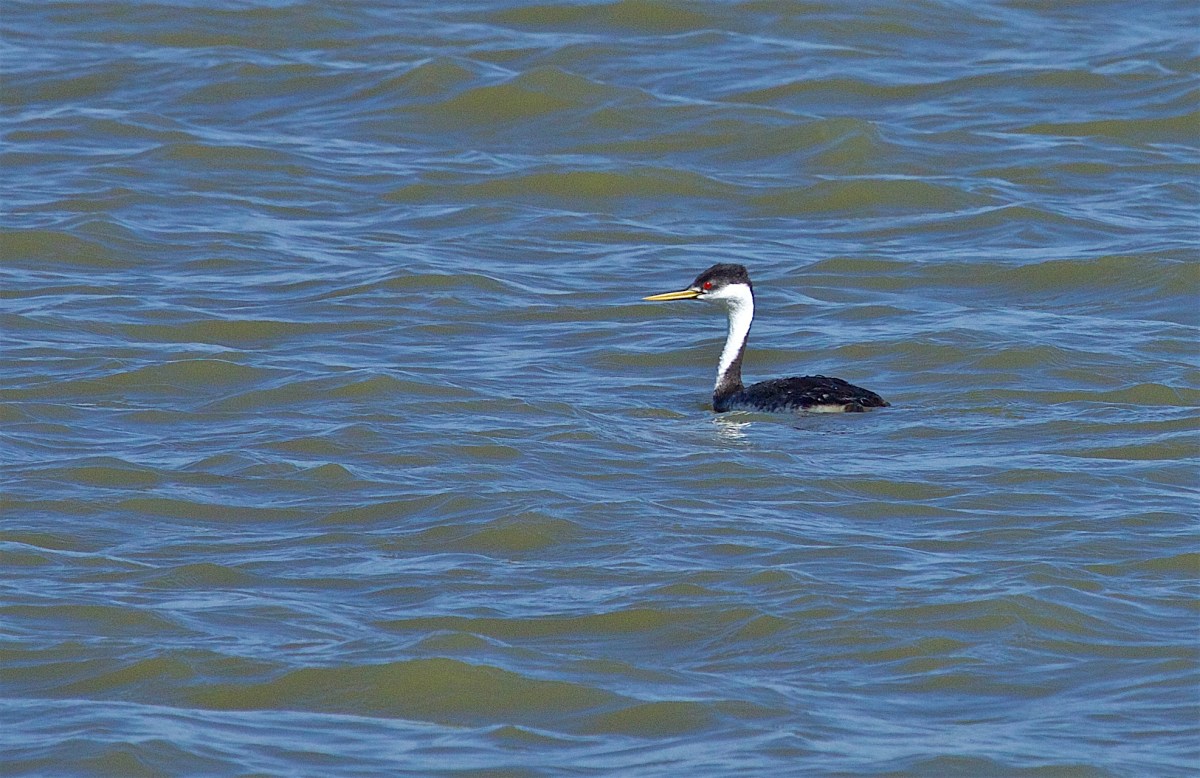
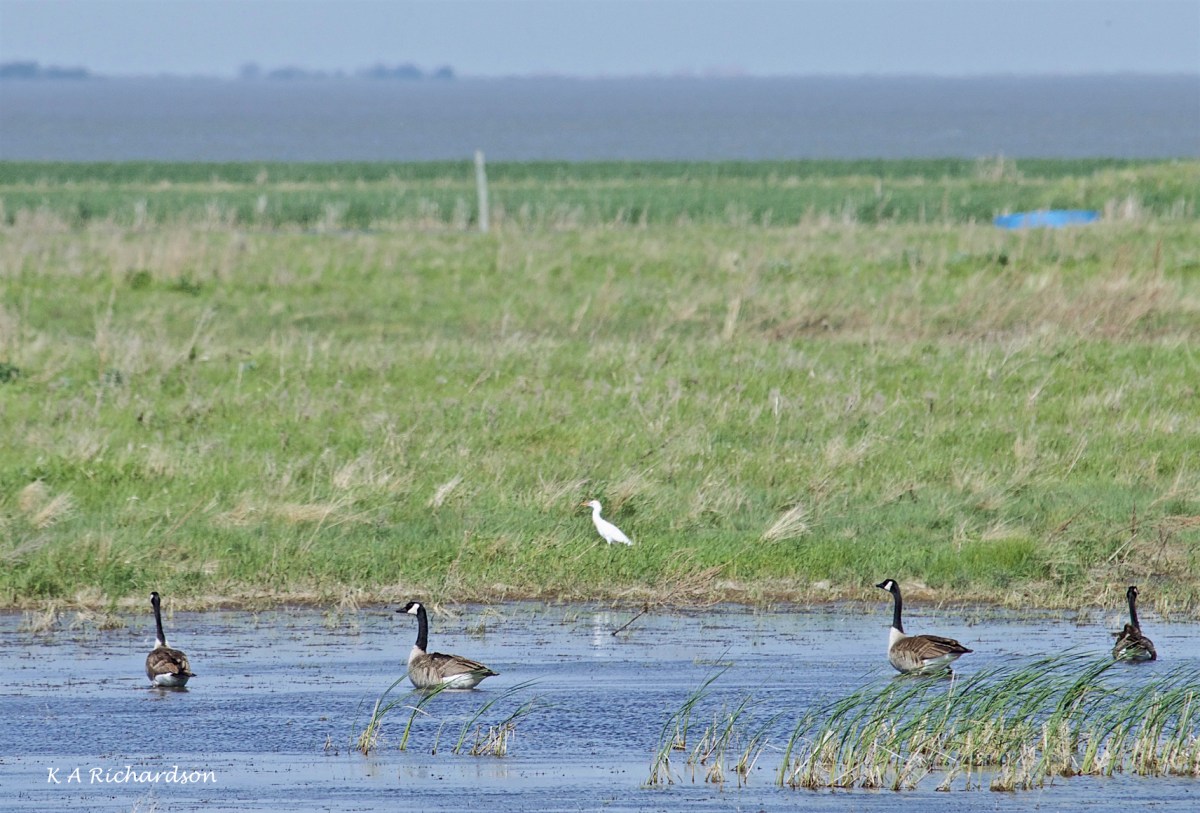
So, off we went, backtracking to Whitewater Lake, which also turned out to be a mild disappointment. Although it’s quite large, there’s a long spit that stretches out from the marshy shores and has an observatory gazebo of sorts at the end. Unfortunately the road/walkway out to it had been washed away recently and we couldn’t get to the end. While we saw birds including Western Grebes, a Cattle Egret, and other waders, gulls, and more, they were generally too far away to get decent shots.

Western Grebe.jpg
Long shots at Whitewater Lake: Western Grebe (This is already cropped heavily!)
Cattle Egret with Canada Geese.jpg
Whitewater Lake: Cattle Egret with Canada Geese. It was windier than it looks here….

There was also a small domesticated herd of bison on the shore in the distance. And,  as usual, the gusty wind that helps account for the lake’s name was less than wonderful!

So, back to the plan: drive across southern Manitoba through places I’d know of nearly forever but had never to my recollection ever visited: Killarney, Cartwright, Crystal City, La Riviera, Pilot Mound, Manitou, Morden, Winkler, Carman, each with it’s own claim to fame that I’m not going to go into here….

Prairies trip Google day 10 to Portage la Prairie.png
Day 10: June 2, 2017

If the surprises of the day, to this point, had been less than memorable, what happened in Killarney, a town of 2200 with its strong pretence of an Irish heritage, was not only remarkable, but wonderful. I’ll get to why in a moment.

First, though, this bit from Wikipedia:

“The Town of Killarney was officially incorporated in 1906 [KAR —about the time my grandfather began homesteading near Moosomin, SK]. An Irish land surveyor named John Sidney O’Brien named Killarney Lake (before that, it was called Oak Lake by the aboriginal people) after the Lakes of Killarney, in Ireland. Legend has it that as he sat on the shore of the lake, homesick for his native home, he took a bottle of “Good Irish” from his pack and, pouring it into the water, christened the lake Killarney. The “Irish”-ness of the community is often used as a tourist attraction with things such as green fire engines, Erin and Kerry Parks, Little Irish Downs, and many other good Irish-themed attractions used to play up this theme. Killarney, Manitoba does not have any actual connection with the town of Killarney, Ireland. Most of the people who originally settled the region were from the Scottish Highlands, the English or were Mennonites or Hutterites of Central European extraction.

What will stick in my mind most, however, are the images of this clean, charming, progressive town. Although Highway 3 allows one to bypass it, that would be a great mistake. My advice? Turn off the highway, and drive towards Killarney Lake, not “man-made,” but certainly human-enhanced. Stop at Erin Park and look for Blue Jays, Grackles, and lots of other birds.

Splashpark_fun.gif
The Splash Park

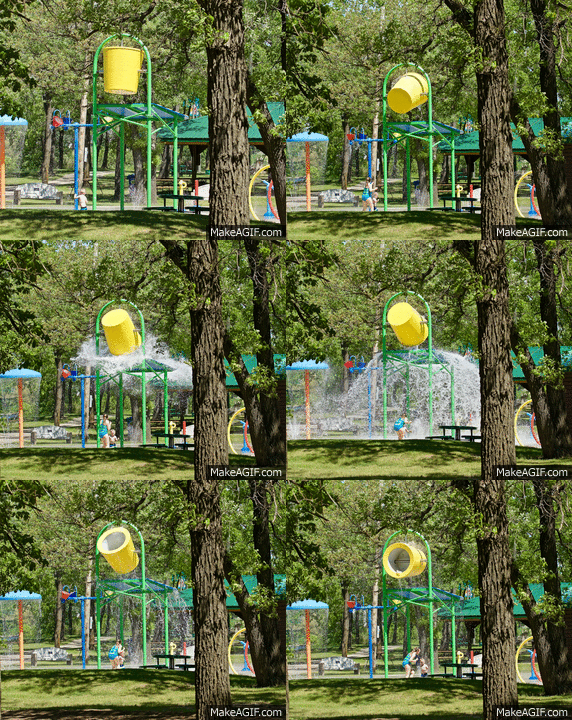
Enjoy the families playing in the park and its fabulous Water Bucket Splash! I’d never seen one of these; instead of simply shooting a video, I took bursts of the bucket filling, then dumping its contents over the delighted children. The process takes much longer than this animated gif indicates — we miss the wonderful suspense…. When I got home, I rued my “mistake” until I found software online that allowed me to make this image. Turns out my blog doesn’t allow me to upload videos anyway!

What blew us away, however, were the White Pelicans, a bird I’d long wanted to photograph! We have ’em in BC, of course, but they’re only rarely seen at either The Coast or in the Okanagan Valley. I had no forewarning that I’d see them here, so the surprise was truly thrilling. Our first look came at Erin Park where we saw them at a distance both in the lake and in flight. It never occurred to me that I could get better shots than the ones below, so I happily accepted what the lake was serving.

First views: click any  photo to enlarge them all….

An even better surprise lay in store, however. We got back into the Murano to go uptown and find some lunch. First, we had to cross the bridge. And there they were: the main flock — so close in some cases, I could barely fit them into my viewfinder. Took a jillion photos and still managed to leave some great shots wanting to be taken, like a conflict in which a Red-winged Blackbird objected defiantly to a Pelican cruising too close to shore. Nana urged me to capture the moment — it went on for several minutes — but after getting the shots below (and a whole lot more), I figured I could come back after lunch and likely find this behaviour again. I was wrong. I know, I know! I should always take my wife’s advice!

The closeups: Click any photo to open it, enlarged, it in a new tab.

White Pelicans (Pelecanus erythrorhynchos)
Good things happen when we work together….
White Pelicans (Pelecanus erythrorhynchos)
Of course, there’s always one who’s lookin’ the wrong way!
White Pelicans (Pelecanus erythrorhynchos) (8).jpg
Feeding frenzy!
White Pelicans (Pelecanus erythrorhynchos) (9).jpg
Success!
White Pelican (Pelecanus erythrorhynchos) (13).jpg
Okay! I’ve caught one; now what?
White Pelican (Pelecanus erythrorhynchos) (11).jpg
Yeoww!! Catfish got my tongue!!
White Pelican (Pelecanus erythrorhynchos) (10).jpg
Down the hatch!
White Pelicans (Pelecanus erythrorhynchos)
After lunch cleanup….
White Pelican (Pelecanus erythrorhynchos) (7).jpg
Serenity at last….

And, of course, there have to be more flight shots! Click any  photo to enlarge them all….

Many of these shots were less than perfect. If I lived in Killarney, I’d be down here every day honing my skills and working the light! I think, now that I’m home and looking more closely at the map, that there are probably several other parks and ponds I’d be checking out on regular basis. Will I ever get the chance? Time will tell….

(The last part of Day 10 is included in the follow-up post….)

2017 Prairies Trip, Part 6 – dealing with the unexpected….

From the thrills of Grasslands National Park, it was a half-day’s drive to our next planned stop, Moose Mountain Park, near Kenosee Lake, Saskatchewan, not far from where my grandfather and later my uncles had farmed from 1905 until the 1970s. As it turned out, we wouldn’t stay on Moose Mountain, but continue on to Moosomin where my Uncle Alec and Aunt Iris live now, and where I had lived from 1946 to 1950.

Prairies trip Google day 7 to Moosomin.png
The trip took more than the six hours Google suggests.
 Seems its designers didn’t reckon on a flat tire! 
(Click map to enlarge image in a new tab.)

We chose to continue along Hwy. 18 and to enjoy the sparsely populated flat lands. Stubble from last year’s crops lay unplowed, and, as I was to learn from Uncle Alex, not about to be; back in my youth it would have been yearning for burning. In our times it will most likely be seeded over directly by equipment like that shown below in an earlier post.

Seeding equipment -03
A combined seeding/fertilizing system at Dwayne and Michaelene’s farm near Maryfield, SK.

Unfortunately, as we took few photos on this stage of the trip, I’ve had to link to/borrow some Internet images to illustrate highlights of this day.

At Mankato, we decided to change our route and head north to Hwy 13, which would take us across to Weyburn and through southeastern Saskatchewan’s oilfields.

At Lafleche, a small village that celebrated its centenary in 2013, where we bought some pastries at a small cafe-general store, we discovered that our left front tire was leaking air. We’d had a similar problem before much earlier in the Spring — a slow leak that could be “fixed” for several days by simply adding air. When we couldn’t find a place in the village with an air pump, we headed back to the highway. And there we found a huge implement repair/machine shop, Jason’s Agri-motive Parts Supply, staffed by a single employee, a gentleman who insisted on putting the air  in himself and refused any payment for the service.

Lafleche, SK - Jason's Agri-motive Parts Supply.png
Lafleche, SK – Jason’s Agri-motive Parts Supply – a friend to those in need!  (Click image to enlarge in a new tab.)

As we continued east, it wasn’t long before the tire warning light lit up again and we realized we had a bigger problem than we’d assumed. We managed to reach Assiniboia, 45 km from Lafleche, a welcome change from the tiny hamlets we’d been driving past.

Google maps - Assiniboia, SK main drag.png
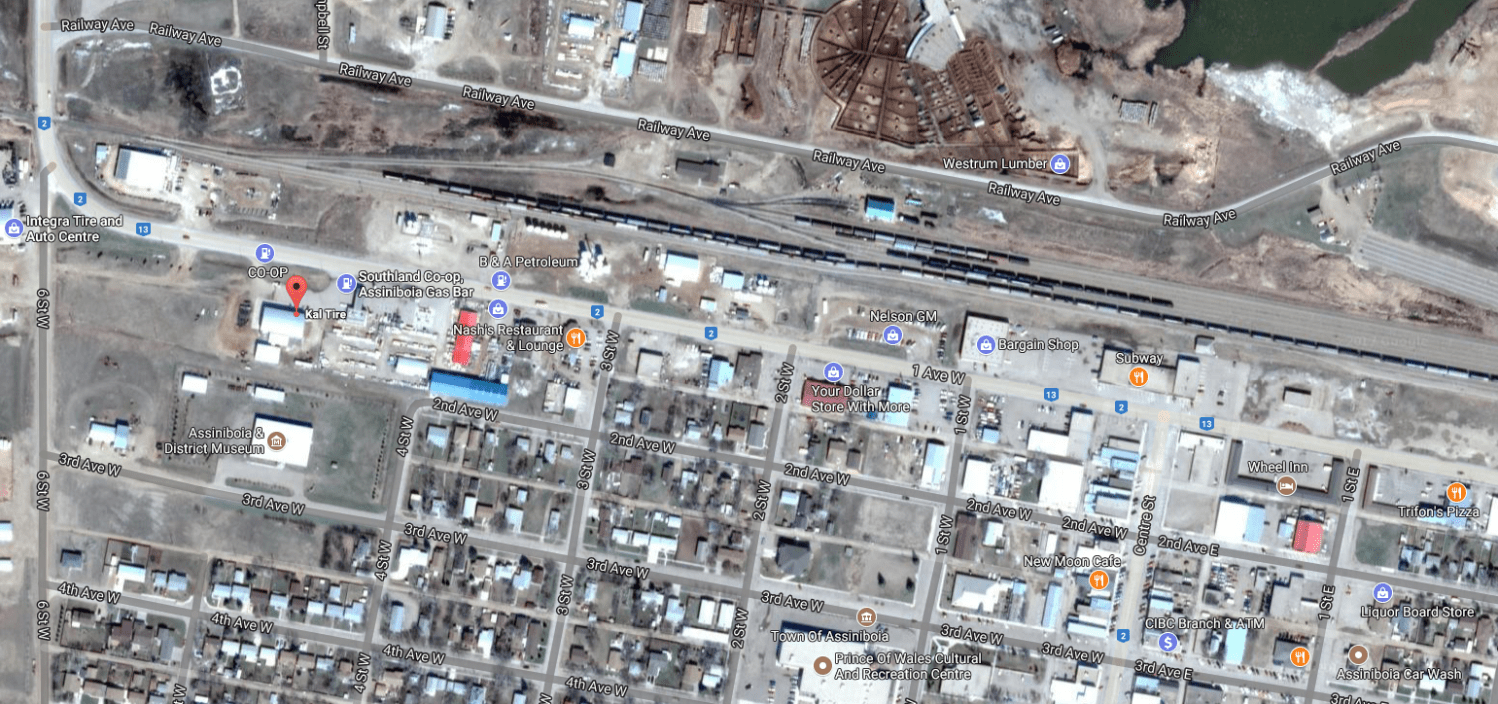
Google maps – Assiniboia, SK main drag. (Click image to enlarge in a new tab.)

Assiniboia is a thriving town of 2400 whose commercial district along the highway stretches over a kilometre and includes all kinds of farm and travel-related businesses. We found a Subway for lunch and a Kal Tire* to repair the tire (which they did right after their lunch break, with great efficiency and good humour. While we did not take the tire guy’s invitation to visit their “world famous art museum,” he made it sound very impressive. We left this town with in high spirits and a great appreciation of the progressive side of small town Sask., even though we didn’t expect to be able to fulfill his farewell “See you again!” We’ll remember this bustling place. (Curiously, Wikipedia’s write up of Lafleche is more than 12 times as long as Assiniboia’s, even though both are about the same age and Assiniboia has had an exciting history. The decaying, old villages seem to be all about remembering. The newer, burgeoning centres are much more about growth….

* I knew Kal Tire as a BC company only. Finding one out here was a great surprise, so I looked the company up on Wikipedia, where I discovered: “Kal Tire was started in 1953 by Thomas J. Foord and Jim Lochhead with the goal of servicing the commercial logging operations that operated in the Okanagan Valley around Vernon, British Columbia and Nakusp, British Columbia by building customers’ trust. Kal Tire was named after Kalamalka Lake, the prominent “Lake of Many Colours” landmark in Vernon. The company is still based in its birthplace of Vernon. Since 1953, Kal Tire has expanded steadily.  Kal Tire comprises 165 company-owned branches, 49 independent associate dealers, 11 mining/industrial/commercial locations, 10 retread facilities, one OTR plant and four distribution warehouses. The business covers a market that includes British Columbia, Alberta, Yukon, Northwest Territories, Saskatchewan, Manitoba, Northern Ontario, parts of Southern Ontario and Quebec, as well as mining operations in Mexico, Argentina, Chile, South America, the United Kingdom, Ghana and Australia.” Who knew? 

Pardon the digression. From Assiniboia we continued onto Weyburn, a much larger city of nearly 11,000, a regional centre in the heart of Saskatchewan’s oil country.

from Weyburn's City Website.png
from Weyburn’s City Website. (Click image to enlarge in a new tab.)

Weyburn can promote itself. It was of interest to Nana and me for it’s “famous people,” including, according to Wikipedia:

• Pat Binns - former premier of Prince Edward Island
• Graham DeLaet - professional golfer
• Shirley Douglas - actress; ex-wife of Donald Sutherland and mother of Keifer
• Tommy Douglas - Baptist preacher, politician, recipient of The Greatest Canadian award in 2004, strongly associated .....with Canadian socialism and the introduction of medicare in Canada
• Eric Grimson - former Chancellor of the Massachusetts Institute of Technology
• Brett Jones - professional football player
• Guy Gavriel Kay - writer
• Trenna Keating - actress
• Brendon LaBatte - professional football player
• Jackie Lind - Emmy Award-winning casting director.
• W. O. Mitchell - writer
• Mark Steven Morton - writer
• Humphry Osmond - medical researcher
• Derrick Pouliot - professional hockey player
• Dave "Tiger" Williams - former professional hockey player

Many of these names are familiar to Canadians of a certain age, like yours truly. We stayed long enough for the driver to take a short nap in a pleasant park. I’ll remember it as a quiet, almost sleepy town, but that’s on me, not the local government and Chamber of Commerce….

OIl pumpjacks near Weyburn
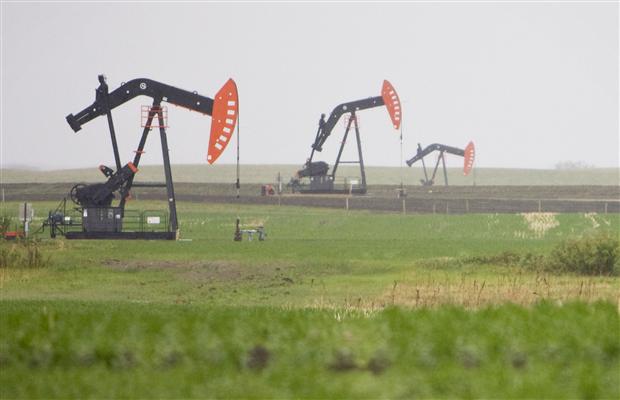
Oil pumps east of Weyburn, SK.

We continued east through the still active oil fields surrounded by farmland, somewhat behind schedule, but still with plenty of sunshine, towards our first camping experience since the near washout at Waterton Lakes. Past tiny villages — Forget (probably For-zhay, originally, not For-get, but now more the latter than the former), Kisbey, and Arcola to Carlyle, a town of 1500 at the foot of Moose Mountain Provincial Park. After “dinner” at a DQ, headed north on Hwy. 9 for the short drive up into the pond-pocked park.

from Google Maps - Carlyle and Moose Mountain.png
Moose Mountain Park, where we hope to camp at Kenosee Lake.
(Click map to enlarge image in a new tab.)

On the screen door of the campsite office, I noticed a rather large number of caterpillars. Inside,  as I enquired about the campground, another man came in and engaged in a rather heated discussion with the office attendant about the threat of the tent caterpillars, which, I learned for the first time, were not only ravaging this park, but had spread across the prairie provinces. According to the man, who had just driven down from Yorkton, 165 km north,and which we would visit on our way home from Winnipeg, Moose Mountain park was about to be destroyed by these “worms” if the park didn’t do something! —spray — immediately! The attendant explained that she didn’t make policy, that she was sure the park authorities were dealing with the issue, and that she would pass his comments on to them. In the meantime, I had reluctantly decided we didn’t want to be dealing a carload of tent caterpillars for the rest of our trip.

Tent Caterpillar invasion Kenosee Lk .jpg
Apparently, this is a cyclical problem, in which the infestation lasts approximately three years. This image from the women’s washroom by Monica Lebersback was taken a year earlier, June 2016.
What we saw here, May 30, 2017, wasn’t this extreme, but it was still enough to leave us unwilling to take ’em on!

This report was published five days later on the Discover Estevan website:

Moose Mountain Taking Steps Against Tent Caterpillars

Moose Mountain Provincial Park and the Village of Kenosee Lake are taking precautions against the invasion of the forest tent caterpillar. 

Joan Adams, Parks Manager at the Moose Mountain Provincial Park, explains that the park and village had an aerial application of Bacillus thuringiensis (BTK) in order to keep the bugs at bay.

“They did the whole park and the village on Friday.”

She adds that BTK is a bacteria, not a chemical.

“It’s absolutely not a chemical. We don’t allow chemicals to be sprayed in the park. And it has no effect on anything but the caterpillars, so even if a bird comes and eats the caterpillar, it wouldn’t affect the birds. It doesn’t affect humans or pets or wildlife.”

And the spray has seemed to work so far. 

“We were told to expect a moderate to severe infestation but the spray from all accounts, has really helped to knock the numbers down. It’s not going to get them all and we’ve been told that it’s a one to three year cycle and last year was the first year that we’ve ever had tent caterpillars in the park. We still have some but I was just in the campground and it’s actually looking pretty good in there.”

She adds that campers can also prepare for the caterpillars as well. “If campers are going to come, there lots of homemade applications like oil or water mixed with a little soap. If they want to bring a spray bottle when they are in their campsite and they see some, go ahead and spray them just like you would at your residence or at your cottage.”

Western Tent Caterpillars.jpeg
Tent Caterpillars photographed a few years ago in Abbotsford, BC.

So much for birding in this area! Even birds don’t like to eat these larvae! Soooo, we called Uncle Alex and Aunt Iris to tell them we would be arriving in Moosomin a day early. They very graciously invited us to stay with them. Family hospitality at its finest! Nana was greatly impressed. (Staying with family, in many cases, just doesn’t —can’t —happen in the small homes of urban Japan, and she had no rural family connections for comparison. My guess, however, is that many of the farm folk I knew of in Hokkaido would have responded in a similar fashion). Fortunately, my aunt and uncle have a spacious two bedroom apartment. We had, as I wrote in Part 3, a wonderful visit with them — despite the fact that their part of Moosomin was also plagued with creepy-crawlers trying to invade their condo!


2017 Prairies Trip, Part 5A: Grassland Owls

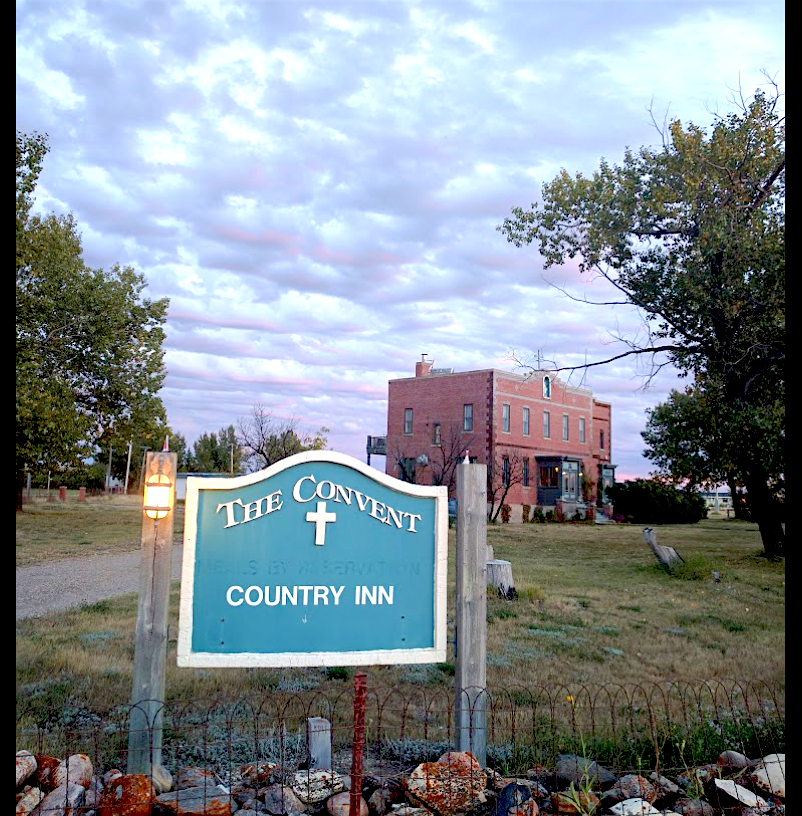
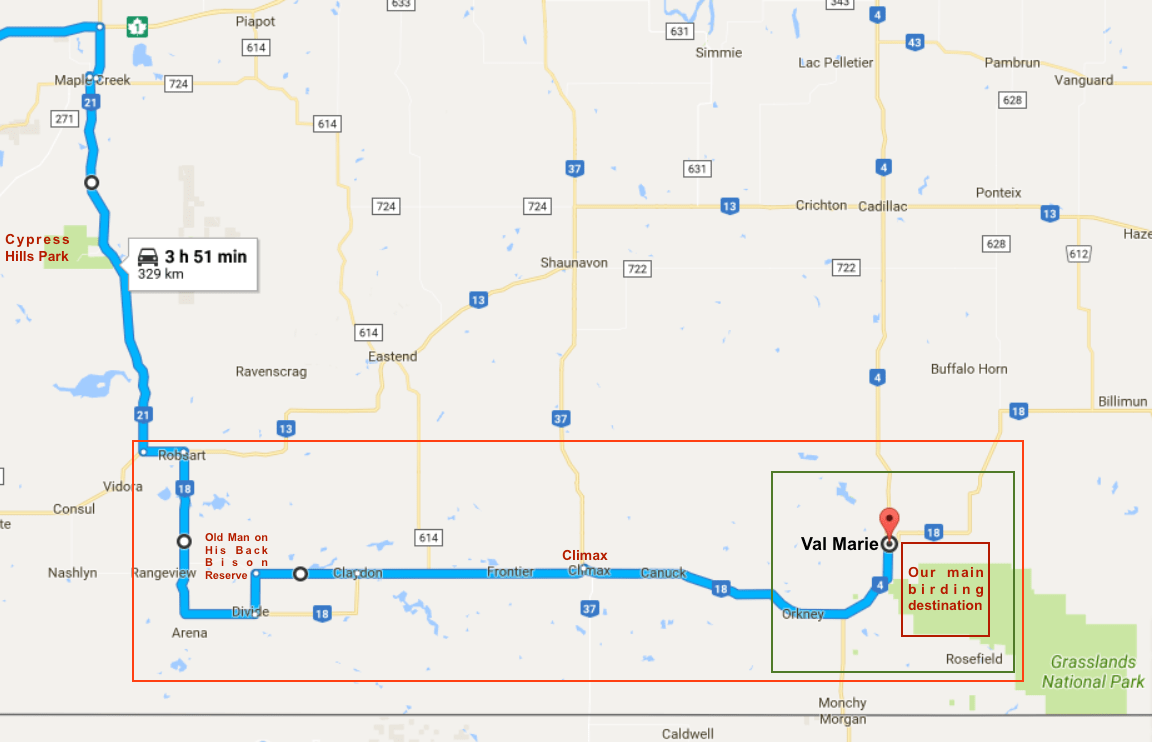
While we were visiting Grasslands National Park, we stayed in Val Marie at The Convent Inn, a fabulous, unpretentious bed and breakfast/inn, which we had learned about from a fellow birder/photographer from Vancouver, Debra Herst.

Val Marie Convent Inn from Internet - 1.png

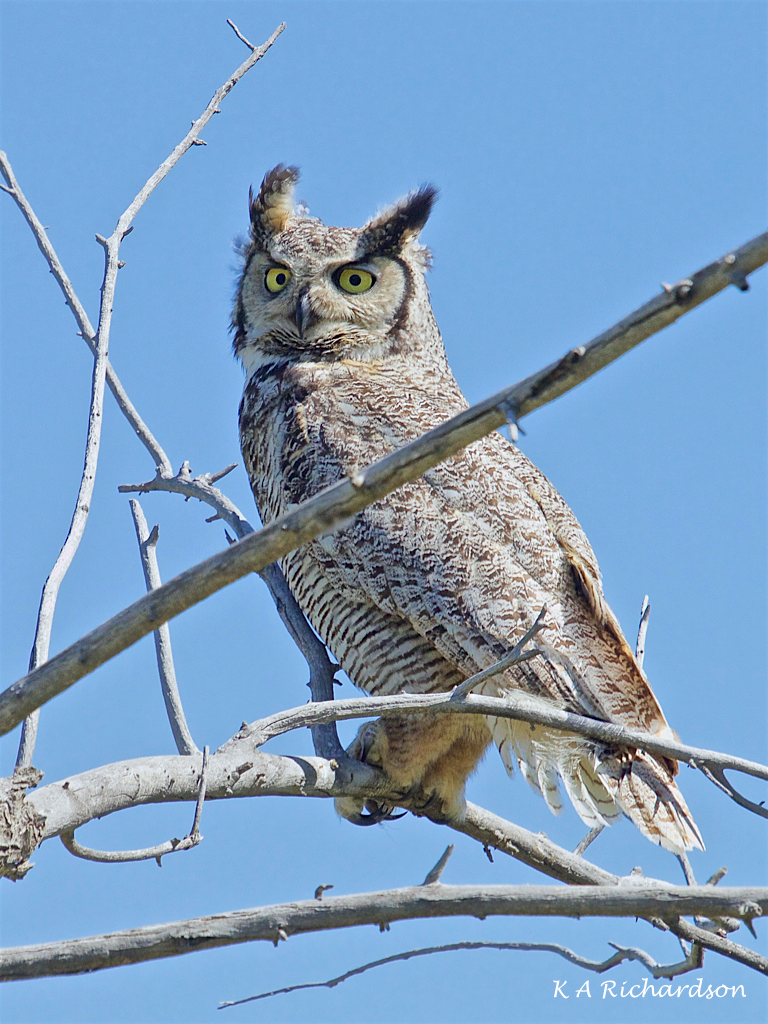
We greatly enjoyed our visit and are extremely grateful to Debra! Ironically, although we knew that she was travelling to Winnipeg a week or so ahead of us, we were greatly surprised to see her at breakfast on our third day. Turns out we had just missed each other, the afternoon before, at Two Trees, a small park-within-the-Park just southeast of Val Marie. We had seen Barn Swallows, Bobolinks and few other familiar birds there, but had completely missed some of the ones Debra had found, including a Great Horned Owl with two ready-to-fledge offspring. Debra gave us precise instructions on where to find them, and we shared where we had seen Chestnut-collared Longspurs the previous evening — on a route that she might have bypassed. She ended up getting great CCLO shots that day on her way west while we returned to Two Trees for one of best days of birding on our entire trip! You can see some of other birds we photographed on the previous post — Part 5….

It was the GHOWs, however, that were, among many great moments, the most memorable! Here are some shots that illustrate why:

Shooting the owlet.jpg
With her iPhone, Nana shoots me photographing the owlet….
(No photographers — or birds — were injured in the making of these visuals.)

What made this find so special? After all, we see Great Horned Owls frequently at home, Not long before we left, I photographed a mother and owlet at the golf course where my eldest son works. This, however, was the first time I’d seen an owlet on the ground.

When we found the pair of youngsters, they were both well up in branches of separate trees. One was more hidden. After getting some decent shots of the more open bird, and of the mother some distance away in a dead tree, I wandered off following some of the song birds that had made themselves noticeable (see previous post — part 5). Nana, however, stayed nearer the owls’ habitat at the west end of park.

Great Horned Owlet (Bubo virginianus) (1).jpg
Hester, closeup.
Great Horned Owl - adult (Bubo virginianus) (7).jpg
Mom watching over her young’uns from a nearby snag.

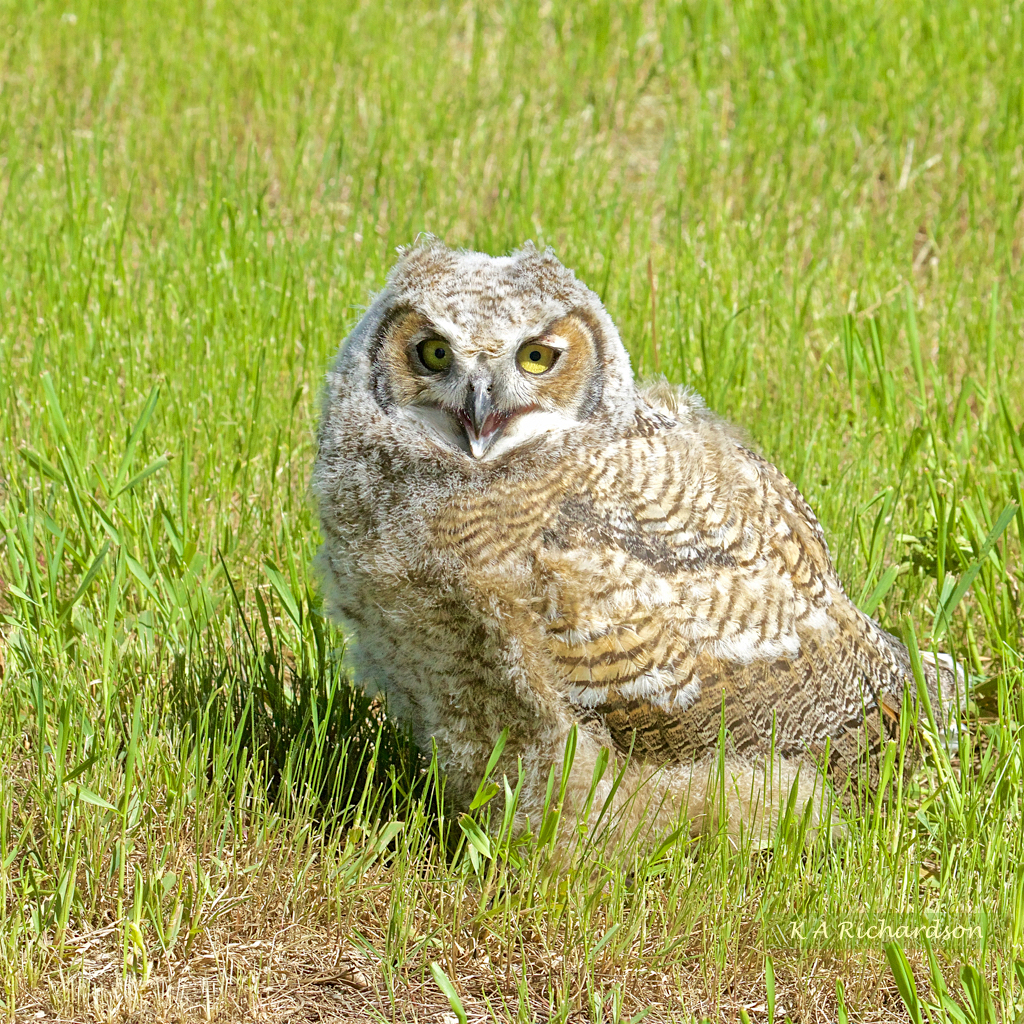
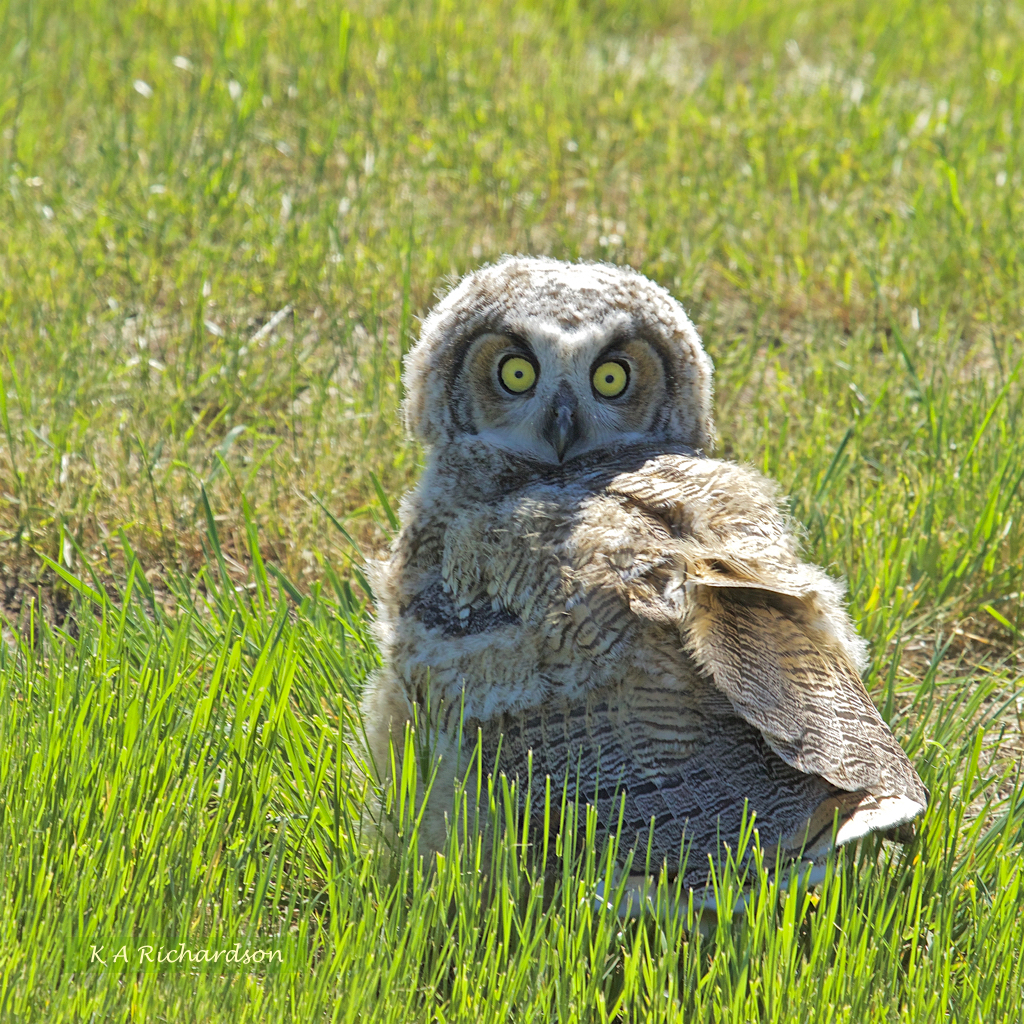
Several minutes passed as I pursued orioles, a thrasher, and an unidentified warbler, (later ID’d as a juvenile Blackpoll). Soon Nana and I were at opposite ends of the park. Then I noticed her beckoning, rather seriously, for me to come back to where she was. She was quite concerned about Henry who had somehow managed to find the grass. Whether he had fallen, or was testing his flying skills, we don’t know. He did not seem injured, but he had clearly become vulnerable. While we didn’t want to harass him, or interfere with Nature’s plan, I did want to use my telephoto to capture the moment. Nana used her iPhone to make a short video. And here are the photos:

Great Horned Owlet (Bubo virginianus)
Henry in the light…. Could that be a smile?
Great Horned Owlet (Bubo virginianus)
Henry in shade…. I am curious, yellow-eyes!
Great Horned Owlet (Bubo virginianus)
Henry closeup. I just wanted to have a look aground—er—around….

Nana was quite worried about the little guy, especially when he took to running, well, waddling, around, and once when he tried to slip outside the enclosing hedge and into the open grasslands, I helped turn him back into the trees and waited. Eventually, he discovered that, to some extent at least, he could make his way back up into trees. Here, he climbs a snag:

Great Horned Owlet (11).jpg
Henry gains the upper hand—er—wing, again. A bit unsteady, but he’ll survive, methinks.

When we left, we trusted that Nature would take care of everything as Nature does. Perhaps owls are raised here every year. If you’re out that way in May, you might want to have a look. We’re certainly going to remember our experience for as long as we have memory!

2017 Prairies Trip, Part 5: Grassland Birds

NOTE: Any image on which the cursor changes to a hand
can be enlarged in a new tab simply by clicking it
.

Prairies trip Google day 4-6* to Grasslands Nat Pk.pngAlthough we were excited to see the mammals of the grasslands (and there were a lot we didn’t see, like badgers, skunks, and others) it was the birds that we came here for, primarily.

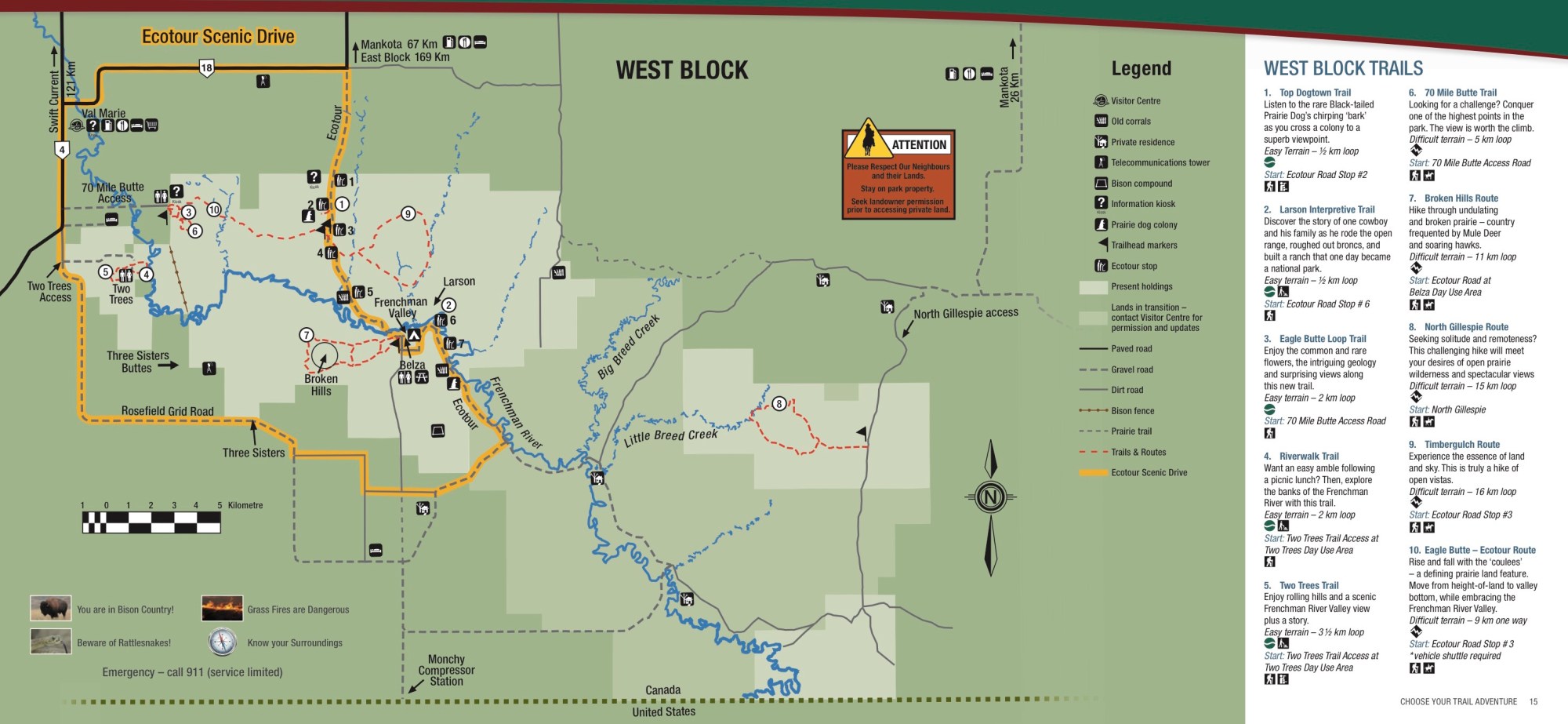
Grasslands National Park map
Most of the birds we photographed were seen within the Ecotour Scenic Drive (in orange).

So here, without fanfare are some of our favourites from this special region presented in alphabetical order.

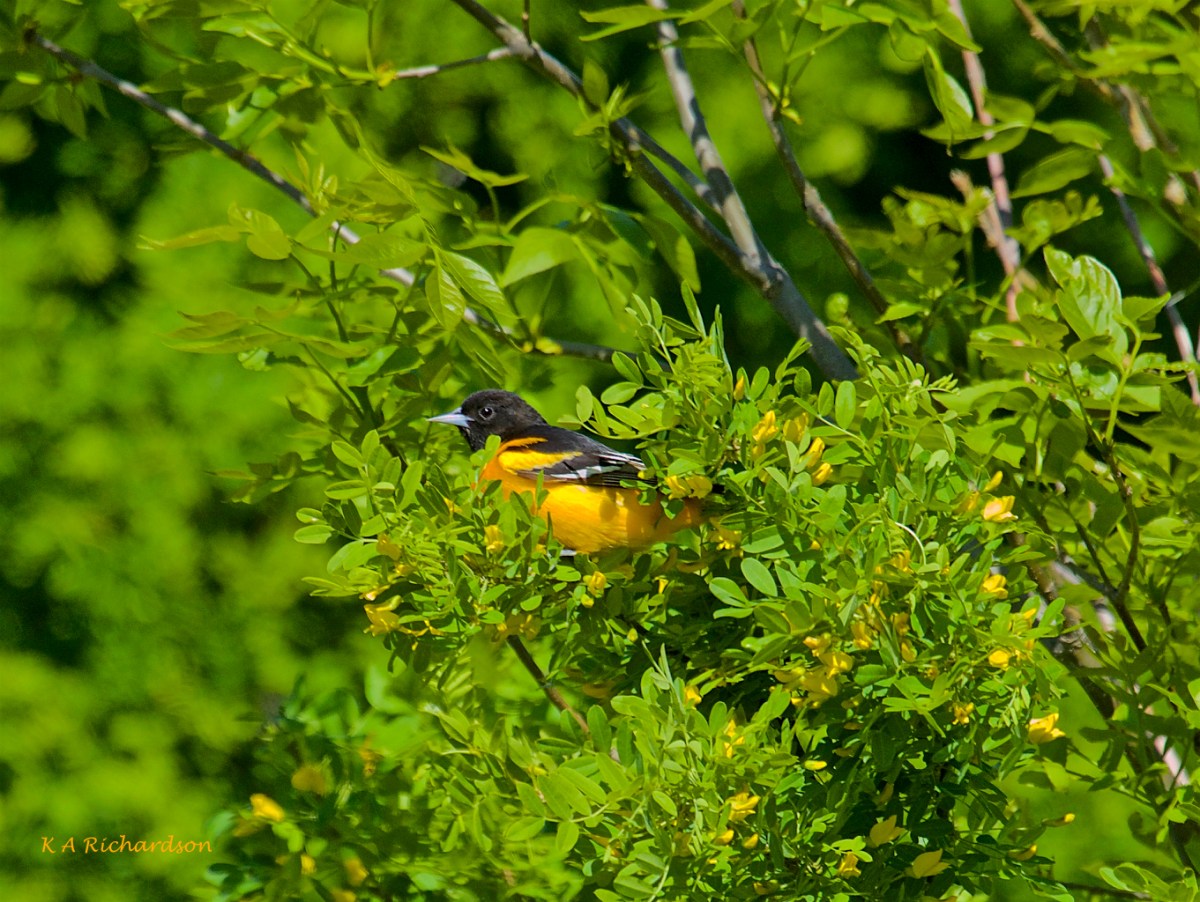
Baltimore Oriole (Icterus galbula) male.jpg
Baltimore Oriole male (Icterus galbula) at Two Trees

Although I had seen this species before (not sure how long ago), this was my first opportunity to photograph it. I like the shot above, even though, he’s hiding. We eventually got more open looks when we reached Winnipeg, MB.

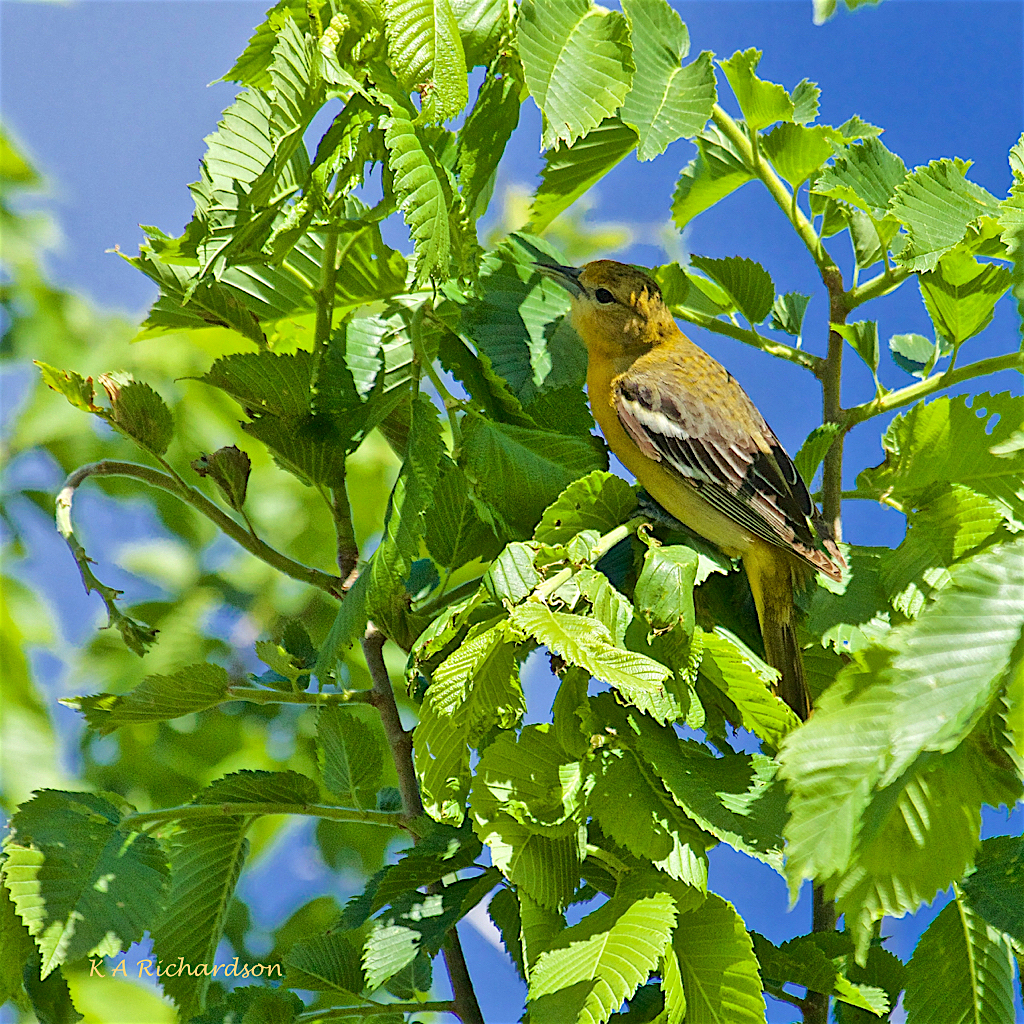
Baltimore Oriole (Icterus galbula) female - 2.jpg
Baltimore Oriole female (Icterus galbula) at Two Trees:
quite similar to the Bullock’s Oriole that we see in BC.

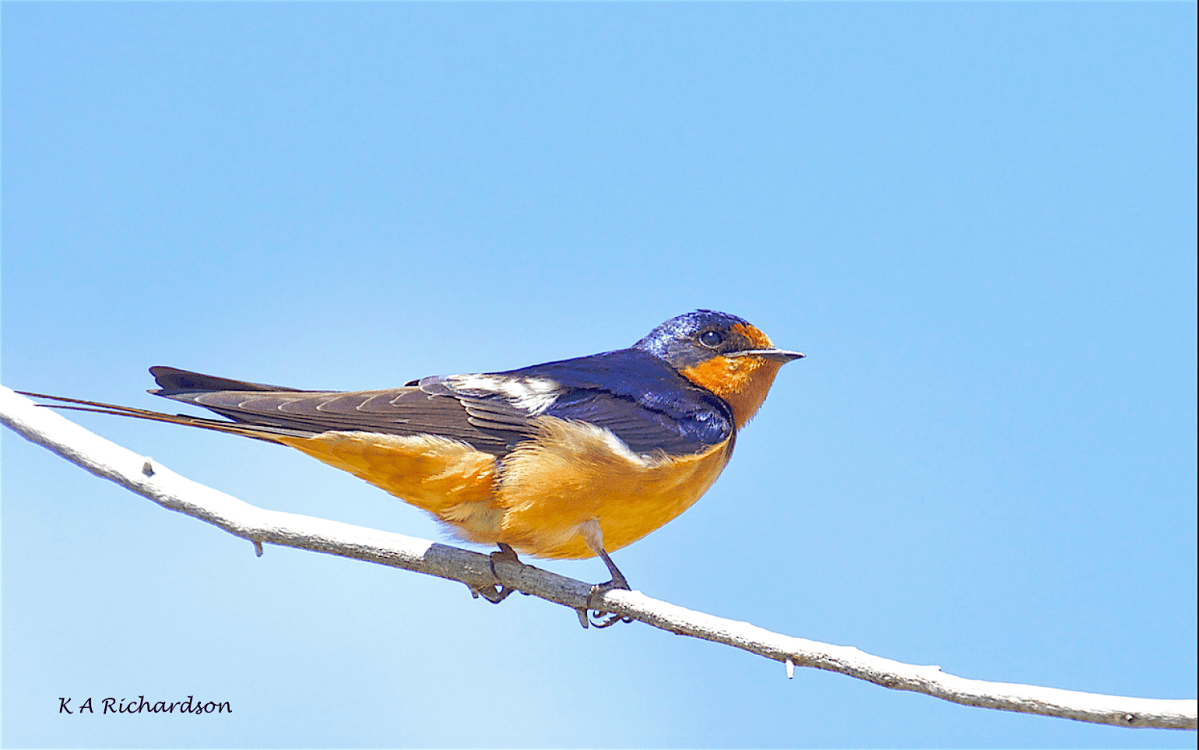
Barn Swallows have been a nemesis bird for me for several years. I see lots of ’em, but they’re always, it seems, on the wing. At Grasslands, I had two special opportunities to view them up close and posing, and I’m reasonably happy with the photos I got. (After returning to Kelowna, I finally found a place where, for a week or so each summer, I should be able to get BASWs, especially juveniles, taking a breather and availing themselves to photographers….)

Barn Swallow - 3a (Hirundo rustica)
Barn Swallow male (Hirundo rustica) at Two Trees
Barn Swallow - female 1 (Hirundo rustica)
Barn Swallow female (Hirundo rustica) at Two Trees
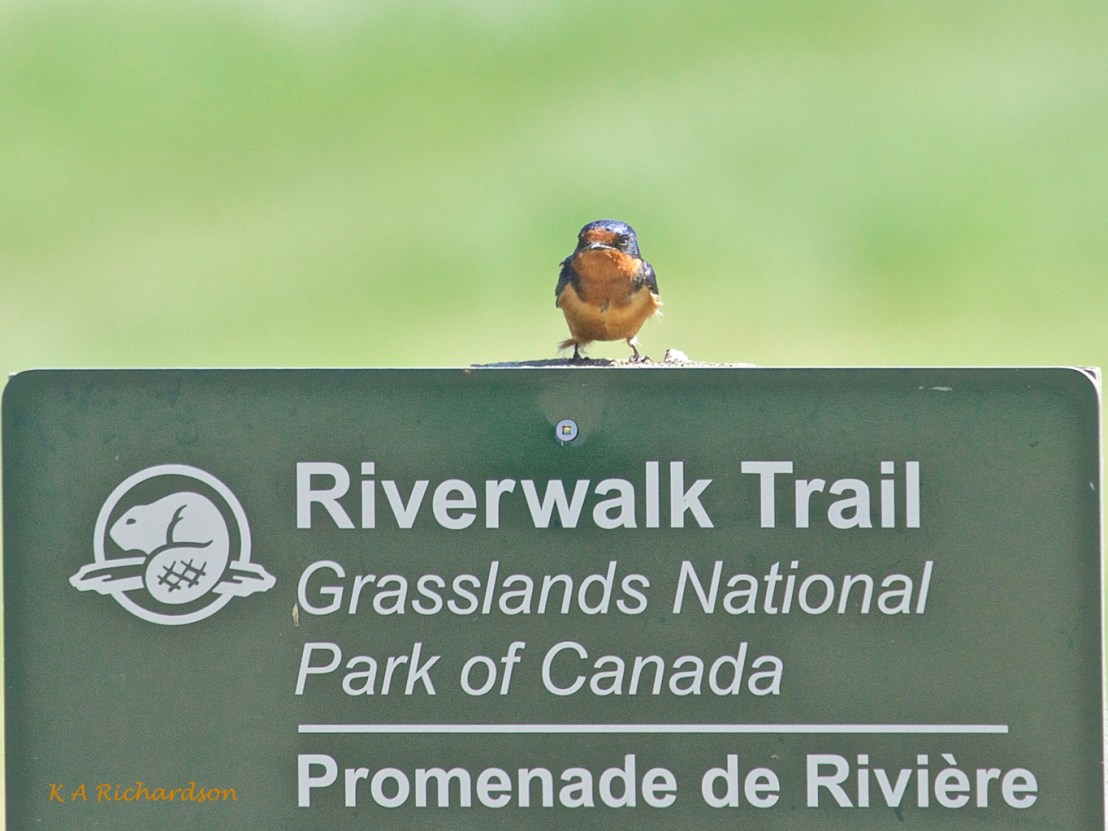
I'm warnin' ya. All you'll see is Bobolinks.
Two Trees BASW warning us about the trail: “All yer gonna see is Bobolinks!”
Bobolink - 4 (Dolichonyx oryzivorus)
Bobolink (Dolichonyx oryzivorus) on Riverwalk trail  at Two Trees. 
(The Barn Swallow on the sign in the photo above was right; while all we saw were Bobolinks, we were delighted, even though this one was devilishly evasive!)
Bobolink - 6 (Dolichonyx oryzivorus)
Another Bobolink (Dolichonyx oryzivorus) on Riverwalk trail  at Two Trees —
a bird I had long wanted to see again! Last time — 1960!
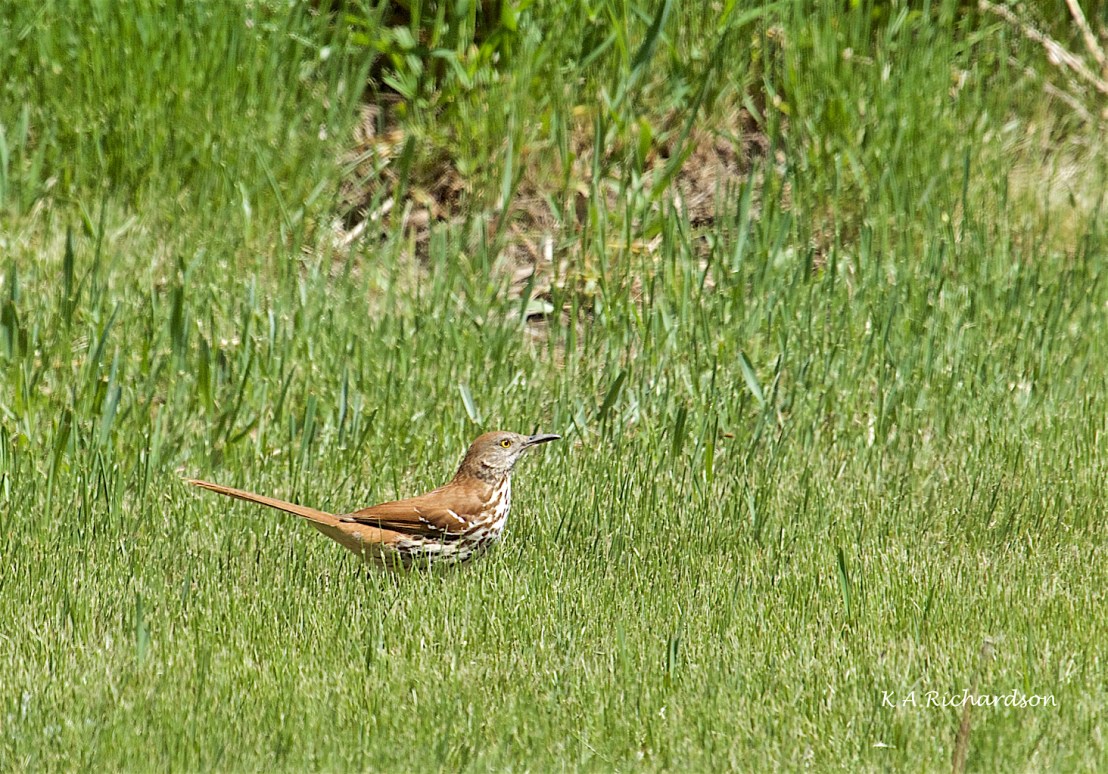
Brown Thrasher (Toxostoma rufum)
Brown Thrasher (Toxostoma rufum) at Two Trees — another lifer!
Brown-headed Cowbird (Molothrus ater)
Brown-headed Cowbird male (Molothrus ater). We often saw these birds with Bison….
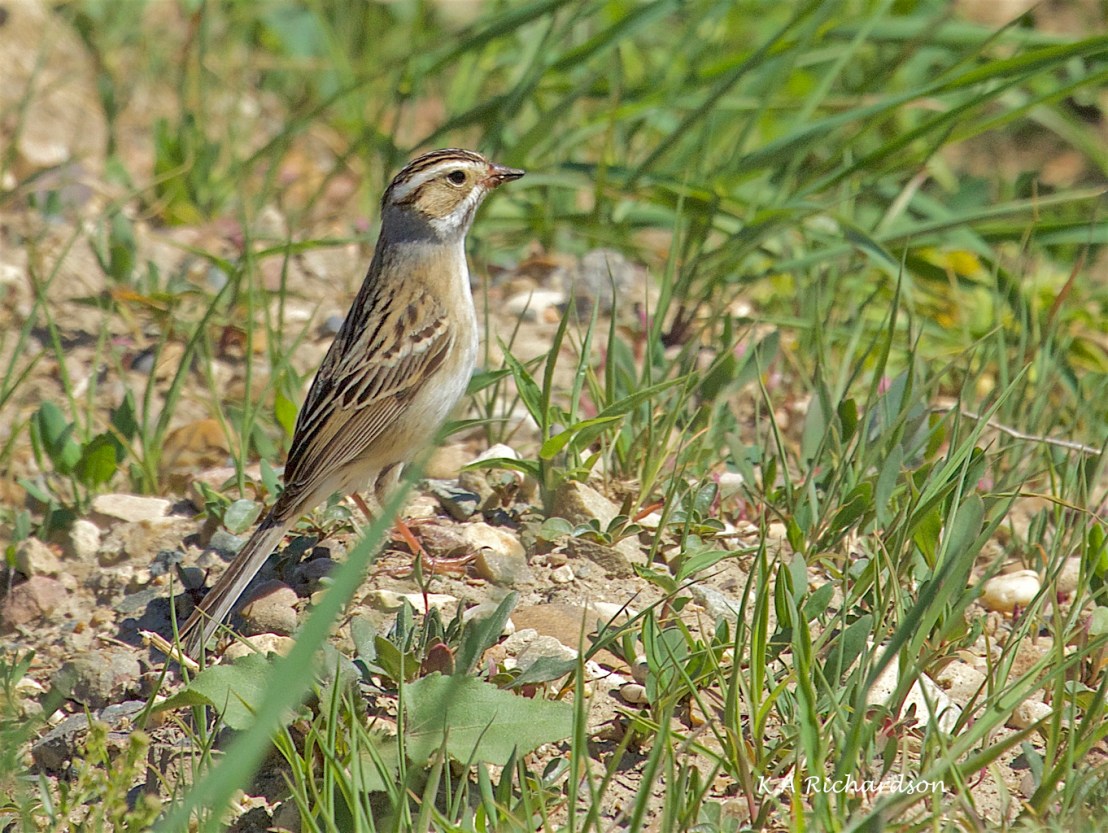
Clay-coloured Sparrow - 3 (Spizella pallida)
Clay-coloured Sparrow (Spizella pallida) at Two Trees — a lifer, too.
Eastern Kingbird (Tyrannus tyrannus)
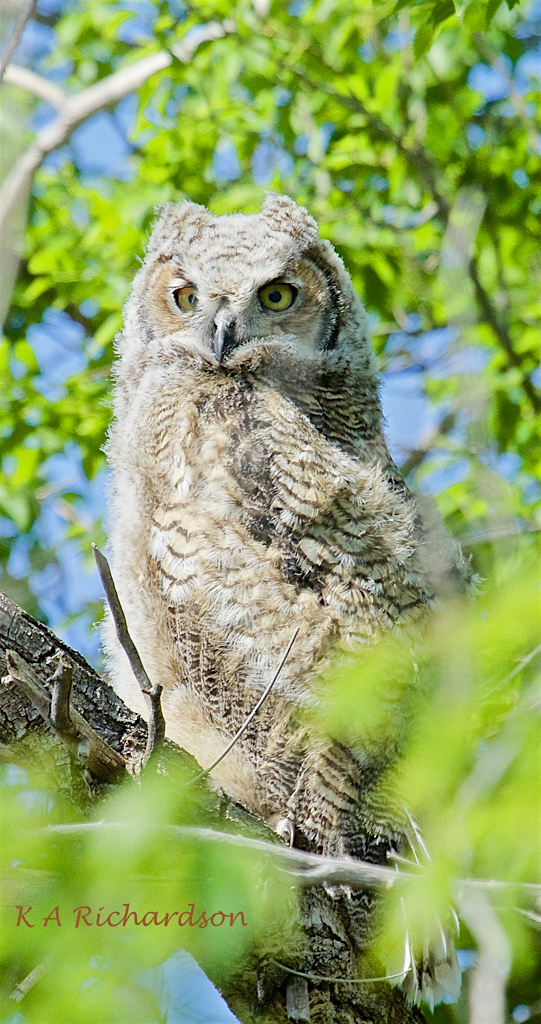
Great Horned Owl owlet - first look.
Great Horned Owlet (Bubo virginianus) at Two Trees — first look; there’s a separate post on this youngster and his mom and sister (to be fair, I was just guessing on the genders)….
Horned Lark (Eremophila alpestris)
Horned Lark pair (Eremophila alpestris): thousands of them, in total,
a few at a time, always a few feet in front of the car!
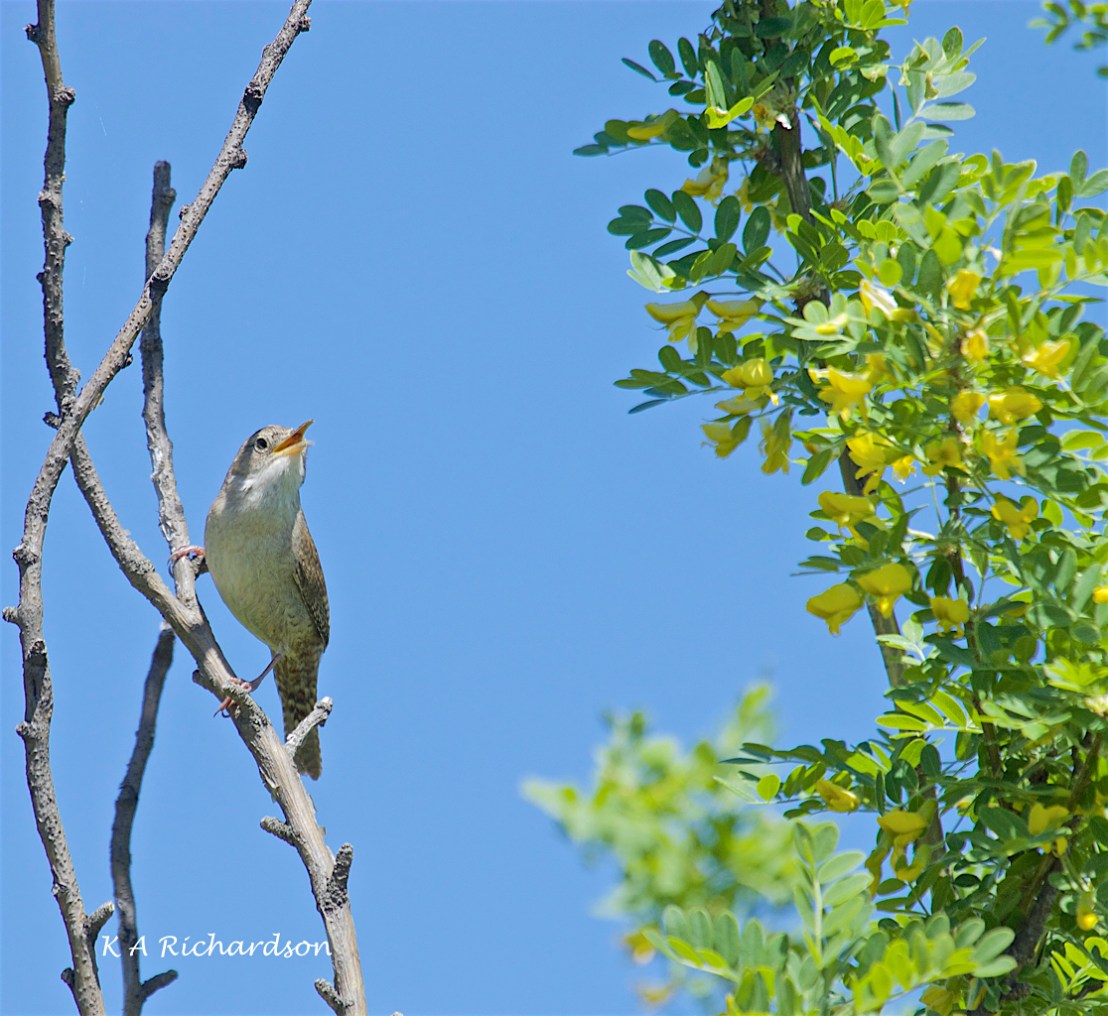
House Wren (Troglodytes aedon
House Wren (Troglodytes aedon) at Two Trees
Lark Bunting (Calamospiza melanocorys)
Lark Bunting (Calamospiza melanocorys): score yet another lifer!!
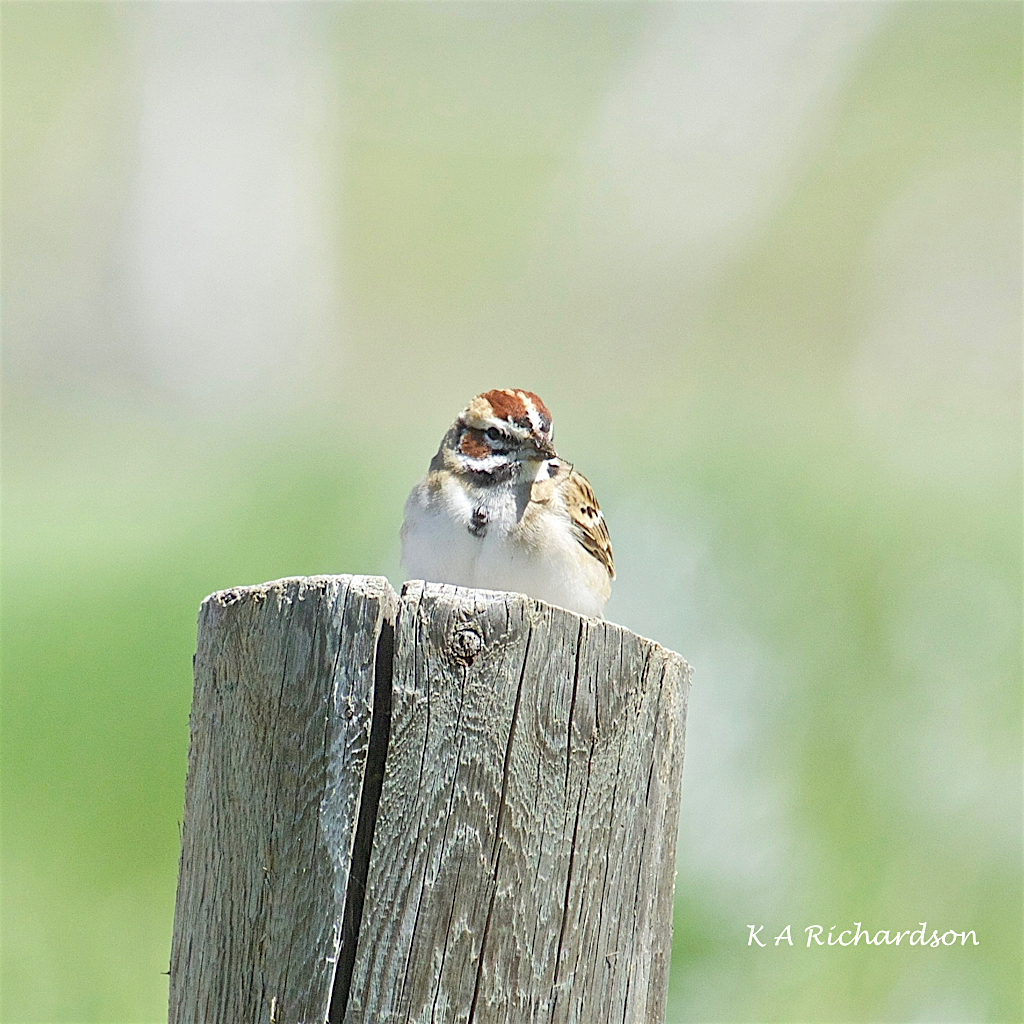
Lark Sparrow
Lark Sparrow (Chondestes grammacus)
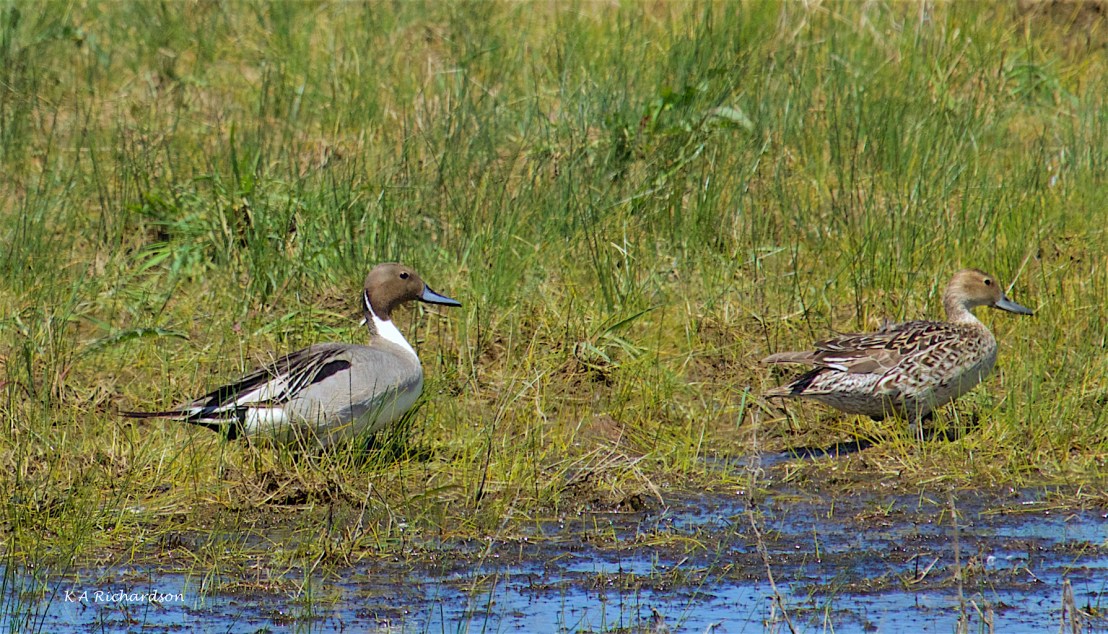
Northern Pintail Ducks
Northern Pintail pair (Anas acuta). Far more common on the Prairies than around Kelowna!
savsp
Savannah Sparrow (Passerculus sandwichensis anthinus)


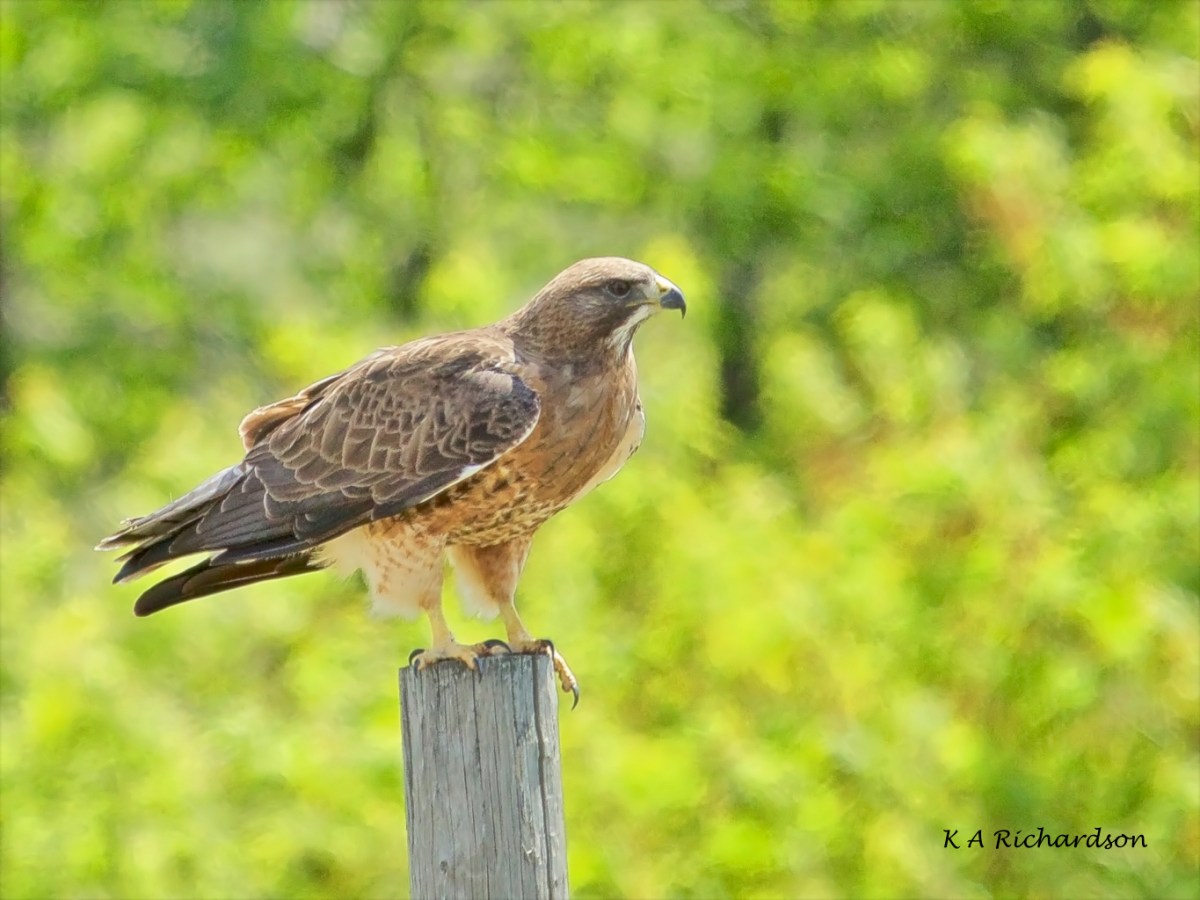
Swainson's Hawk.jpg
Swainson’s Hawk (Buteo swainsoni) — a lifer raptor….
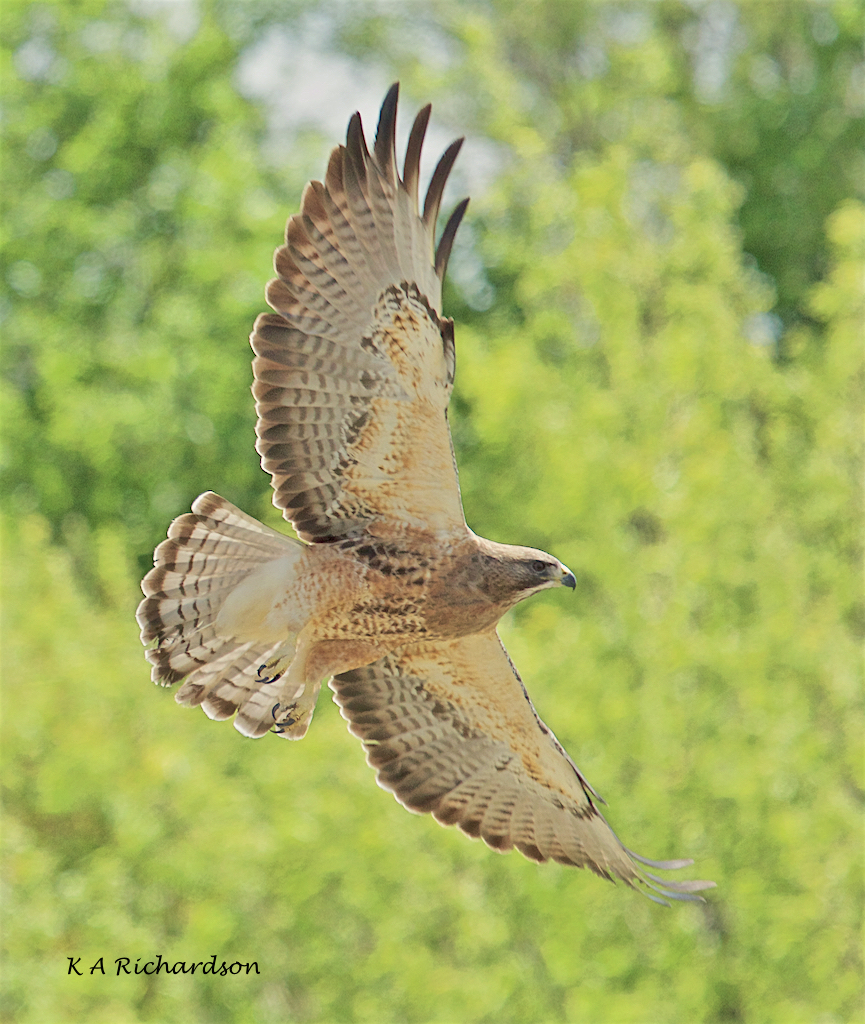
Swainson's Hawk (1).jpg
Swainson’s takes flight….
Unidentified Warbler
Blackpoll Warbler (Mniotilta varia) 
juvenile at Two Trees: another lifer! (Originally listed as Unknown Warbler.)
Upland sandpiper (Bartramia longicauda)
Upland Sandpiper ( Bartramia longicauda) at Two Trees: yet another lifer!!
Warbling Vireo (Vireo gilvus)
Warbling Vireo (Vireo gilvus) at Two Trees
Western Meadowlark (Sturnella neglecta)
Western Meadowlark (Sturnella neglecta) on a post near Old Man On His Back bison ranch.