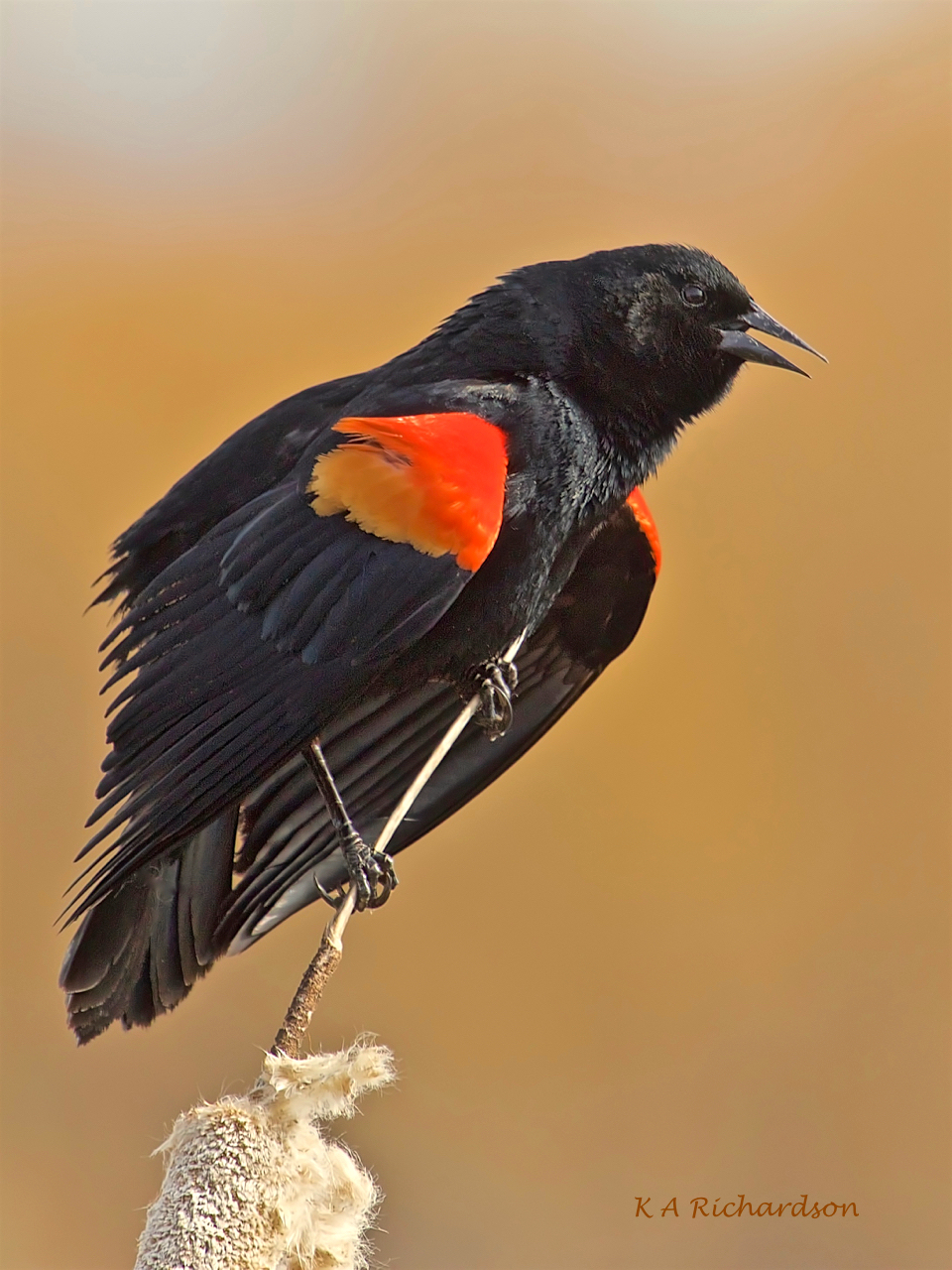
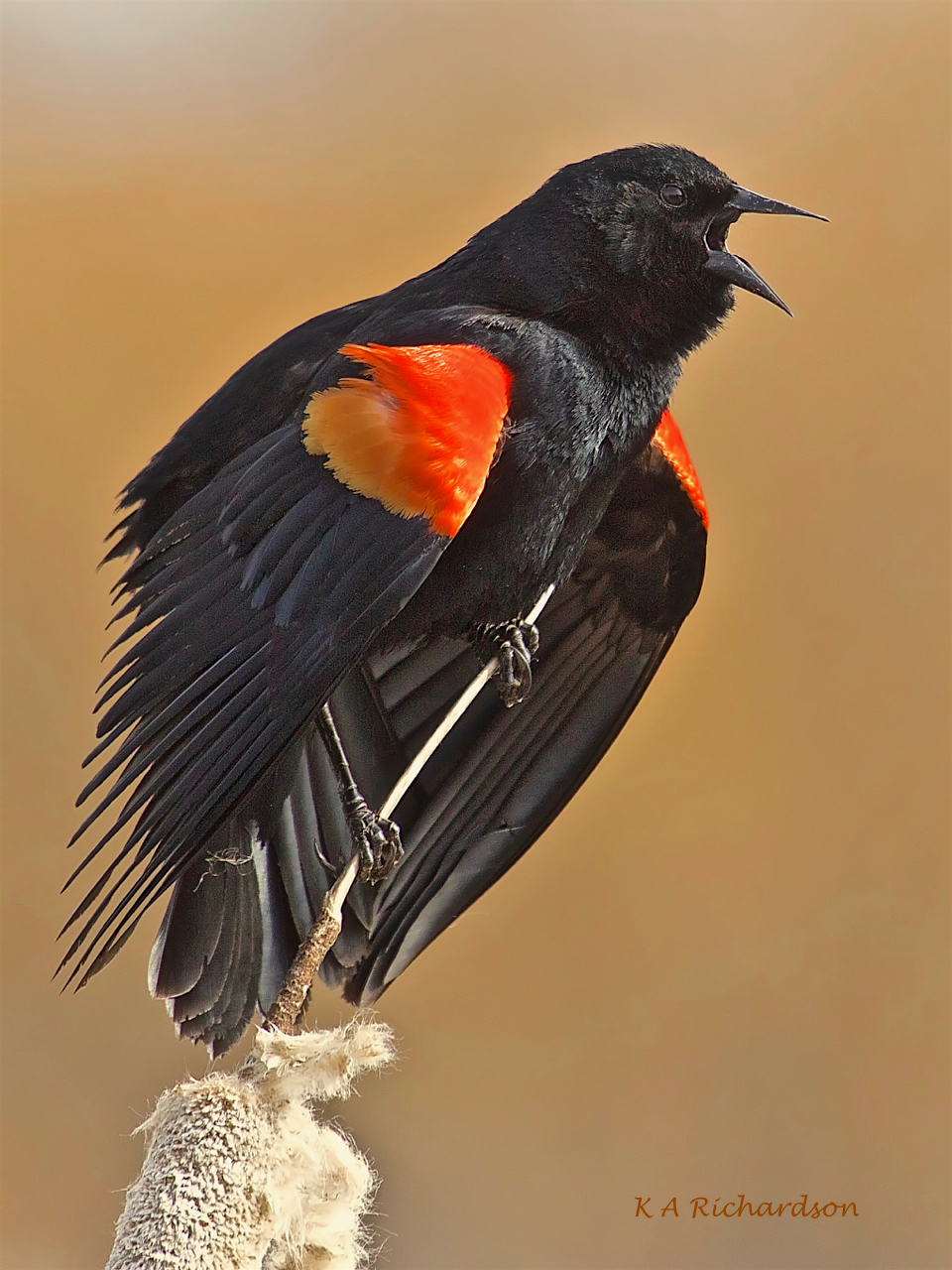
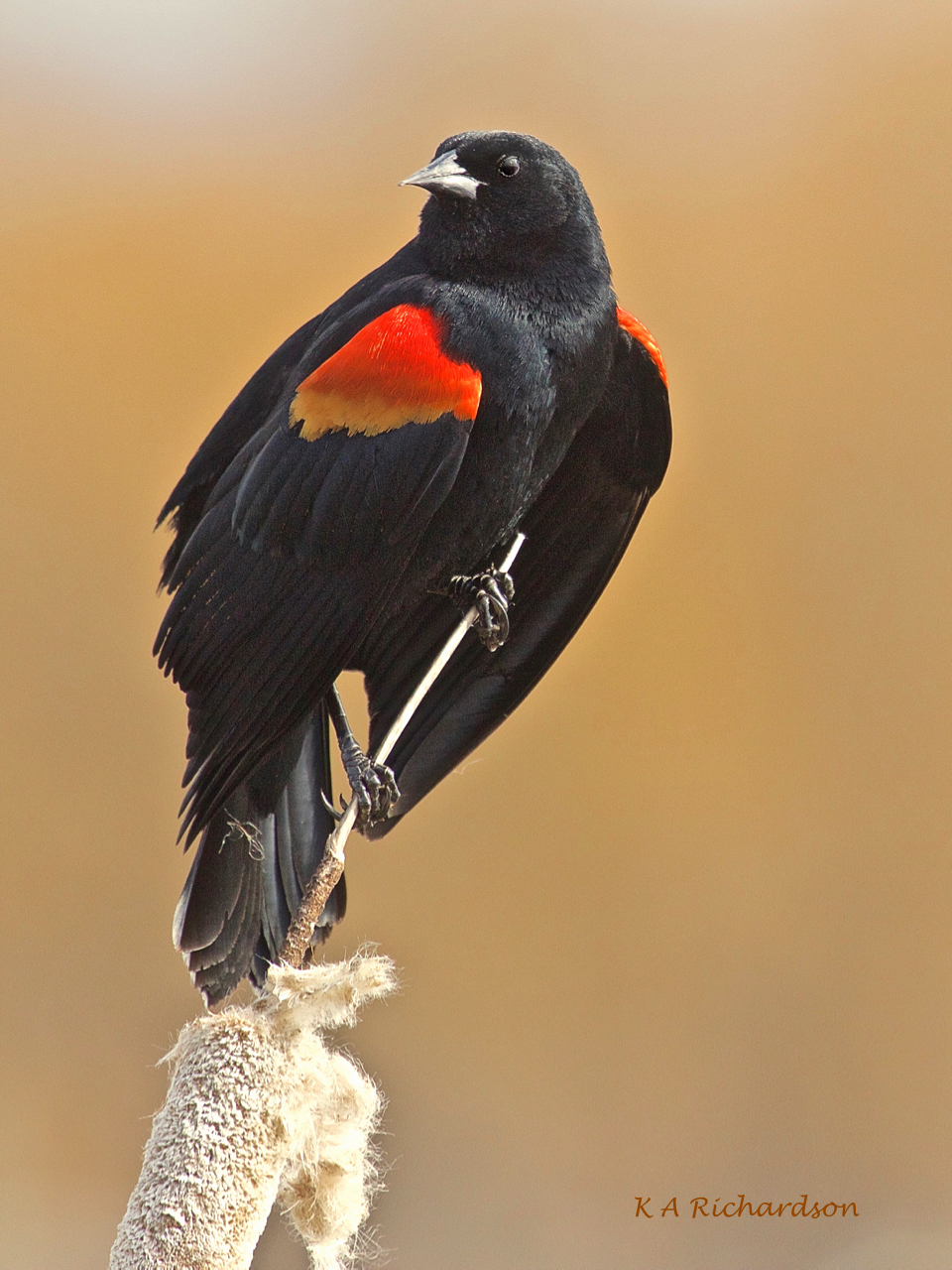
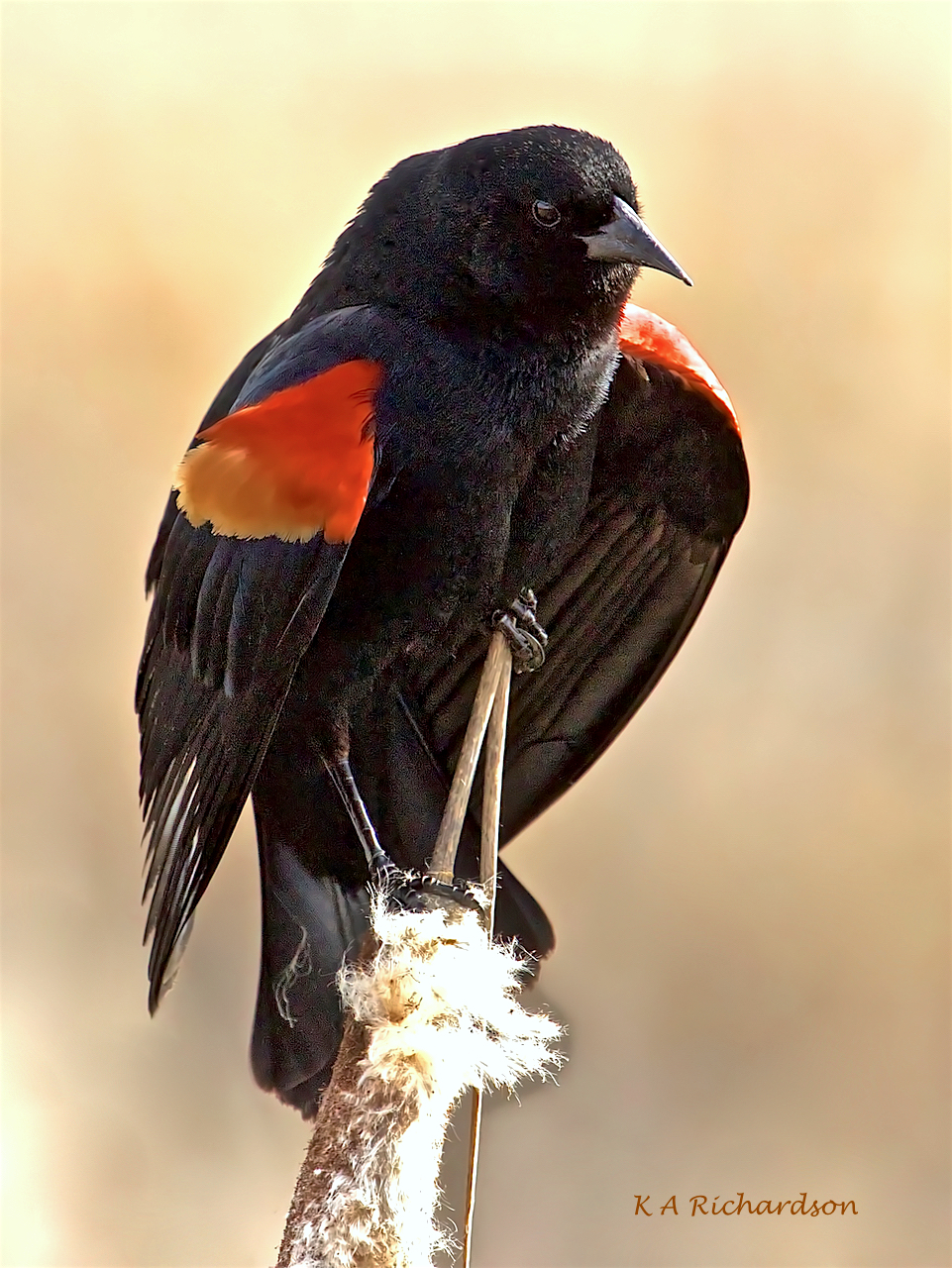
*The official American Birding Association four letter abbreviation for Red-winged Blackbird(Agelaius phoneceus). For more examples and exceptions to the basic rule, click here.
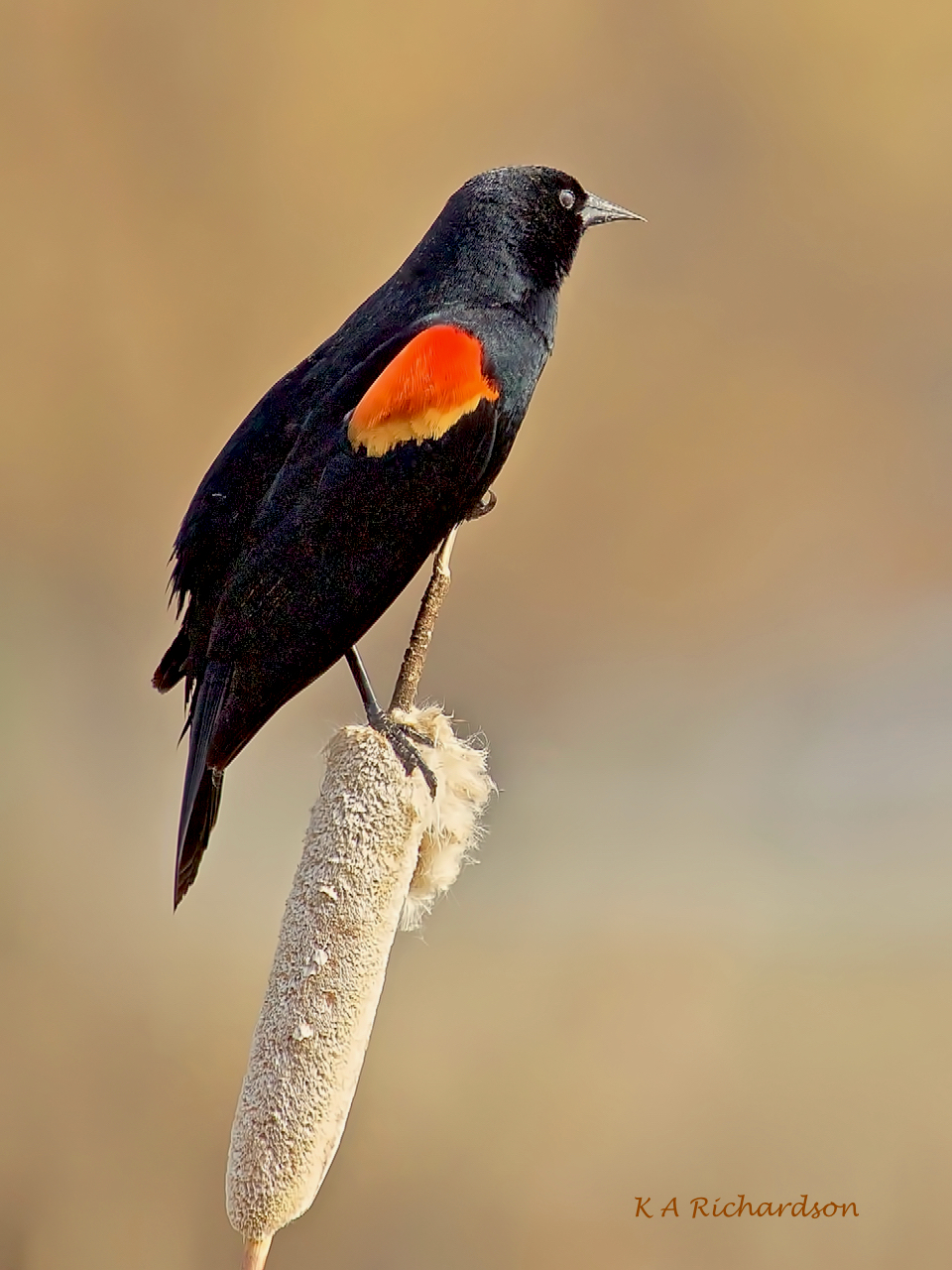
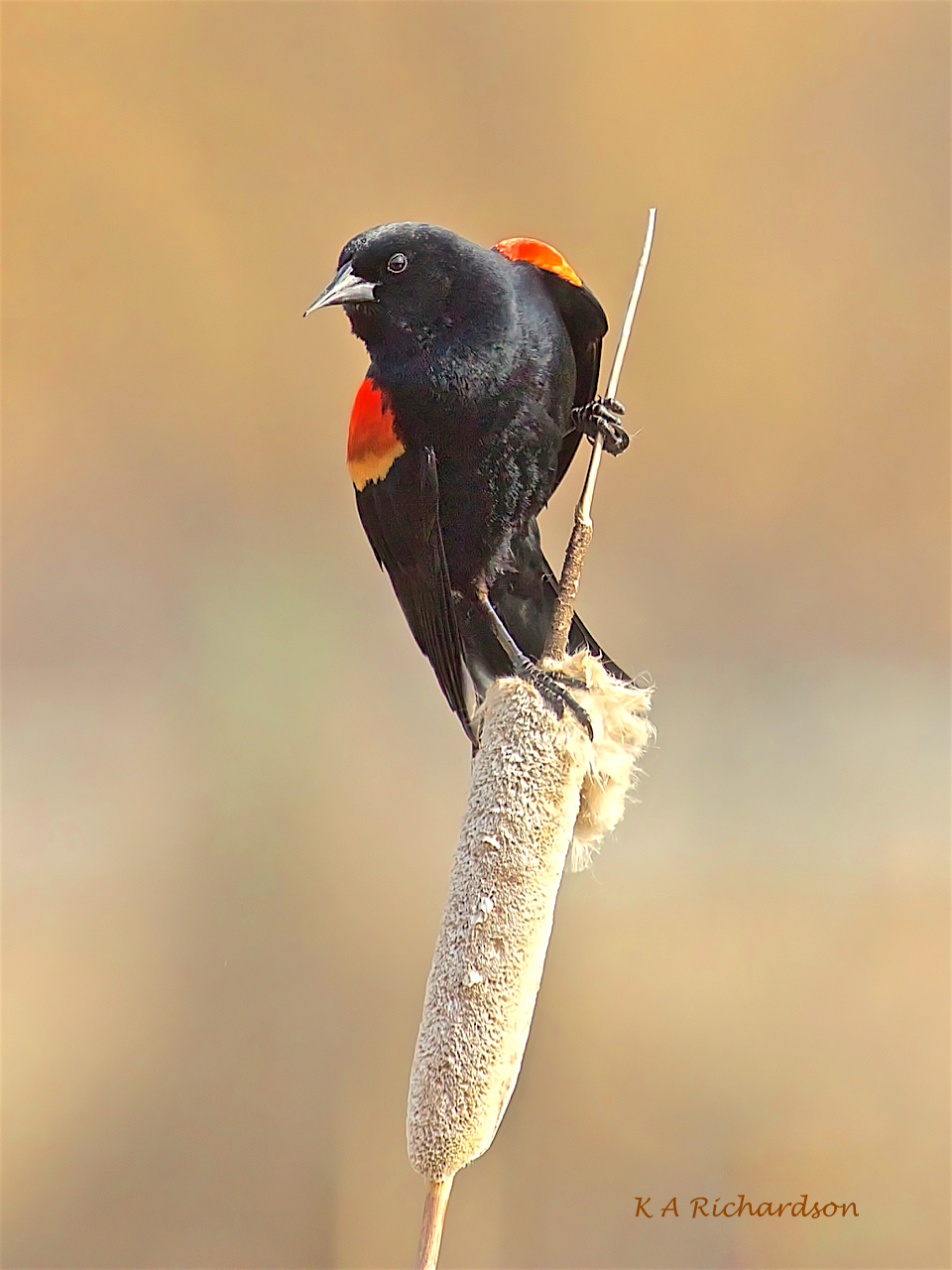
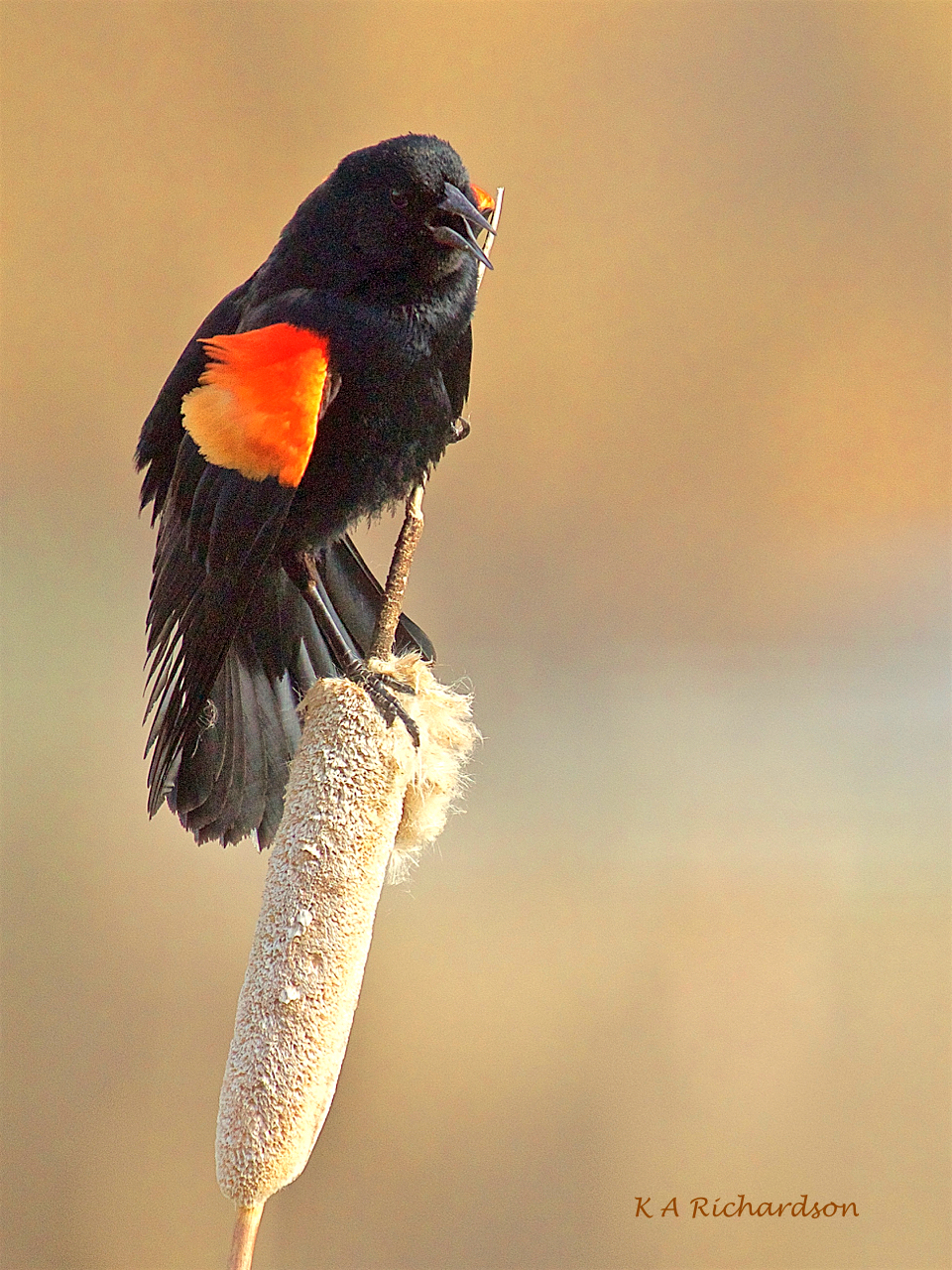
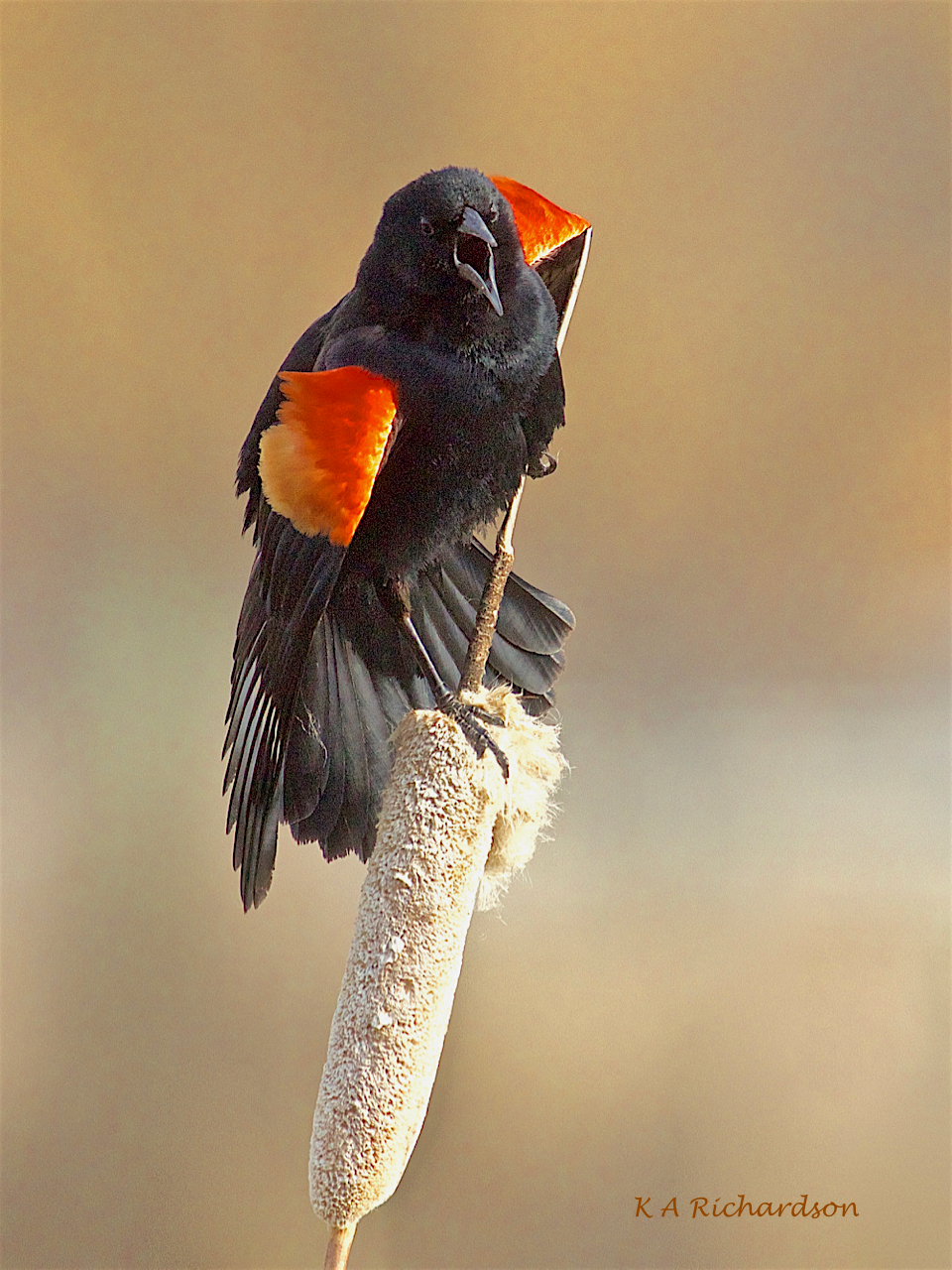
March 19, 2018. Thomson Marsh, where I do most of my weekly birding, is replete with male RWBLs this time of year. It’s a great location for trying to get that perfect RWBL shot — something I’ll never accomplish with my current equipment. I’m not complaining. Just the opposite, in fact! I’m enjoying the existential challenge of knowing that any small incremental improvement represents major progress.
This post features Rebel, a bird who loves to perform, who’s easy to locate among the dozens who populate the Marsh, and whose “camera tolerance” is about as good as it gets!
Sitting calmly on a cattail, surveying the world, with blank eye.Preparing to perform….Opening salvo….Full blast!Repeat and repeat again!Tail in for maximum power!Smug satisfaction….King o’ the World!
The last image has some nice sharpness in spots, but the cattail’s colour is blown out!
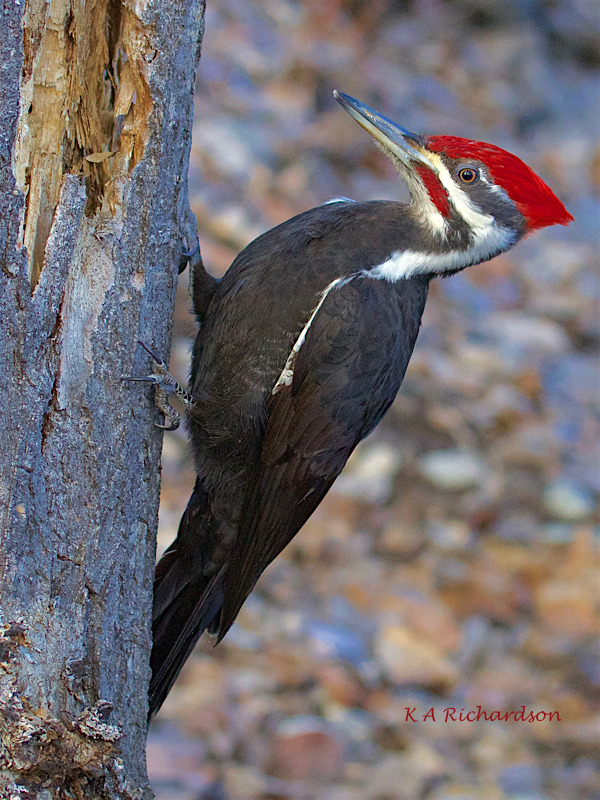
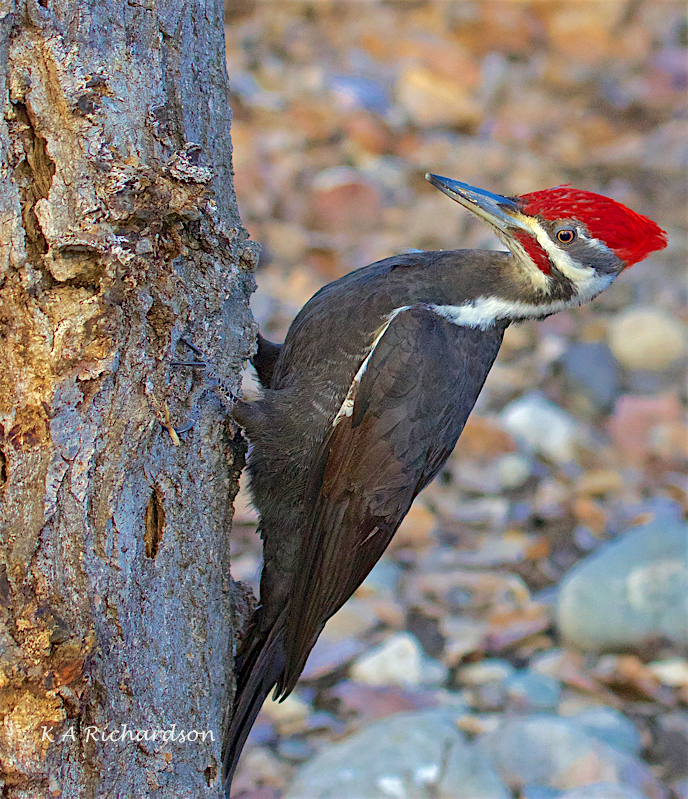
Mission Creek, Kelowna, BC. near Gordon Bridge. Fearless Foz: Click photo to enlarge in new tab.
March 2018: For the uninitiated, a PIWO is a PIleated WOodpecker, the largest of the seven species of woodpeckers we see up here most frequently. They’re colourful and industrious and often very willing to be observed and photographed — especially if they’re committed to an excavation!
On Friday, March 9, I was heading home after a walk around my beat. I’d enjoyed a lovely variety of birds, and thanks to a tip from a neighbour, had been able to check out a Bald Eagle that may be returning an old nest above Mission Creek. Although I was unable to get decent photos of it due to the thick branches in the way, I was glad to see him again.
As I approached Gordon Bridge where I would normally head south along the Road back to our condo, I ran into a fellow birder who asked if I had seen the PIWO on the other side of the bridge. It was working down low, she told me.
We parted, and I took a look, but made my search more difficult than it needed to be and would have missed the bird had I not run into to my colleague again not the bridge after I had given up. She just pointed down to the bird at work, and I was on my way….
What follows describes the process of trying to get the shot that you see above — especially when, at first, it seems nearly impossible. Let me give you a hint: success requires effort on the fotog’s part and considerable cooperation from the bird!
One never knows for sure whether a bird will stay put or immediately flee. The second option is the more likely to occur most of the time. Fortunately, this particular PIWO is accustomed to people poking into his private affairs; my task was actually pretty easy. But one only knows this when the encounter is over!
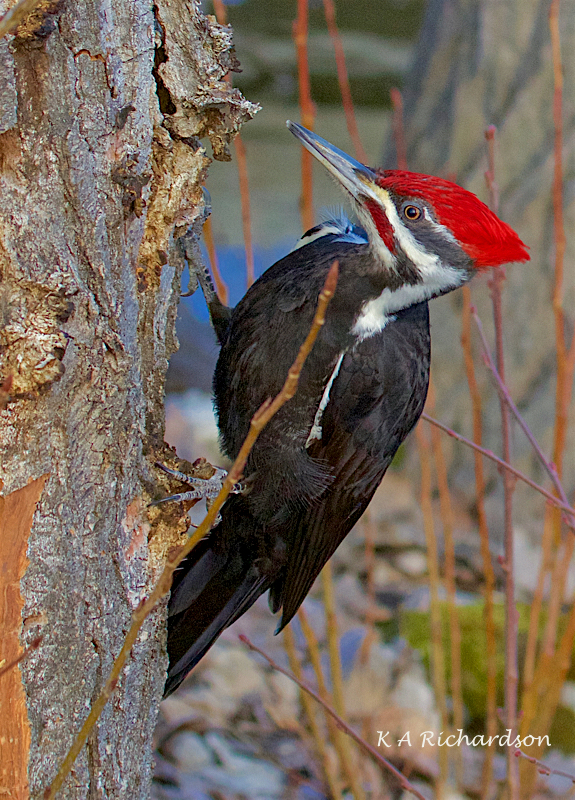
First lookout Fearless Foz: not terrible, but those branches are really annoying!
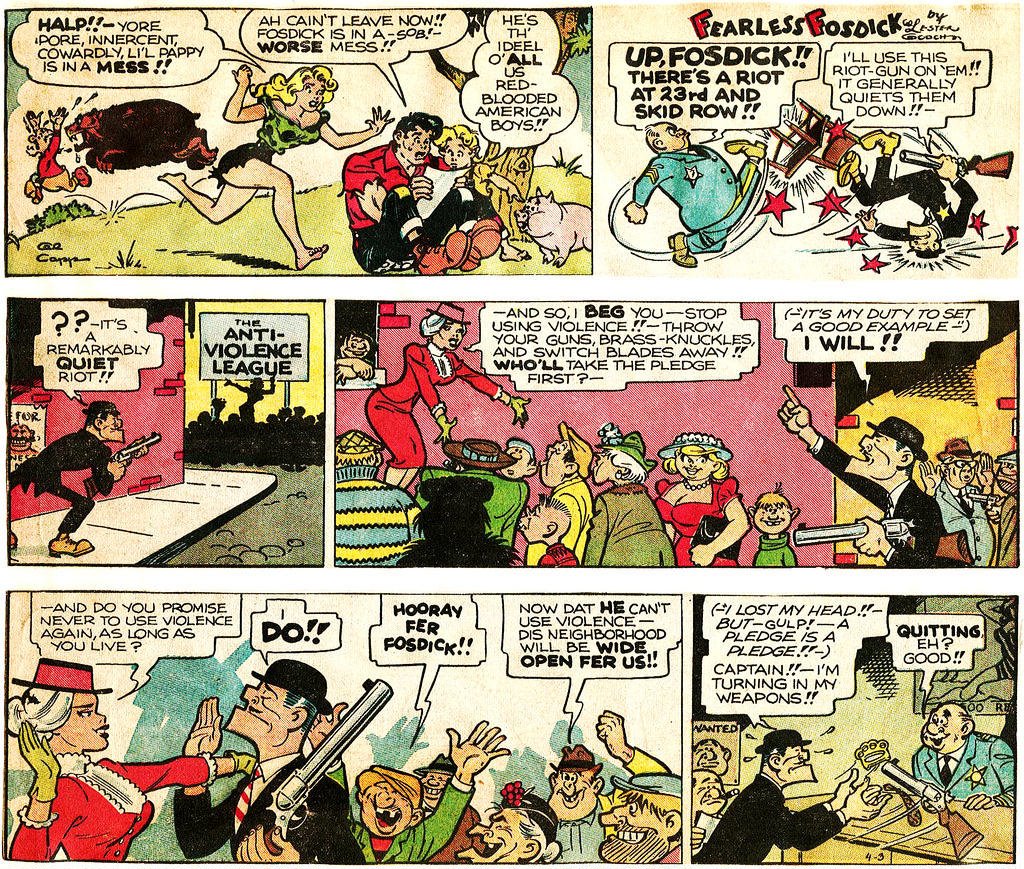
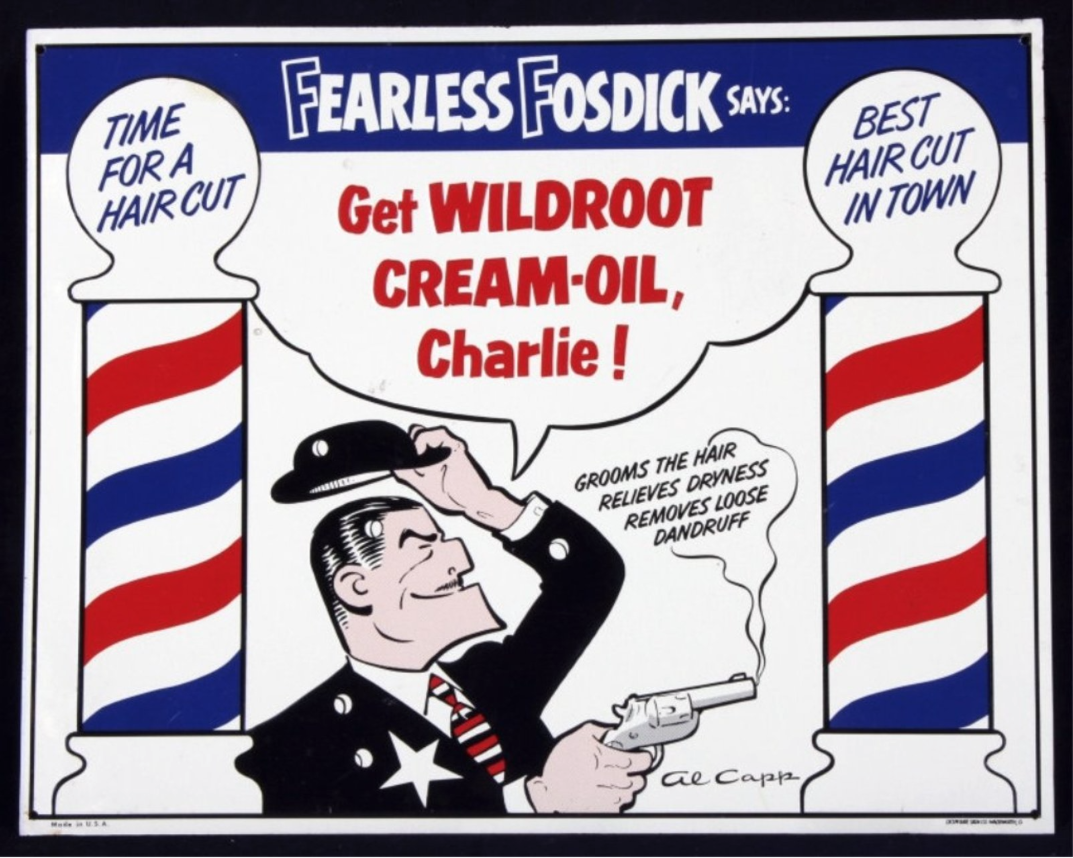
The name, Fearless Foz came to me from a remark my birder friend made about our bird of the day: “He likes people,” she said. “He’s fearless!” And so Fearless he became. Fearless Fosdick came to mind — a flashback from my days reading comics as a kid. You may remember Al Capp’s syndicated cartoon strip, Li’l Abner, which had as a cartoon within the cartoon, a Dick Tracy parody cop called Fearless Fosdick. More on him at the end of this post….
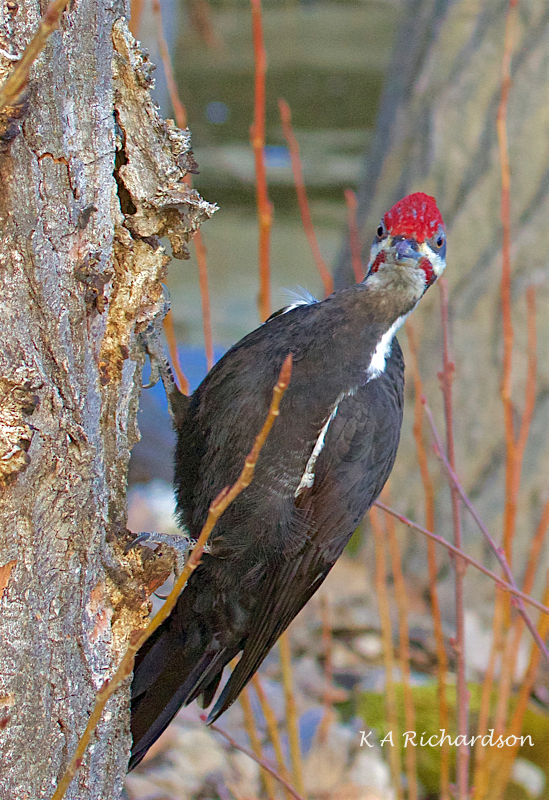
A look one seldom sees. He knows I’m here, yet soldiers on….Reprise: So how to get this shot from the branchy one above?
Well the trick was simply to get closer than he was comfortable with in the moment, see if he would withdraw to a more favourable location, take a shot, then back off and let him get back to work. All of this assumed, of course, that he wouldn’t simply back off and fly away! Having worked with him 14+ months ago, I bet on his staying focused…. Click any of the images below to enlarge the whole cluster.
Mission Creek, Kelowna, BC. near Gordon Bridge. Fealess Foz
Mission Creek, Kelowna, BC. near Gordon Bridge. Fealess Foz
Mission Creek, Kelowna, BC. near Gordon Bridge. Fealess Foz
In the sequence above, you can see, how after retreating at first to the other side of the tree, he peeks back around again, and slowly finds his way back to the excavation….
He’s almost there. I’m happy to have a good shot of his grasp and his full body. The plumage details worked out well, too.
At this point, I decided I to allow him to get back to his cavity work as I attempted to photograph him at work. This required my moving down the slope, around one large tree, through some saplings, and then resting against another tree, which, had it not been there, would have meant my tumbling all the way down into the creek!
Mission Creek, Kelowna, BC. near Gordon Bridge. Fealess Foz
Mission Creek, Kelowna, BC. near Gordon Bridge. Fealess Foz
Mission Creek, Kelowna, BC. near Gordon Bridge. Fealess Foz
Of course, all my movement meant we had a little more negotiation to complete
before we were both where we wanted to be. I took advantage, continuing
to shoot even as I edged myself into place. He backed off briefly, then, once I was settled, resumed his business, which he continued to work at until I left. Elapsed time for the entire encounter: 12 minutes.
Click any image in the cluster below to open them all in a new tab.
Mission Creek, Kelowna, BC. near Gordon Bridge. Fealess Foz
Mission Creek, Kelowna, BC. near Gordon Bridge. Fealess Foz
Mission Creek, Kelowna, BC. near Gordon Bridge. Fealess Foz
Mission Creek, Kelowna, BC. near Gordon Bridge. Fealess Foz
Mission Creek, Kelowna, BC. near Gordon Bridge. Fealess Foz
Mission Creek, Kelowna, BC. near Gordon Bridge. Fealess Foz
Mission Creek, Kelowna, BC. near Gordon Bridge. Fealess Foz
As you can see above, I was able to persuade him to move a bit from time to time
so we could inspect his work. He was most obliging!
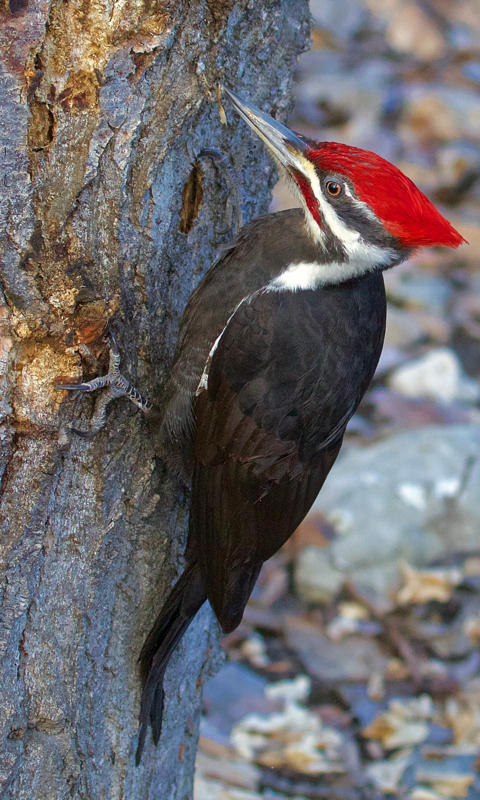
And so we concluded with one parting profile shot on the trunk of the tree.
Click the image to enlarge it in a new tab.
Then it back to work for him and homeward bound for me.
Oh yeah! Almost forgot my promise to show you Fearless Fosdick the first!
Although these older photos are not signed, I assure you that they’re all mine…. Each image can be enlarged in a new tab just by clicking on it.
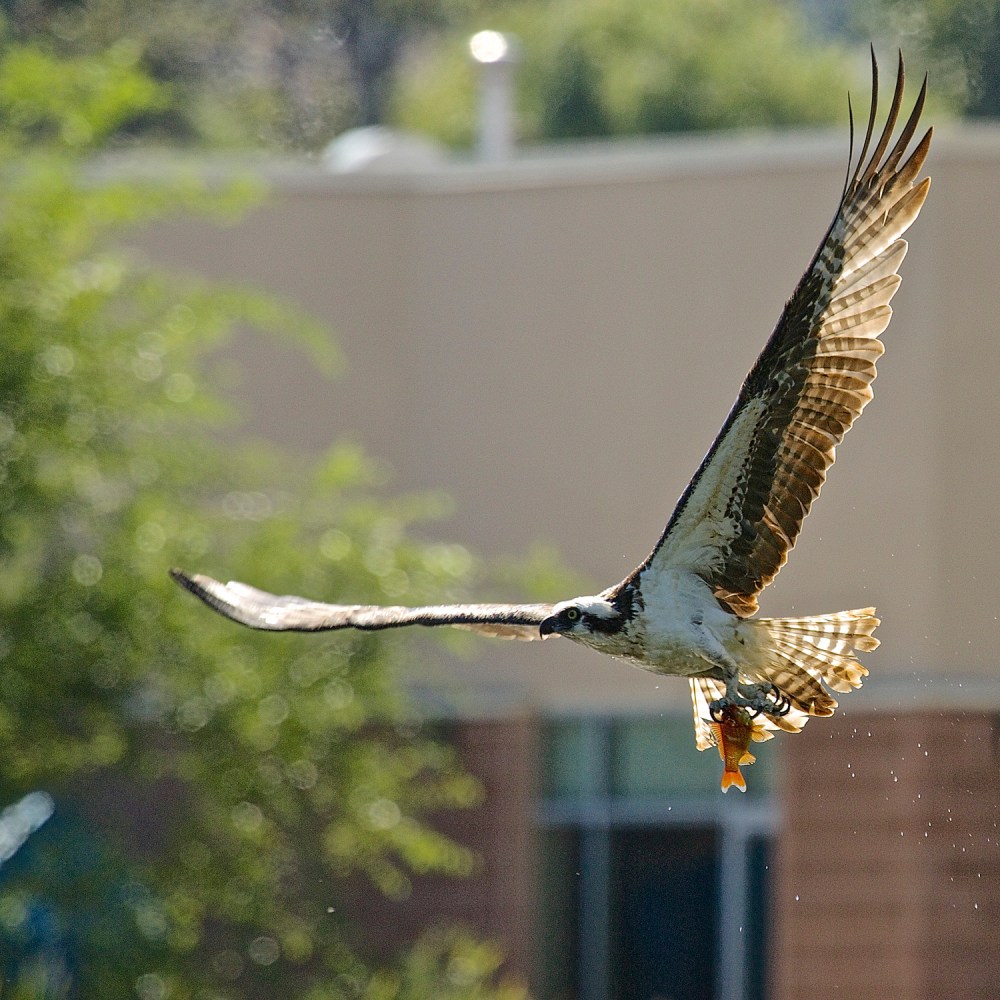
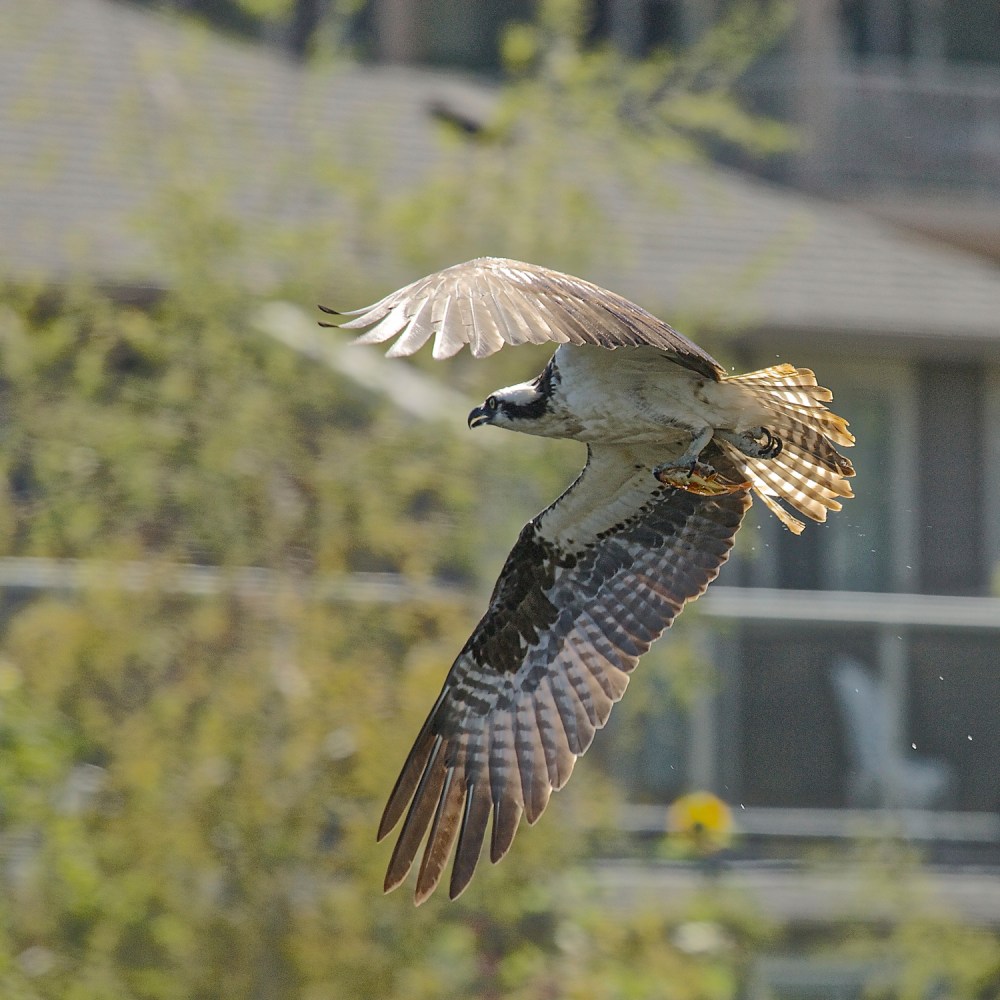
Osprey hovering above Thomson March, preparing to drop and catch….
My first recollection of Ospreys fishing go back to my days at 108 Mile Ranch/Resort where I lived for 15 years in the 70s and 80s. The golf course, where I spent a lot of my summer vacation days, overlooks 108 Lake and a small pond that separated the second and third holes back in those days. Nothing could distract me more than picking up on a Osprey hovering and then plunging almost vertically into the lake before lifting off with a big fat Rainbow!
Adult Osprey takes a large trout from Kentucky Lake, Kentucky-Alleyne Prov. Park….
But I never studied these magnificent birds. I took their avian performances for granted.
Nana and I thrilled to spectacle of Ospreys hunting on the Teshio River in Northwestern Hokkaido. When we settled in New Westminster, I used to travel 25 km either to Iona in Richmond or Grant’s Narrows in Pitt Meadows to enjoy the fish hawks in action, usually at considerable distance — perhaps a couple of times a year….
When planning our move to Kelowna, we were delighted, in late September 2014 (unusually late, but we didn’t know that then), on one of our first hikes along Mission Creek, not far from our current home, to discover this youngster atop a hydro pole feasting on a spawning Kokanee.
“You shoulda seen the one that got away! It was at least this big!!”
Soon, we were surprised to find several Osprey nests in locations that we often visited. Best of all, from 2014 through 2016, a pair of Ospreys nested in the largest Rec Field light, which we can see from my home office. At last, I was ready, willing, and able to do a little more serious study of the habits and talents of these awesome predators.
Poppa and twins atop the Lightship Nest…. “Mom said to ask you, are we cleared to fly yet?”
The story of the raising of the twins (above) in the Spring and Summer of 2016 is told in another post. Today’s episode is dedicated to observations of Osprey in action, especially the father above (Poppa) in Belmont Pond which is only five or six stones throws from our condo and of the twins, once they learned to fly, learning how to do what Poppa does….
A brief word about Belmont Pond. It’s not very big, but it’s full of fish that feed mergansers and our Ospreys. But perhaps not quite what you think. Apparently, it’s an old quarry, not terribly deep, however. And the fish are distinctly non-native. More on this in a bit…. Here’s Poppa Osprey preparing for to catch lunch….
Poppa in the big willow at the northwest end of the larger Belmont Pond.
I changed my angle so I could watch him fish.
Now that I was in place…
…he returned to the task at hand.
On two separate occasions from this very location, I’ve been privileged to watch both Poppa and Momma go about their predation. It usually takes them a couple or more tries, because, as you’ll see, their target is not very big, but it is very visible from up here!
Hover and drop is not the preferred technique, here.
Rather, the birds use a shallow dive, eagle-like, to grasp their prey in this pond….
The young ones, when they’re ready, will learn this method first, too….
Just after capture — what’s he got?Yes, indeedy, it’s a Goldfish!Securing his grasp……turning……”Look what I got!” ……across the pond……up, dammit, up……a quick peek into the houses, then up, up, and away!!
This capture went quite smoothly.
But on another day, there was considerably more excitement,
which is covered in this post….
February 17, 2018: As I stare out the window at an all-day blizzard, and daydream of Spring around the corner, my mind drifts to new life and ducklings, and trips over this memory of a humorous encounter from two days before Mother’s Day, 2015.
Click imageto enlarge in a new tab.
There’s a spot on the southwest side of Michaelbrook Marsh, where, if we leave the open playing field and sneak through the long grass, and carefully make our way around the wild roses, we can observe a log that often hosts a Great Blue Heron using it as hunting platform. More likely, though, it’s occupied by bale of Western Painted Turtles.
On this day in May, however, approaching very cautiously, I was delighted to find a mother Hooded Merganser and her chicks sitting between a pair of turtles. Fascinated, I recorded the scene. When I got home, my imagination took over, and this fantasy played out. And, while admitting that I speak neither Merganserese or Turtleian, I’m confident that this is what was happening….
So the turtles were acting as guards, lookouts, really. Mom was busy just watching over her babies. Boyfriend Pete is, as is the Hoodies’ custom, nowhere to be found at this time.
Among the chicks, most, as is normal, were simply sunning and being good.
But Georgetta and Herman (on the right) were restive, the brother, in particular. Click any image below to enlarge it in a new tab.
Mom and chicks between the lookouts. Herman and Georgetta are on the right. Click images to enlarge in a new tab. Guard on the left: “Jeeze, I wish Frank didn’t have his butt right in my face.” Mom: “Such a lovely day. And such a lovely family. I’m so lucky!” Georgetta: “Wanna go swimmin, brother?” Herman: “Stop crowdin’ me, Georgetta. I don’t wanna go swimmin’ again!” Guard on the right: “Man, I hate Merg Duty, especially when there’s so many of these little brats!”Herman: “Oh wow! Mom got me a pony!” Georgetta: “That’s not a ponee; it’s a elefunk!” Mom: “Oh dear!” Guard: “Must keep a stiff upper lip!” Herman: “I don’t care what you say, girl! I’m goin’ for a ride!”” Georgetta: “I bet you can’t stay on for five seconds….” Mom: “Oh dear!” Guard: “That tickles! Must keep a stiff upper lip!” Herman: “This has to be the most boring pony EVER!!” Georgetta: “I told you—it ain’t a ponee; it’s a elefunk!” Mom: “Oh dear!” Guard: “What do they think I am, a pony?” Georgetta: “Maybe you need a push!” Herman: “Maybe this IS a elefunk! It sure is slow!” Mom: “Oh dear!” Guard: “One-a-these-days, I’m gonna….!”Herman: “How do I make this guy go?” Georgetta: “MO-OM! Herman’s not sharing the elefunk!” Mom: “Oh for Pete’s sake! Speaking of Pete, he’s gonna get an earful if he ever comes back. Nobody told me there’d be days like this!” Guard: “My lips are numb!”Well, Herman managed to fall off and had to climb back up onto the log, Georgetta quit pestering to ride, and Mom put her hair up to warn the other chicks not to do anything foolish! As for the guard, he never let on another thing!
A couple of days later, this incident apparently forgotten, I observed the chicks having a ball in their bathtub, making as many bubbles as they possibly could….
Who knew that Sir Ralph, the most outstanding Great Blue Heron on my beat, is also a part time thespian? Here are a few scenes from his recent performance on the smaller stage at Belmont Pond:
Click on any image to enlarge it in a new tab….
“Now is the winter of our discontent Made glorious summer by this sun of” —er—Belmont….“No beast so fierce but knows some touch of pity. But I know none, and therefore am no beast.”“Shine out fair sun, till I have bought a glass, that I may see my shadow as I pass.”“Tis better, sir, to be brief than tedious.”“Bad is the world, and all will come to naught when such ill-dealing must be seen in thought.”“The world is grown so bad that wrens make pray where eagles dare not perch….”
I recently published a piece on the Great Blue Herons I encounter on my beat. This is an update with photos from the mid January into the beginning of February 2018.
We’ve had a mild winter (so far) compared with last year’s.
January 2018 much warmer than January 2017, esp. first half! Great news for herons!
A quick note about Sir Ralph, the subject of this piece, originally written for a response to a post on my Flickr site by a Texas colleague who expressed admiration for this bird struggling with our harsh Canadian climate:
On Sir Ralph of Thomson & Michaelbrook Marshes and Belmont Ponds
“Like many of us Northerners (aka Canadians, esp. the BC variety), he finds ways to enjoy every season, and here, in Kelowna, considers winter less “rigorous” than “stimulating.” Since this winter has been much milder than 2017, he has no trouble feeding himself as there has been some open water somewhere in the Marsh throughout.
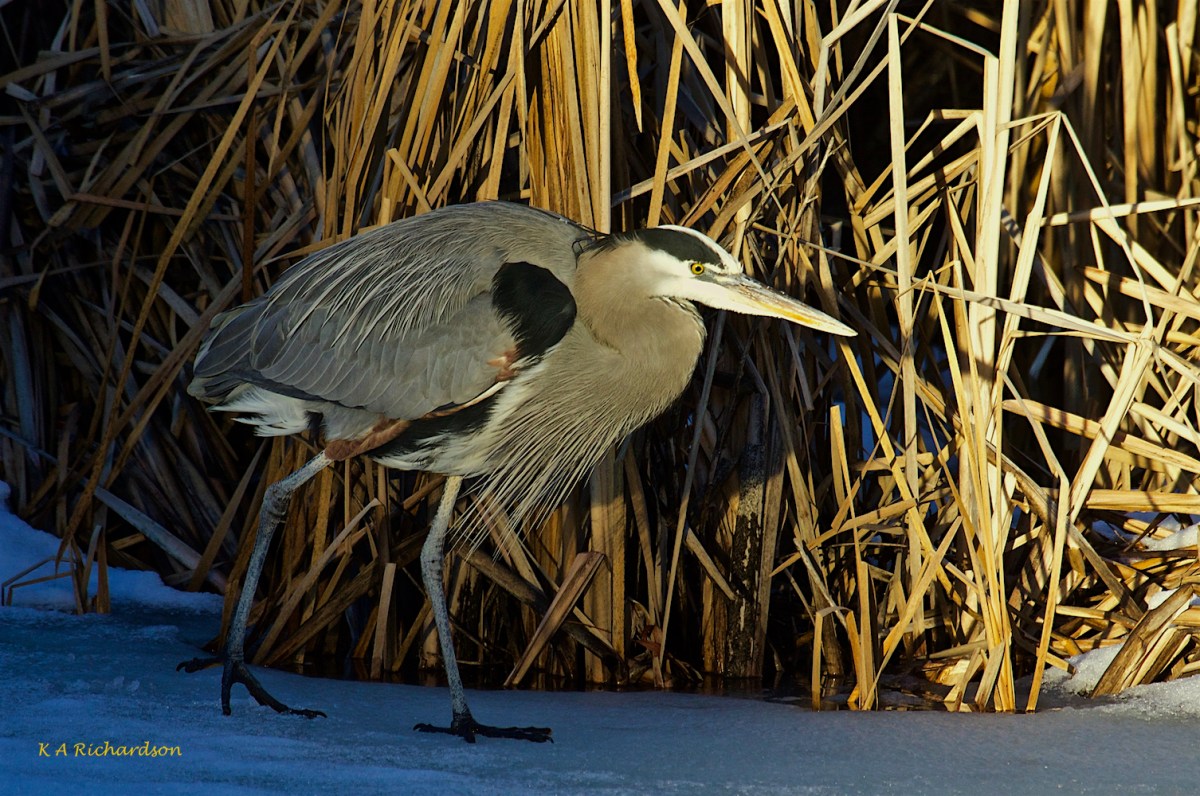
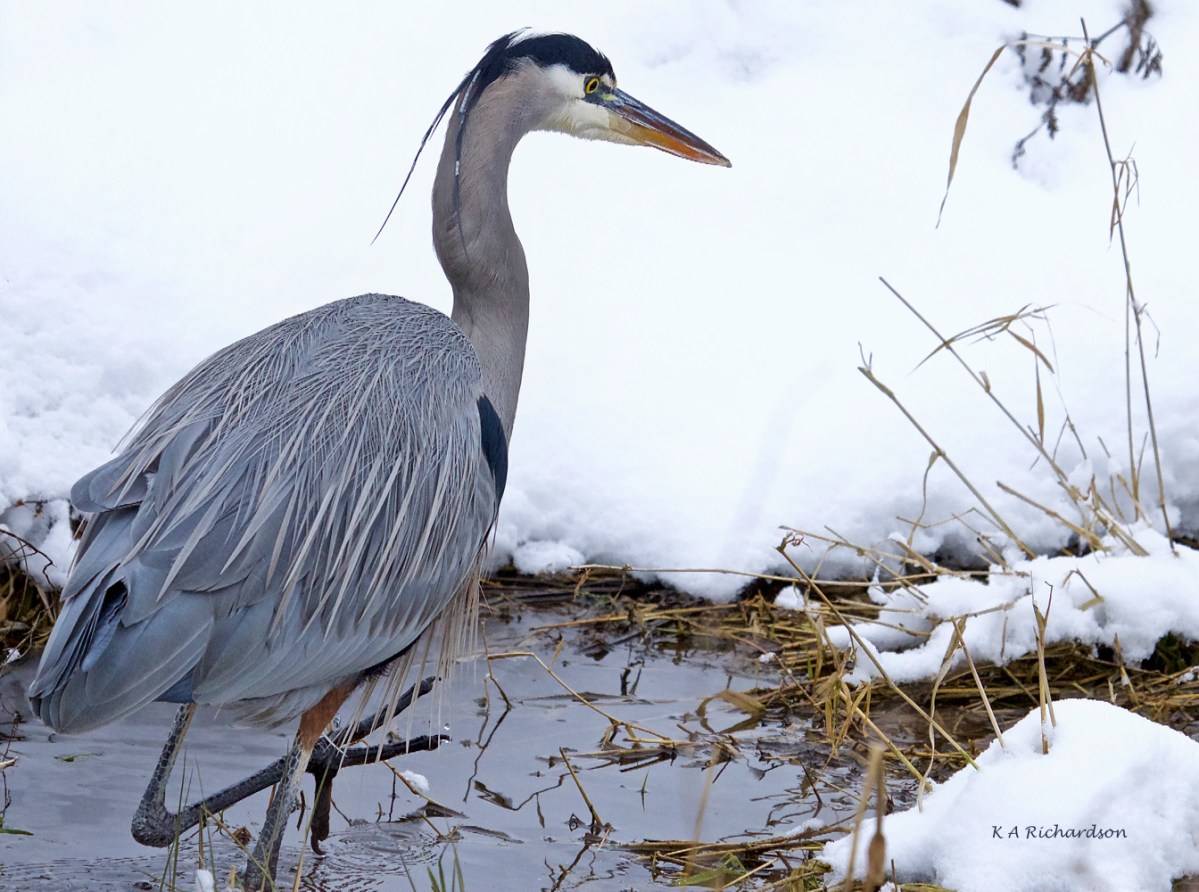
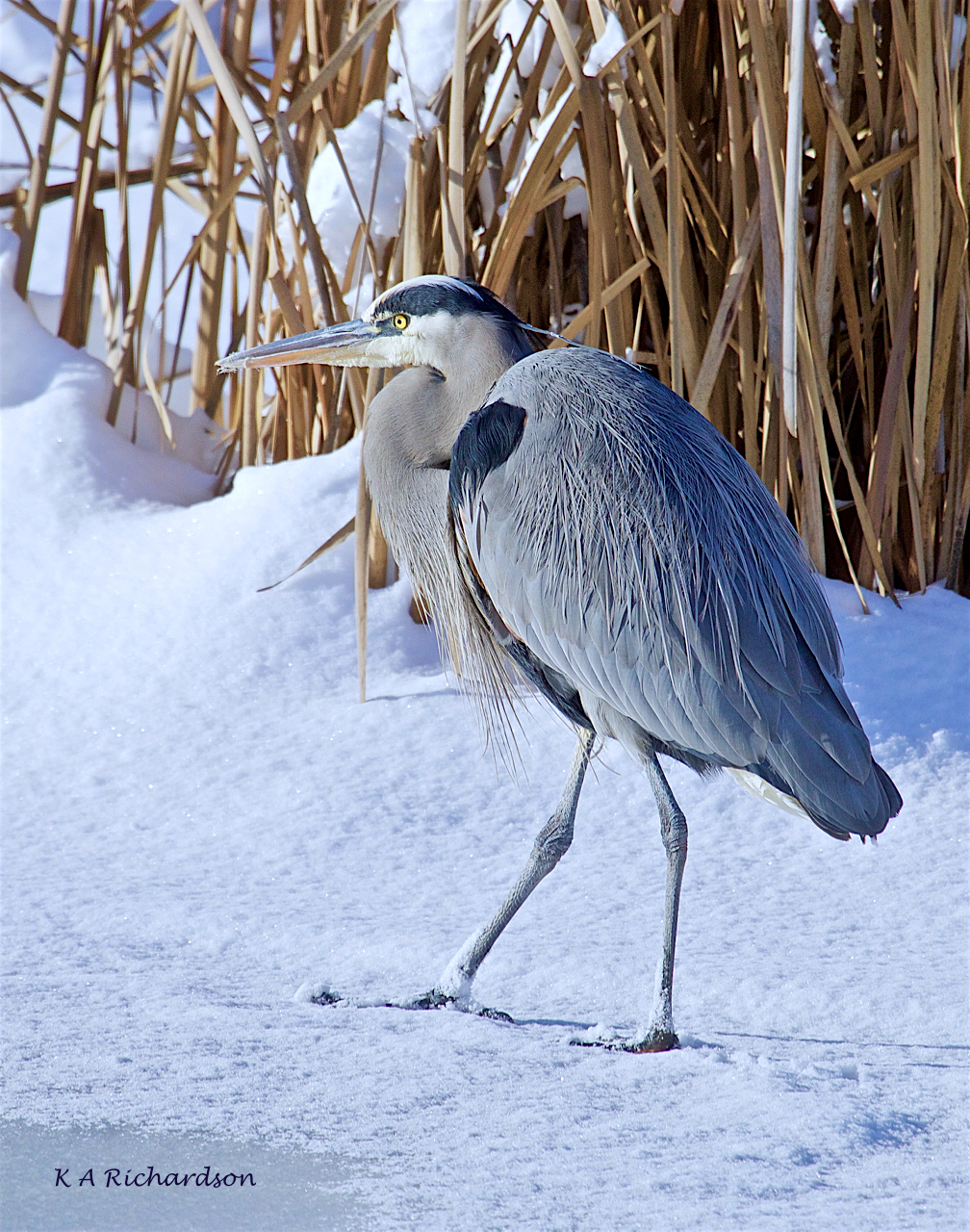
And now, still in the first week of February, with the RWBlackbirds already back, staking out their territories, there is continuous open water — I estimate the Marsh to be 95% ice free. Although it may snow overnight and melt during the day, Ralph prefers this climate to Coastal rain. His prodigious plumage protects him and promotes his claim to regal status….
As you can see in a later post, he even engages in thespian pursuits when the muse seizes him…. Recently, he performed scenes from Richard III, not because he’s in any way like Shakespeare’s arch-villain, but because he’s versatile enough to play roles from villainy to virtuousness, a virtuoso in fact!
Next to Kessie, the resident American Kestrel, Ralph is one of the most likeable denizens of the fen, even if he rarely smiles (see photo below). He’s got the same dry sense of humour that my dad passed on to me….”
December 2017 ended with a promise of a repeat of January’s frosty days. Turned out to be hollow. Here’s Ralph on December 30:
At least it’s sunny….
By January 20, the Marsh had changed radically:
Click image above to open enlargement in a new tab….
At the end of January, we caught up with Sir Ralph in the smaller of the two Belmont Ponds that he also frequents (as well as Michaelbrook which is still quite frozen at this time). While there was only a little open water under the bridge over the very short connecting creek, he was surveying his options very carefully.
Sir Ralph sees his shadow and concludes that Woodchucks are poor prognosticators!
He was smiling as if he had inside info about an early Spring…. Time will tell.
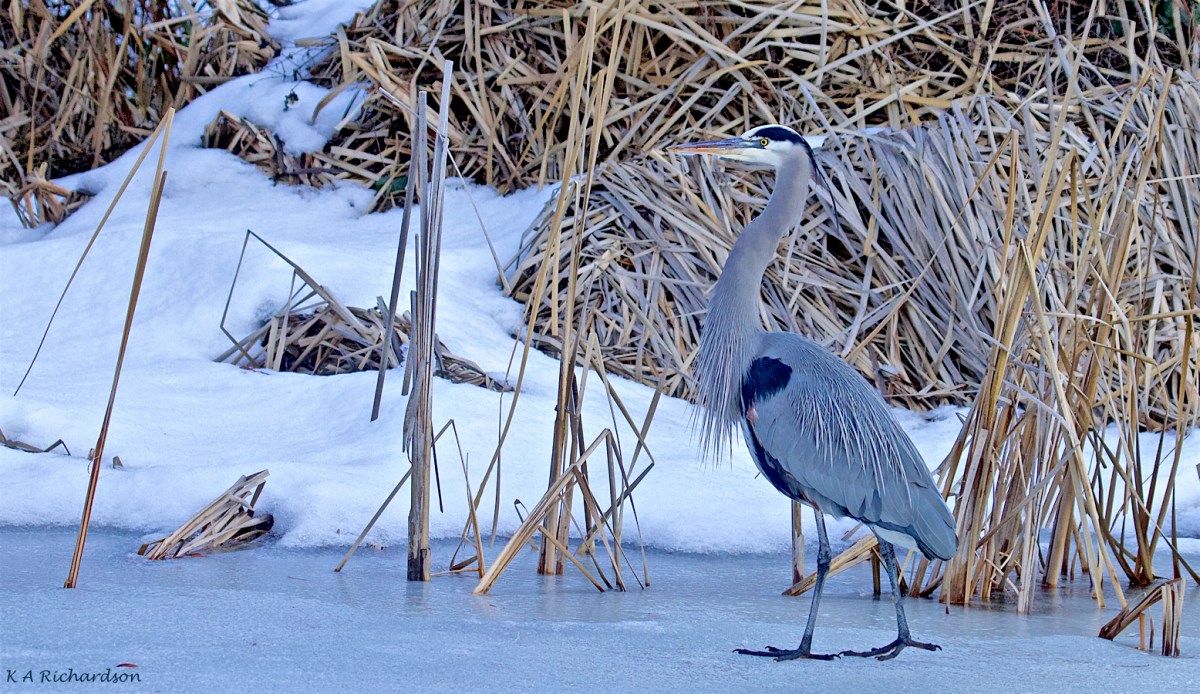
…smiling as if he had inside info about an early Spring….On his way to check out the “creek” and the larger pond…. Click to enlarge.It’s a different world on this side….Sir Ralph tries to blend in with the Cattails along the shoreline….
He can make himself look tall and slim, but sometimes, methinks, he over estimates his “invisibility”….
Ralph tries to hide behind a Cattail, with dubious success….
Two days later, I visited Belmont again, where I found Sir Ralph indulging his passion for the theatre in a marvellous presentation of scenes from Shakespeare’s Richard III….
If you’re just looking for information on Great Blue Herons (Ardea herodias), I very much recommend this website: heron conservation — it doesn’t have my photos, of course!
Published December 20, 2017: Sing to “🎶 If I had a hammer…🎵.” Click here to open a performance in a new tab. Ignore the brief delay while it loads….
Actually, the title should say,
“If I had a dollar — ever’ time some’un asks me— if I’ve “seen the heron” —, I’d be able to buy —
that new lens that I covet!” (Repeat.)
But that’s much too long a title, not to mention that someone stuffed the Genie back in the lamp and erased the password!
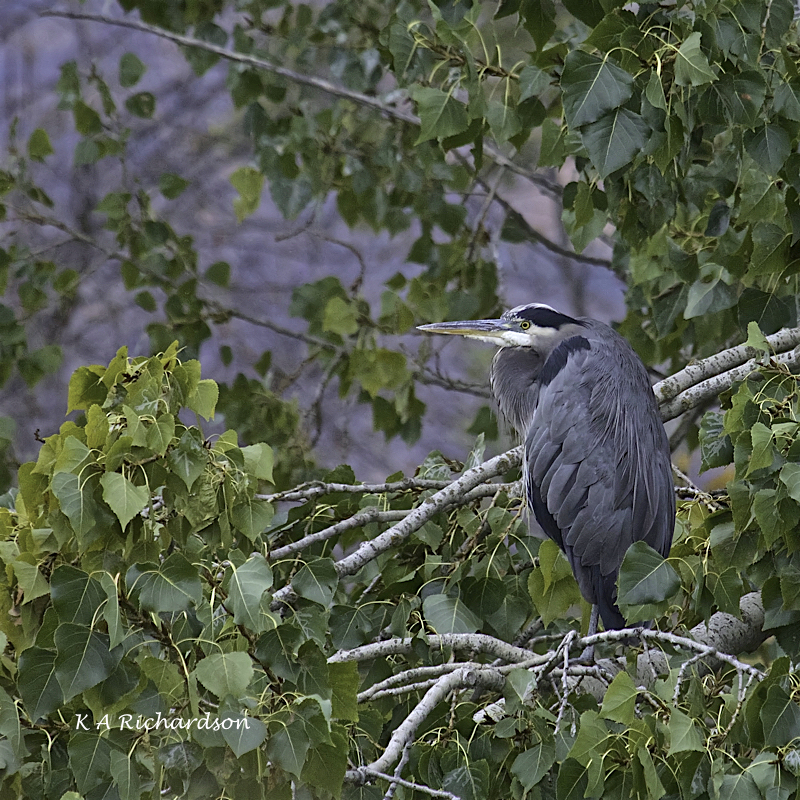
I wrote about Great Blue Herons(Ardea herodias) in my piece on water birds of 2016. In this post, however, I want to give the GBHEs their own place to shine, with a retrospective of some of the fascinating individuals I’ve been privileged to met….
NOTE: Click any single image to enlarge it in a new tab….
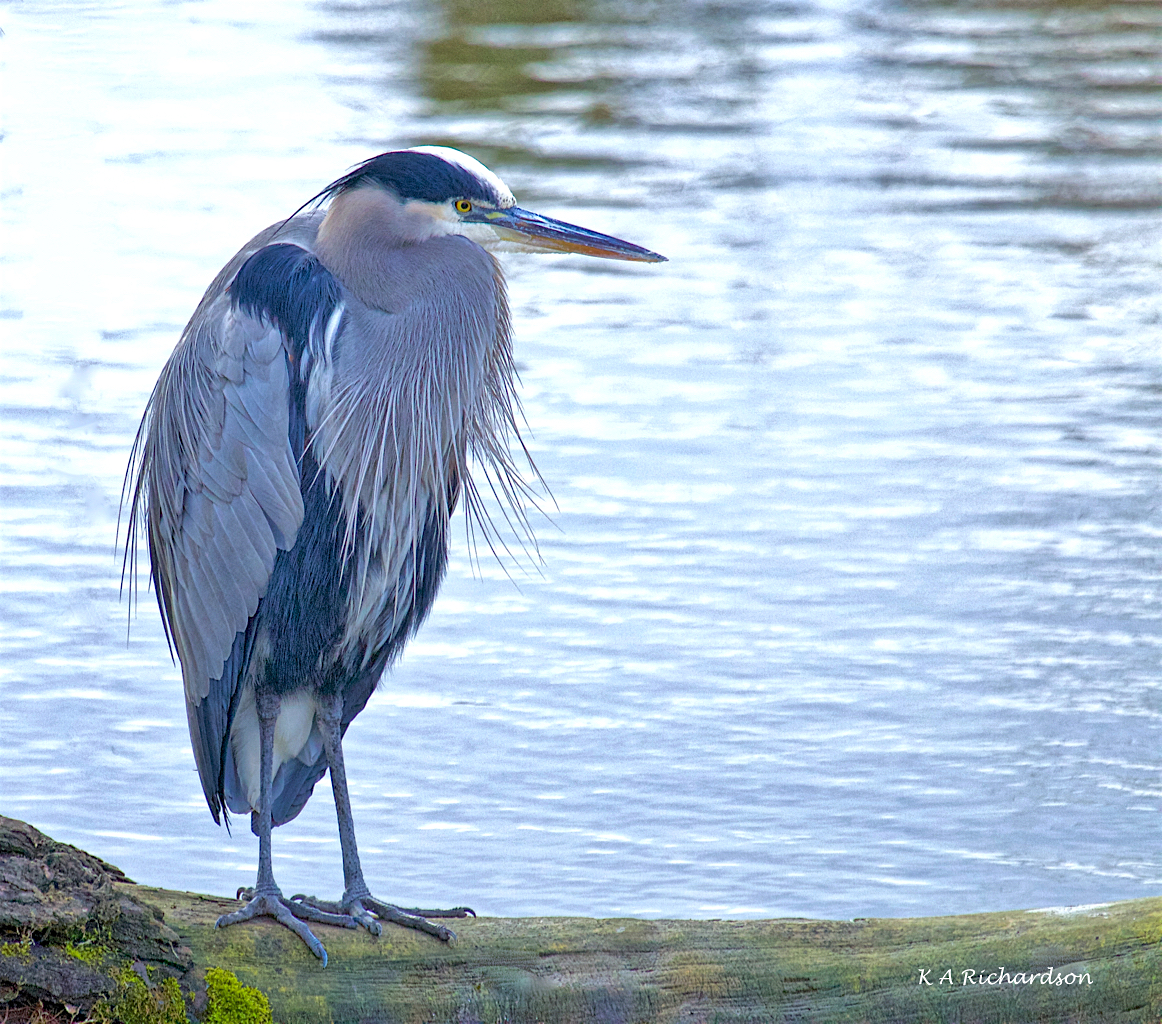
Sir Ralph of Belmont Pond, Kelowna, BC. He also frequents nearby marshes when he’s not here.
On “my beat,” I see numerous GBHEs, many with features of appearance (that can sometimes betray me!) and idiosyncrasies that enable me to recognize them, even, Gob fordib, to name them. The one I know best was already named by the residents on Belmont Pond — “Ralph.” Nobody really knows if he’s a Ralph or a Ralphina, but that’s the burden shared by all herons I know….
My Beat: main heron viewing areas are Belmont Ponds, Michaelbrook Marsh, area west of the RV Parking, Teal Pond, and the area from Raptor Tree Pond west to West Pond. Click image to enlarge in a new tab.
In the three years we’ve been here, I’ve discovered that Ralph is the calmest, most photographable of the GBHEs in the area. I encounter him in other locations besides Belmont Pond, including Thomson Marsh’s West Pond, and Michaelbrook Pond. Other herons also frequent these locations, but regal Ralph stands out, so much so that I’ve taken to calling him Sir Ralph of Belmont.
171116: Sir Ralph among the cattails of West Pond in Thomson Marsh. Notice his full epaulette.
I think this is Ralph, because I’ve watched him move from this location to Belmont and from Belmont to Michaelbrook and from there back to West Pond. Other herons, of course, may share these locations, so then I have to fall back on Ralph’s calm demeanour which sets him apart from most of the others I observe. However, since I don’t want to strain my credibility, I’ll drop the naming aspect and focus on the photos….
So here from my growing, indeed, groaning, Great Blue collection are some favourites marked with the dates (yrmmdd) when I stole their souls:
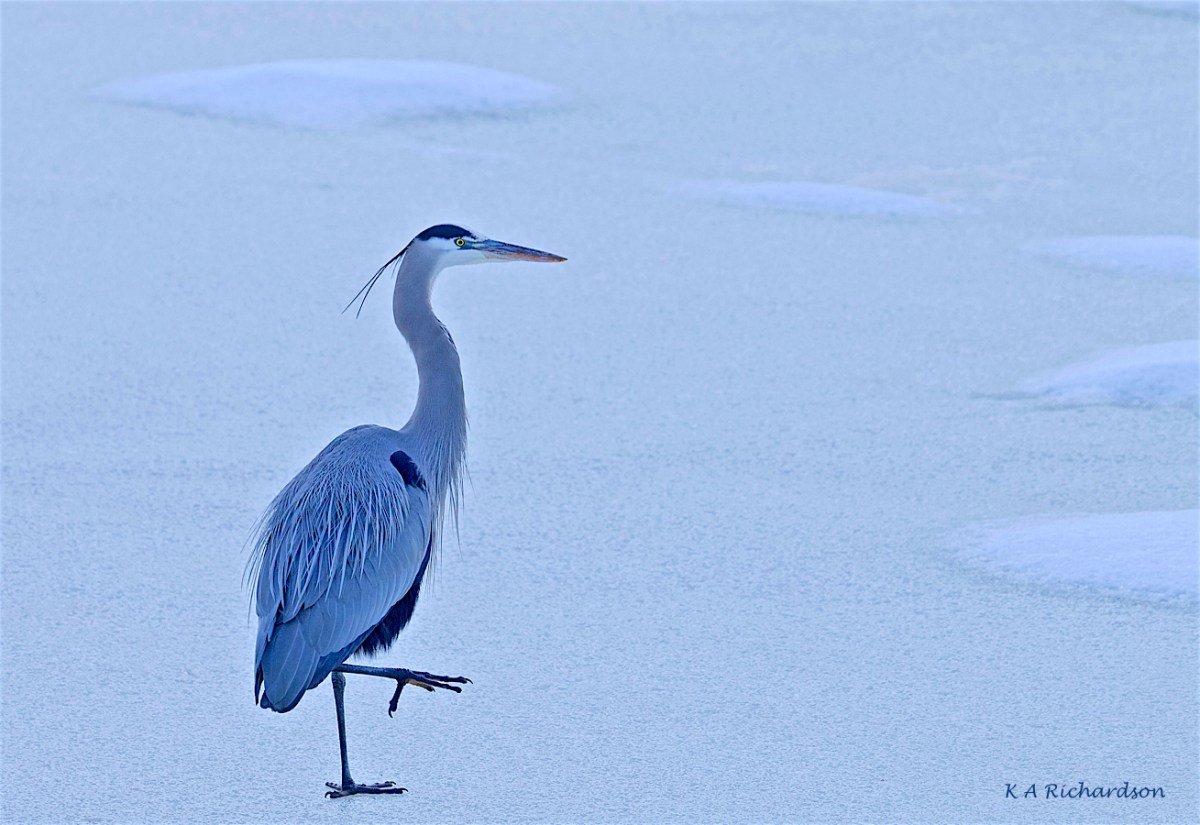
Herons in Belmont Pond: As long as there’s some open water in either of the two Belmont Ponds (connected by an intermittent stream) we’ll see herons. The young ones sometimes take a while to catch on to the mystery of Hard Water….
151122: (small Belmont Pond) I’m confused….
Click any of these photos taken two monthslater to enlarge them all…
Different ice and a big stretch…
Trying to levitate, perhaps?
Sticking his neck out…
and walking the walk….
The juvenile below photographed in a similar pose to 151122 bird, almost two years later, — struggling with soft water….
170915: I think I hear a goldfish….
Five days earlier, near the same spot:
170910 : Making a statement….170910: Missed Opportunity
And elsewhere:
170910: Burnaby Lake ~ The Darkling Heron151208: Bench Boss waiting for the Belmont Pond team to show up…150902, Large Belmont Pond: Standing-On-One-Leg with Western Painted Turtles: Ted, Thurston, and Truman: Ted: “Ol’ Standing-On-One-Leg looks crabby tonight.” Thurston: “Where? Where? I can’t see him!” Truman: “Behind you, bud, but trust me, it ain’t worth turning around for….” Standing-On-One-Leg: “Hmmmn. Must look up my recipe for ‘Turtle Soup’.171216: Yearling Noogye watching the large Belmont Pond freeze….Noogye closeup….
On high perches and in flight:
170901 Noogye: Once upon a roof, there was a young heron….
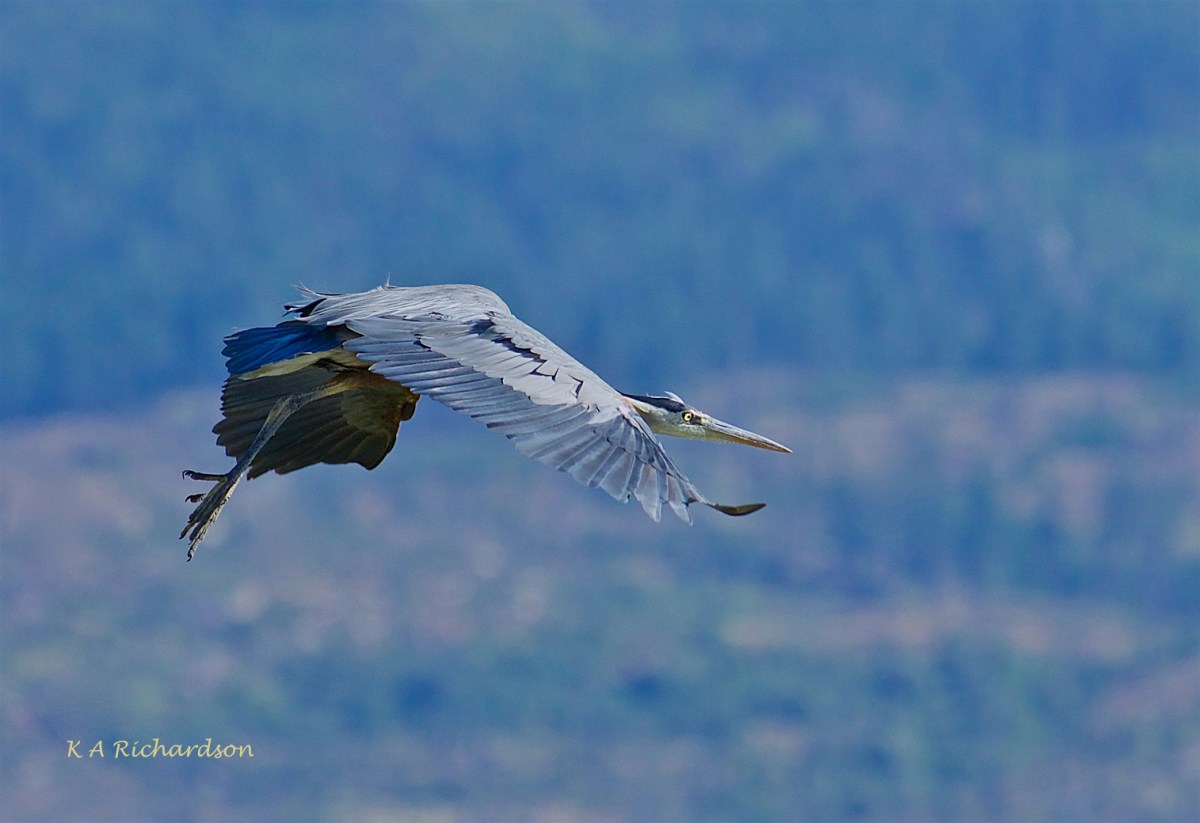
Capturing herons in flight is always a bit of challenge, but rewarding when you succeed….
Click any of these photos from 150922 to enlarge them all…
Neck bent; not at the destination yet….
This tree looks suitable….
Touchdown!
When gliding towards a landing, or making a short takeoff and landing, GBHEs often stretch their necks out like the ones below:
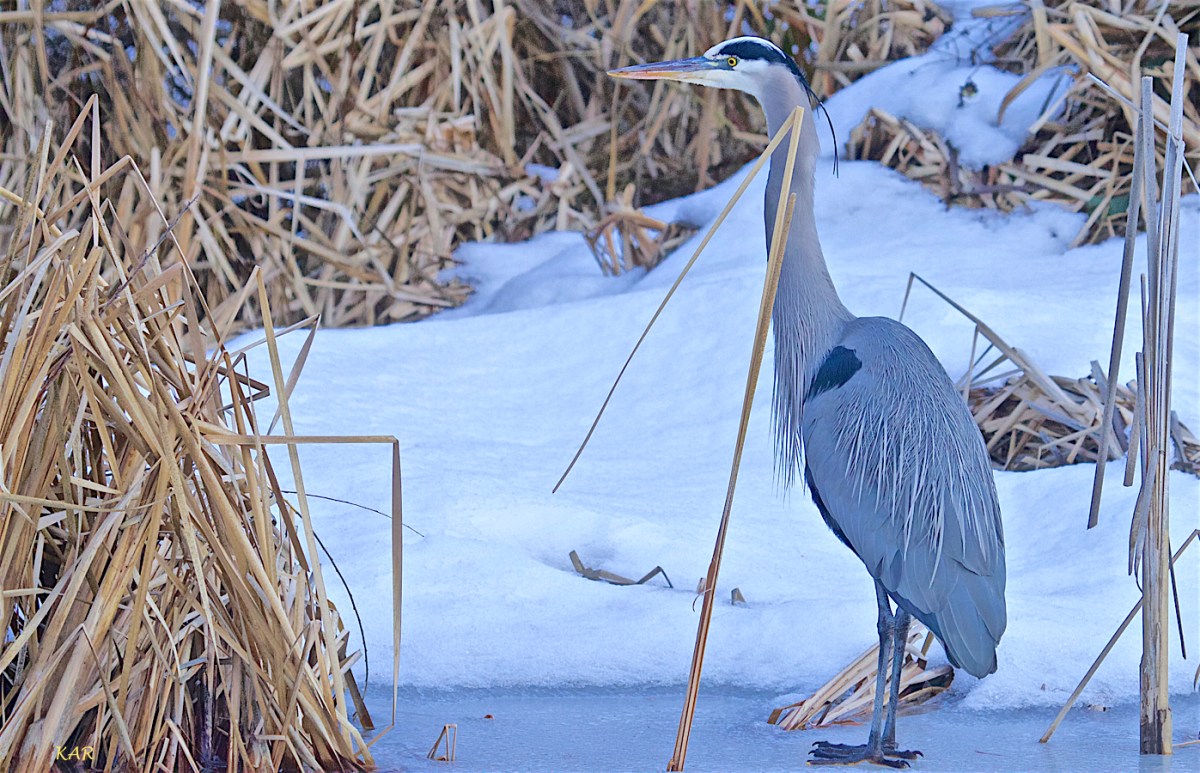
151029 descending into Thomson Marsh near the Raptor Tree….170716, Thomson Marsh, a short hop from one pond to the next….161105: Ralph above small Belmont Pond making a fashion statement.161105: Ralph in his regal pose at the top of the small Belmont Pond Willow….171016: Great Blue, not sure which one, in the Raptor Tree above Thomson Marsh.
Herons waiting:
170118: A well wrapped fella at Rotary Marsh, Kelowna. Looks a lot like Ralph, but probably isn’t, as RM is several kms away from Ralph’s domain…
Click any image to enlarge them all and read the full captions….
161101: Sentinel of Michaelbrook with a splash of late Autumn colour.
171216: Sentinel of Michaelbrook awaiting snow….
161225: Thomson Brook North: Wary of the Hawks.
Herons foraging:
Desperately Seeking Sushi….and finding it!
Winter GBHEs are no less discriminating…
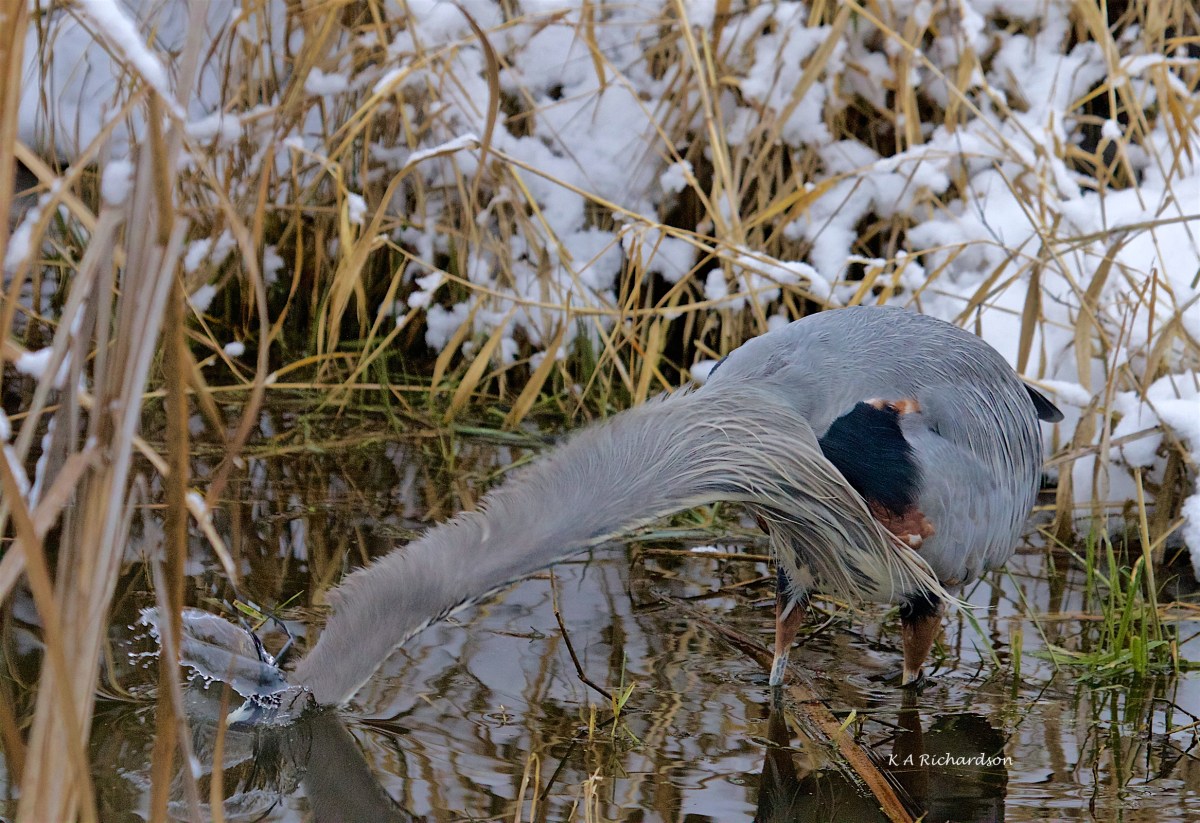
Stalking…Spotting…Striking…and Savouring!
And finally (“Whew!” you say), a few portrait shots:
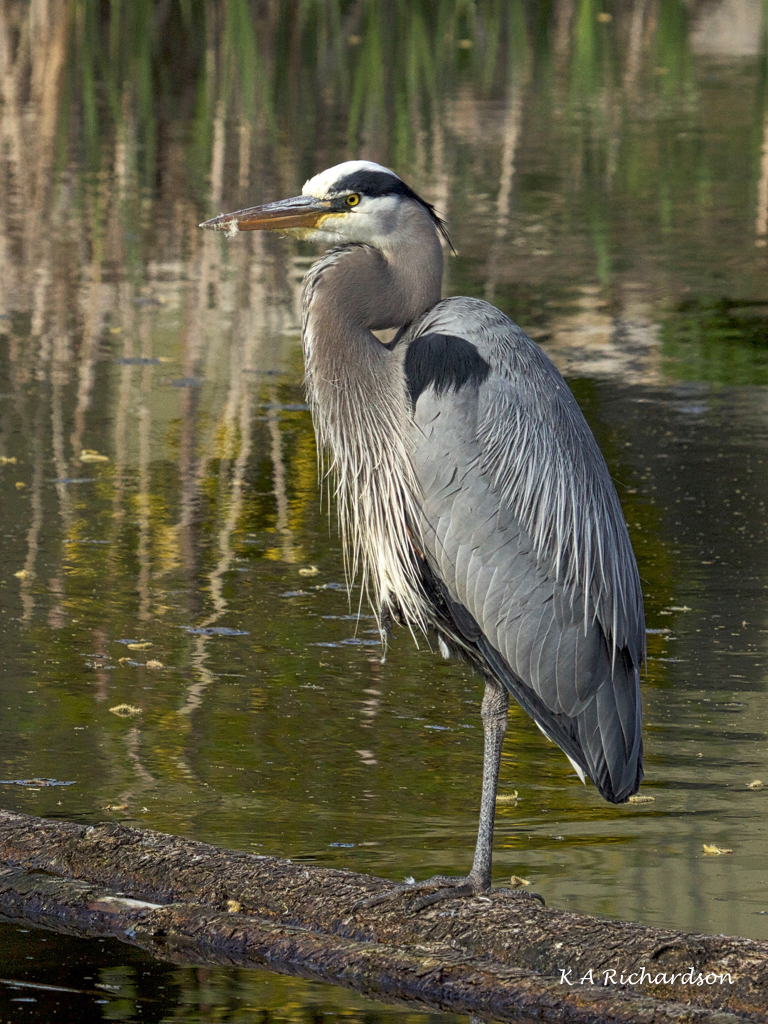
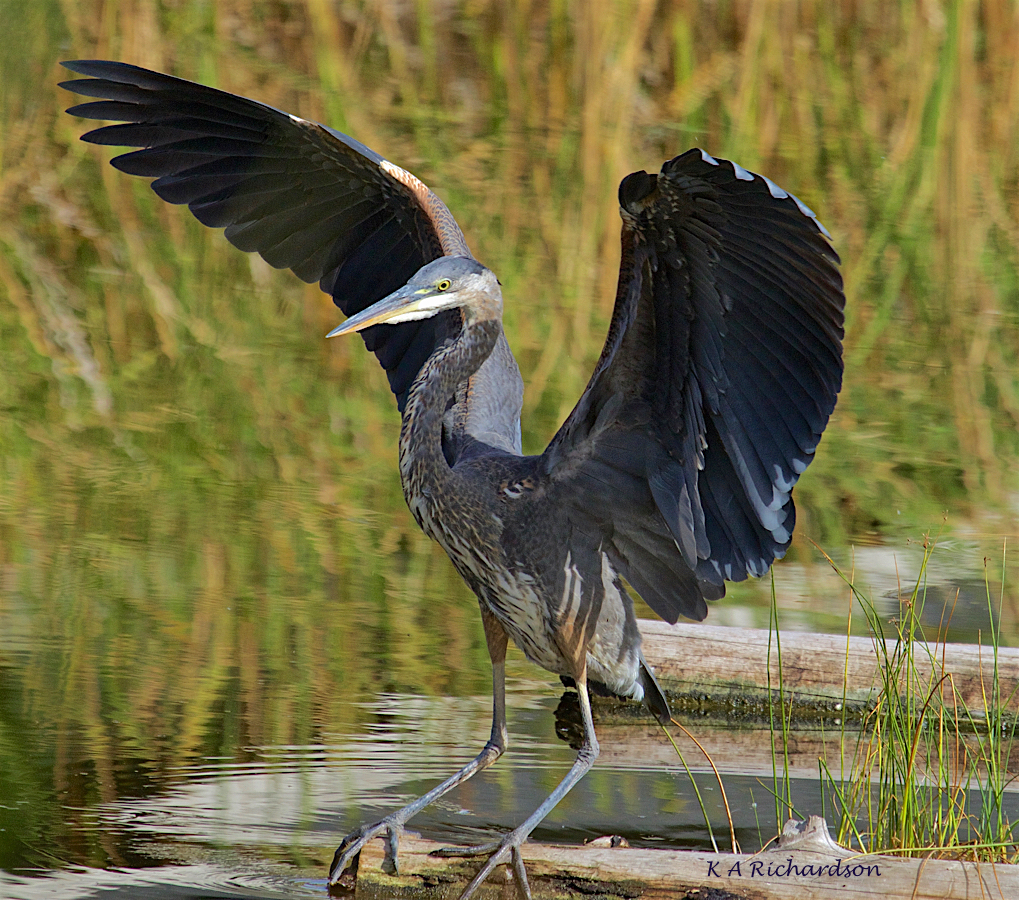
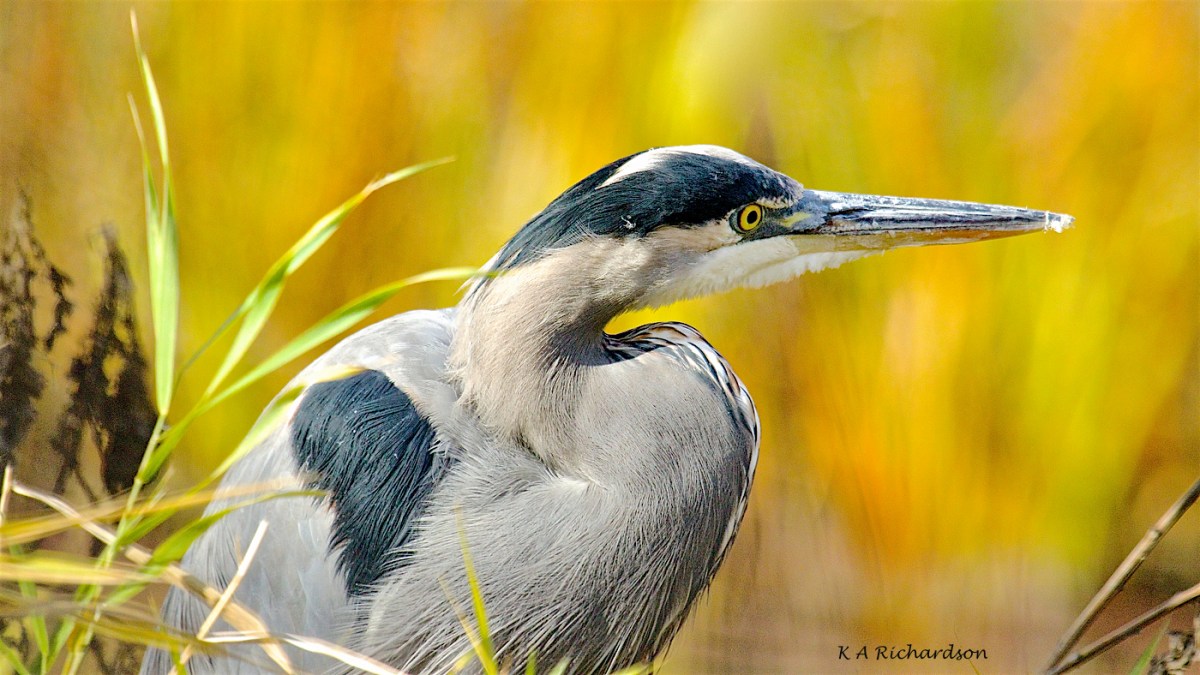
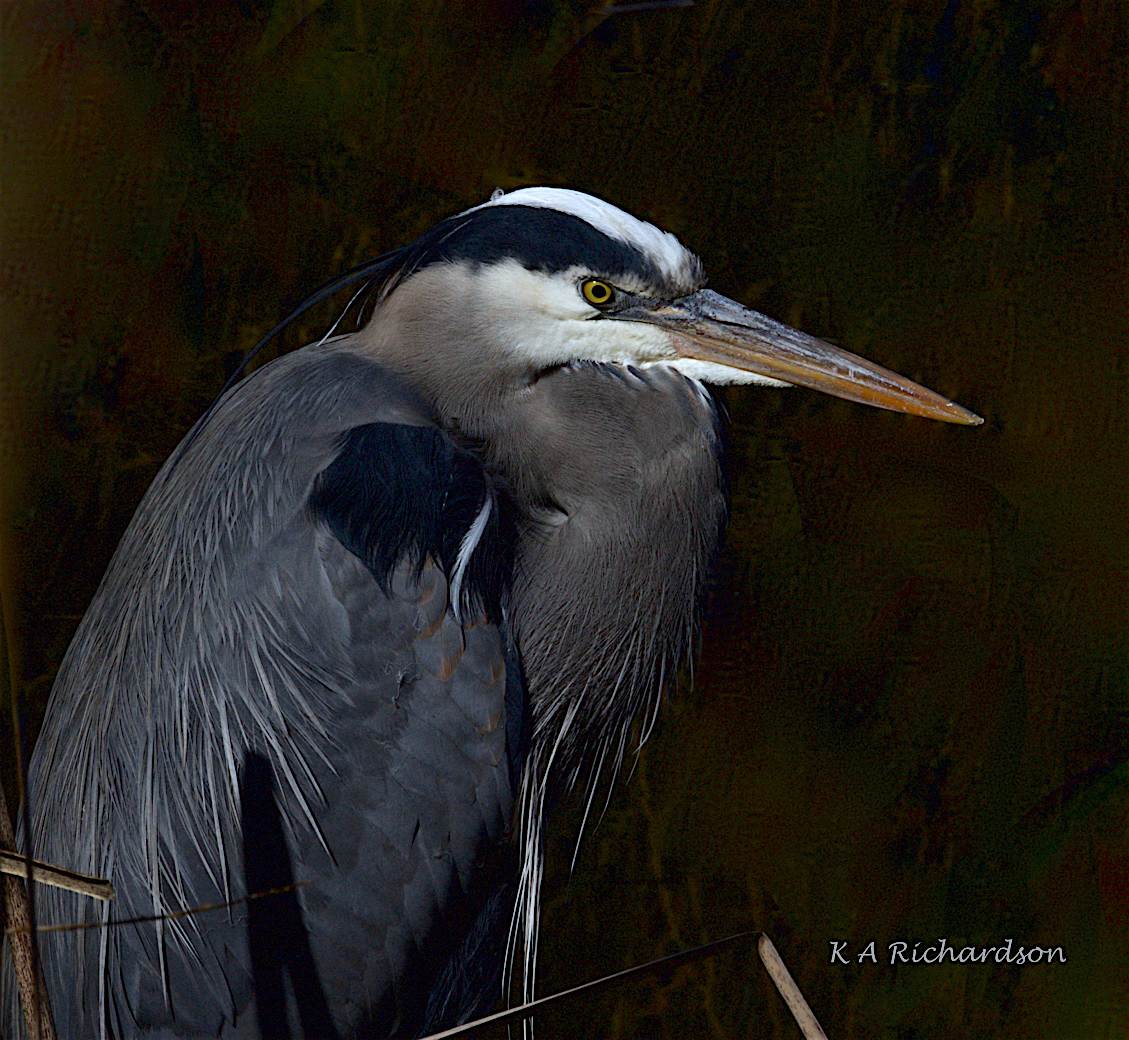
140917: Colony Farm, Coquitlam. Yearling. Note the greenish lore (just in front of the eye), absent in fully mature GBHEs. I like the translucence in this image….140829: Burnaby Lake: another juvenile, detailed. Lots of vinous colour here….150921: Mission Creek, Kelowna. Another juvenile that posed beautifully in very special light.151027: Michaelbrook Marsh. Full adult, possibly Michael….171028: Thomson Brook North: Young Adult, possibly Michael…. I like the backlighting here….171117: West Pond, Thomson Marsh. Also backlit, crest only raised by the breeze….170327: Small Belmont Pond: Ralph in full adult plumage, so close and still I could almost touch him….
And most recently, from December 30, 2017, in Thomson Marsh, West Pond….
NOTE: If the cursor changes to a hand over any photo, click to enlarge the image in a new tab.
On our very enjoyable visit to my cousin’s farm near (tent-caterpillar-free) Maryfield SK, which I mentioned in Part 3, we also enjoyed a special moment with these little guys:
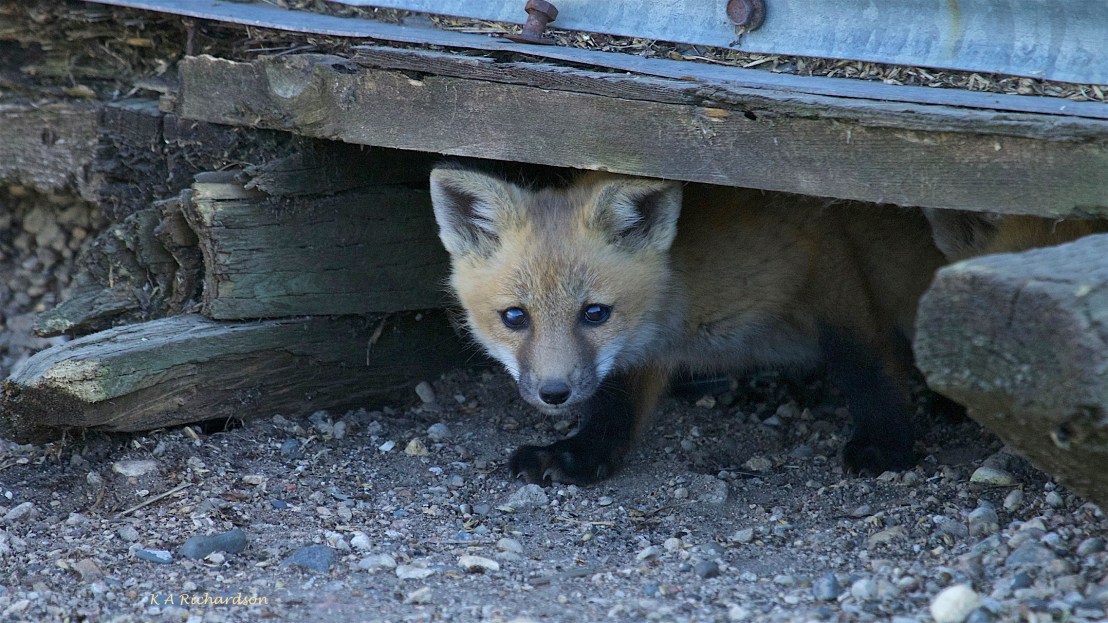
Fox kits under the granary. The one out front was definitely most confident. I dubbed him “Francis.”Although his siblings were curious, only Francis dared to come out….For Francis, it seemed to be a game. If I moved in, he retreated…but not so far that he couldn’t see me….Here he seems bored with the game; either that or he needed a quick nap!
Eventually, I got too close, I guess, and Francis disappeared with the the others. I thought I should have a look around the back side of the granary, and, as I moved carefully in that direction, who should come round the bin, but Francis, as happy to see me as I was him — maybe not, but the backlit shot here is a memory I’ll keep alive as long as can!
Surprise!!
It’s hard to say why this felt like such a blessing. Of course, they’re cute, but they can be a pest on a farm or even an urban environment. I often used to see them in Sapporo, where I lived from ’89 to ’02. In the spring of 1990, I’d had a delightful encounter with a family of Hokkaido fox kits near the top of an urban ski hill not far from where I lived.
Since returning to Canada from Japan in 2002, I hadn’t seen any foxes in BC or elsewhere. It was just a coincidence that this summer, my cousin was not keeping chickens as she often does, so she and her husband were enjoying the foxes, too, and told me where to look for them. This is a memory I’ll cherish as long as I’m able to!
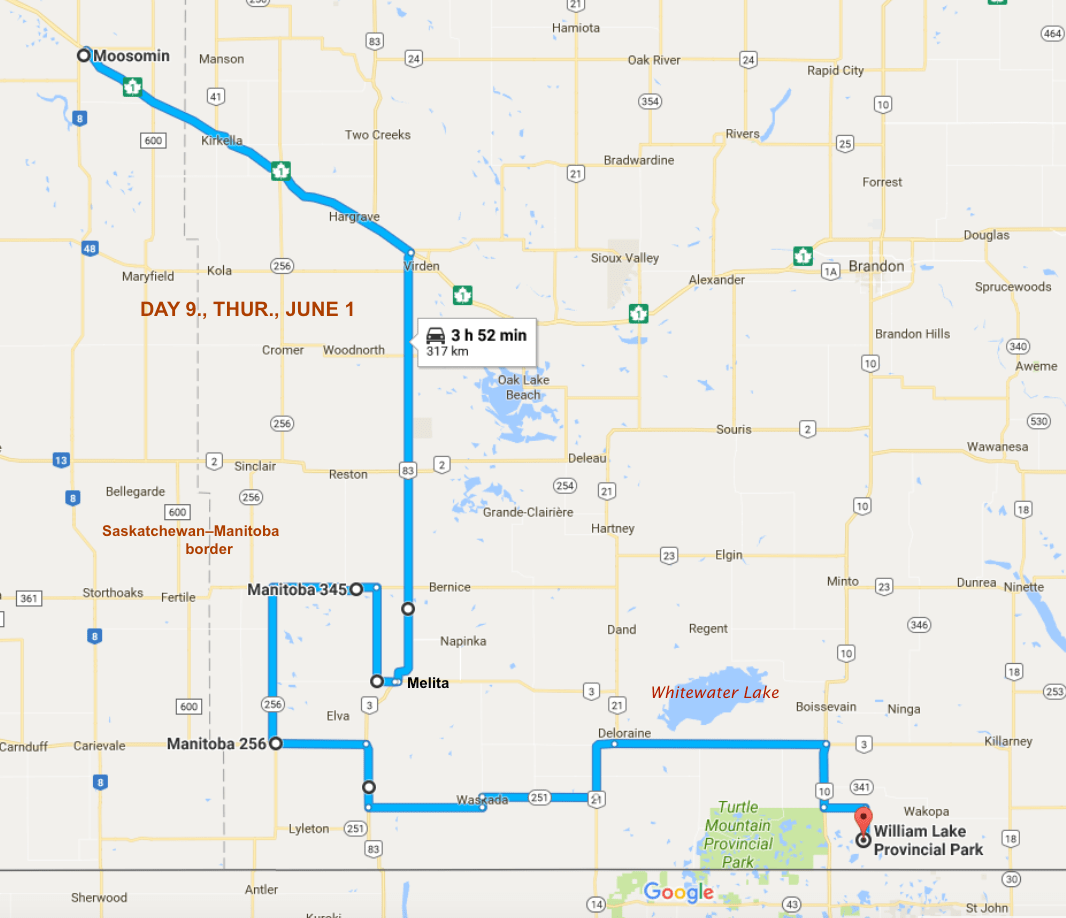
The next day, we pushed on — across the border into Manitoba where we hoped to do some birding around the village of Melita and to camp in the Turtle Mountain Park before visiting Whitewater Lake the next day. Then we’d be on our way to Winnipeg.
A short day in terms of distance, but with lots of exploring. We actually travelled a lot farther than this map shows….
Well, the birding was okay, no caterpillars to contend with. Not fantastic, but okay. Turtle Mountain, however, turned out to be so much less than I’d imagined all through my youth when I looked south from the Trans -Canada Hwy on our regular visits from our home near Winnipeg to Moosomin where my grandmother lived, and the farm which Alec and Iris took over in the 1950s. My research with Google Maps indicated that there was a decent road from west to east through the Park. That did not pan out. So, enough said; what’s a little wasted time?
We headed north to Boissevain, a town I’d long known of but never visited, in hopes that we could camp there. When the campground proved quite unsatisfactory (I’ll spare readers the details), we thought we were stymied. Once again, ended up at Subway for dinner where we enquired of one of the employees as to where we might find a decent camping spot. He immediately and strongly recommended a place that hadn’t even come up on our searches, a spot called William Lake Provincial Park. We decided to have a look. It turned out to be one of our favourite camping spots of the summer. Not that we have many photos to show for it! Fortunately, Nana took some with her iPhone.
William Lake: Car camping among the scrub oaks. Breakfast. No caterpillars!William Lake, through the trees. Wish we had taken more shots here!
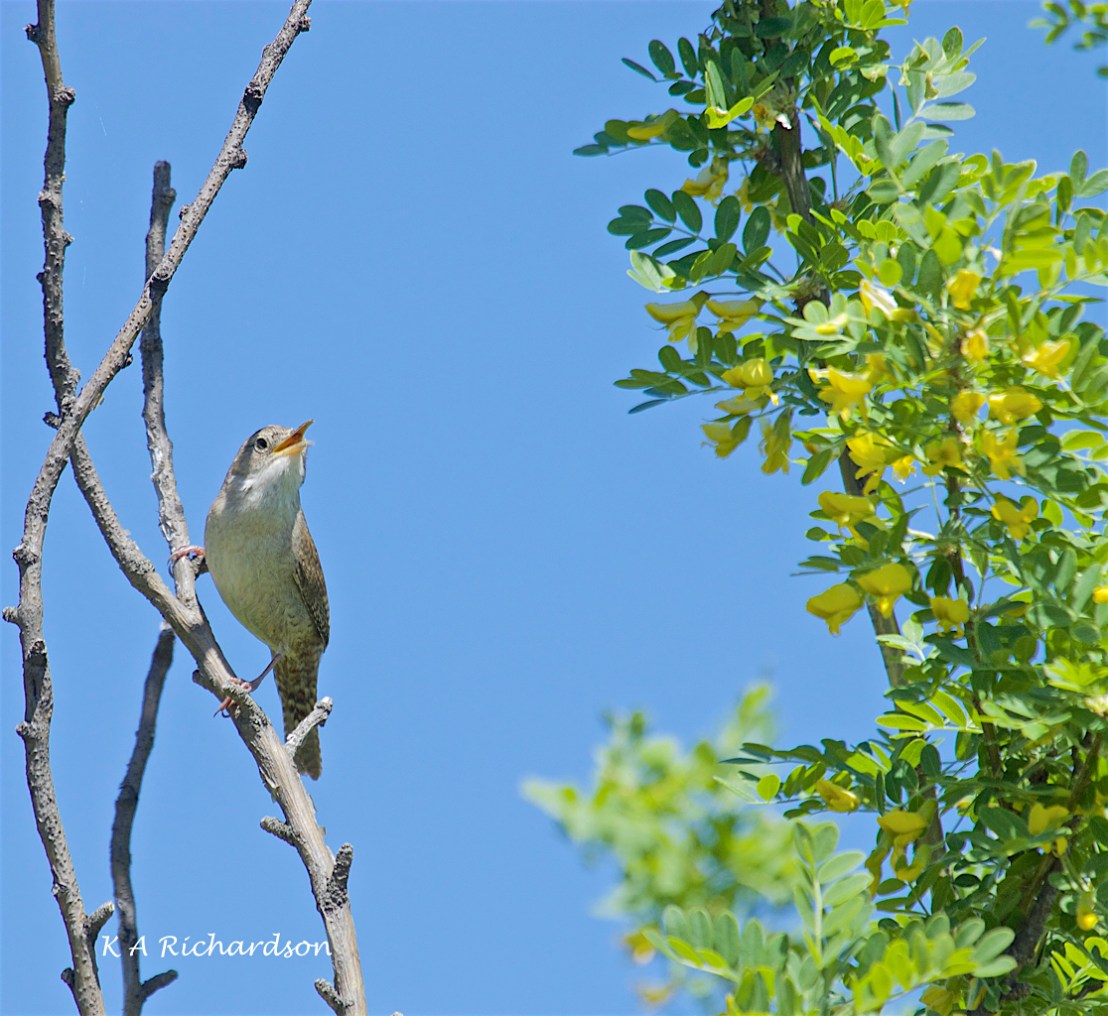
Some of its features couldn’t really be illustrated with photos: June 2 — no caterpillars!Clean heated washrooms with showers and hot and cold water! Wonderful morning birdsong —particularly a lovely House Wren that really didn’t want to pose for pics as it foraged among the oaks. Free firewood! And we had the place almost entirely to ourselves…. Until the next morning (Friday, June 2) when, as we were leaving, we found the gate that had been dark and unstaffed the night before, now processing a line of cars coming in. As the exit was closed, I went in to pay for our night’s stay, only to be informed that we would also be charged the $5 day pass fee for Friday, as well. I explained that I didn’t that was reasonable, and I was “let off this time”…. Good ol’ Manitoba. (BC did away with day passes several years ago….) If they had simply rolled the five bucks into the camping fee, we’d never have minded. Funny how that works: don’t nickel and dime me; in fact, I’ll give you a dollar if you don’t!
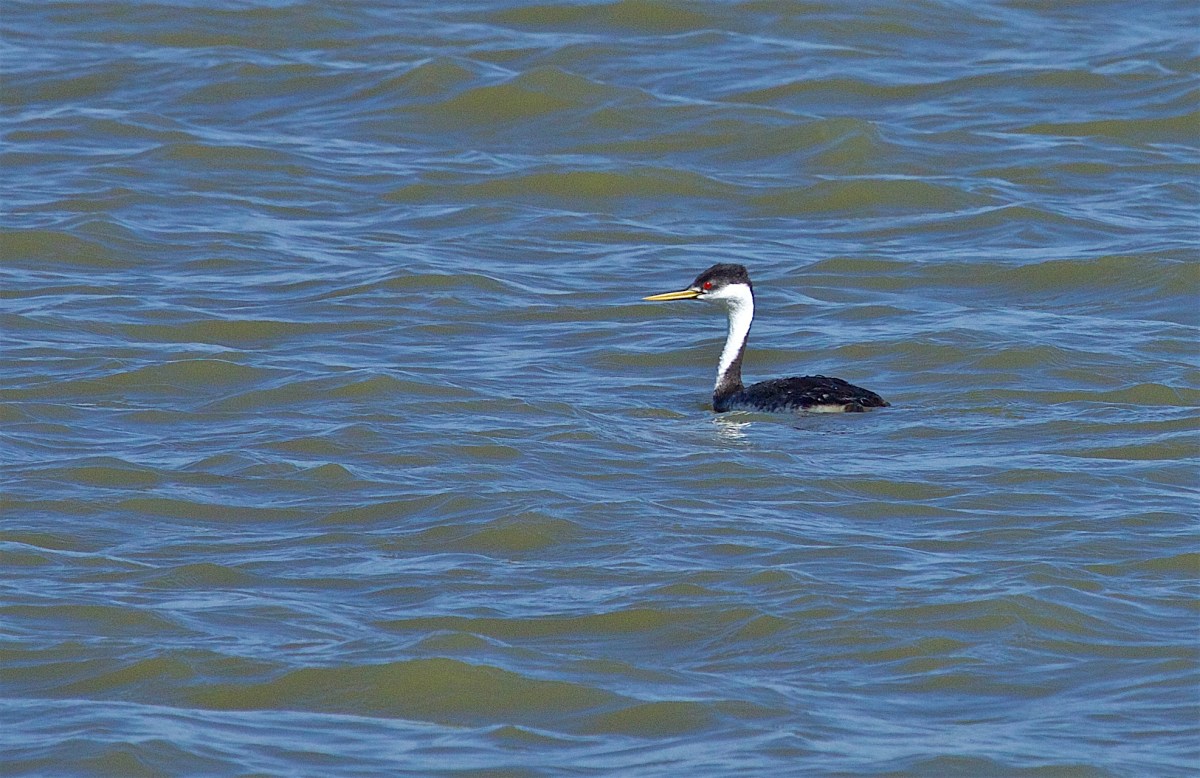
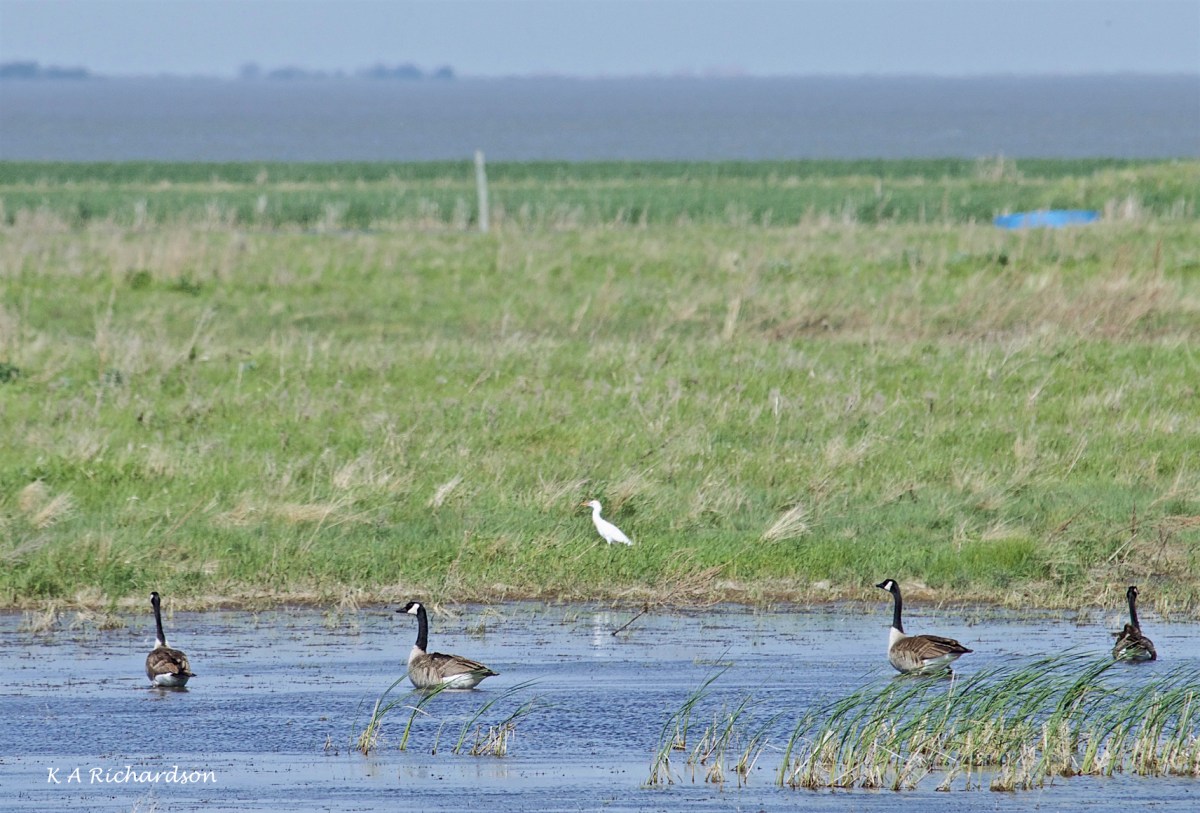
So, off we went, backtracking to Whitewater Lake, which also turned out to be a mild disappointment. Although it’s quite large, there’s a long spit that stretches out from the marshy shores and has an observatory gazebo of sorts at the end. Unfortunately the road/walkway out to it had been washed away recently and we couldn’t get to the end. While we saw birds including Western Grebes, a Cattle Egret, and other waders, gulls, and more, they were generally too far away to get decent shots.
Long shots at Whitewater Lake: Western Grebe (This is already cropped heavily!)Whitewater Lake: Cattle Egret with Canada Geese. It was windier than it looks here….
There was also a small domesticated herd of bison on the shore in the distance. And, as usual, the gusty wind that helps account for the lake’s name was less than wonderful!
So, back to the plan: drive across southern Manitoba through places I’d know of nearly forever but had never to my recollection ever visited: Killarney, Cartwright, Crystal City, La Riviera, Pilot Mound, Manitou, Morden, Winkler, Carman, each with it’s own claim to fame that I’m not going to go into here….
Day 10: June 2, 2017
If the surprises of the day, to this point, had been less than memorable, what happened in Killarney, a town of 2200 with its strong pretence of an Irish heritage, was not only remarkable, but wonderful. I’ll get to why in a moment.
First, though, this bit from Wikipedia:
“The Town of Killarney was officially incorporated in 1906 [KAR —about the time my grandfather began homesteading near Moosomin, SK]. An Irish land surveyor named John Sidney O’Brien named Killarney Lake (before that, it was called Oak Lake by the aboriginal people) after the Lakes of Killarney, in Ireland. Legend has it that as he sat on the shore of the lake, homesick for his native home, he took a bottle of “Good Irish” from his pack and, pouring it into the water, christened the lake Killarney. The “Irish”-ness of the community is often used as a tourist attraction with things such as green fire engines, Erin and Kerry Parks, Little Irish Downs, and many other good Irish-themed attractions used to play up this theme. Killarney, Manitoba does not have any actual connection with the town of Killarney, Ireland. Most of the people who originally settled the region were from the Scottish Highlands, the English or were Mennonites or Hutterites of Central European extraction.”
What will stick in my mind most, however, are the images of this clean, charming, progressive town. Although Highway 3 allows one to bypass it, that would be a great mistake. My advice? Turn off the highway, and drive towards Killarney Lake, not “man-made,” but certainly human-enhanced. Stop at Erin Park and look for Blue Jays, Grackles, and lots of other birds.
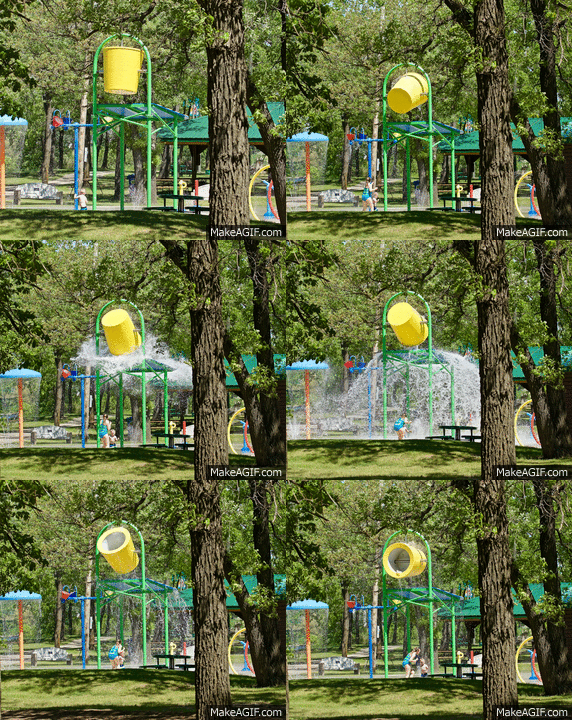
The Splash Park
Enjoy the families playing in the park and its fabulous Water Bucket Splash! I’d never seen one of these; instead of simply shooting a video, I took bursts of the bucket filling, then dumping its contents over the delighted children. The process takes much longer than this animated gif indicates — we miss the wonderful suspense…. When I got home, I rued my “mistake” until I found software online that allowed me to make this image. Turns out my blog doesn’t allow me to upload videos anyway!
What blew us away, however, were the White Pelicans, a bird I’d long wanted to photograph! We have ’em in BC, of course, but they’re only rarely seen at either The Coast or in the Okanagan Valley. I had no forewarning that I’d see them here, so the surprise was truly thrilling. Our first look came at Erin Park where we saw them at a distance both in the lake and in flight. It never occurred to me that I could get better shots than the ones below, so I happily accepted what the lake was serving.
First views: click any photo to enlarge them all….
Pelicans erythrorhynchos arriving….
Landing, er, watering?
Youngster or done breeding?
Ready to breed….
An even better surprise lay in store, however. We got back into the Murano to go uptown and find some lunch. First, we had to cross the bridge. And there they were: the main flock — so close in some cases, I could barely fit them into my viewfinder. Took a jillion photos and still managed to leave some great shots wanting to be taken, like a conflict in which a Red-winged Blackbird objected defiantly to a Pelican cruising too close to shore. Nana urged me to capture the moment — it went on for several minutes — but after getting the shots below (and a whole lot more), I figured I could come back after lunch and likely find this behaviour again. I was wrong. I know, I know! I should always take my wife’s advice!
The closeups: Click any photo to open it, enlarged, it in a new tab.
Good things happen when we work together….Of course, there’s always one who’s lookin’ the wrong way!Feeding frenzy!Success!Okay! I’ve caught one; now what?Yeoww!! Catfish got my tongue!!Down the hatch!After lunch cleanup….Serenity at last….
And, of course, there have to be more flight shots! Click any photo to enlarge them all….
Pelecanus erythrorhynchos in flight – one!
Two!
Three!
Four!
Five! Enough already!
Many of these shots were less than perfect. If I lived in Killarney, I’d be down here every day honing my skills and working the light! I think, now that I’m home and looking more closely at the map, that there are probably several other parks and ponds I’d be checking out on regular basis. Will I ever get the chance? Time will tell….
(The last part of Day 10 is included in the follow-up post….)
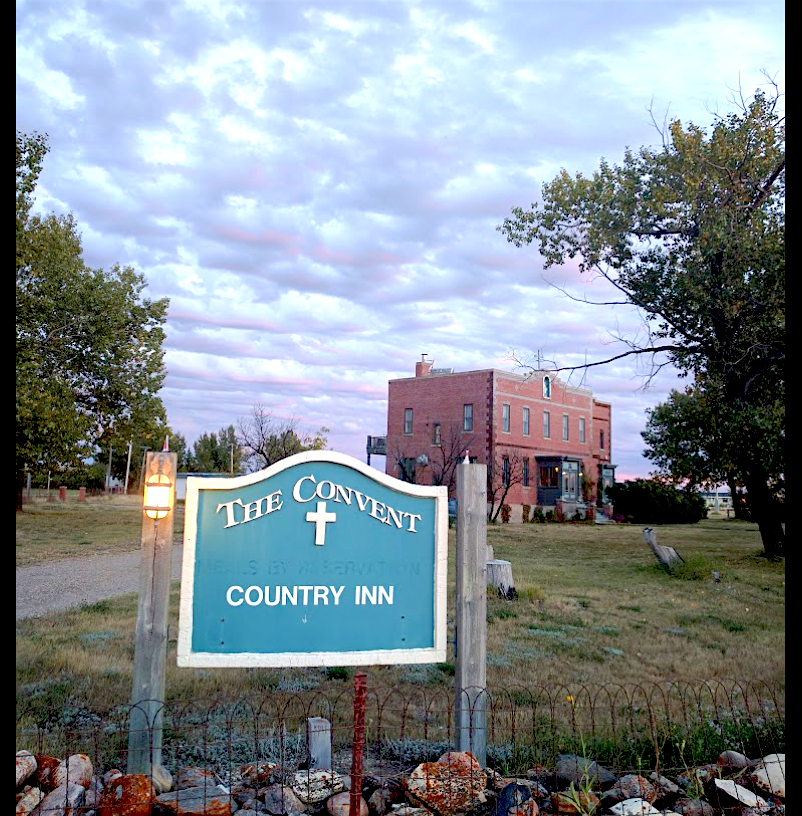
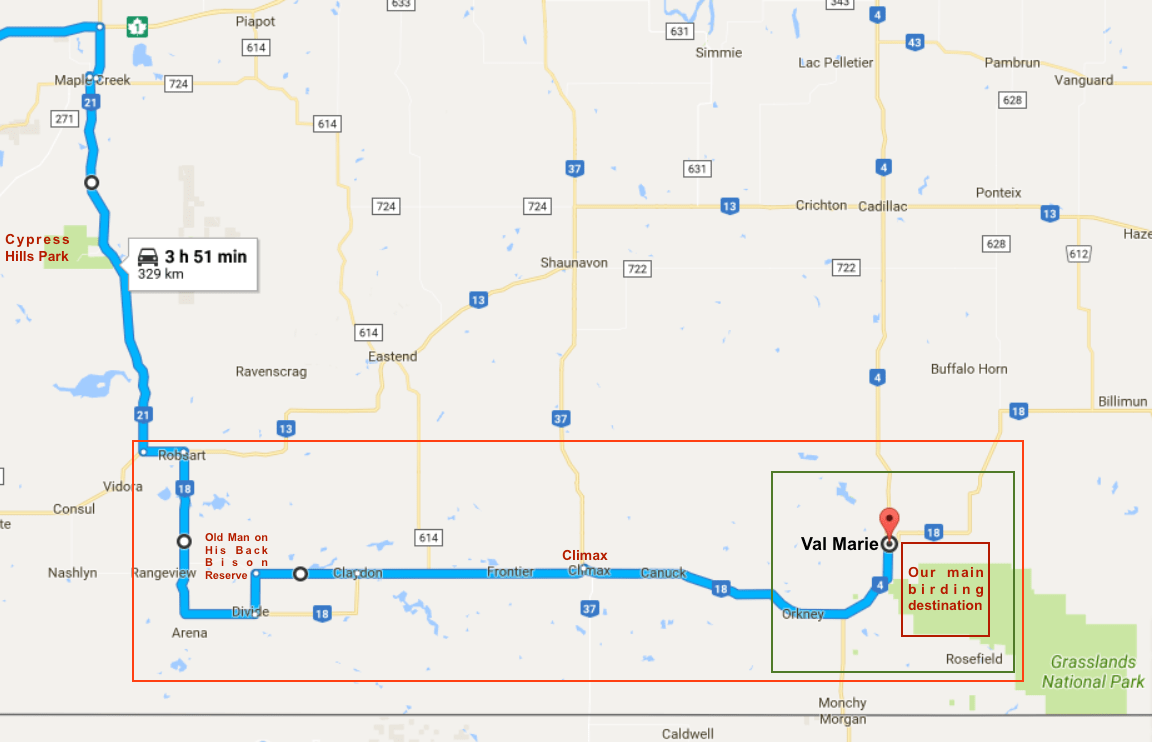
While we were visiting Grasslands National Park, we stayed in Val Marie atThe Convent Inn, a fabulous, unpretentious bed and breakfast/inn, which we had learned about from a fellow birder/photographer from Vancouver, Debra Herst.
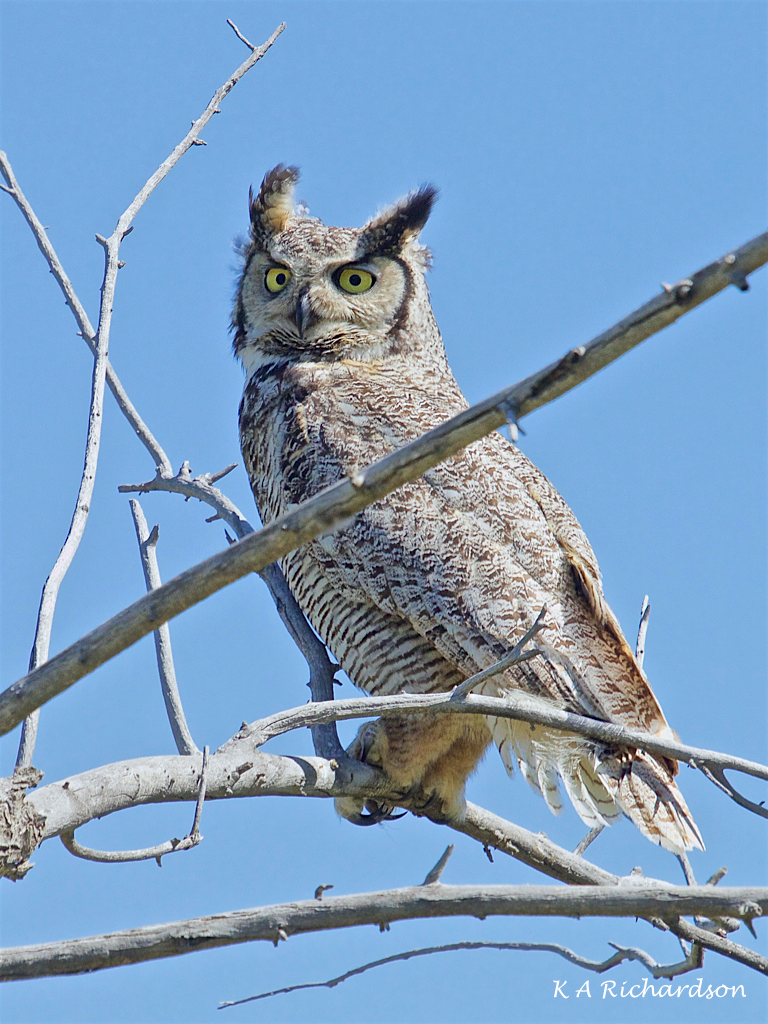
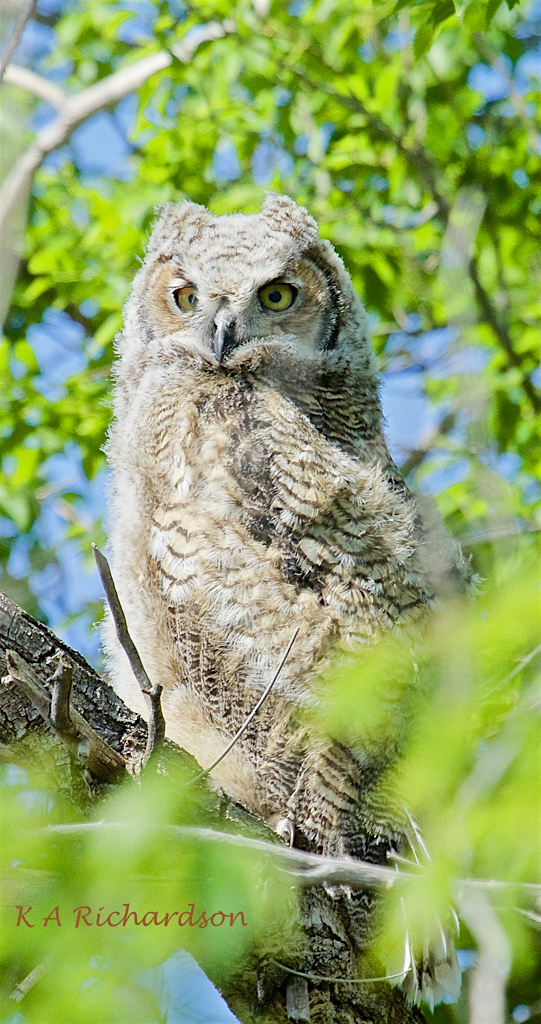
We greatly enjoyed our visit and are extremely grateful to Debra! Ironically, although we knew that she was travelling to Winnipeg a week or so ahead of us, we were greatly surprised to see her at breakfast on our third day. Turns out we had just missed each other, the afternoon before, at Two Trees, a small park-within-the-Park just southeast of Val Marie. We had seen Barn Swallows, Bobolinks and few other familiar birds there, but had completely missed some of the ones Debra had found, including a Great Horned Owl with two ready-to-fledge offspring. Debra gave us precise instructions on where to find them, and we shared where we had seen Chestnut-collared Longspurs the previous evening — on a route that she might have bypassed. She ended up getting great CCLO shots that dayon her way west while we returned to Two Trees for one of best days of birding on our entire trip! You can see some of other birds we photographed on the previous post — Part 5….
It was the GHOWs, however, that were, among many great moments, the most memorable! Here are some shots that illustrate why:
With her iPhone, Nana shoots me photographing the owlet…. (No photographers — or birds — were injured in the making of these visuals.)
What made this find so special? After all, we see Great Horned Owls frequently at home, Not long before we left, I photographed a mother and owlet at the golf coursewhere my eldest son works. This, however, was the first time I’d seen an owlet on the ground.
When we found the pair of youngsters, they were both well up in branches of separate trees. One was more hidden. After getting some decent shots of the more open bird, and of the mother some distance away in a dead tree, I wandered off following some of the song birds that had made themselves noticeable (see previous post — part 5). Nana, however, stayed nearer the owls’ habitat at the west end of park.
Hester, closeup.Mom watching over her young’uns from a nearby snag.
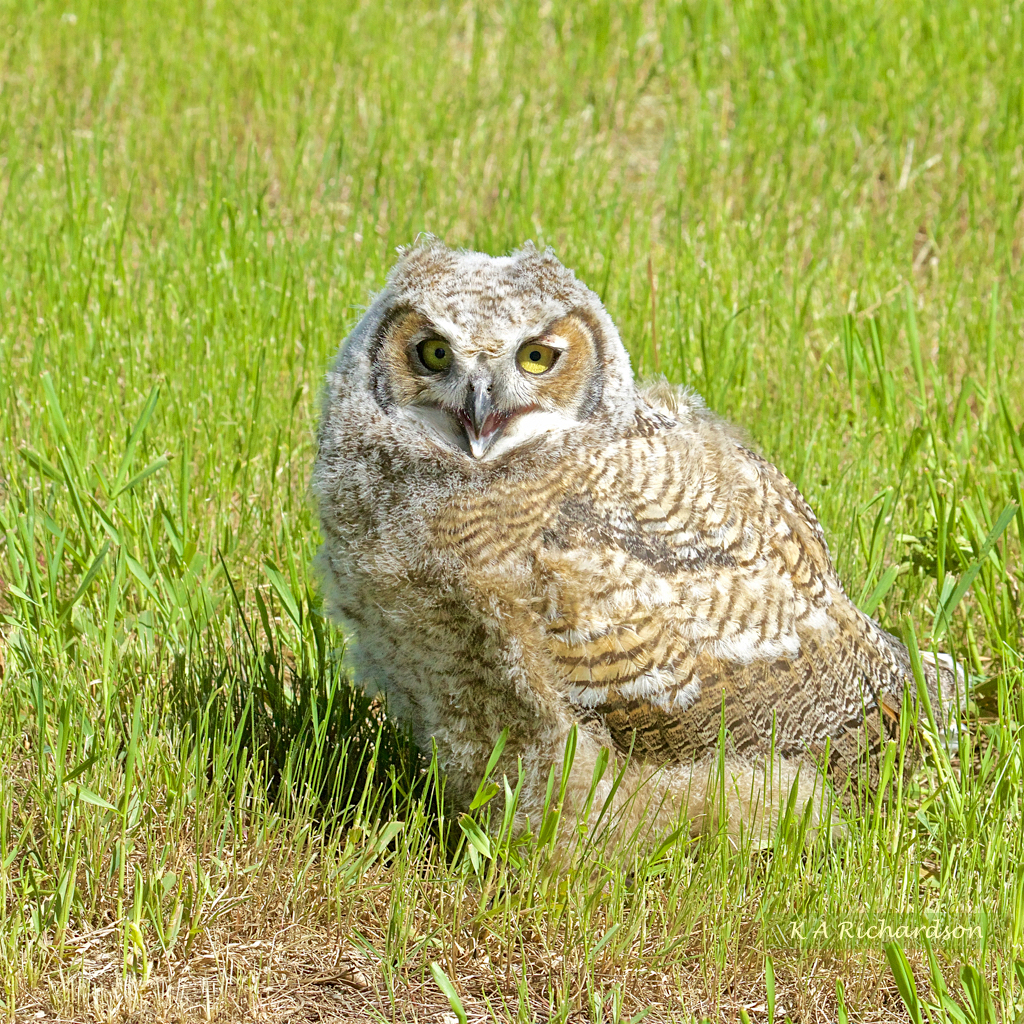
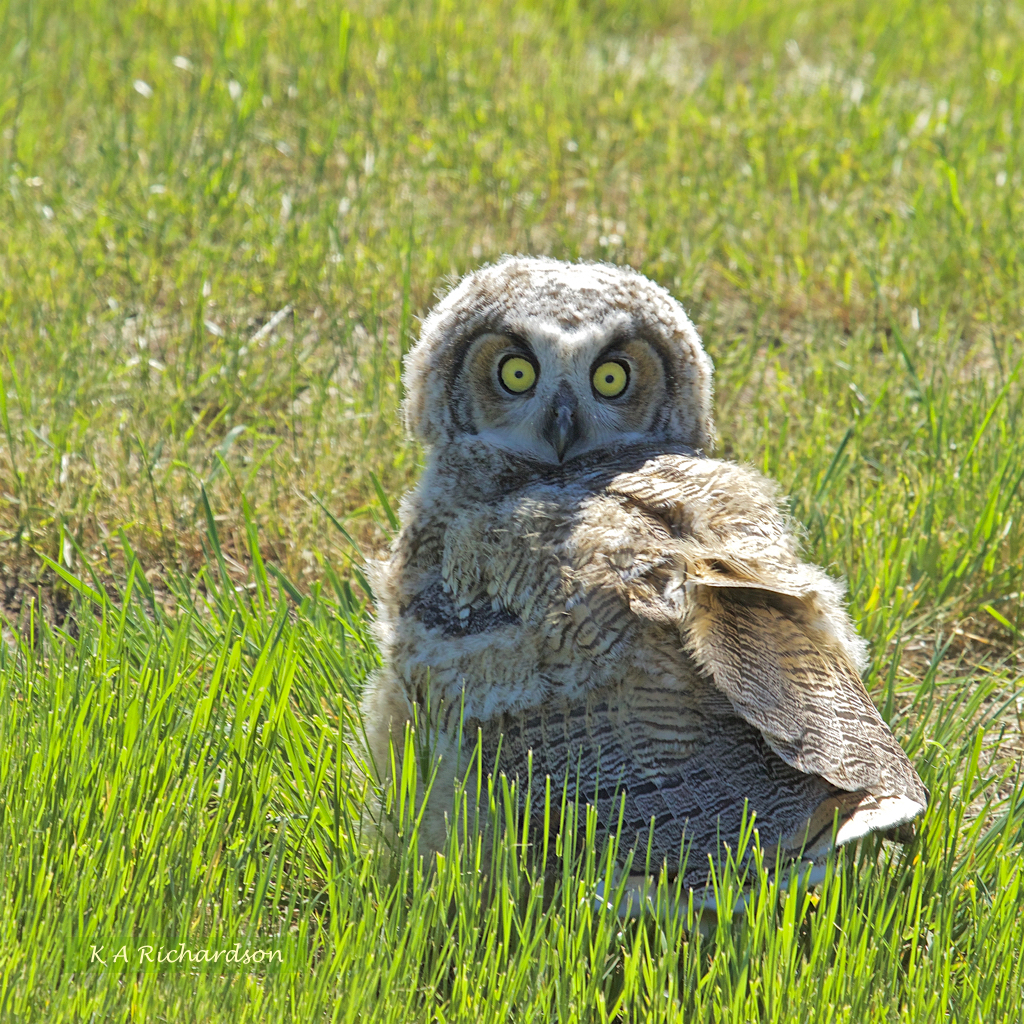
Several minutes passed as I pursued orioles, a thrasher, and an unidentified warbler, (later ID’d as a juvenile Blackpoll). Soon Nana and I were at opposite ends of the park. Then I noticed her beckoning, rather seriously, for me to come back to where she was. She was quite concerned about Henry who had somehow managed to find the grass. Whether he had fallen, or was testing his flying skills, we don’t know. He did not seem injured, but he had clearly become vulnerable. While we didn’t want to harass him, or interfere with Nature’s plan, I did want to use my telephoto to capture the moment. Nana used her iPhone to make a short video. And here are the photos:
Henry in the light…. Could that be a smile?Henry in shade…. I am curious, yellow-eyes!Henry closeup. I just wanted to have a look aground—er—around….
Nana was quite worried about the little guy, especially when he took to running, well, waddling, around, and once when he tried to slip outside the enclosing hedge and into the open grasslands, I helped turn him back into the trees and waited. Eventually, he discovered that, to some extent at least, he could make his way back up into trees. Here, he climbs a snag:
Henry gains the upper hand—er—wing, again. A bit unsteady, but he’ll survive, methinks.
When we left, we trusted that Nature would take care of everything as Nature does. Perhaps owls are raised here every year. If you’re out that way in May, you might want to have a look. We’re certainly going to remember our experience for as long as we have memory!
NOTE: Any image on which the cursor changes to a hand can be enlarged in a new tab simply by clicking it.
Although we were excited to see the mammals of the grasslands (and there were a lot we didn’t see, like badgers, skunks, and others) it was the birds that we came here for, primarily.
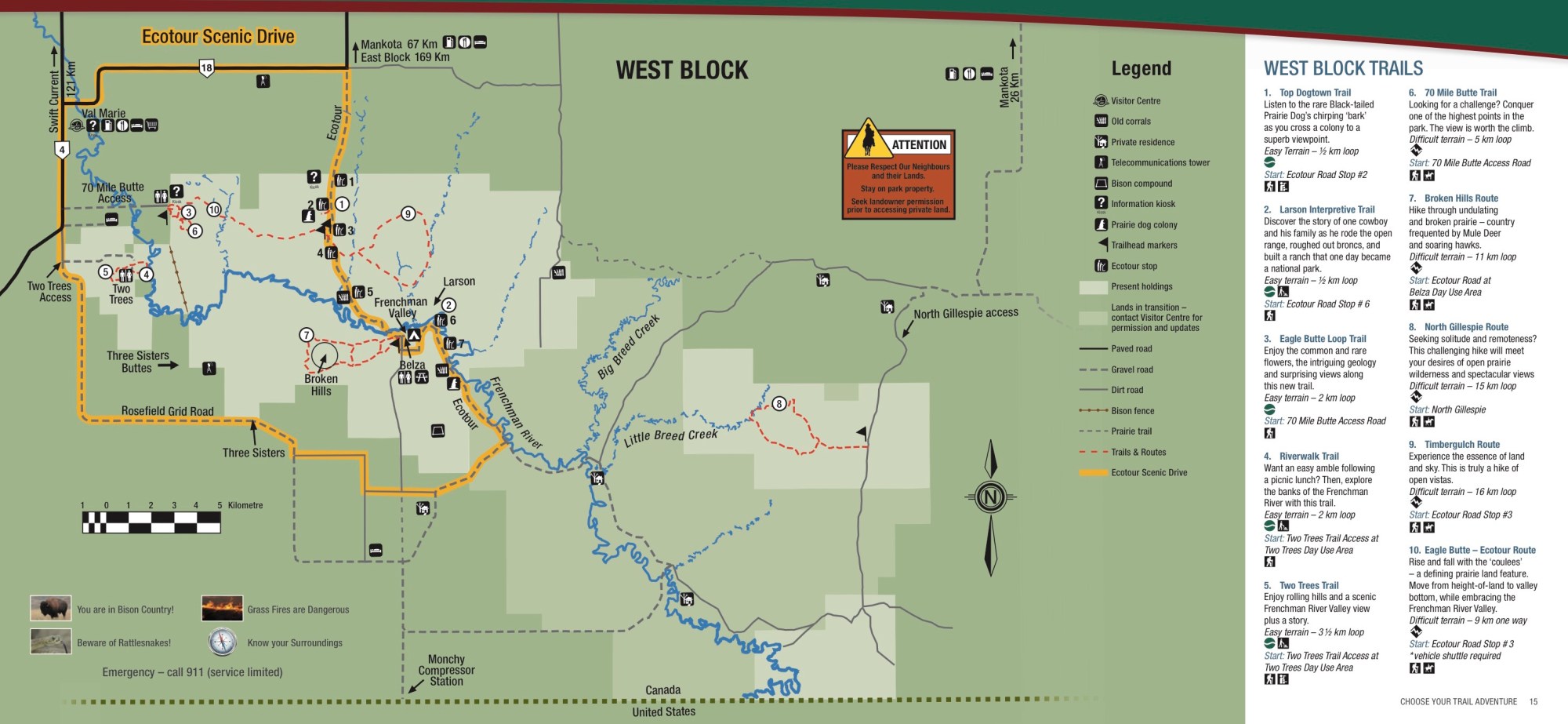
Most of the birds we photographed were seen within the Ecotour Scenic Drive (in orange).
So here, without fanfare are some of our favourites from this special region presented in alphabetical order.
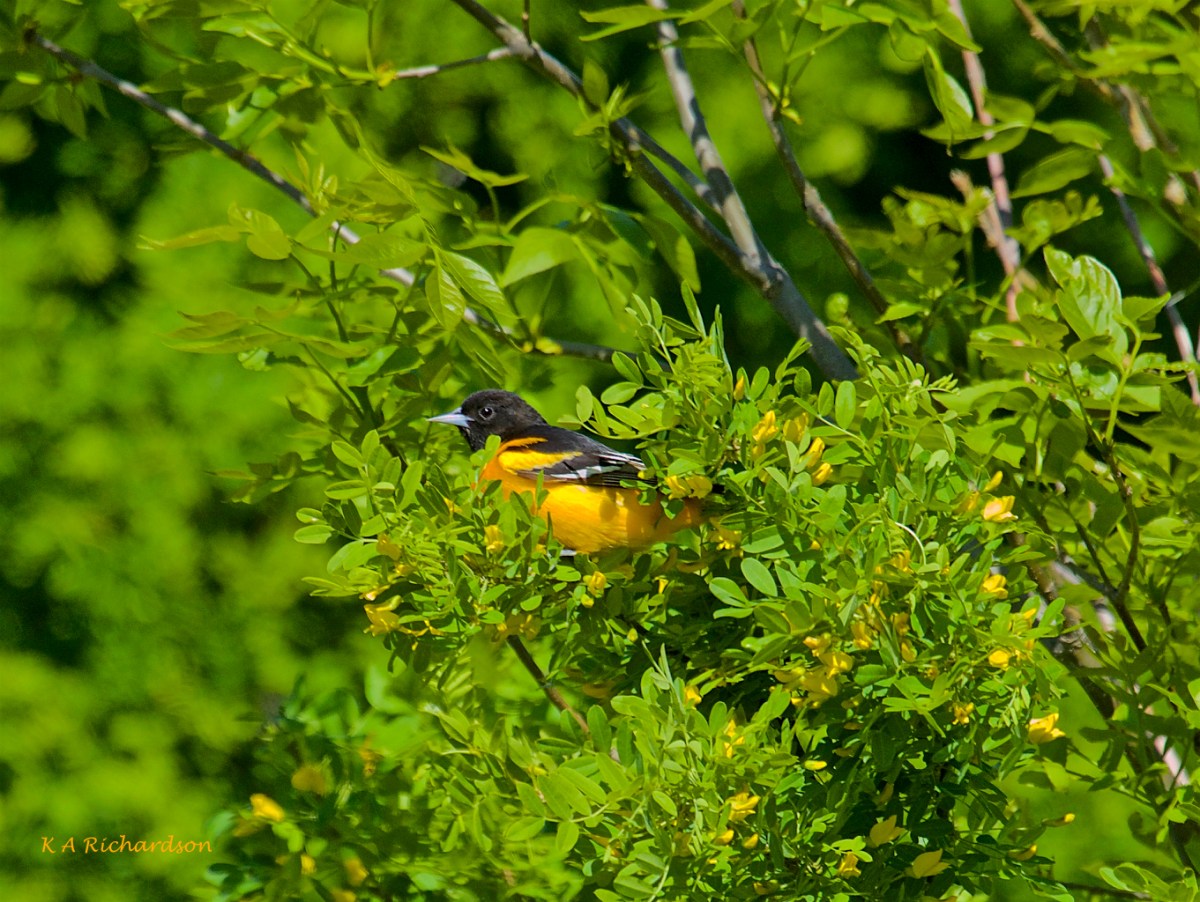
Baltimore Oriole male (Icterus galbula) at Two Trees
Although I had seen this species before (not sure how long ago), this was my first opportunity to photograph it. I like the shot above, even though, he’s hiding. We eventually got more open looks when we reached Winnipeg, MB.
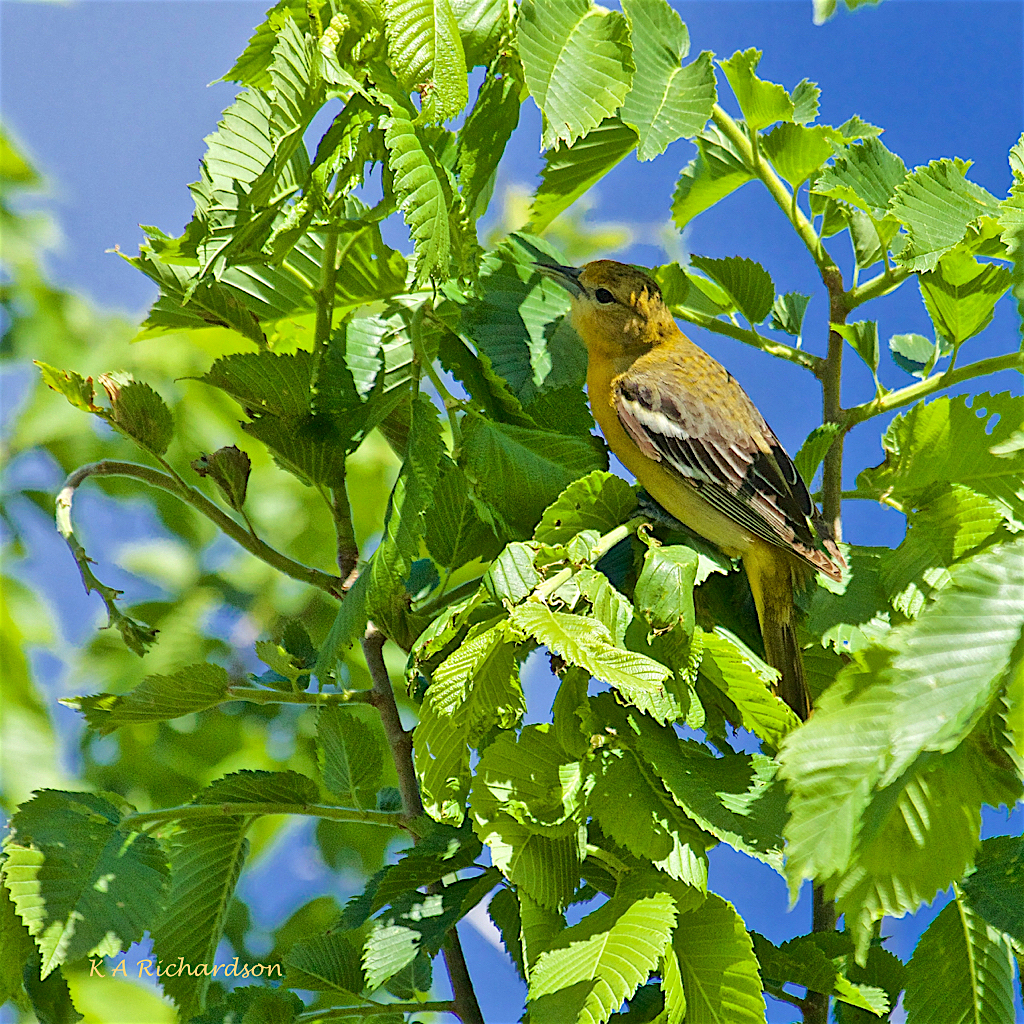
Baltimore Oriole female (Icterus galbula) at Two Trees: quite similar to the Bullock’s Oriole that we see in BC.
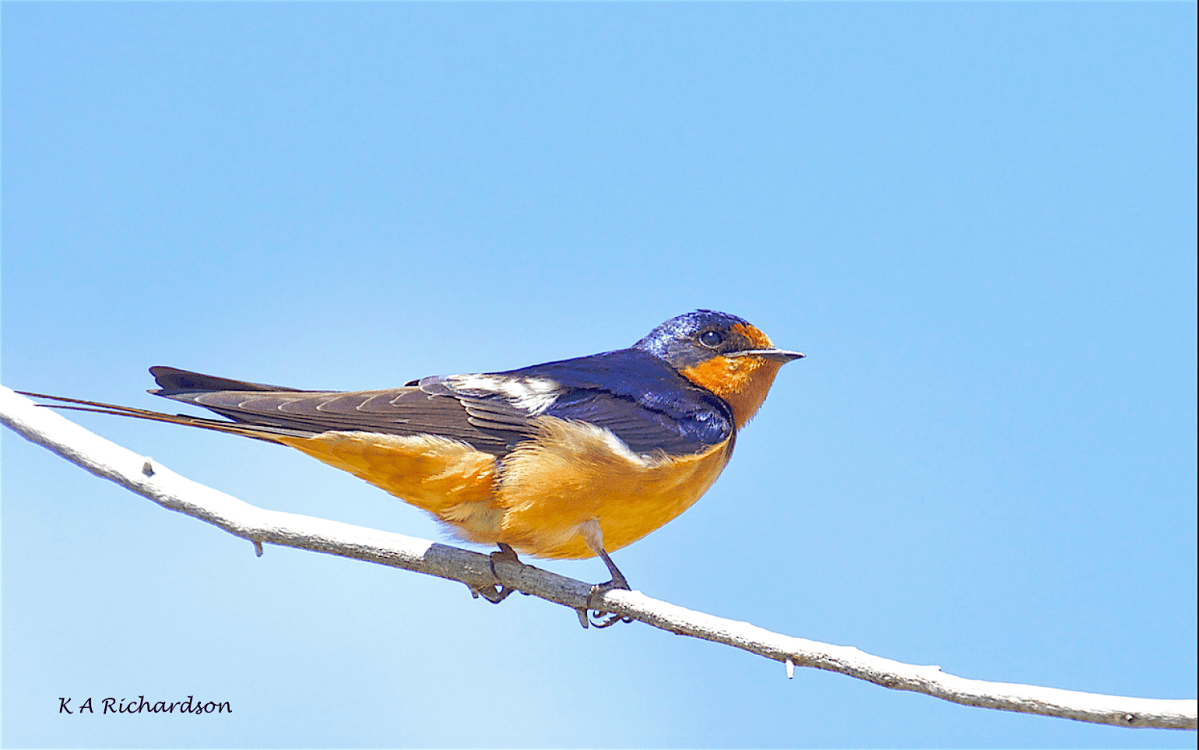
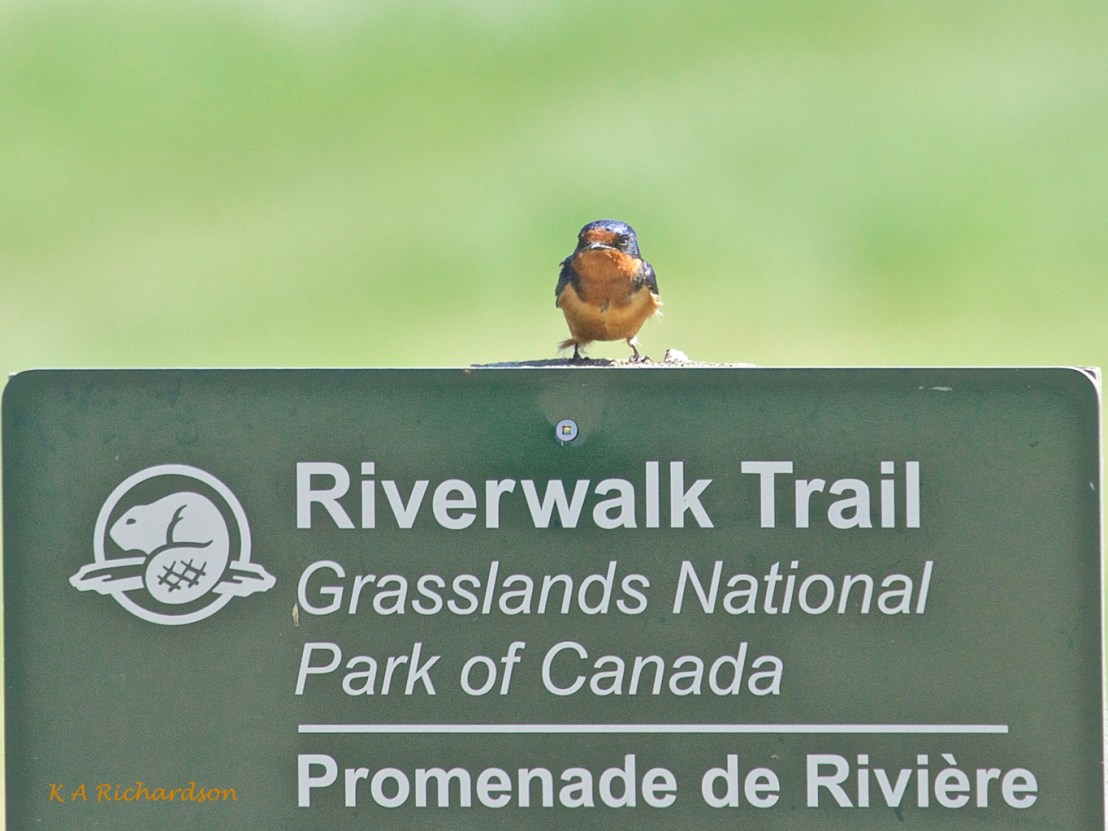
Barn Swallows have been a nemesis bird for me for several years. I see lots of ’em, but they’re always, it seems, on the wing. At Grasslands, I had two special opportunities to view them up close and posing, and I’m reasonably happy with the photos I got. (After returning to Kelowna, I finally found a place where, for a week or so each summer, I should be able to get BASWs, especially juveniles, taking a breather and availing themselves to photographers….)
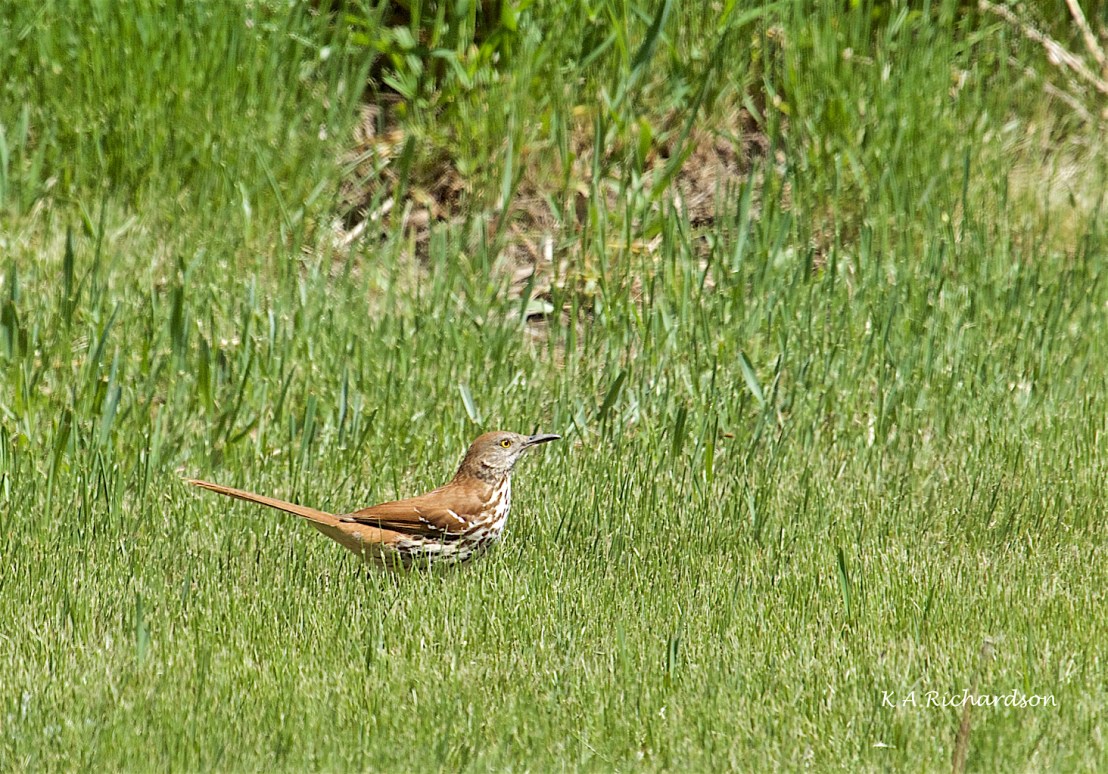
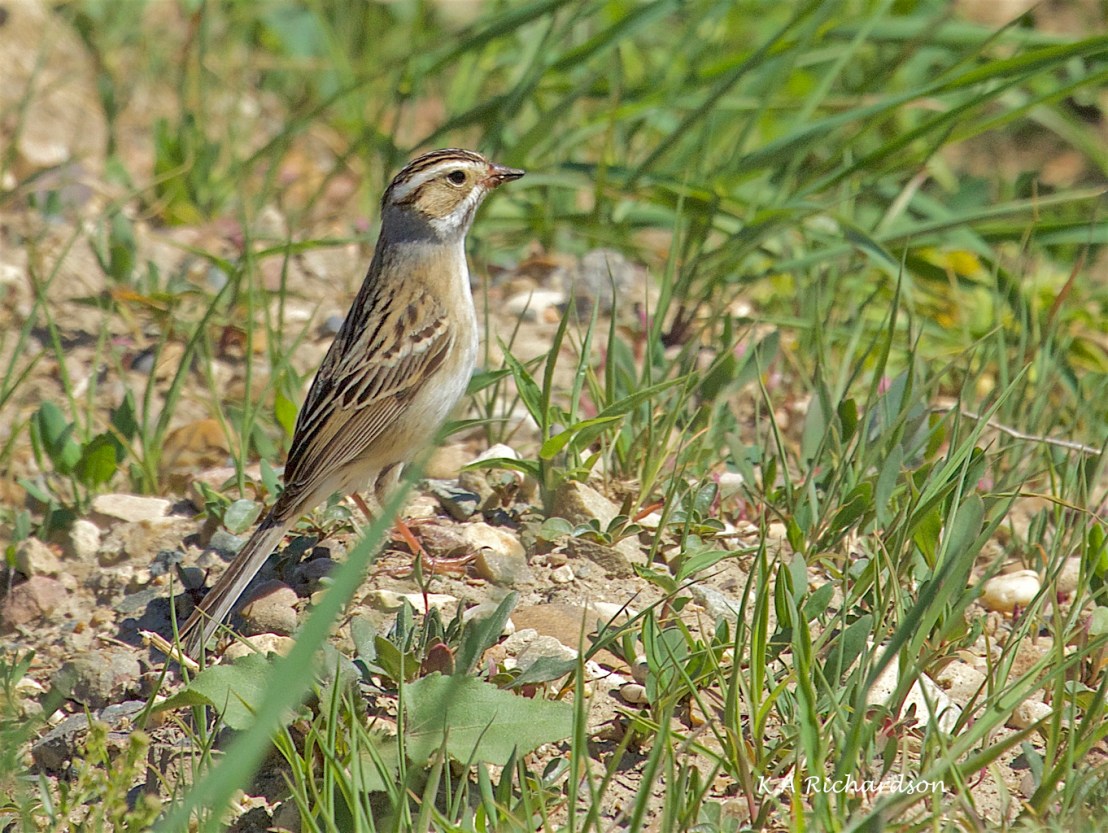
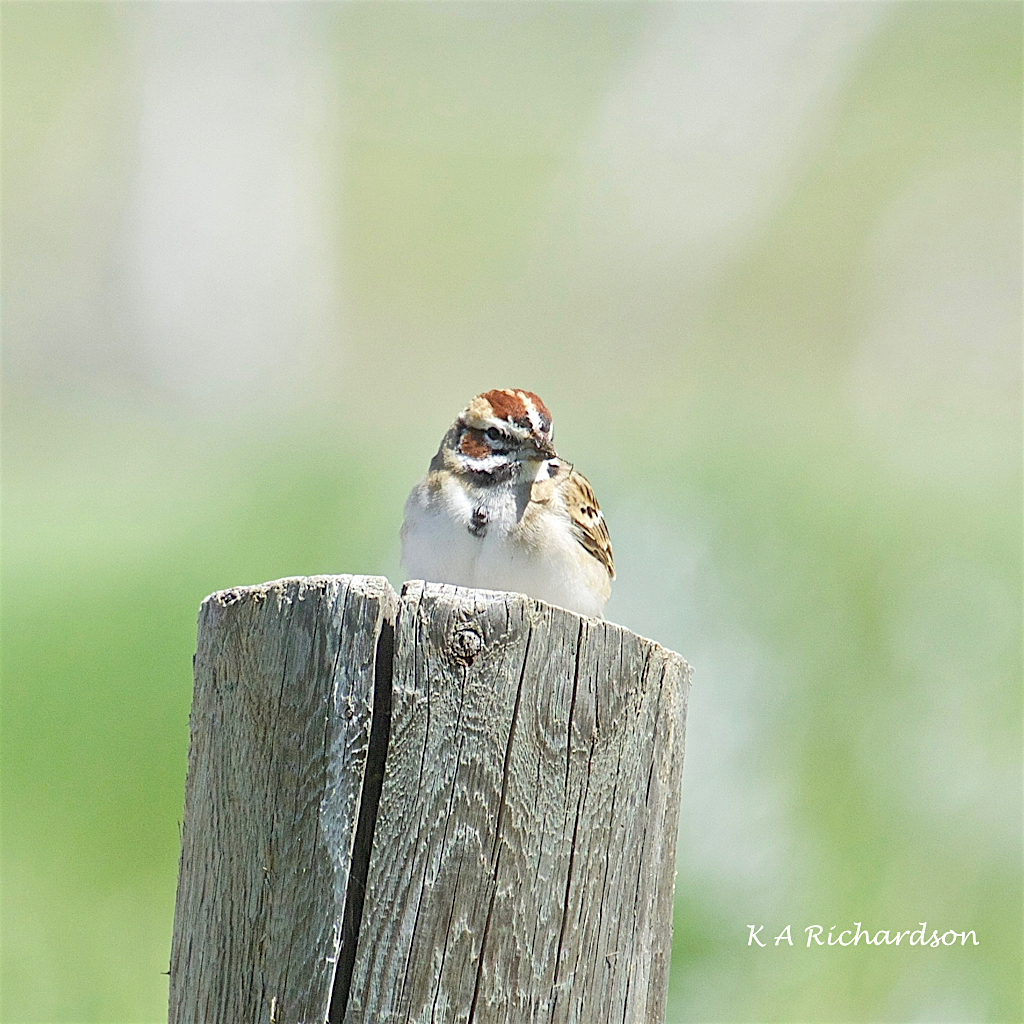
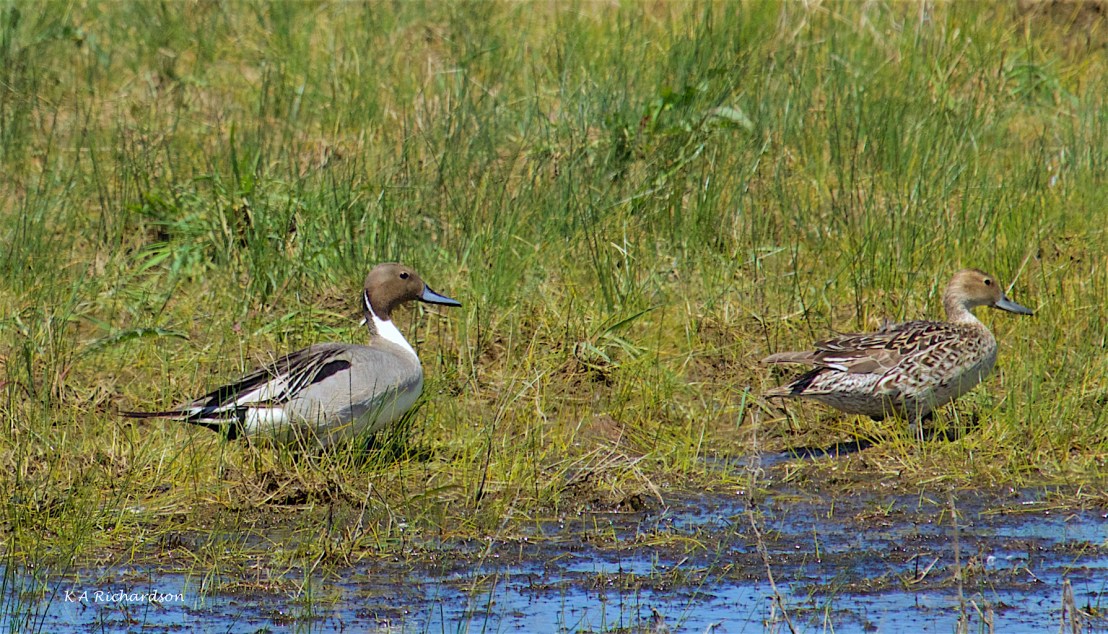
Barn Swallow male (Hirundo rustica) at Two TreesBarn Swallow female (Hirundo rustica) at Two TreesTwo Trees BASW warning us about the trail: “All yer gonna see is Bobolinks!”Bobolink (Dolichonyx oryzivorus) on Riverwalk trail at Two Trees. (The Barn Swallow on the sign in the photo above was right; while all we saw were Bobolinks, we were delighted, even though this one was devilishly evasive!)Another Bobolink (Dolichonyx oryzivorus) on Riverwalk trail at Two Trees — a bird I had long wanted to see again! Last time — 1960!Brown Thrasher (Toxostoma rufum) at Two Trees — another lifer!Brown-headed Cowbird male (Molothrus ater). We often saw these birds with Bison….Clay-coloured Sparrow (Spizella pallida) at Two Trees — a lifer, too.Eastern Kingbird (Tyrannus tyrannus)Great Horned Owlet (Bubo virginianus) at Two Trees — first look; there’s a separate post on this youngster and his mom and sister (to be fair, I was just guessing on the genders)….Horned Lark pair (Eremophila alpestris): thousands of them, in total, a few at a time, always a few feet in front of the car!House Wren (Troglodytes aedon) at Two TreesLark Bunting (Calamospiza melanocorys): score yet another lifer!!Lark Sparrow (Chondestes grammacus)Northern Pintail pair (Anas acuta). Far more common on the Prairies than around Kelowna!Savannah Sparrow (Passerculus sandwichensis anthinus)
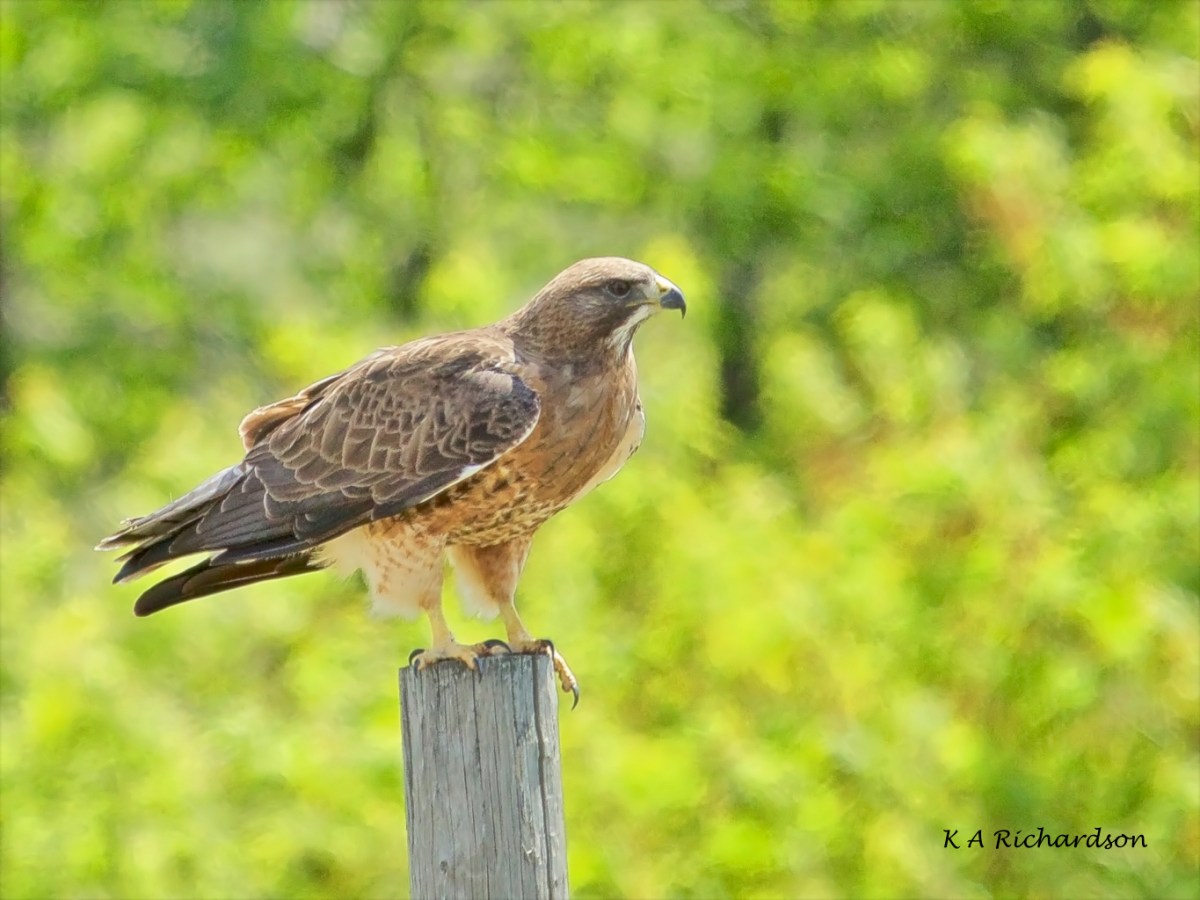
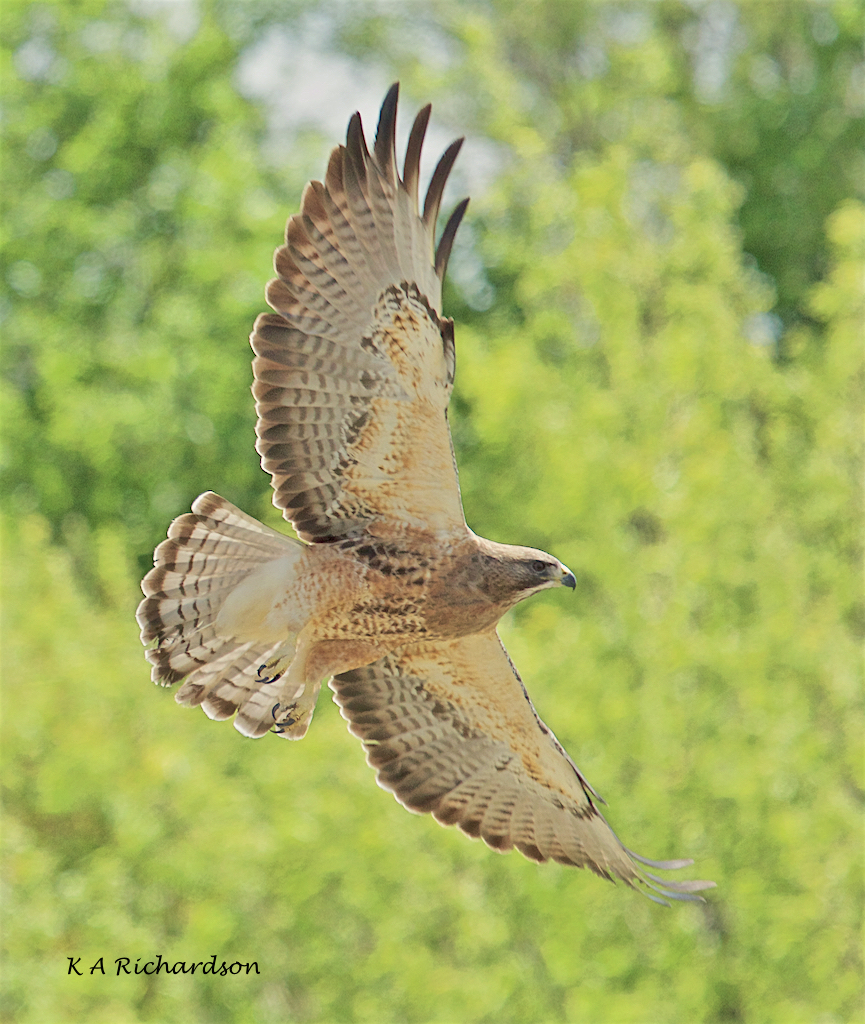
Swainson’s Hawk (Buteo swainsoni) — a lifer raptor….Swainson’s takes flight….Blackpoll Warbler (Mniotilta varia) juvenile at Two Trees: another lifer! (Originally listed as Unknown Warbler.)Upland Sandpiper ( Bartramia longicauda) at Two Trees: yet another lifer!!Warbling Vireo (Vireo gilvus) at Two TreesWestern Meadowlark (Sturnella neglecta) on a post near Old Man On His Back bison ranch.
















































 birds & musings