In the first week of the month, spring temperatures toyed with our expectations, starting high, then falling then rising again. In the second week, however, temps dipped before rising dramatically after the 12th….
Still, for the beginning of April, these conditions felt more or less normal, and I went about, as in previous years, surveying the ponds and brooks and marshes on my beat, looking for ducks that had been more or less ‘away’ all winter.
Ducks are fine, of course, but spring is much more about migratory passerines, especially as warblers and goldfinches add fresh colour among permanent residents still in their winter plumage. I must admit, however, that there were fewer House Finches and warblers than I expected. In fact, the population patterns I’d come to expect over six previous seasons seemed ‘off’ for spring, summer, and fall.
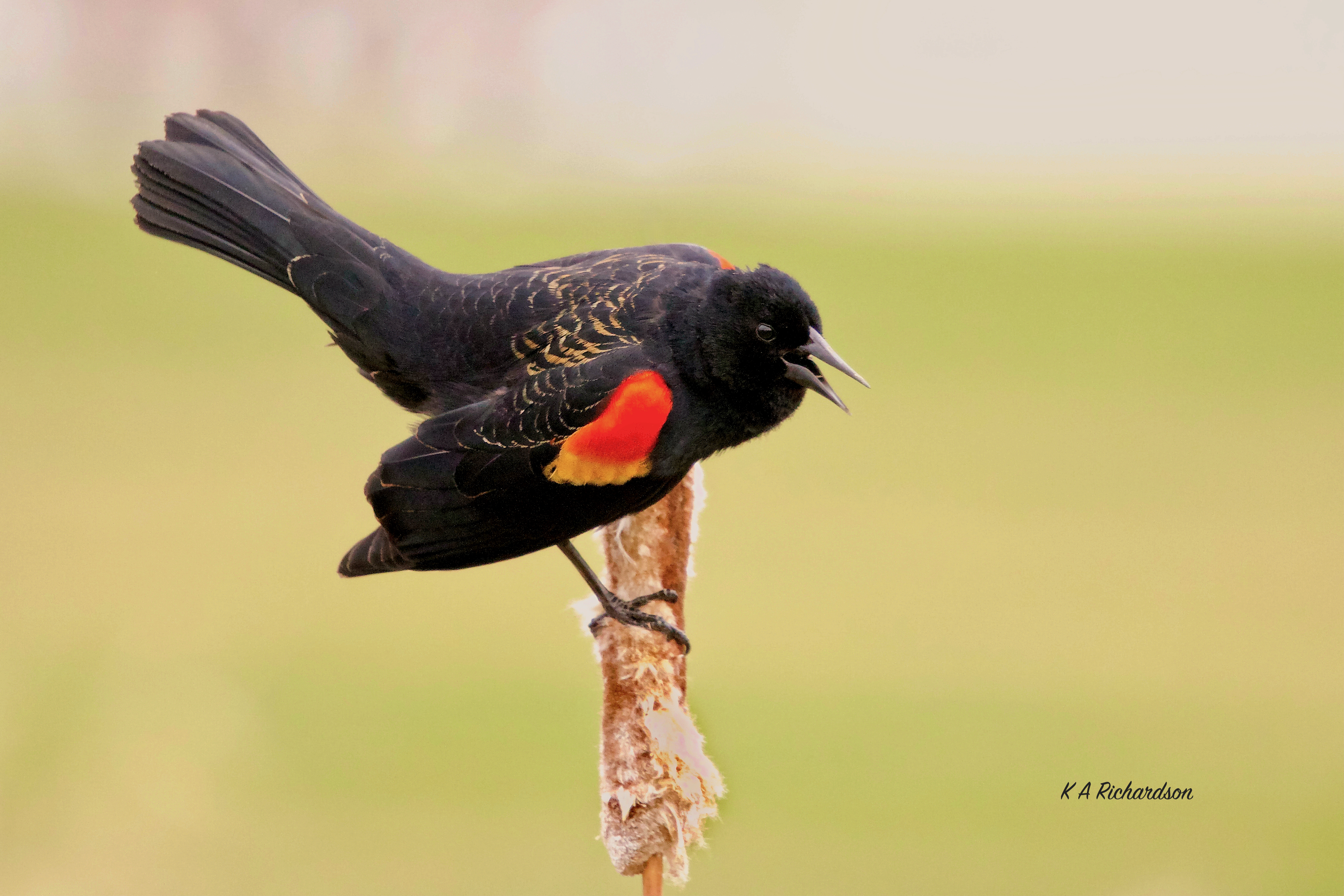
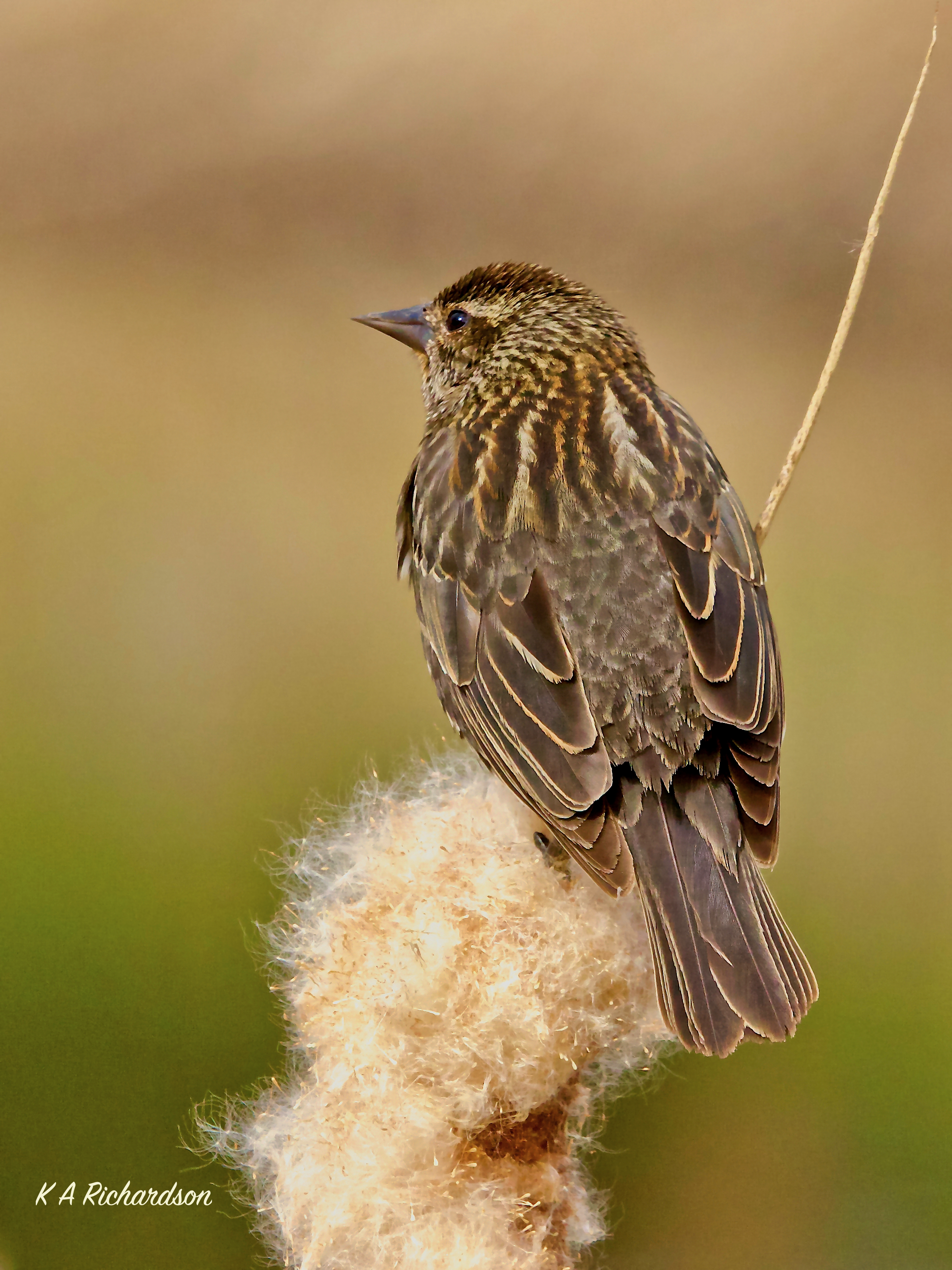
For all that, it seems there’s always an abundance of blackbirds, including, by mid-April females popping up one or two at a time, prompting great excitement among the brightly coloured males in the marshes. We can even begin wondering when the Yellowheadeds will make it back….
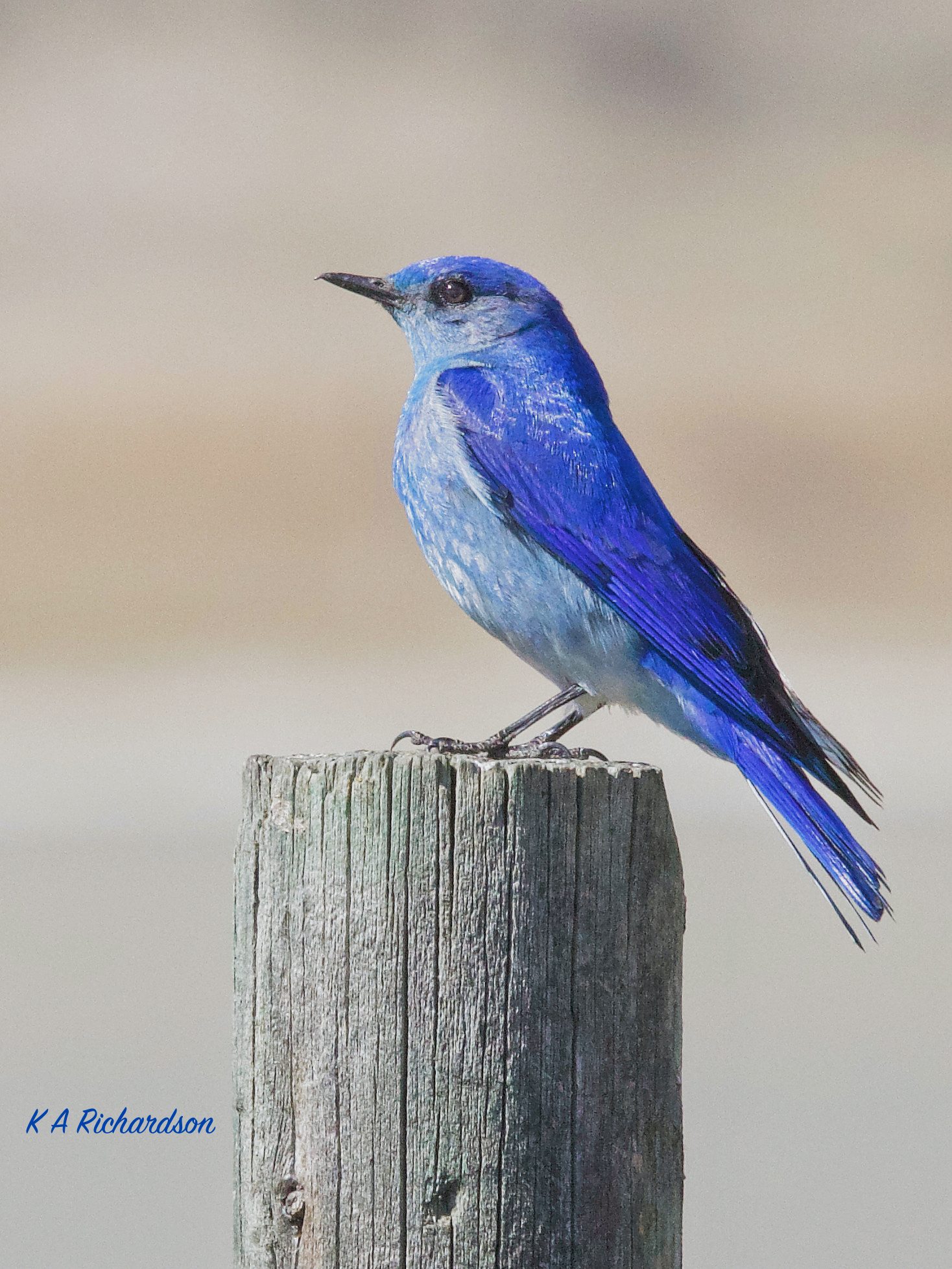
One of our favourite spots to visit as early in spring as we think the birds will be back is White Lake Grasslands Park, northwest of Oliver, BC. It’s a great spot for early bluebirds, both Westerns and Mountains, Western Meadowlarks, and Say’s Phoebes. As well, there’s often a chance to see some raptors, even a Golden Eagle if we’re really lucky. And if the birds are uncooperative, perhaps we can inspect some spring flowers.
For enlarged images, click on any one in the gallery.
Note: You may have to wait a bit for the images to load.
Also, on your Mac, you can see enlargements of any single images by right clicking on the photo and choosing ‘Open image in a new tab’. Gallery images can be enlarged just by clicking on any one of them.
If you’re using an iPad, it’s best to turn it sideways to landscape view…. Also, try viewing in Reader Mode! Available only with Safari web-browser as far as I know….
In an earlier post (November 2021) I wrote that Homher the Intersex Mallard (Anas platyrhynchos) had ‘magically’ reappeared after being ‘away’ for the summer from both Belmont Pond and Thomson Marsh. I was overjoyed to see her again.
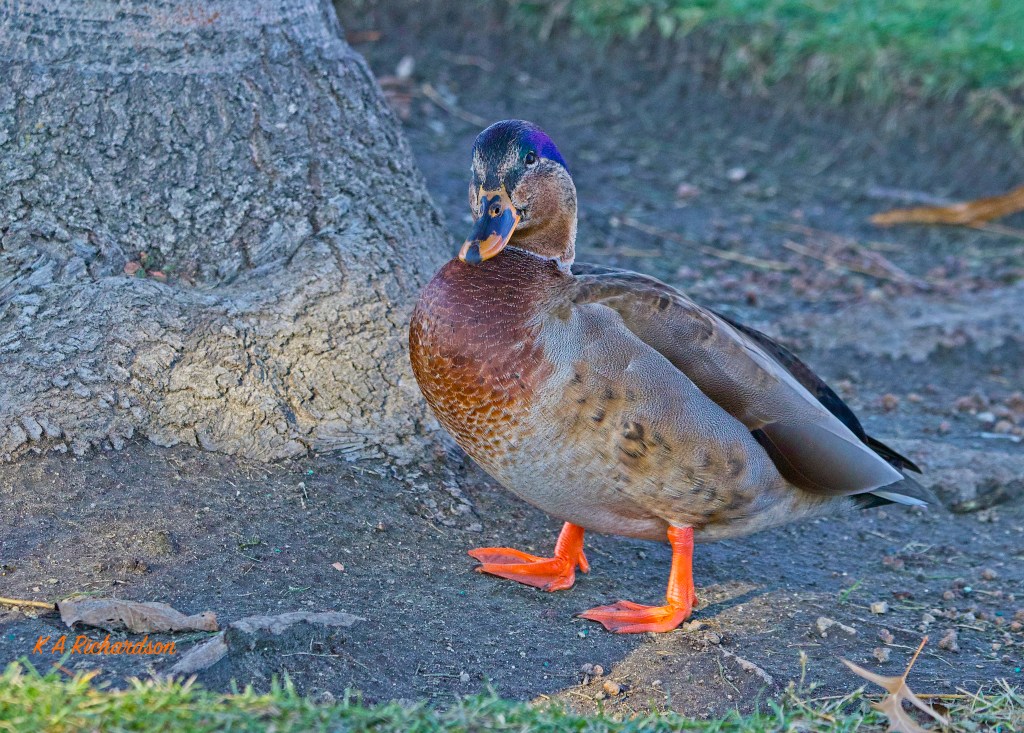
Well, I’m happy to report that the other two iDucks I first identified in the January 2021 have also showed up again in their separate locations in November 2021. First, Muncie on November 13 at Munson Pond/Park, and then on November 19 near Teal Pond in the SE sector, Thomson Marsh, the one I call Socratease showed up. As well, another duck I am able to eyedentifye — er, identify — by her blondness and beige ‘beads’ at the back of each eye and below the eye-line, a ‘regular’ female I call Molly also graced us with her presence! (Added 2024: Homher, Muncie, and Socratease all have ‘beads’ similar to ones Molly sports!)
First, then, Muncie at Munson Park about 3.6 km northeast of TMarsh where her ‘cousins’ reside.
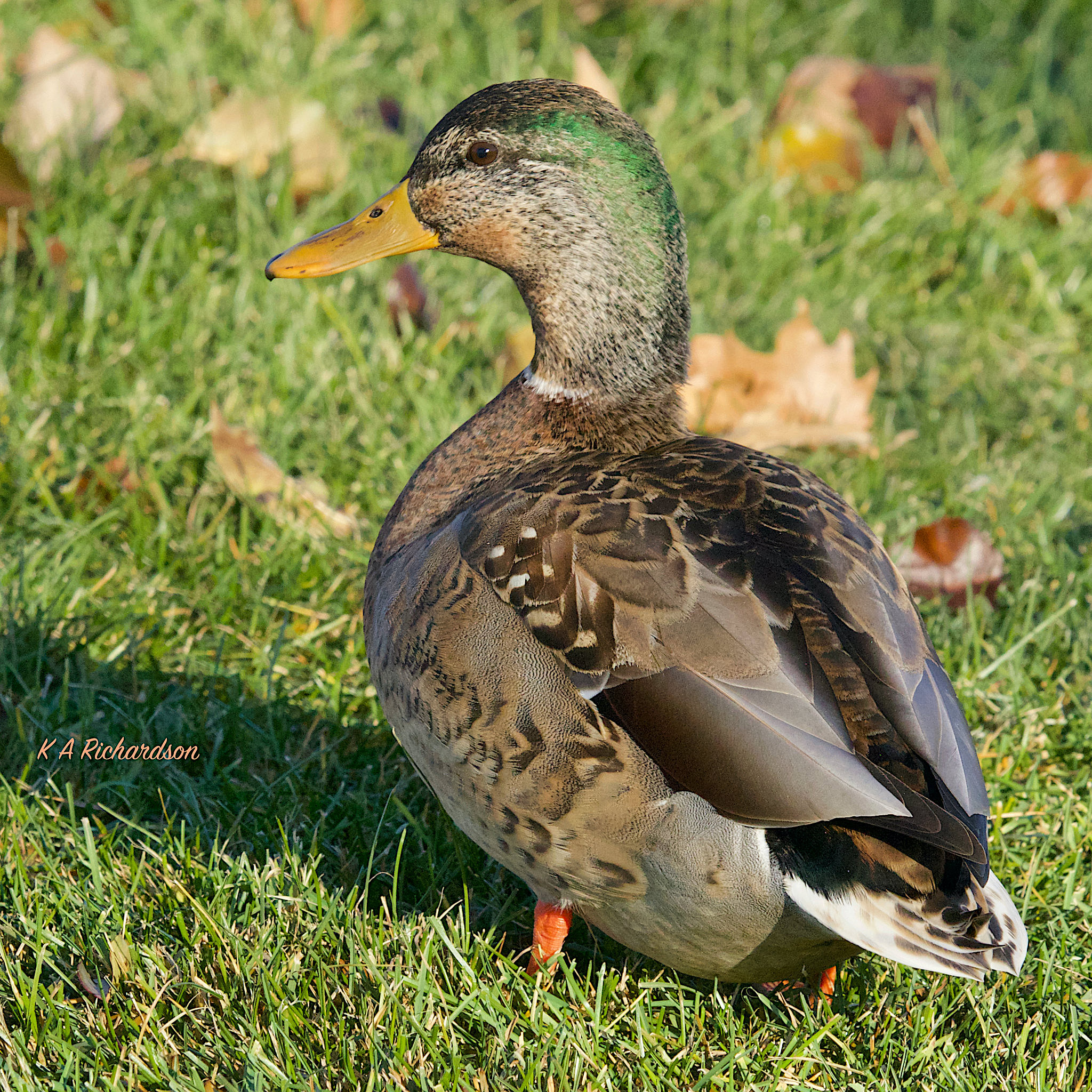
December 2021: Muncie, the Intersex Mallard (Anas platyrhynchos) of Munson Park, Kelowna, returns after being ‘away’ all summer! She appears to be in fine fettle as we used to say!To my surprise Muncie has white ‘beads’ behind both of her eyes, just like the second and third ducks in this post, especially Molly the blonde hen. You can enlarge the images by right clicking and choosing to Open image in a new tab.
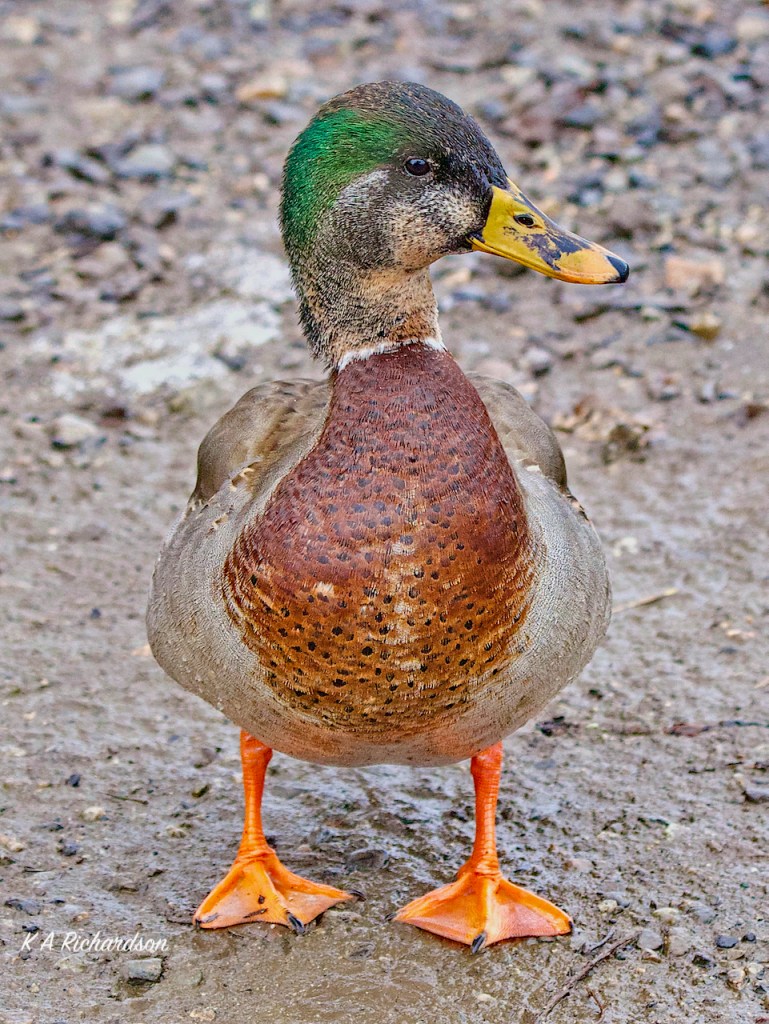
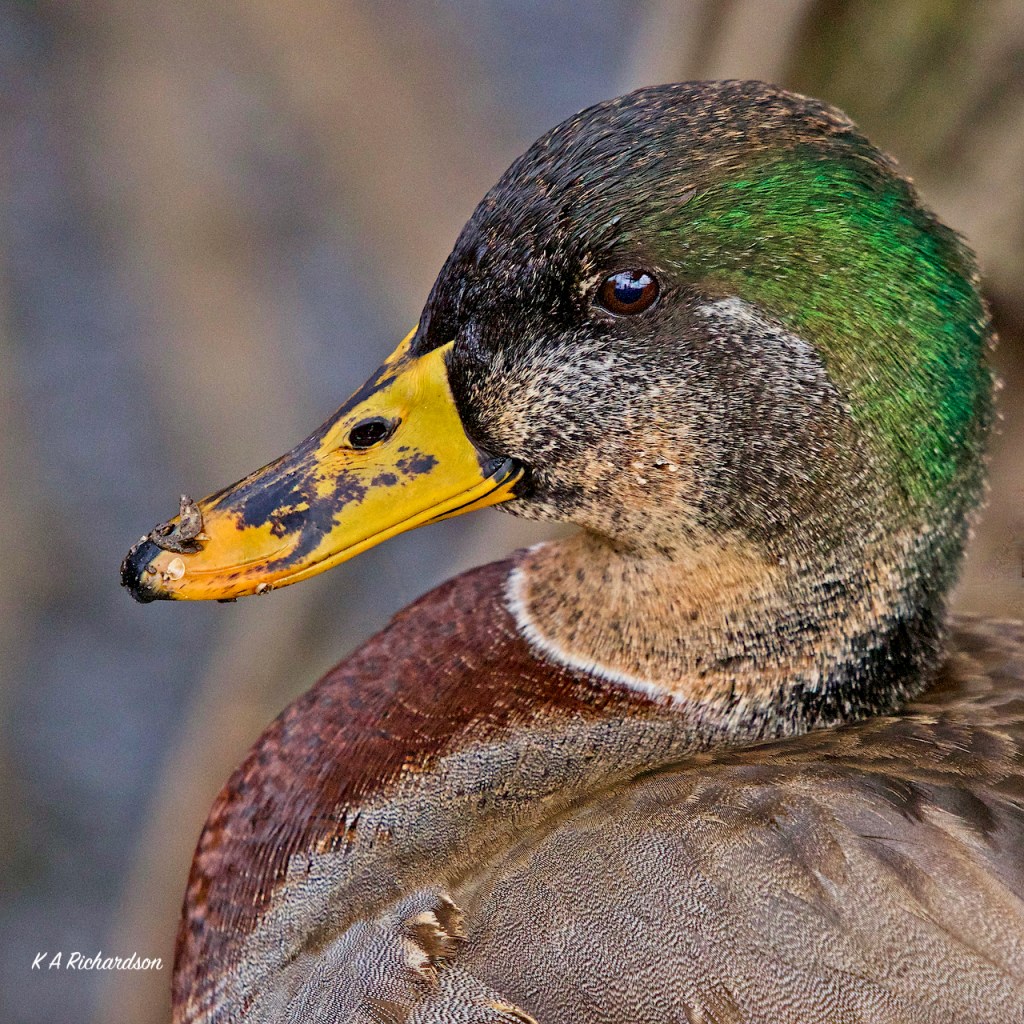
Then (below) Socratease, as she appears now, on the left, and as she did a year ago, on the top right.
Above: The bottom right image shows her foraging in December 2021. While her bill is less like a Mallard hen’s than Homher’s and Muncie’s, there’s no doubt that Socratease is an Intersex Mallard, too. Click on any gallery image to see the photos enlarged.
Finally, Molly Mallard, who despite hanging out in a wintering flock of more than 100 ducks, stands out first as one of the blonde hens, and then because of a unique white ‘bead’ behind each eye. Below the photos of Molly are some further observations about this detail.
Molly Mallard, a blonde hen has a distinctive ‘bead’ at the back of her eye not seen on other blonde hens in the large flock of wintering Mallards, some ‘regulars’ in the area, and some just winter migrants.
Here’s Molly from her other side, with the ‘bead circled’:
A uniquely marked Mallard (Anas platyrhynchos) hen that I discovered last spring, which has returned for the winter of 2021-2. Rather independent, she eschews company as she goes about her ‘shopping’…. Her most distinctive mark is a white ‘bead’ just behind her eye (on both sides), circled in this image. I haven’t seen this feature in any of the other ‘blonde’ hens in the winter flock….
Now that snow covers our area, it will be more difficult to keep track of these individuals, but you can be sure I’ll try….
Below, Homher, the iDuck that started all my research: December 2021 after an early snowfall:
Homher doesn’t mind the snow as much as she does the ongoing documentation of her existence….
Here’s another photo of Homher with Molly (taken February 7, 2021):
Molly the eye duck with Homher the iDuck, SE sector, Thomson Marsh, Kelowna, BC. It was a coincidence that she crossed paths with Homher; they don’t necessarily hang out together….
It’s nearly impossible to differentiate “normal Mallards” by appearance. Molly is an exception! Her creamy complexion and the “bead” at the back of each eye enable me to pick her out of the large flock quite readily….
In progress: Added February 2022. I am working on the blonde Mallard hens in the large flock wintering in the SE sector, Thomson Marsh, Kelowna, BC. A coming post illustrates what I’ve ‘discovered’.
An old dog learns something new…. Does the term “intersex duck” intrigue?
Please note: some of the photos are high resolution and take extra time to load on a slow computer. ALSO: IF YOU’RE VIEWING THIS ON AN iPad,I recommend that you turn it sideways to landscape view then tap the AA at the top of the toolbar and choose Show Reader: I think you’ll enjoy the enhanced reading experience! If you’re using a Mac from 2020or newer, I also recommend that you click on the reader view icon on the left side of Safari’s address bar. I have no idea whether you can get enhanced reading from other systems on non-Apple devices….
Large Belmont Pond, March 23, 2020.
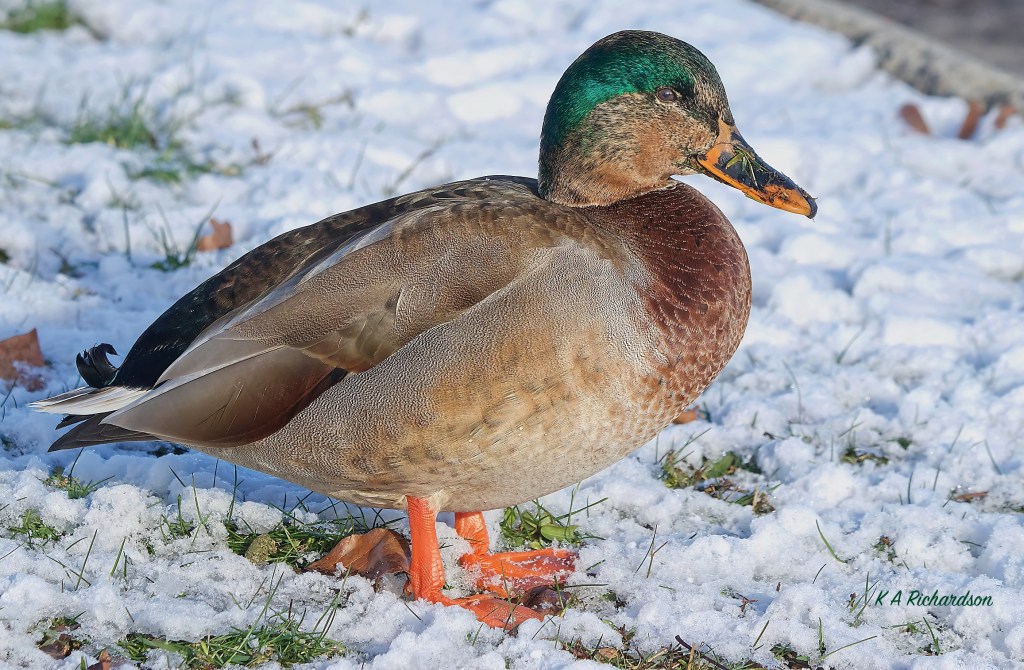
Unusual Mallard, Large Belmont Pond, Kelowna, BC. Check the female bill on this otherwise male-looking duck….
I noticed a strange looking duck, resembling a Mallard drake, sitting calmly on the south-end raft where various species, but mostly Mallards, preen and sun themselves from Spring through Autumn. As there were other Mallards in the pond, it was easy to compare/contrast. What I noticed first was this one’s “white eye,” or more accurately, its closed white lower eyelid.
The plumage wasn’t quite right, either, but that’s not unusual as we move from Spring through Summer. Of course, on this day, we were just at the official beginning of Spring! Remember, too, that this was the first Covid year….
Above is what I thought was (foreground right) aMallard (Anas platyrhynchos) and (upper left) a hybrid Mallard-Gadwall (aka Brewer’s Duck so named by Audubon in 1822) in the Large Belmont Pond, Kelowna, BC. Umm, I got the ‘Mallard’ part right….
Then I noticed the newcomer’s bill: orange with black streaks or spots, like a Mallard hen’s. The head was streaked only on the top side with the green that completely covers other Mallard drakes’ noggins. And the new duck’s sides resembled both a female’s and a male’s.
At the time, I was very puzzled by the combination of male and female physical characteristics. I had nothing in my lexicon to describe it. On my way home, I recalled having seen a reference somewhere to a “Brewer’s Duck” that Audubon had named sometime back in the 1800s that had eventually been shown to be a hybrid of a Mallard and a Gadwall. At home, I looked up BD on the Internet, and found this:
Audubon’s Brewer’s Duck, which he first identified in 1822 as a “Bemaculated Duck,” a misspelling of ‘bimaculated’ and named in honour of the same ornithologist for which the Brewer’s Blackbird and Brewer’s Sparrow are named, Thomas Mayo Brewer.
Then I did what no effective birder, student of Nature, or anybody, really, should do:I jumped to a conclusion without asking enough questions / doing sufficient research. The bird with the fake blind eye (I had already named it Homer, in honour of the blind Greek poet/historian) was, I surmised far too easily, a Brewer’s Duck — a Mallard-Gadwall hybrid! After all, I had seen Mallard hybrids before, particularly a Mallard-Northern Pintail cross that I’d observed in 2013 in White Rock (South Surrey), BC. And I’d learned at that time that Mallard hybrids are not rare, in fact not all that remarkable, really, except for their “enhanced appearance.”
Mallard-Northern Pintail hybrid, January 31, 2014, South Surrey, BC.
Still, Brewer’s Ducks, my research showed, were certainly uncommon. I noticed that Homer didn’t fit perfectly the description of BD’s I was reading, but blithely chalked that up to the idiosyncrasies of hybridism. And then, as I am wont to do (!), I began “sharing the news” of my discovery — on Flickr, and with friends and acquaintances who live in the area and likely to see Homer themselves.
For that impulsive transgression, months later, I humbly apologize. In a moment, you’ll be picking up on the fact that from here on pretty much every use of the male pronoun appears in quotation marks. If you haven’t guessed already, soon you’ll understand why….
‘Homer’ hung around Belmont Pond for a week or so and, even with the sudden onset of Covid-19, friendly neighbours on the east side of the pond allowed me access to their back yard on the pond’s east side to photograph ‘him’ at closer range than in my first encounter.
The original comment, below, turned out be NOT TRUE!! “Mallard-Gadwall hybrid, aka Brewer’s Duck, named by Audubon in 1822. A rare find and a welcome addition to the large Belmont Pond, Kelowna, BC. “ (‘Homer’ was the original spelling; the name has since been adjusted to reflect more recent ‘information.’ Read on!)
Then suddenly, as April arrived, ‘he’ was gone from Belmont Pond. Forever, I suspected; off with the other Mallards to Northern destinations for the breeding season.
I was very pleasantly surprised, therefore, when I “rediscovered Homer” in a channel of Thomson Marsh on April 4 and again on the grass near Teal Pond during the week of April 13.
The main core of my daily beat….
The April photos included extreme closeups that have become very important parts of an historical record. By mid-April, “Homer” had “disappeared” once more. Forever, I thought, again(!).
‘Homer’ in the Channel just north of Teal Pond, Thomson Marsh, April 9, 2020.
Naturally, I celebrated the find, anyway, and persisted in trumpeting the re-arrival of the “Brewer’s Duck.”
Not who I thought ‘he’ was…. But certainly very friendly in this ‘new’ location….
By May, however, Homer was no longer to be seen, at least by me. Not until Autumn, October 29, 2020, when ‘he’ magically reappeared in Belmont Pond, then, as in the spring, in the Southeast Sector of Thomson Marsh, between Teal and Raptor Ponds.. Imagine my surprise!
” ‘Homer’ returns. I had observed this duck in the Spring of 2020 and was surprised and delighted to see ‘him’ again in Belmont Pond in late October 2020. No doubt about ‘his’ being the same bird!”“Gettin’ back to my roots….”
Soon, others were noticing and photographing ‘him’, too. Still, no one I knew ever had a “better” identification of ‘him’ than mine. Then one day, on an umpteenth Flickr post, the late Paul Anthony Baker, a colleague from The West Coast, wonderful photographer and birder who went by the handle “ebirdman,” whom I’d known since 2013* , wrote a simple question/comment in a response: “Lovely shot, Keith! Have you ever done any reading on intersex birds? This bird looks very much like an intersex Mallard. Take a look (at this link) and see what you think. https://www.inaturalist.org/projects/intersex-ducks” And that kind prodding, as we say, changed everything! *(Very sadly, Paul passed away in January 2021: https://www.flickr.com/photos/ebirdman/51842381242/in/dateposted/ For much of a year, we did not know what had happened, until his son chose to update his blog. Paul is deeply missed!)
Here’s what turned up, in part, on the site Paul referenced: Note on iNaturalist website by Reuven Martin (project createdon January 26, 2018): “Intersex” birds are those that show plumage and bare-parts colour seemingly intermediate between male and female. This is commonly seen in Mallards and is also known to occur in other ducks and perhaps other birds. Such birds are often confused with hybrids. As far as I know, the phenomenon is not well-understood or studied. I use “intersex” in quotes because the term has quite a different meaning to how it’s used in humans.
Reuven continued: This project is for any ducks thought to be or to possibly be “intersex”. I’d like to get a better handle on how their plumage can vary. Other interesting questions: * Can these birds reproduce, and if so which sex are they? (Generally thought to be female, but I’m not sure how well-supported that is). * Is behaviour and voice typically more male-like or female-like? * Does the plumage remain consistent over the birds life? (The answer is at least sometimes yes.)
The screen shot below shows some of the locations of interest to Reuven on the iNaturalist blog….
I had written “Homer, the Brewer’s Duck (Audubon, 1822), a Mallard-Gadwall hybrid near Teal Pond, Thomson Marsh, Kelowna, BC, shows how to clip the grass with precision…. “Not so fast,” my friend Paul replied. “Have you ever done any reading on intersex birds?”
As I probed for information on the Internet, I was overwhelmed by what I found. The earliest data I encountered came from a cooperative website, Bird Hybrids http://birdhybrids.blogspot.com (apparently coordinated by Dave Appleton from North Elmham, Norfolk, United Kingdom). It enabled me to find the site of another Flickr member in Sweden, Carl Gunnar Gustavsson, that is also devoted to hybrids and birds that might be mistaken for hybrids, such as the duck below that so resembles “Homer.” Mr. Gustavsson’s post is dated December 27, 2008! And these are his images:
Under his photos, he had written: _63I8334 Mallard Intersex 1 “Malmoe, Sweden 27 December 2008. This is the most masculine out of 2 or possibly 3 individuals at the same pond today. At two other ponds there were only normal birds. I saw this one also about 2 weeks ago when it was accompanied by a normal male and a normal female. Today it seemed to be accompanied by a female only when it at times separated from the flock. I presume that this is a pure mallard with poor sex definition alternatively a masculinised [sic] female. Arguments in favour of other origin?? I uploaded this picture because I think it might add something to the discussion if a bird is a hybrid or an abnormal individual of a pure species.“
While clearly NOT “Homer,” Carl Gunnar’s duck in Sweden 12 years ago certainly represented the same natural phenomenon I’ had’ been viewing in Kelowna, BC, Canada!
Besides his own photos I found a useful opinion Mr. Gustavsson had offered on on someone else’s work, as well, that sets out his criteria of judgment in the hybrid vs intersex argument (quote copied and edited to remove Internet links that no longer work): “I [d]on’t think it is a hybrid at all but what we call an intersex, i.e. a pure Mallard with both male and female features. Odd but not too uncommon. This one is the most extreme that I have heard of [dead link removed]. It was ringed [banded?] as a typical female but 10 years later looked like a rather typical male except for the bill which is still of a female type (it is the bird in the front I am talking about!!!!!!!!!!!). Some other examples, mainly my own [dead links removed]…. As you can see there are different degrees of masculinity and I think yours is rather typical. Black on the bill like in a female, green on the head green from the eye and backwards/downwards reminding on an american wigeon [sic], a mixture of male and female feathers along the side of the body and more or less obvious male type “hooks” on the tail.Moulting [eclipse] male birds is the big pitfall but should not be a problem at this time of the year, [as they] do usually not have black on the bill or only a black mid rib on the culmen [upper ridge of a bird’s bill] and usually have a more mixed pattern of colour on the head — not the typical limited one that your bird has.” [bold face and square brackets – [ ] – are mine – KAR]
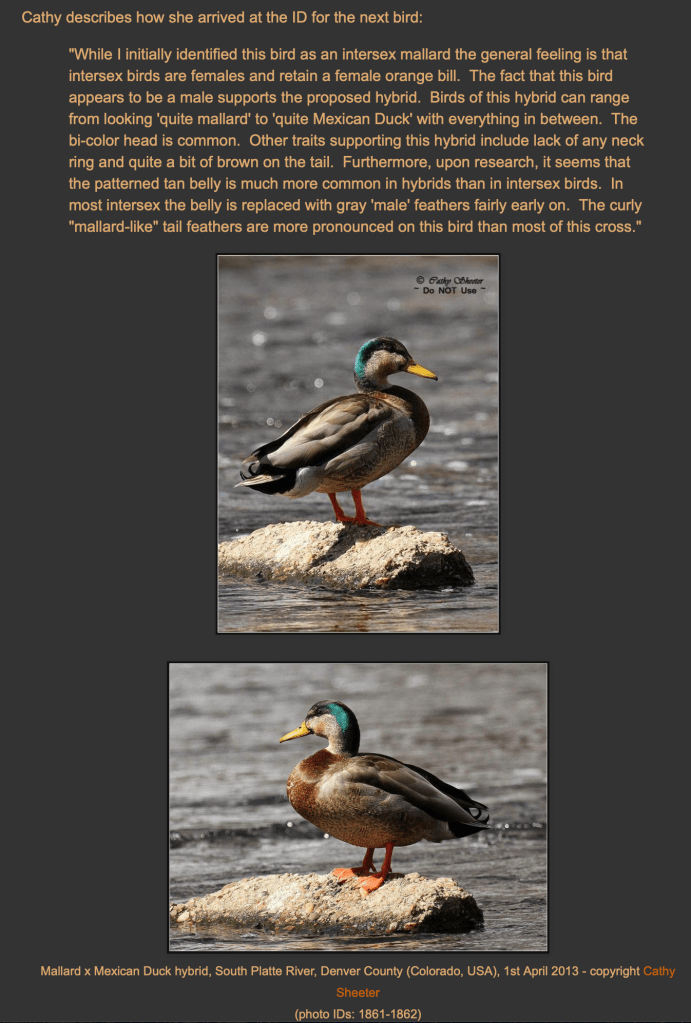
As I delved deeper into Dave Appleton’s Internet page on hybrids vs intersex ducks, I came across other opinions. One of the most interesting is authored by Laura Erickson, a birding expert and writer from Duluth, Minnesota. One of her first references to “intersex ducks” appeared on her Flickr site on February 3, 2009. [https://www.flickr.com/photos/lauraerickson/3251558114] where it attracted a comment from Joern Lehmhus. (He is still actively chasing this issue as shown by his comment on one of my Flickr posts in December 2020 pointing out that I had found an intersex duck, not a Mallard-Gadwall hybrid!) In 2009, Mr. Lehmhus was questioning whether the duck Laura had labelled “intersex” was perhaps a Mallard-Black Duck hybrid. It was not as we learned from yet another post by Cathy Sheeter, another Flickr member who discussed the Mallard-Mexican Duck hybrid vs iDuck issue on Appleton’s Bird Hybrid’s site on April 1, 2013 (and no, I don’t think there’s an April Fools prank involved here!). https://birdhybrids.blogspot.com/2014/04/mallard-x-mexican-duck.html
Cathy’s duck, she concludes,isa hybrid, not an intersex. This discussion continues below the sidebar in red below.
SIDEBAR! This “hybrid/intersex/eclipse drake distinction” became important to me when I came across a second duck at Thomson Marsh on December 1, 2020, that was also difficult to identify, one I eventually named Socratease. More on her (shown just above) later..
In her piece, Cathy Sheeter emphasizes the importance of the appearance of the bill. When I suggested that Socratease (above) is an intersex Mallard, my Flickr friend Jody Wells, on Vancouver Island, challenged me, claiming that it was just an eclipse drake, using the bill and other features to explain why he thought so. At first, I was inclined to agree. Over time, and having managed a couple of times to find Socratease again, I became more sure of my judgment. Jody was apparently unfamiliar with intersex ducks at that time, and is learning about this phenomenon along with me…. Eventually, I concluded that Socratease is also an iDuck!
Now back to C Sheeter’s case for why the duck in the photos below is NOT an intersex Mallard: (Note: as I cannot copy the individual photos, I’ve had to use a screen shot from her site.)
This discussion shows how easy it is for some of us to mix up hybrids and intersex ducks….
I also want to return to Laura Erickson’s blog from Minnesota for a moment. Although she first discussed intersex Mallards on herFebruary 2009 podcast, she returned to that story in her blog post of February 13, 2016 where the audio has been transcribed. I encourage anyone interested in this story to read it here: https://blog.lauraerickson.com/2016/02/intersex-mallard.html. Part of what makes it interesting to me is her attempt to link aging to sexual characteristics, not just in Mallards, but in other birds, and even people.
To hearthe original 2009 podcast click the link below then follow my instructions. Her audio podcast is a bit hard to get to, but worth the effort: https://www.lauraerickson.com/radio/?year=2009 Scroll down and click 2009 (on the list on the left), AND THEN in the next window, scroll down again to the February 4th entry – “Intersex Mallard” and click the audio link THERE to hear her short and fascinating podcast:
PLEASE NOTE: as time/opportunity permit and more information and thoughts develop, I am continuing to update this post and add others related to it!
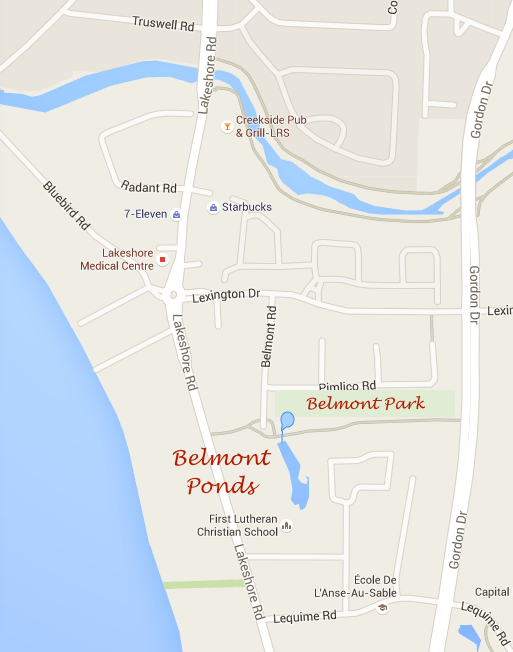
These are the main areas I go to; there are many others as well. This map is included to show the distance between Belmont Ponds / Thomson Marsh and Munson Pond and Park.
UPDATE: In January 2021, at Munson Park, as the ducks fly, about 3.6 km north of where Homher resides, I found a third iDuck. To keep things simple, I named her Muncie. She was hanging out with a pair of mooching Mallards near a well-known bird feeding station catering to passerines. The ducks help clean up the spillage. The drake of the pair was somewhat mean towards Muncie, but she handled his harassment cleverly and found efficient, somewhat sneaky routes back to the treats. I  observed her several times through the remaining winter of 2021. At one point, she had met a single Mallard drake whom she was dominating!
Here is a little gallery tribute (Click on a photo to enlarge it and enter the gallery; to close it, click the x in its top right corner.)
In the fall of 2021 she appeared again and is still to be found in the same location in February 2022 and in Spring 2023:
Another Intersex Mallard, I believe! A little over 3.4 kilometers (2.1 miles( northeast of where Homher resides. “Had I known you were coming, I’d have cleaned my bill, and made one for you!”Muncie the iDuck of Munson Park, 2021. My last ‘spring photo’ of her at Munson Park was taken March 1. However, on a visit to the feeding station there on November 13, 2021, a very dull afternoon, I found her again — literally ‘same time, same station’! I have since seen her in January and February 2022 and 2023. I did not follow up in 2024, unfortunately.Muncie the Intersex Mallard (Anas platyrhynchos) of Munson Park, March 1, 2021
For the full record of Homher, the gorgeous iDuck star of Thomson Marsh (below), take a quack at my growing Flickr album of Homher here: www.flickr.com/photos/8666250@N02/albums/72157713743926477 Here’s one of our “venerable lady” in February 3, 2021, and below that three and a half months later, and below that a link to a new post following her through to a full year after that — February 2022.
Intersex Mallard, Homher, SE sector, Thomson Marsh, Kelowa, BC, February 2, 2021.
Update November 4, 2021 Homher disappeared again in April but reappeared on May 18, 2021 at Belmont Pond (where I had first seen her over a year earlier and where she had been seen by another Kelowna photographer, Roberta Snow, as far back as June 2019).
Intersex Mallard (Anas platyrhynchos) Large Belmont Pond, Kelowna, BC, taken May 18, 2021. It appeared that our venerable lady had decided to hang out here for the summer. Latest spring sighting was June 1. After this she went AWOL again — until she reappeared near Teal Pond in Thomson Marsh, over a kilometre to the east on October 27! She continues to hang out there into 2022!
Several years ago, I used to frequent a popular birding forum in BC. I was new to wildlife photography and at first had less than ideal equipment. I needed all the help I could get! The forum was valuable for a great variety of information, not least of which was access to some excellent images of BC birds. I learned a lot about birds and even more about quality photography — just by observation. No one was anything but supportive of those who posted (a fact that seems to apply to most photographic sites I visit). Sometimes, however, it was pretty obvious that some posts were of substantially higher quality / value than others.
The basics came quickly — the rule of thirds, issues of exposure and colour balance, clarity, capturing motion in a still, and of course, processing (both over and under)…. Besides these considerations, it was obvious that different folks have different tastes and different tolerances for defects. While I’m inclined to be a perfectionist, I’m a failed one who is often far too tolerant of my own “near misses”….
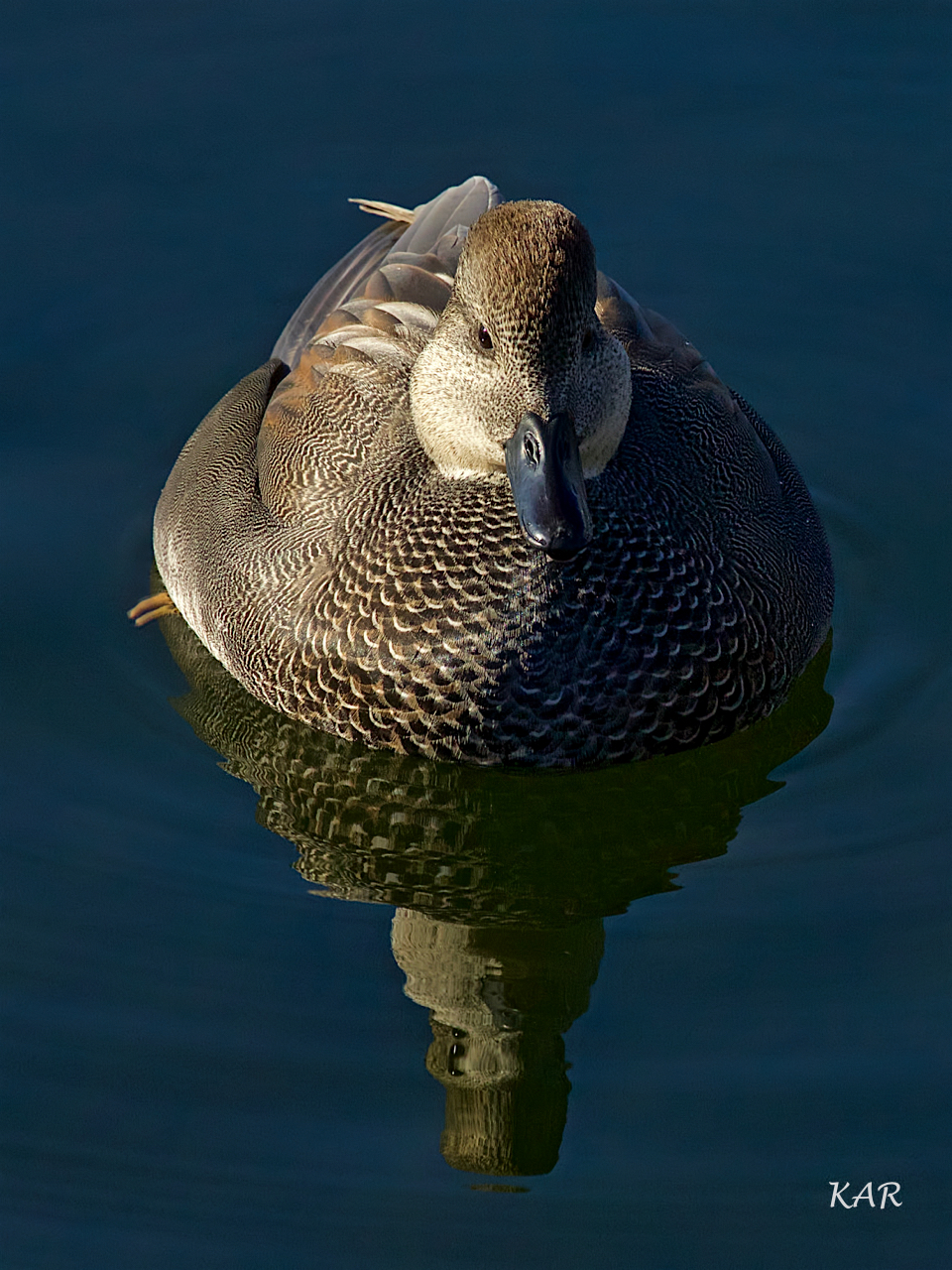
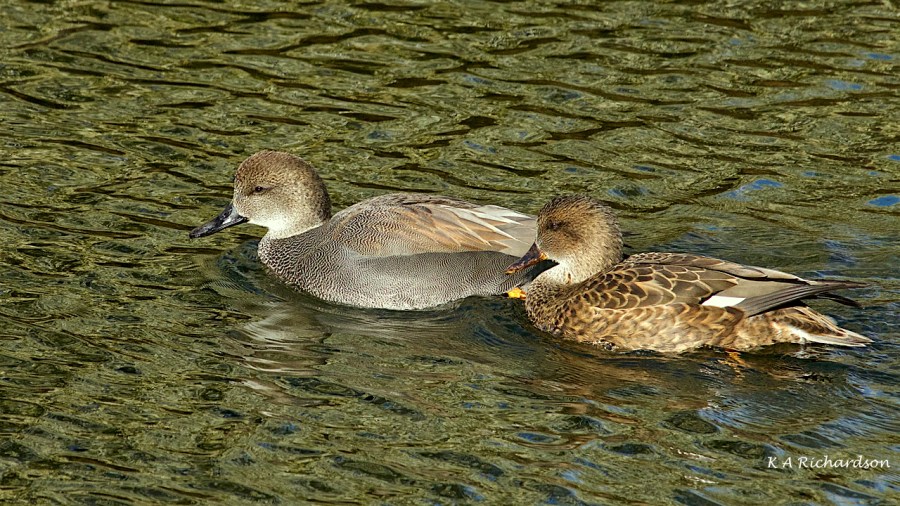
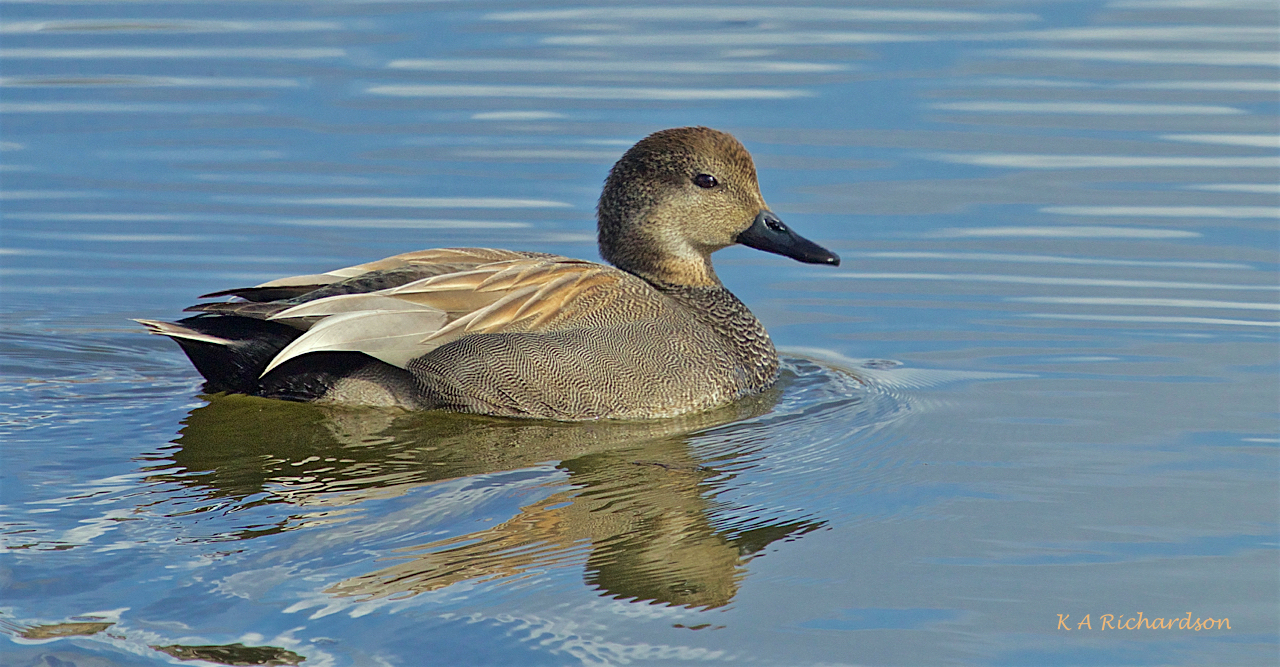
This piece is a reflection on shots taken recently at Kelowna’s Waterfront Park, a place I visit only a few times each year. Also know as Rotary Marsh, this spot is a 15-minute-drive from home, all of 6–8 km away, depending upon one’s route choice. Sure, I’ll go in early Spring just to see what’s there, or on Canada Day just to be patriotic. But in late October / early November, on a sunny Second Summer late morning, it’s for the light, and the Gadwalls….
Probably one or two photos would have sufficed to show why I like the place. I’ve chosen, however, to post the near misses as well as the ones that come closest to the quality I had in mind when I pressed the shutter button.
Let’s begin with the best of the bunch, then take a look at others and examine why they don’t work as well:
I like the way the bird is centred so that it’s half in light and half in shadow. Even the shaded side, however, offers some detail and trace of light. The reflection on the left tip of the bill is a nice touch. With its saturated tones, we realize that the photographer is aiming for art not merely a record or snapshot. There is effective clarity throughout. The water bokeh is informative but not distracting. Although the duck is not looking directly at the camera, we get a sense that he’s aware of what’s going on.
Contrast the shot above with the next two near (or, perhaps, not so near) misses:
Can you see the missing quality?
If you’re going to show the reflection, make sure you show it!
In the shot just above, the distribution of light and shadow, compared with the image we like, is off target, not 50-50. The plumage detail on the sunlit side is beautiful, but, sadly, we’ve got only halfaduck here!
In the set below, viewer preferences will determine” the better shot.” I’ve been quite surprised, sometimes when my peers’ selection of the “quality one” differ from mine.
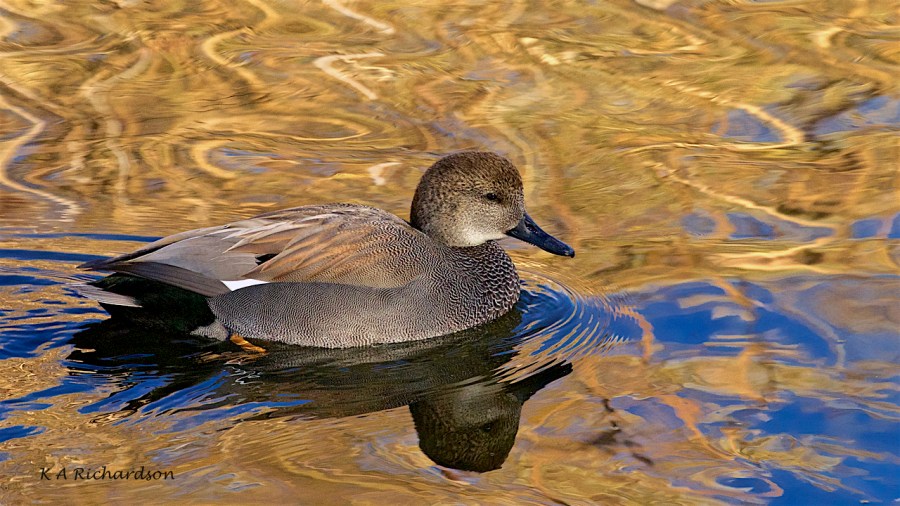
In this set, while both are near misses, in my opinion, each still has some appeal. I like the greater simplicity in the photo on the bottom. I wish the drake didn’t look so sleepy, but that’s a minor consideration for me. The upper photo has an orange tint, the lower one more blue. The water is less distracting in the lower shot. Finally I prefer to see the whole foot rather than its fragmented image.
Yet I have friends who see what I consider defects as positive attributes. Sometimes, it’s simply a case of my being more sensitive to some flaws than others rather than finding certain attributes more resonating than others. Critical vs affirming mental approaches….
One more point about quality and perceptions of it. Since we’re viewing our photographs on monitors, it behooves us to make sure the latter are set for optimal viewing. Back in my consulting days, I saw way too many monitors that needed to be recalibrated — corrected for brightness and colour…. I’m sure that some over-saturated photos I see online were produced on monitors that were too bright, and some diluted-toned images developed on monitors that were too dark….
Finally, two shots below remind us that the photographer is to some degree as much responsible for the way a pond looks as nature is. Change your angle and you’ll change the photo. We all know this, I think, and sometimes, there’s no opportunity to find the optimal shot location — we have to shoot what we’re served. But when we have a choice, make it!
The shots below were taken in the same pond only minutes and metres apart. The outcomes, however, are remarkably different….
On golden pond? Click photo to enlarge in a new tab.
Or in another dimension? Click photo to enlarge in a new tab.
So that’s it for the moment. If you’re a young photographer or a neophyte to this genre, I hope you’ve found something worth thinking about. I wish you well. I hope that you will continue to study, explore, and pursue the best results you can come up with!
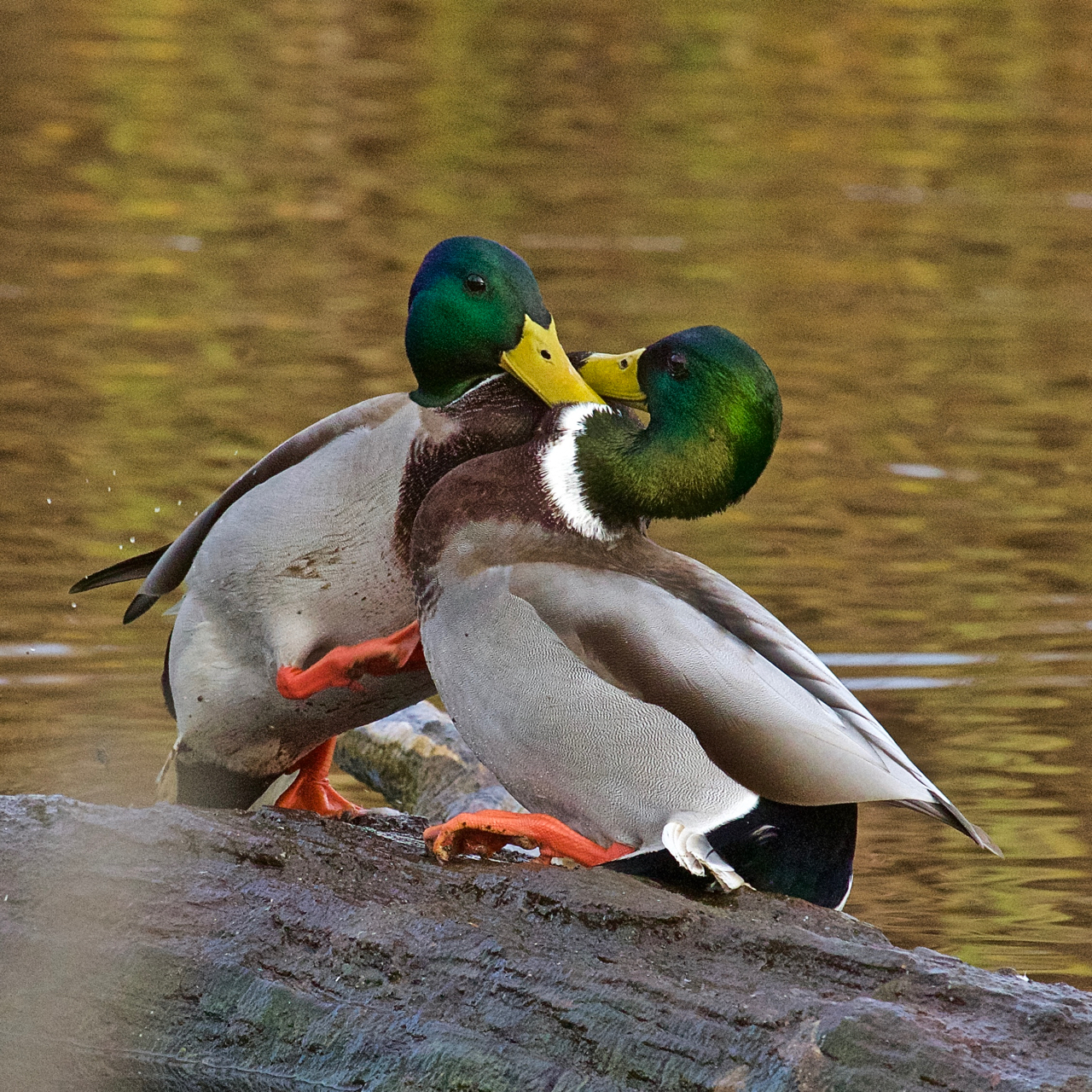
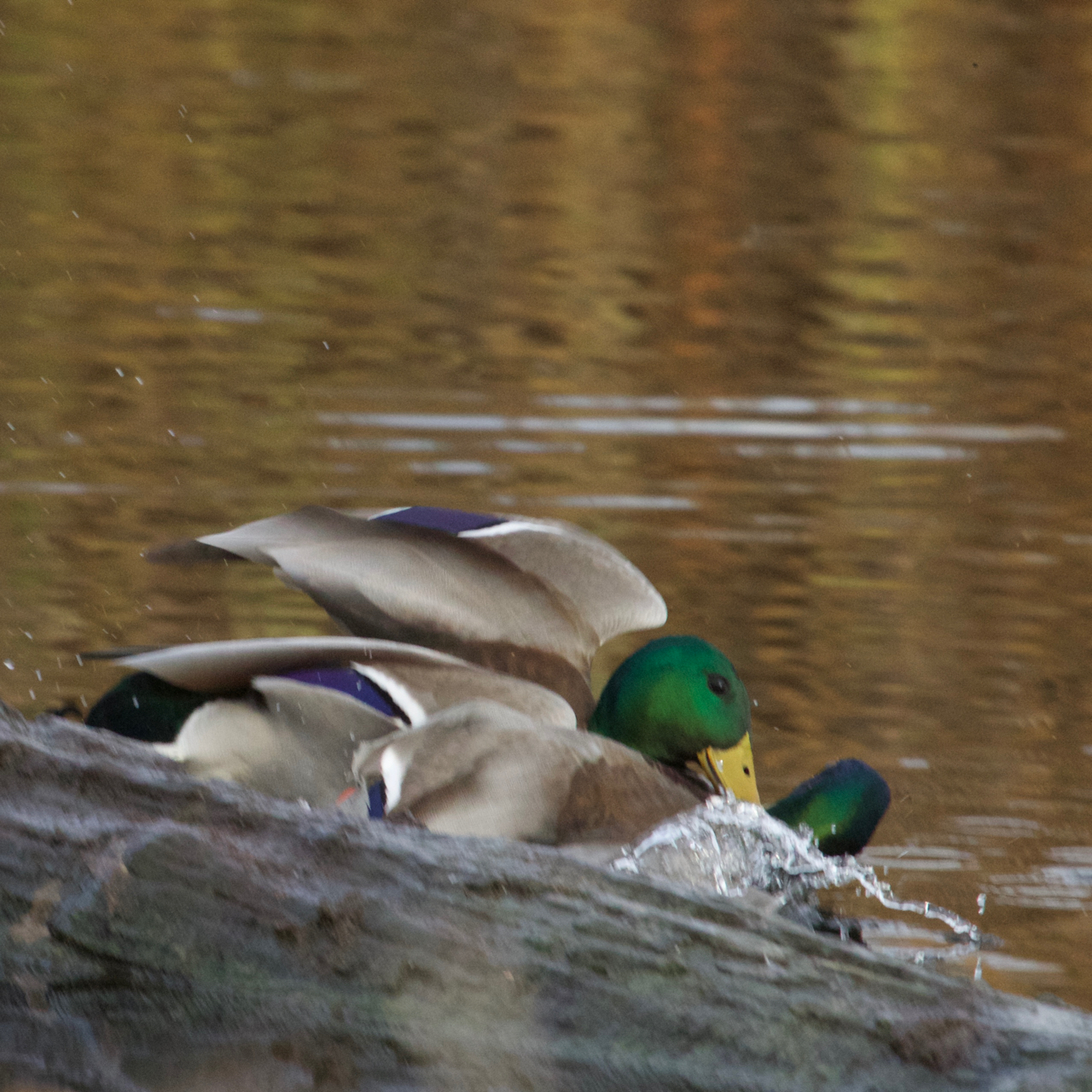
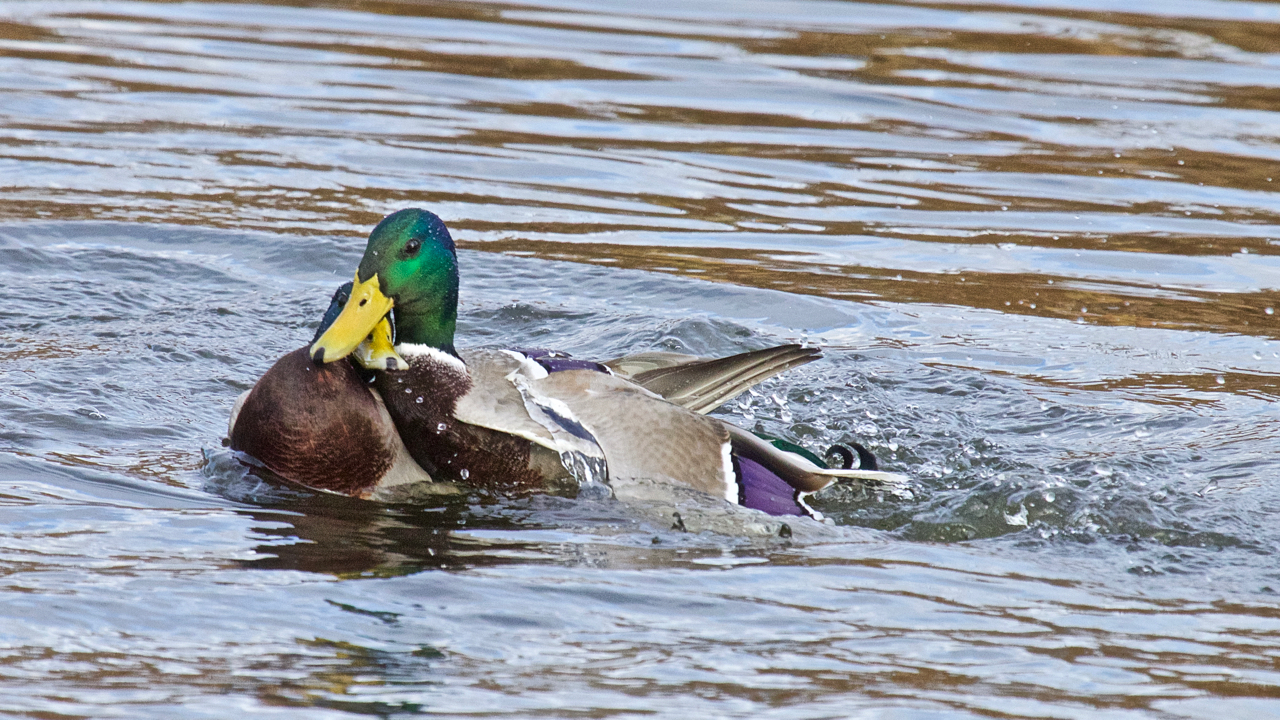
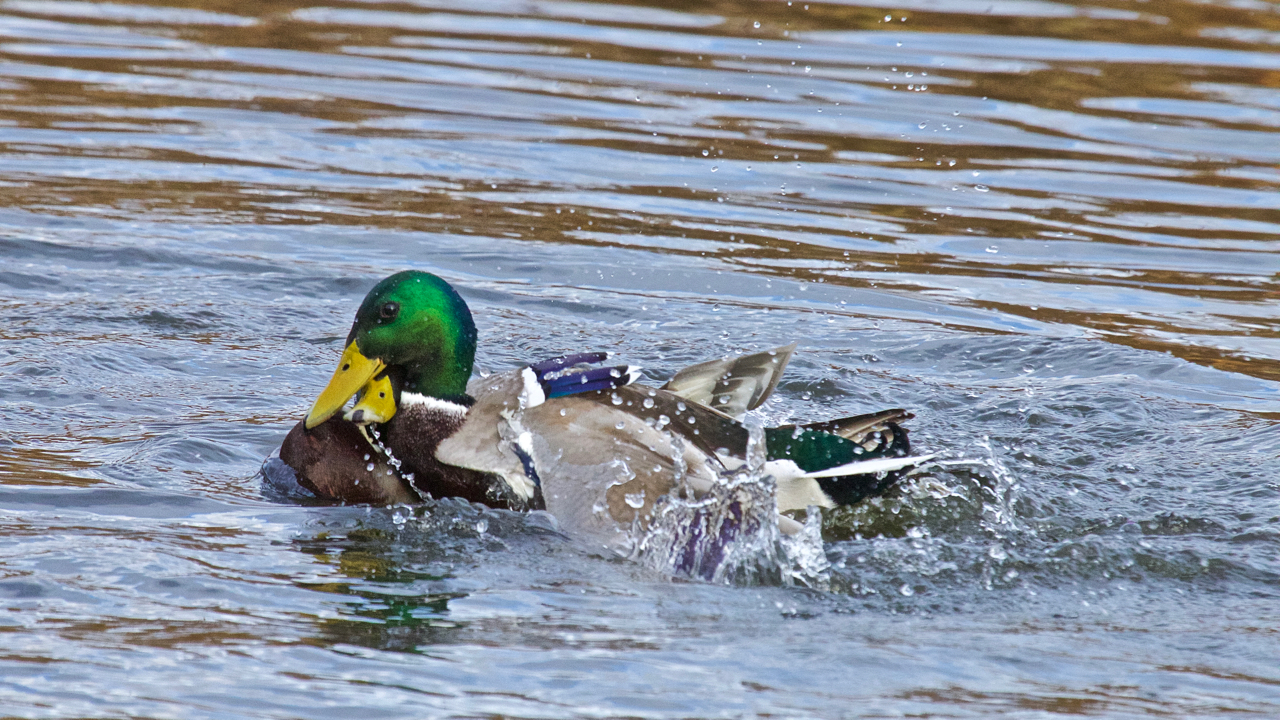
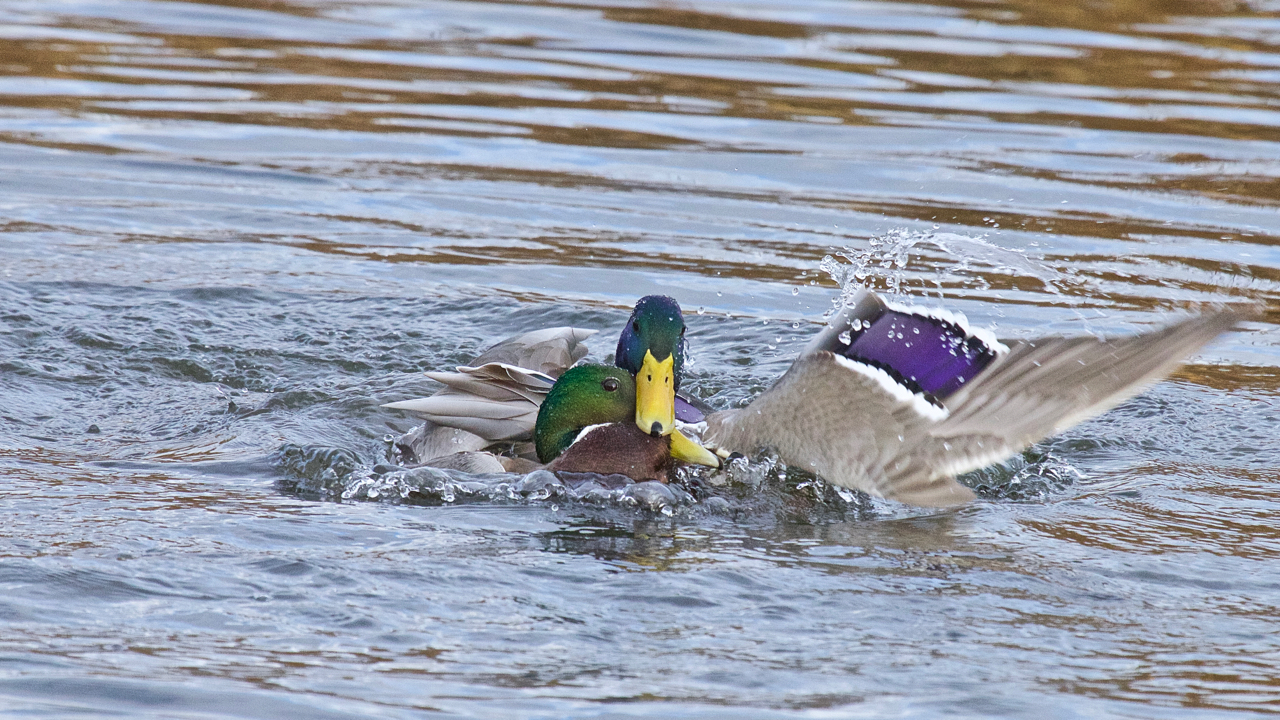
I’ve often remarked on the wonderful cooperation among diverse waterfowl species on a pond. I’ve also noted moments of remarkable conflict, frequently involving Mallard ducks. Usually, we see this in breeding season, often between male and females. Sometimes there are horrible conflicts between hens over whose brood is going to be raised on a particular pond. And, certainly, there plenty of anecdotes about rivalries among drakes.
But it’s nearly the end of October, 2018, for goodness sake! What I witnessed the other day at Teal Pond, TMarsh, took me by surprise. A little quarrel rapidly escalated into a probable duckicide. To be sure, in the end, one drake was driven away and a Victor declared, but I have to admit I was holding my breath as I pressed the shutter….
As I hadn’t wanted to disturb the ducks on the log, I wasn’t as close as I could have been. That ghost of a cattail in the lower left of the frame is annoying and should have been avoided. But being too close might have kept the conflict from erupting. I’ll leave it to viewers to decide whether or not I did the best thing….
The aggressor is the drake on the left…. We’ll name him at the end of the series….
Notice the leverage with both bill and foot…
Over they go….
It’s all a blur! Who’s got the upper bill, so to speak?
The bill-neck clamp hold!
It’s becoming very serious!
Is a drowning about to happen?
No question who’s in control!
The victim makes a break….
The Victor regains control and submerges the victim….
Wild thrashing!
Only a few moments later, Victor poses — revealing no signs of the near carnage just attempted!
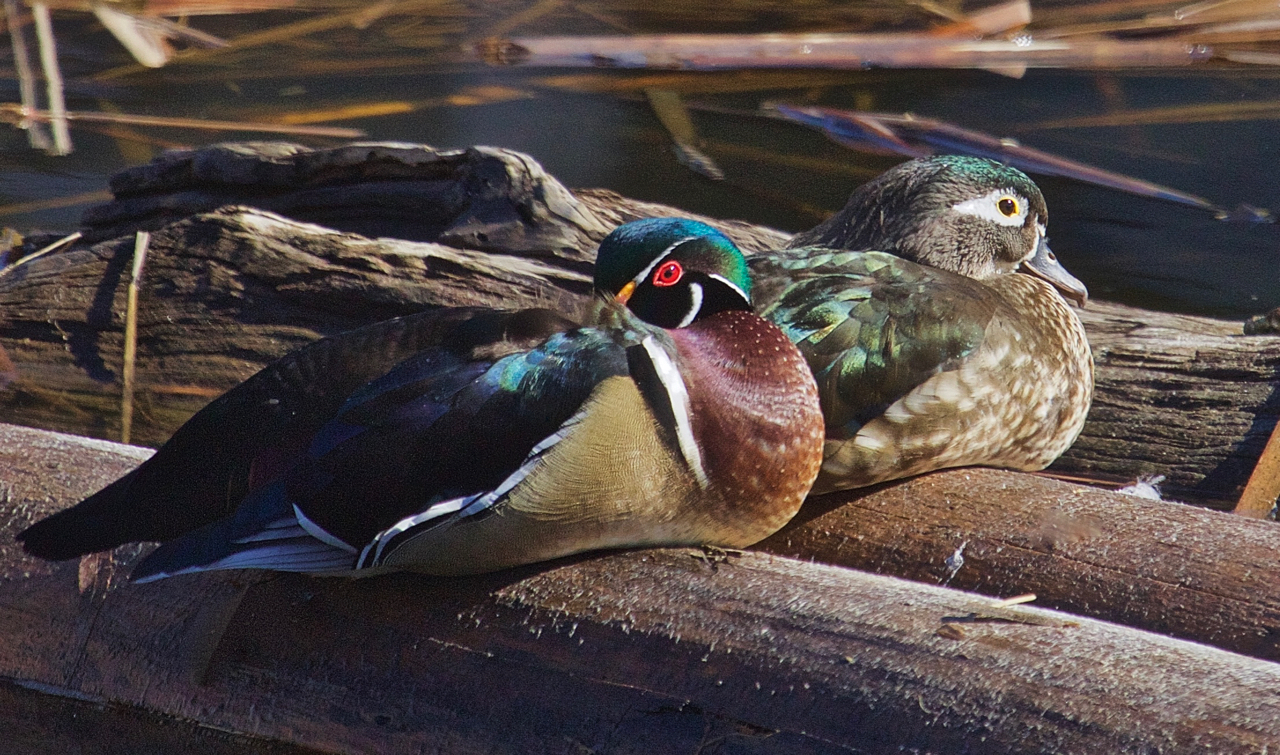
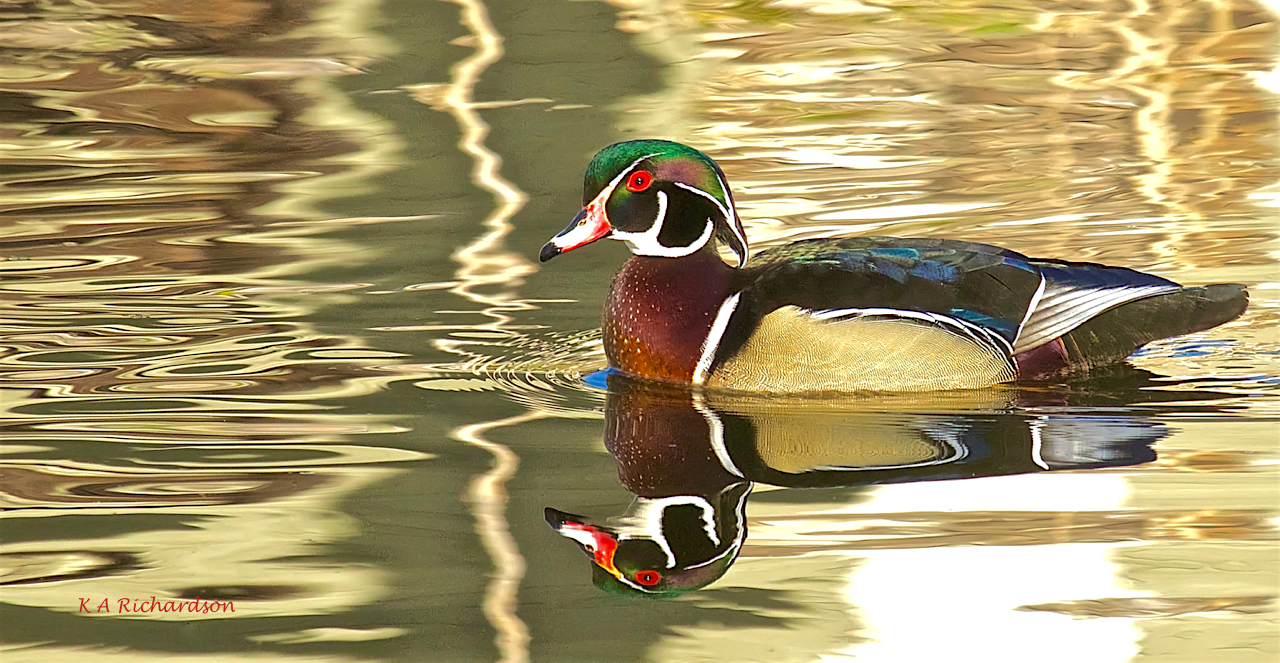
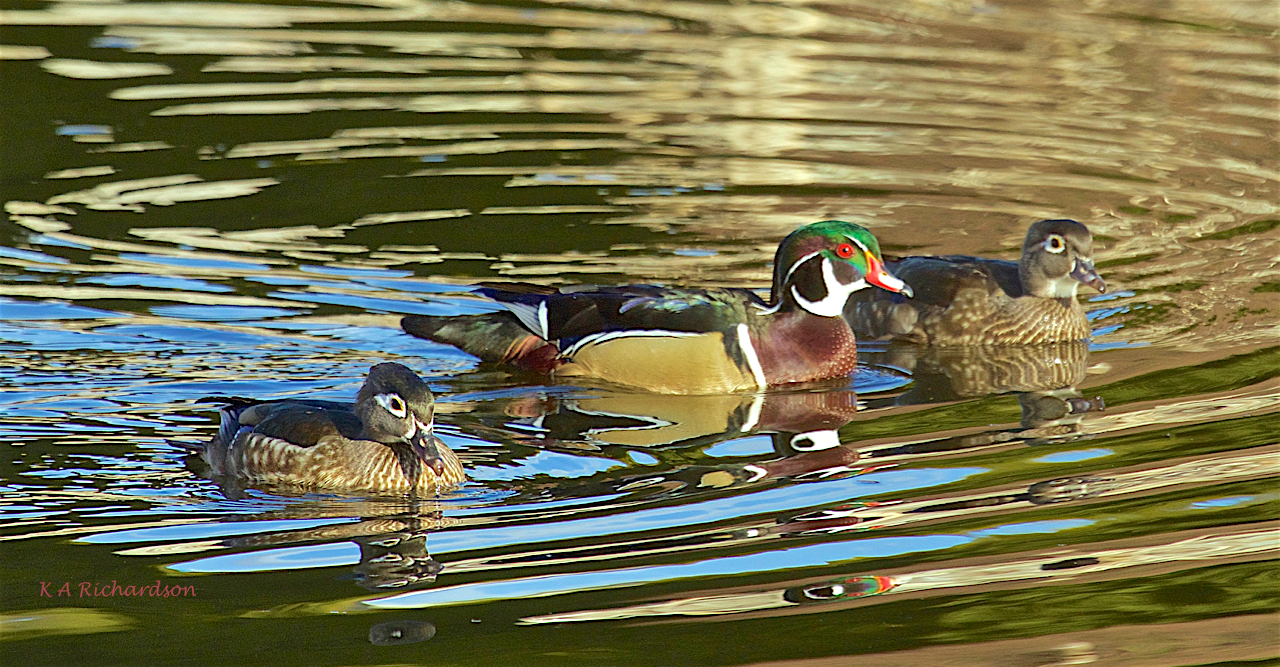
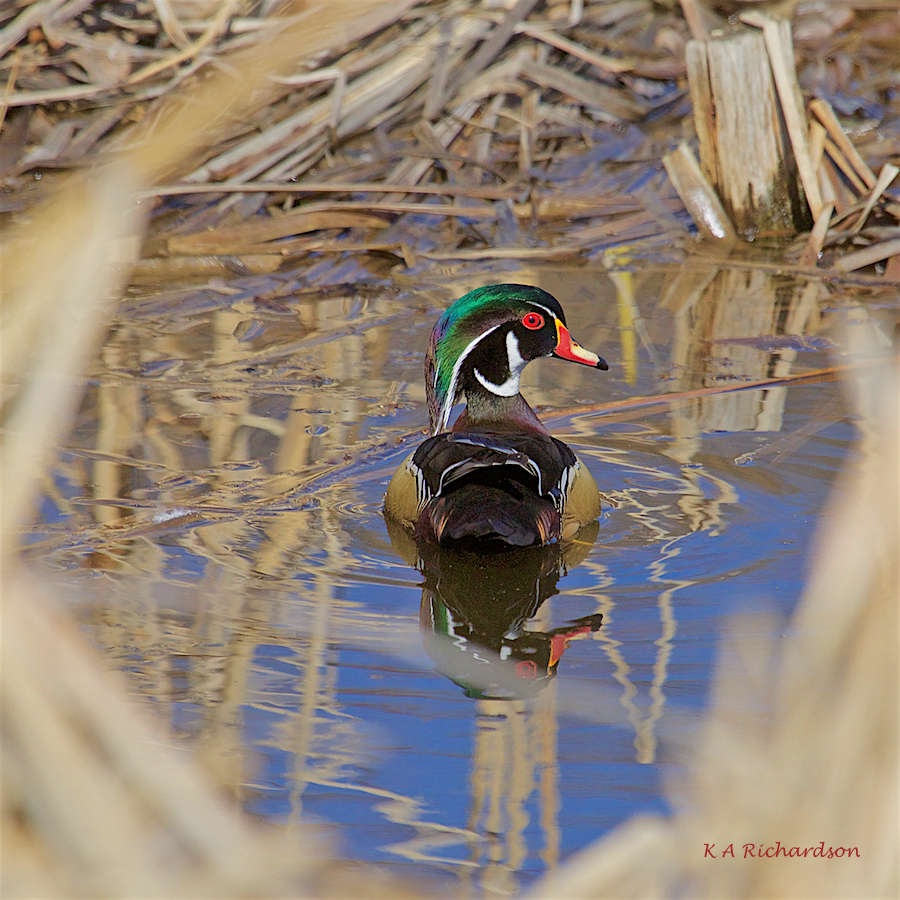
If you’ve visited this blog before, you probably know I’m a huge fan of Wood Ducks, by far the most colourful waterfowl we see here. As this shot from last fall shows, each adult in a pair has quite distinctive and different colouring as shown below
(Click any image to enlarge it in a new tab):
This pair, surprisingly, were photographed on November 26 in Teal Pond, Thomson Marsh, Kelowna, BC.
Relatively rarely, however, have I seen or photographed them in the Marsh. More often I see them in one or both of the Belmont Ponds that are only a couple of hundred metres from home. And every Spring and Fall they are a highlight of the season for me and many others who may not really be “birders” in the usual sense.
Here are some highlights of the small band that visited us from March into May 2018. Most of the shots that follow are from the end of March and early April. At the end of this post, however, there’s something special — a first for my observations in this location….
My first glimpse of the WODUs’ return happened in Thomson Marsh, on the Ides of March, before all the ice was gone there or on Belmont Ponds: unexpected — and exciting:
So great to see them here again at the beginning of Spring. They would stick around long enough (at least she would) to raise a brood into the summer of 2018.
On March 15, I photographed this fella and wrote on my Flickr page, “Large Belmont Pond, Kelowna, BC. Record shot only. This fella was following his mate, more hunched up than usual for a drake…. Looks a little dazed, or is that dazzled…? Here we are in mid-March. The snow is 85% gone, and Thomson Marsh again is ice free. Michaelbrook is only 50% thawed, but will come along quickly now. The larger Belmont Pond is 80% ice free (it thawed suddenly over two days, and will be all gone the day after tomorrow). Today, we had two pairs of WODUs, one pair of COGOs, a couple of pairs of Mallards, and, of course, Ralph, the GBHE…. It really feels as if Spring has arrived at last — the first Violet Green Swallows over the marshes, and even a couple checking out the foundation wall of our condo despite the new townhouses crowded onto the old vacant lot over which they used to cruise after filling up on insects over Belmont Ponds. Should know in a few days if they’re prepared to adapt to the changed environment or not. Also saw a flock of waxwings, possibly CEWAs flying in and around the TM Raptor tree. The BOWAs are still hanging around Mission Creek, and should be checking out soon….
Better images followed:
For several days, this pair seemed content to spend an inordinate amount of time doing just this!
The lady of this species is often overshadowed by her more colourful mate. Here’s a set from March 20 to address that oversight…
Click any of the images below to view it fully & enlarged in a separate window….
WODU female of Belmont -01
WODU female of Belmont -02
WODU female of Belmont -03
WODU female of Belmont -04
In habitat….
Surreal….
March 25: Of course, the drake also demands his due….
There were a couple of pairs around, but only one stayed. The drakes’ duck-tail ‘dos were slightly different…. Not sure that’s an important detail, however….
March 28: “Cross this line & enter a whole new dimension of time and space!”
Click either image below to view it fully & enlarged in a separate window…. (from March 28 also)
Light… and…
Shadow. Two shots, same time of day, only seconds apart….
But there was a little trouble brewing in Pond City. A single female was attempting to turn one pair into a threesome. Ironically(?), it was the drake that put an end to it. In the process, our “unloved duck” lost a few head feathers….
The duck on the left in the photo attempted to ingratiate herself into the family…
But the drake was having none of it….
Hester has a haircut….
While I probably don’t need any more Wood Duck shots, couldn’t resist trying to create something more artistic. Will leave viewers to decide if I succeeded….
I was still trying as with this natural vignetted shot through the Cattails on the south end of the larger Belmont pond….
And, now we’ll end this saga from Spring 2018 with this set all from April 20 dealing with a recurring theme in my Belmont photos — Wood Ducks minding turtles — starring William Wodu and a trio of Western Painted turtles,
Melbert on the left end, Malcomb in the middle and Mini-Mickey….. Click images to enlarge in a new tab.
“I’ll be with ya in a moment, better self, but bear with me for a few minutes; got stuck with Turtle-minding duty again!”
“Okay, guys, look this way, and I’ll show you a trick y’all might wanna try some time (hee-hee; that’d be the day!)…. Guys, guys??
“Bluddy little pancake! I’m doing m’best and he’s still all curled up like I’m gonna try to eat ‘im or sumthin’!”
“You know, Melbert, we could at least take a look, humour him a little, doncha think? I mean, he is trying his best!”
M-M:”Geez, Mom, do I hafta?” WW: “Well! If that’s how you feel about it, entertain yerself, ya little grorange pancake!”
“Well, thank goodness that’s over! Now for a nice sitz bath. You might say this is like having your lake and logging in, too!”
A few images taken around home and in the Okanagan region in April prior to our departure for Texas on the 24th. Click any image to open it, enlarged, in a new tab.
Killdeer returning to Thomson Marsh marks the official beginning of Spring….
American Wigeons show up in Spring and add some new colours and patterns to the Marsh.
Every so often they move out of the Marsh and into the Rec Fields where they strut around like royalty….
Here for a couple of weeks, it seems, and then they’re off to breed elsewhere….
Northern Pintails rarely come close enough to the Marsh to be photographed. In 2018, I learned that I could get shots in fields north of Munson Lake….
Sexually dimorphic Ring-necked Ducks and a female Bufflehead spent a couple of days in Thomson Marsh in mid March, giving me this closeup opportunity….
Gadwall Drake on Golden Pond, Thomson Marsh, Kelowna, BC. Year-round residents, really, we see them in breeding plumage this time of year and they feel like visitors.
American Coots are seen on my beat frequently in Spring, less commonly in other seasons….
A behaviour I noticed for the first time this Spring involves an odd relationship between Coots and Gadwalls where the latter waits for the Coot to dive down and retrieve succulents that the Gadwall craves. Because the Coot usually brings up more than it can devour, the Gadwall moves in and appropriates a share. I watched a pair of GADWs do this for several days with a pair of Coots, with no serious complaints from the AMCOs….
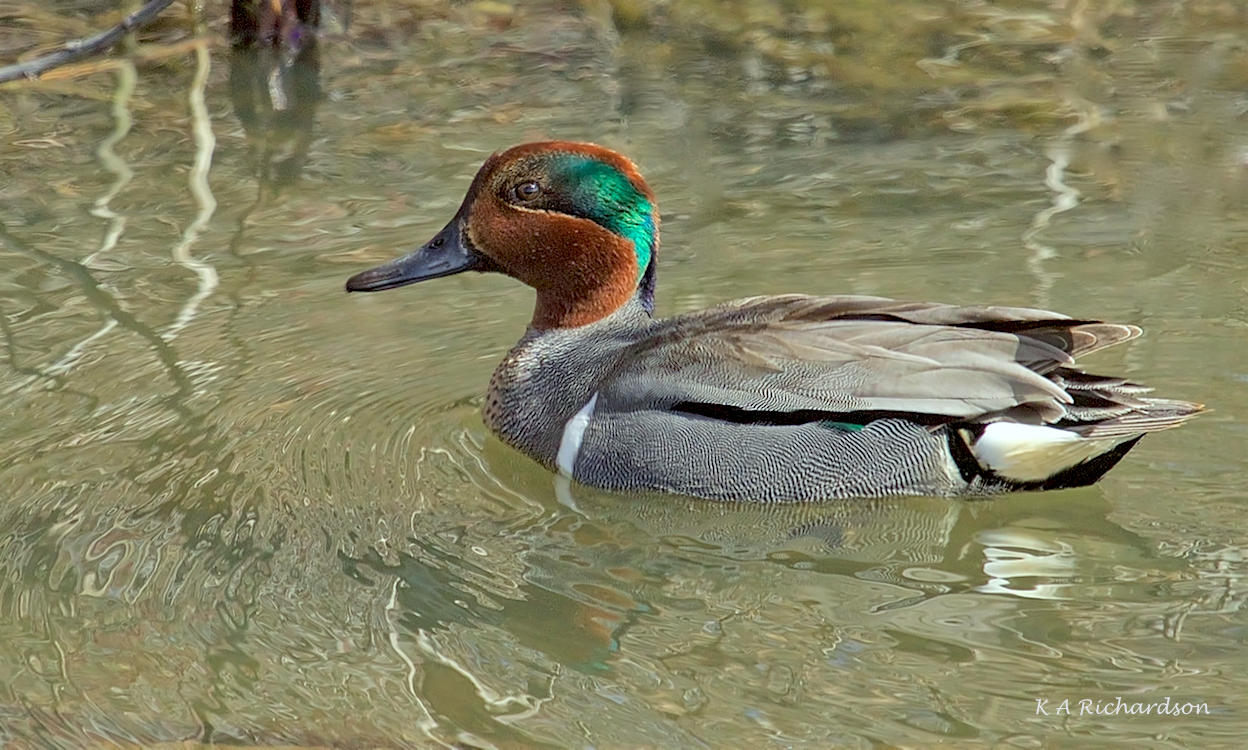
Thomson Marsh, Kelowna, BC. For all my Coastal friends who can walk right up to these gorgeous little ducks at, say, Piper Spit in Burnaby, let me tell you that getting this shot required 20 minutes of hard work! The brook here is very narrow, so the teals, especially, cling to the shadowed side with its tangle of underbrush. Occasionally, if they flush, they’ll land in a slightly more accessible part like this. On my camera tolerance scale where 1 is “here this second; gone the next,” and 10 is “I’ve got all day; knock yourself out!” they’re a 3…. Getting the shot, in the end, is very satisfying….
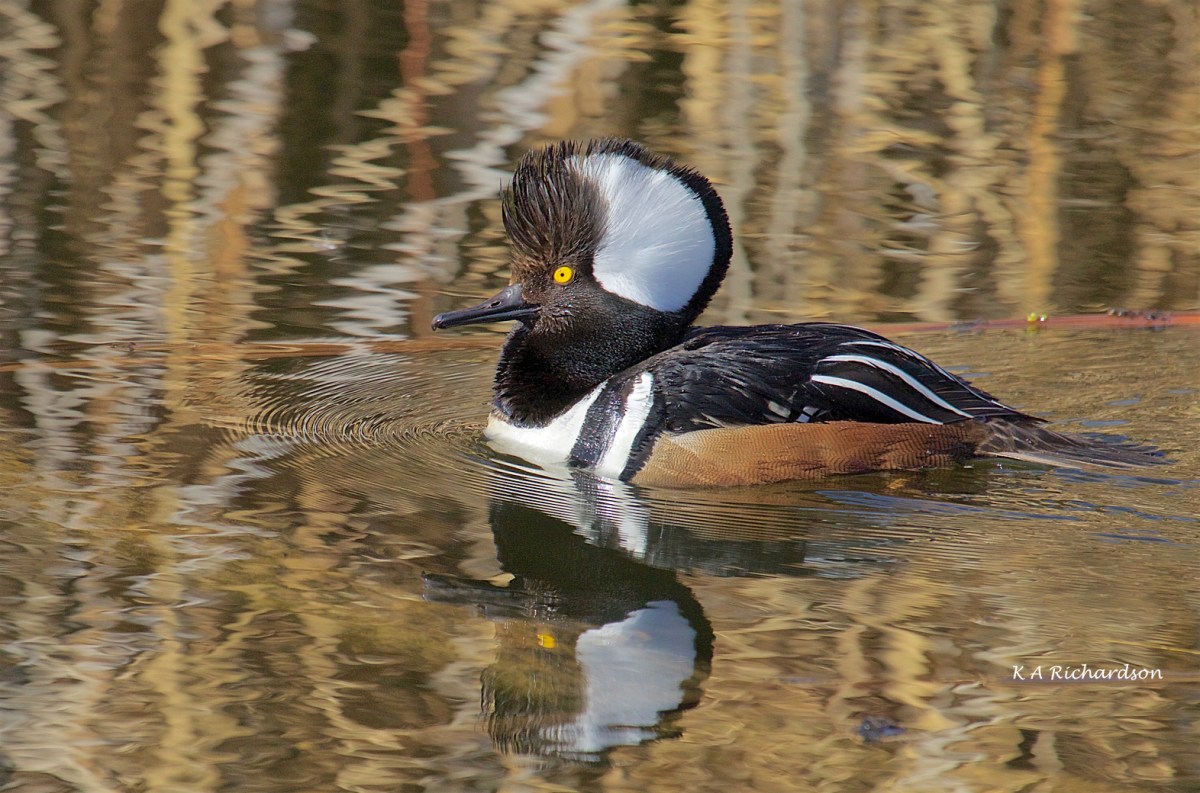
Hooded Merganser female who showed up alone in Belmont Pond, just behind our condo, and spent several days grooming herself as if waiting for a mate to join her. The same situation occurred last year.
Click any image in the group below to enlarge the whole group and view one by one.
Hilda Hoodie preening…
and preening…
and preening some more until…
she’s finally happy with her “look”:
Now it’s time for Hilda to sit back and wait for His Nibs to show up….
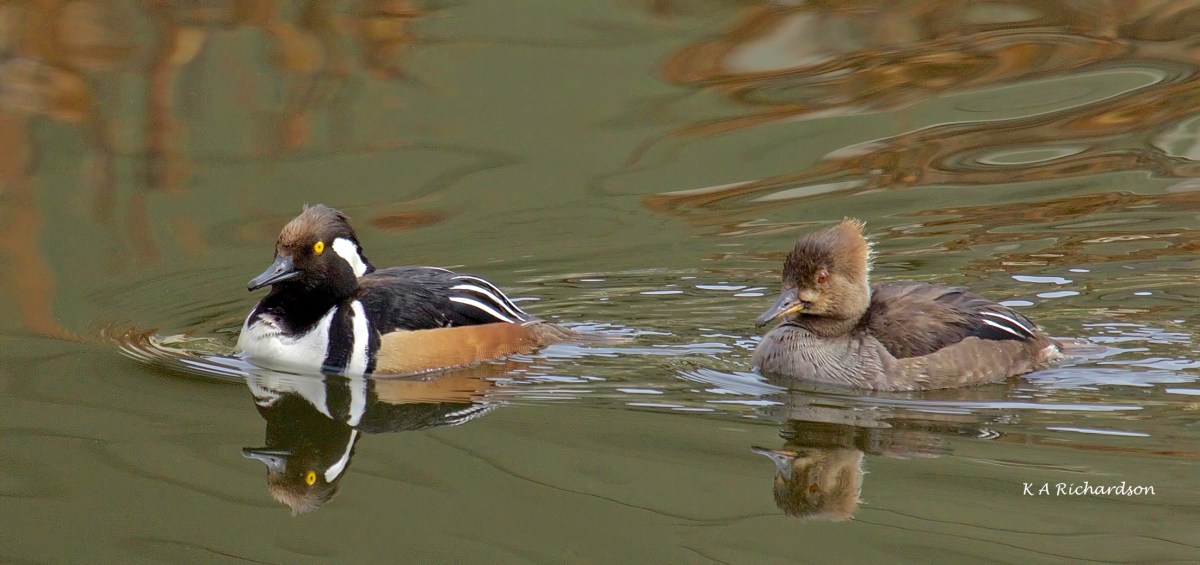
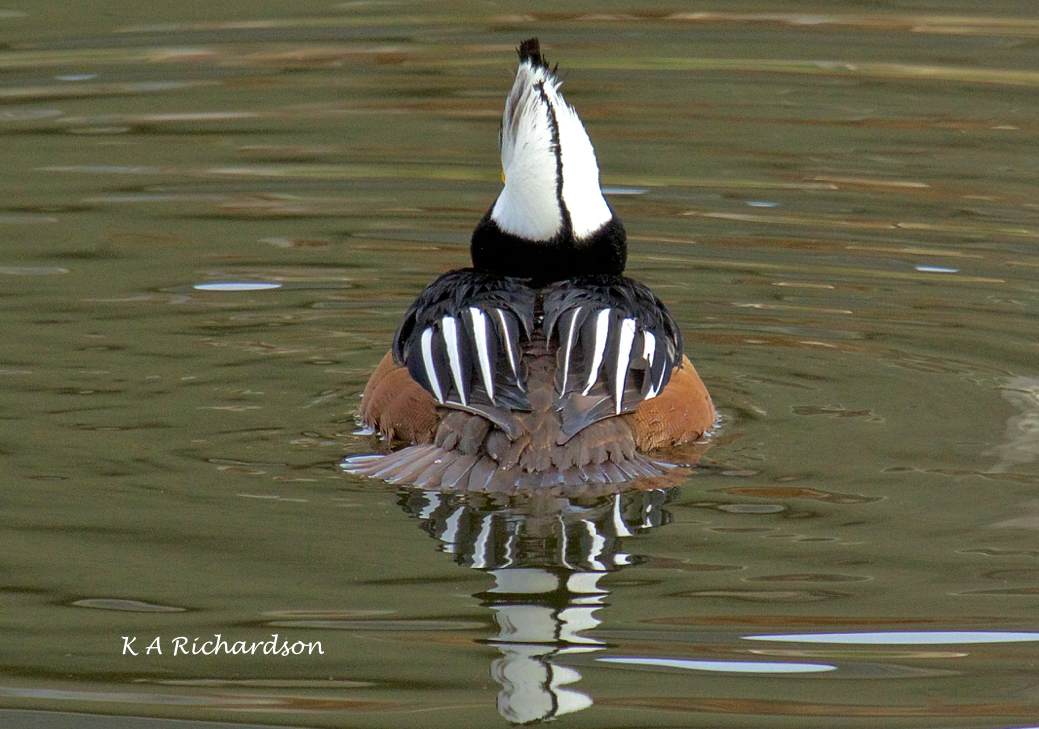
Belmont Pond, Kelowna, BC. Well, Hilda clearly knew he was coming, and now that’s he’s logged on, she’s really trying to impress!
Belmont Pond, Kelowna, BC. “Okay! I’m here! What now?” They stayed for a few days and then they were gone, not to be seen again until Autumn….
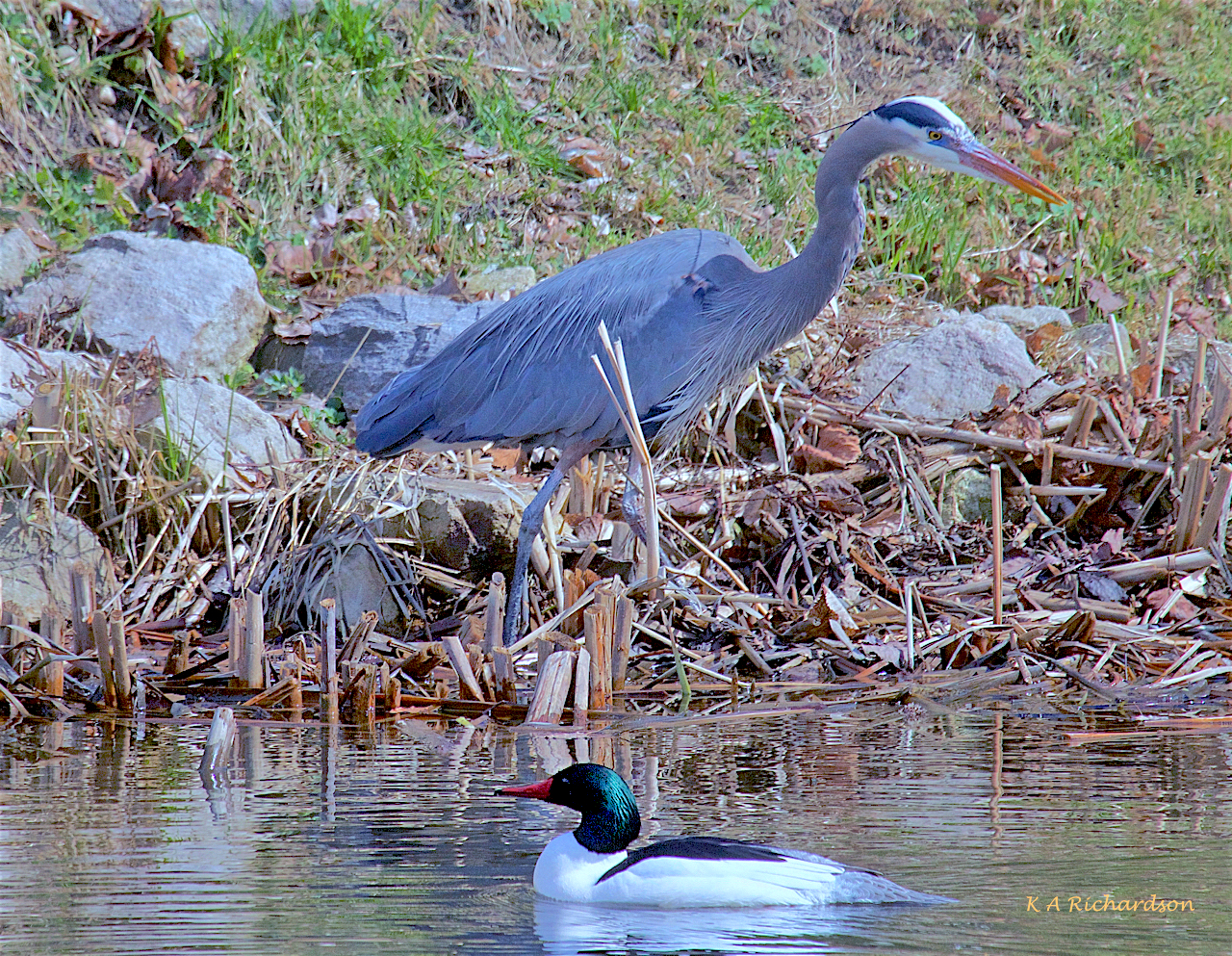
While 2017 was a better year for Common Mergansers here and in several other ponds I monitor, we were graced in early April by this fella’s a visit. Unfortunately, this year he didn’t bring a mate…. Did see a pair and a singleton in Thomson Marsh, but here in Belmont Pond, we have a much better chance to get close enough for a good look….
Belmont Pond, where Noogye, a young Great Blue Heron now fully promoted to adulthood, exchanged pleasantries with Como the Common Merganser: Como: “You fish your way…” Noogye: “…and I’ll fish mine!” Como: “Er, that’s just what I said…. (Sheesh! Herons!)”
In the next post, I’ll take a look at Spring Wood Ducks of Belmont Ponds…..
Belmont Pond in late November 2015 with a light veneer of ice….
Sometime in March, little Belmont Pond — surrounded by homes, a park with the same moniker, a church and private school and its fenced off playground — melts back to life. In winter it may be — or not — frozen for weeks at a time depending upon the severity of that season. In 2015, it froze long enough for a skating area to be cleared, while in 2016, an El Niño year, it was open except for brief spell when it wore a thin veneer of ice.……………………
Through January, February, and much of March 2017, thick ice sealed the pond. Kids hauled hockey nets onto it; residents took to watering the surface from time to time so the folks would have smooth skating.
Belmont Pond, February 2017
Hider Heron checks out one of Belmont Pond’s new nesting boxes.
And a group of neighbours got together to make and install three Wood Duck nesting boxes in hopes that in Spring we’d be able to enjoy the thrill of watching Woodies, and possibly Hooded Mergansers, Common Goldeneyes, or Buffleheads use them to raise young. It’s too soon to say, of course, but we remain hopeful. The ducks have returned to the pond. How long they’ll stay is still a guess.
…………………………………
……
By mid-March, the ice had thawed enough to allow some ducks to return, like this Common Goldeneye (Bucephala clangula) who was obviously pleased to be here!
Clarence is one happy COGO!
He grew even happier as the water opened up…. Note: click on any image in a group to enlarge it!
“Oh, what a feelin’!”
“Oh yeah!”
“I’m feelin’ somethin’ comin’ over me…..”
And soon he had company!
Howard the Hooded Merganser (Lophodytes cucullatus) applauded the change of seasons….
By late March the Wood Ducks (Aix sponsa) were back. Whether they noticed the new nesting boxes is not known by anyone not fluent in Woodduckese…. We have to wait and see.
Wilbur Woodie in all his glory, April 1, 2017….
And wife, er, partner, Wilma, who was about to greet one of our Western Painted Turtles, obscured for this photo by a cattail blocking the way….
The WPTs appeared at the end of March as well: click on any image in a group to enlarge it!
Stick together fellas!
“This pond is our pond…”
The bravest, closet to shore.
The smartest, closest to escape routes!
Soon, the entire pond was clear, and the Hoodies were asserting themselves, especially Howard who likes to think he’s the boss, but whom no one else takes as seriously as he takes himself….
I’m a happy dude, clap your wings! I’m a …..
Click on any image in the group to enlarge it!
I love this place…
and you know what else I love?
Yep! ME!!
If he becomes too full of himself, however, one way to Howard Hoodie can be back to earth, er, water, is by his partner, Hester, who has her feathers full!
Hester pins his Howard’s hood back from time to time….
and appreciates it when he does his job when interlopers start getting too cute….
Howard did ask that I include the photo below with his question in the caption:
Do you think this ‘do makes by butt look big?
It’s been a bit much for Clarence Cogo, all this Hoodie kerfuffle. His partner apparently isn’t keen on Belmont and it appears they have bade us farewell….
Clarence, it was nice to have you with us for your staycation. Be happy!
With no intent to downplay the supporting cast, the real stars of Belmont every Spring are the glorious Wood Ducks, Wilbur and Wilma. So here’s a closing look at them. Click on any image in a group to enlarge it!
As promised in the previous post on late winter ducks, here’s a look at some ducks that usually arrive a little further into spring: mergansers (Common and Hooded) and Wood Ducks.
To enlarge single photos after the one below, just click the photo.
Heron checks out Belmont Ponds and signals an alternative use for the new nest boxes….
But first, a look at some encouraging signs that we may have some of the COGOs with us a bit longer than usual this year. Over the winter, some of the lads who live along the east side of Belmont Pond got together and built three Wood Duck nesting boxes, or at least that was their intent. Such boxes, however, are also used occasionally by cavity nesters such as Buffleheads, Hooded Mergansers and COGOs. Now that the ice is finally off the pond, all of us duck watchers in the neighbourhood are curious to see which species, if any, make use of the new nesting facilities!
Some birds will use them for their own purposes, do doubt….
Among the first to show up in Belmont Pond Main, now that it’s is no longer a ‘hard water reservoir,’ were a pair of COGOs. The young drake below seemed eager to practise his moves before his lady came by:
(NOTE: IN MULTI-PANE ILLUSTRATIONS, JUST CLICK TO ENLARGE!)
“I’m feelin’ somethin’ comin’ over me…..”
“Oh, what a feelin’!”
“Oh yeah!”
“Hoo—whee!”
“Makes my nictitating membrane just twitch!” (170318)
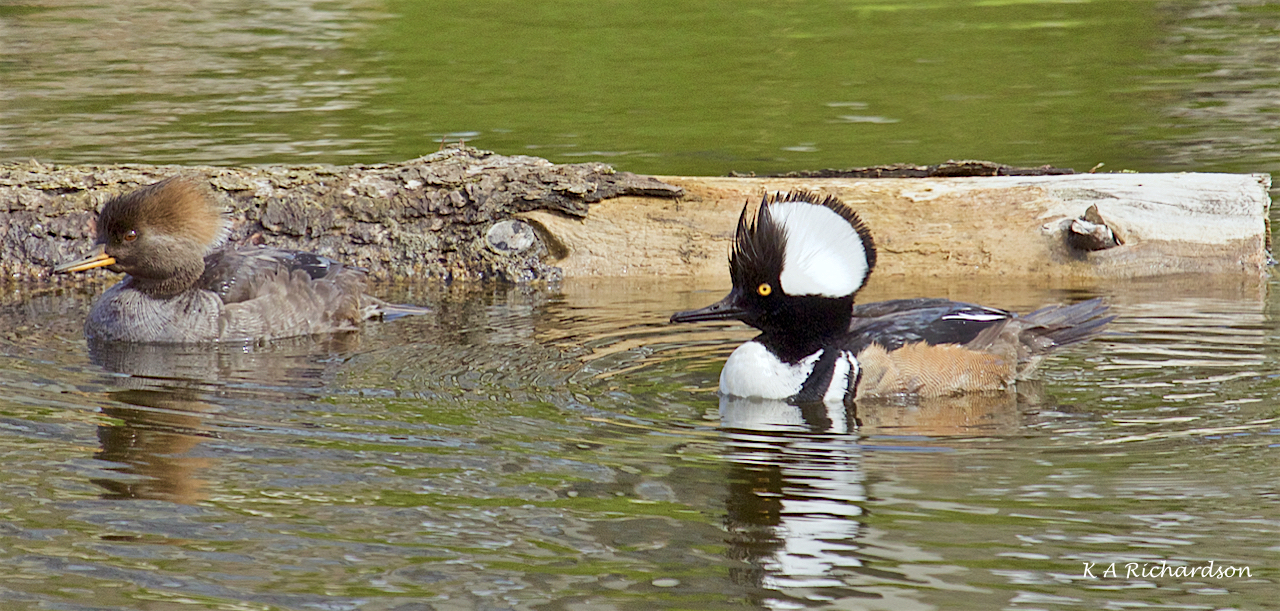
Keeping Loverboy company was a pair of Hooded Mergansers.
(Lophodytes cucullatus) Belmont Pond, Kelowna, BC. First of the year, still lots of ice on our little pond….
The object of his affection….
And this lad was also showing signs of spryness appropriate for springtime shenanigans!
Yoga workout…:
The Bowling Pin…
The Flippy Flap…
The SlowMo…
and Breathe….
Meanwhile, back at the Fish Pond on the other side of town, where we last watched the Canvasbacks beginning to sense their own need to start preparing for the season, another kind of merganser had found the pond en route to its own rendezvous.
In the Fish Pond….
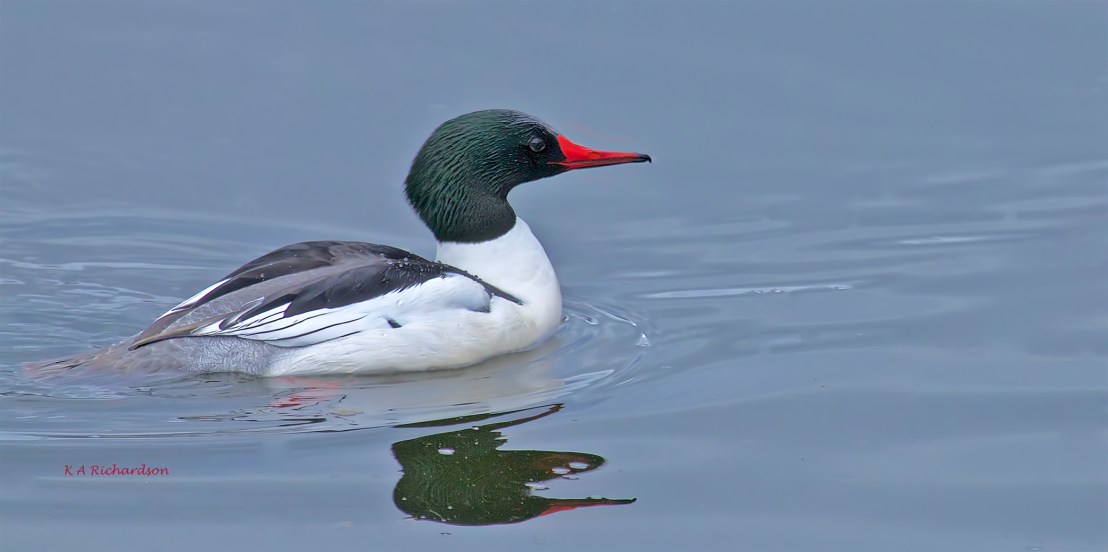
Green, black, white, and, oh yeah, ORANGE!
In this light, black and white…not really….
Not one for mixing with the other ducks on the pond, and at this point, the only COME to be seen, he later swam to the south end and pulled up onto the bank for a little sunshine:
Enjoying the sun on the last day of February 2017.
He stayed around for several more days and was eventually joined by another of his kind:
Common Merganser drake buddies, 170328
On March 23, I found yet another COME, this time in Munson Pond where it’s usually impossible to get a closeup shot. However, because that pond was still frozen except for a narrow channel around the shore, I was able to snag a shot of this guy working along the shoreline from 250 meters away towards me. He didn’t see me until after I had captured his soul. Here he has turned around and retreated from my intrusion….
On his way back to less interaction with Homo sapiens….
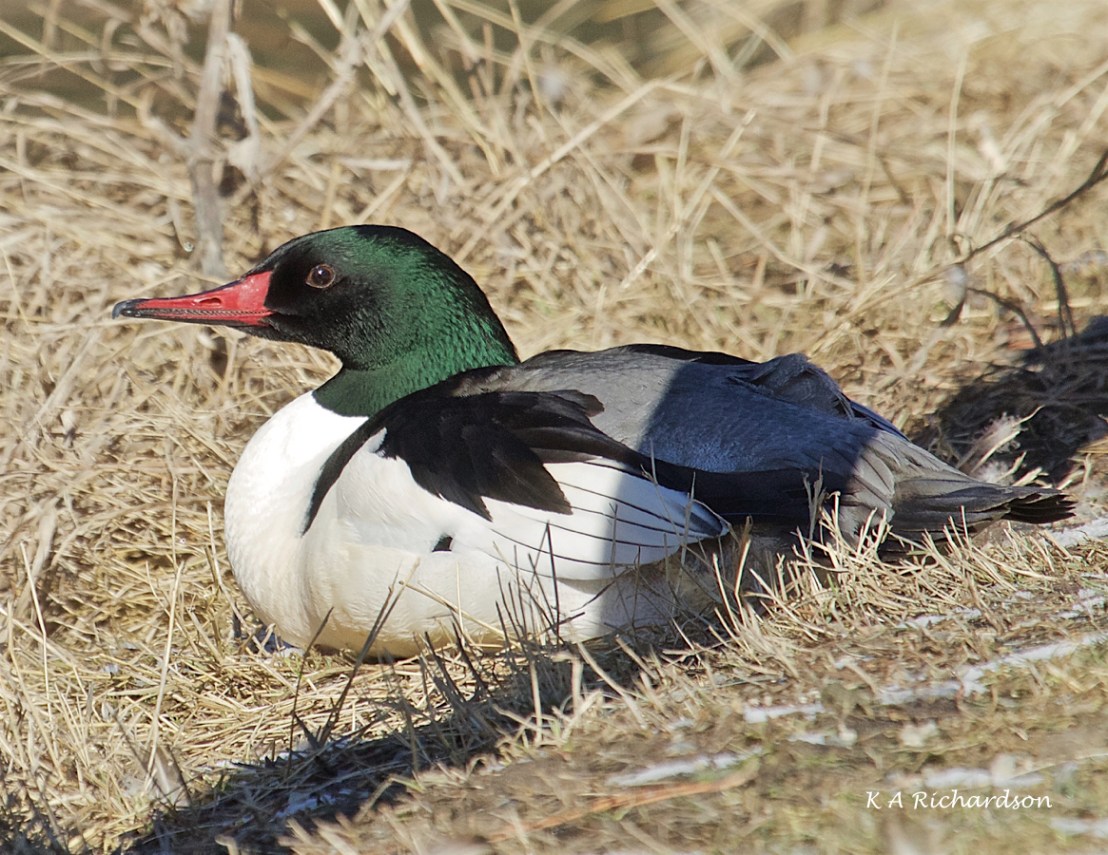
Mergansers do nest in the area, and I will cover them again, I’m sure! I can hear some folks asking, “But where are the females?” Well that’s covered in a different post, to some extent, but I will offer this group of shots of a female COME taken in February while there was still a considerable amount of ice on lower Mission Creek. The two genders are getting together as I write this and will stay together until the merganserlings hatch….
Kelowna is a wonderful location for people who love waterfowl, especially ducks. You can read all about ’em in Parts 3, 4, and 5 of my 2016 highlights —just click the Ducks tab in the menu to the right (and down a bit) of this post…. Most of the quackers (actually, most of them don’tquack, but that’s too fine a point right now!) in those posts are spring and summer residents. A few stay all year ’round, or most of it anyway. This post is dedicated to the ones who are most prominent in late winter / early spring, including a species that seems to be popping up in many new spots around BC in 2017, the Canvasback. Until this year, I’d seen them only at a distance. It was a great joy to find them close to home in a pond where photographing them is reasonably easy.
Canvasback pair, Hall Road Fish Pond.
Cornell’s Lab of Ornithology describes the species: “A large diving duck, the Canvasback breeds in prairie potholes and winters on ocean bays. Its sloping profile distinguishes it from other ducks.” In coloration, it’s similar to the Redhead (a close cousin of the Eurasian Pochard), which has a round head. Both species, especially in winter, can be found in sizeable flocks or rafts on fairly large bodies of water.
While Canvasbacks are found in all regions west of Atlantic Canada, they can be a challenge to find and get close to.
Cornell offers a couple of interesting facts about CANVs. The second one I find really amazing!
The species name of the Canvasback, Aythya valisineria, comes from Vallisneria americana, or wild celery, whose winter buds and rhizomes are its preferred food during the nonbreeding period.
The oldest recorded Canvasback was a male and at least 22 years, 7 months old when he was shot in California in 1991. He had been banded in the same state in 1969.
Good buddies….
Displaying….
Intelligent, prudent, and confident….
So glad to have these guys around for more than three weeks 2017.
For comparison purposes, here’s some images of Redheads from 2015 and 2016. You can see that the similarities and differences are about equally balanced. Click images to enlarge.
We’ll see this species in a month or so at a ‘secret location’ north of Kelowna.
Redheads’ range is similar to Canvasbacks’ but not identical.
I discovered the Canvasbacks at a kids’ fishing pond beside Hall Road when I went there to observe Buffleheads. I’d seen BUFFs there the previous two late winters where they are confined sufficiently to let a photographer get close…. While the CANVs were a great bonus, I wasn’t disappointed by the wee ones, either.
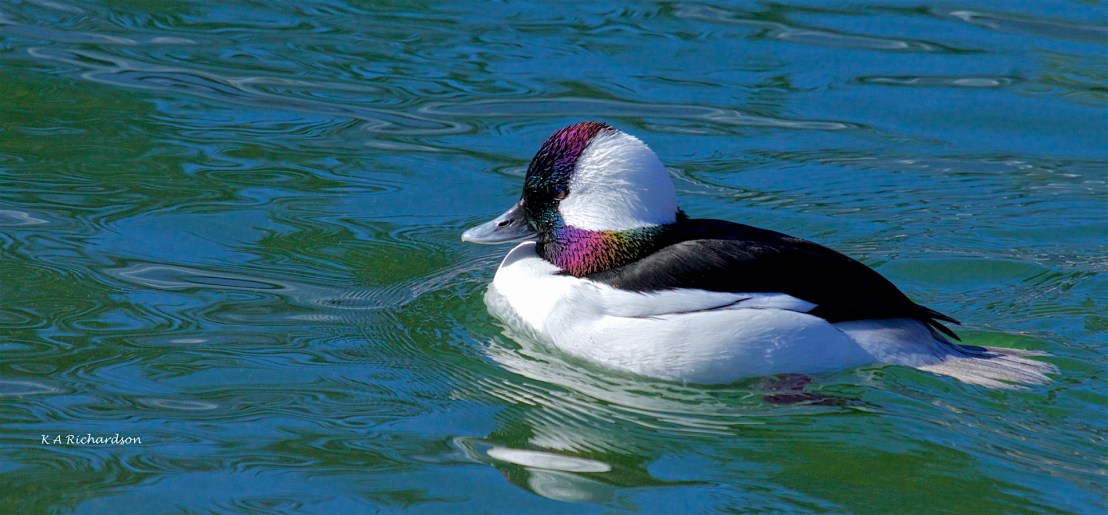
On a cloudy day, he looks black and white with a hint of colour…. Hall Rd. Fish Pond.
On a brighter day, we get a very different impression!
Click on any of the images below to enlarge it.
Bufflehead range is widespread — well done, little ones!
The Bufflehead nests almost exclusively in holes excavated by Northern Flickers and, on occasion, by Pileated Woodpeckers.
Unlike most ducks, the Bufflehead is mostly monogamous, often remaining with the same mate for several years.
Bufflehead fossils from the late Pleistocene (about 500,000 years ago) have been found in Alaska, California, Florida, Illinois, Kansas, Texas, and Washington. One California fossil that resembles a modern Bufflehead dates to the late Pliocene, two million years ago.
Bufflehead normally live only in North America, but in winter they occasionally show up elsewhere, including Kamchatka, Japan, Greenland, Iceland, the British Isles, Belgium, France, Finland, and Czechoslovakia. In some of these cases, the birds may have escaped from captivity.
The oldest Bufflehead on record was at least 18 years and 8 months old. It was caught and re-released by a bird bander in New York in 1975.
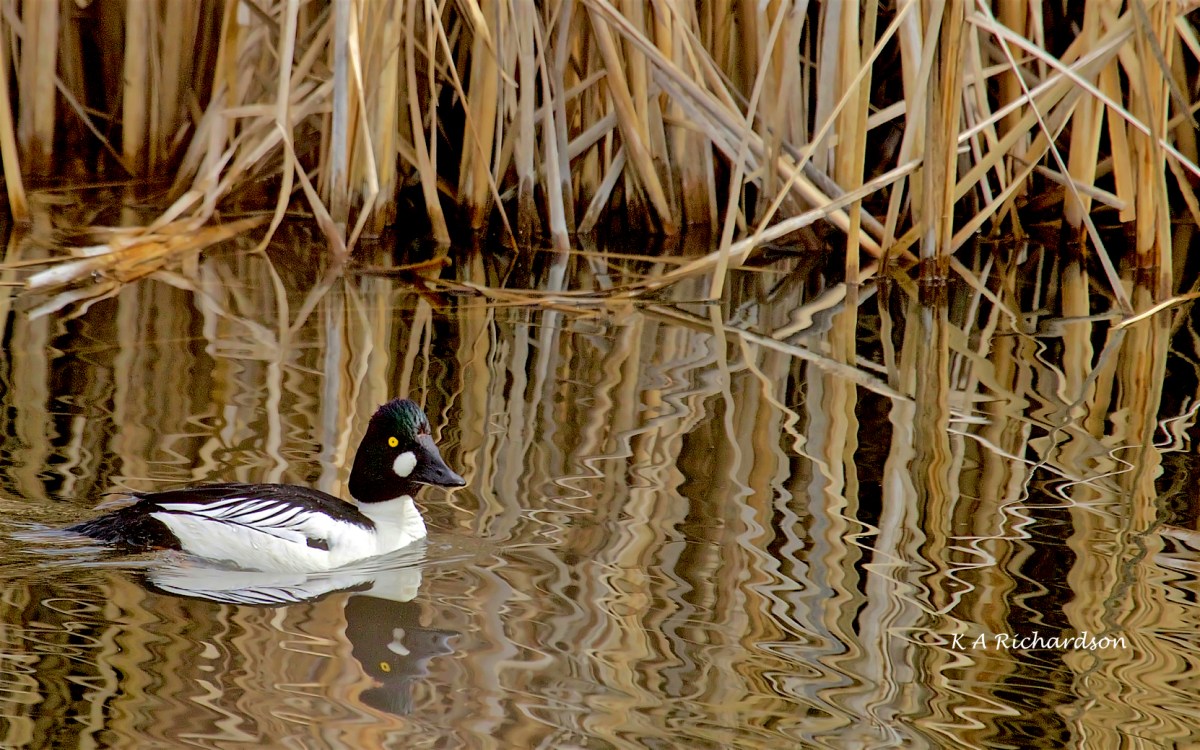
One more group that we see mainly in the winter and that leaves us around the same time the Canvasbacks return are the Goldeneyes, both Common and Barrows. You’ll find images and further information on Common Goldeneys, near the bottom of this post: Waterfowl Part 3. Here are some photos from 2017: Click on any photo to enlarge them all.
The COGO raft in Mission Creek, February
Handsome is as…
handsome does… (whatever that means!).
COGOs make underwater art!
Thanks to Cornell, again, for these fascinating facts about COGOs….
Hunters dubbed the Common Goldeneye the “whistler” for the distinctive whistling sound of its wings in flight. Cold weather accentuates the sound.
A female Common Goldeneye often lays eggs in the nest of another female, especially in nest boxes. She may lay in the nests of other species of ducks as well. Common and Barrow’s Goldeneyes lay in each other’s nests, and Wood Ducks and Hooded Mergansers often lay in the goldeneye’s nest too.
Like Wood Ducks, Common Goldeneyes readily use nest boxes as a stand-in for naturally occurring tree cavities. Some return to the same box year after year.
Goldeneye chicks leave the nest just one day after they hatch. The first step can be a doozy, with nests placed in tree cavities up to 40 feet high. As the female stands at the base of the tree and calls, the downy chicks jump from the nest hole one after the other and tumble to the ground.
After the ducklings leave the nest they can feed themselves and require only protection. Some females abandon their broods soon after hatching, and the young will join another female’s brood. Such mixed broods, known as “creches,” may also occur when a female loses some ducklings after a territorial fight with another female. Young scatter and mix when females fight, and not all of them get back to their mother when the fight ends. Some or all of the ducklings may be transferred to one brood, usually that of the territory owner.
The eyes of a Common Goldeneye are gray-brown at hatching. They turn purple-blue, then blue, then green-blue as they age. By five months of age they have become clear pale green-yellow. The eyes will be bright yellow in adult males and pale yellow to white in females.
In winter and early spring, male Common Goldeneyes perform a complex series of courtship displays* that includes up to 14 moves with names like “masthead,” “bowsprit,” and “head throw kick,” in which the male bends his head back to touch his rump, then thrusts forward and kicks up water with his feet. *I hope to cover this in future posts….
The oldest known Common Goldeneye was a male, and at least 20 years, 5 months based. He was banded and found in Minnesota.
Look for Spring mergansers and Barrows Goldeneyes in a post coming soon….

























































 birds & musings