Category: Bluebirds

April ~ Part 5 — week 3:

No one expected the week preceding Sunday, April 18 to be Sean’s last. Certainly, he didn’t. He continued to go to work, was eager to get his first Covid 19 vaccination on Thursday the 14th. We talked about it by phone. ‘No problem,’ he said. But his right arm was next to useless and his breathing so laboured that phone calls had to be brief. I planned (in my head) to visit him on Sunday.

In the meantime, I continued to enjoy the fine spring weather, walk my daily beat, and to add to my photo collection. We even travelled to Bertram Creek Regional Park, a few minutes south of our place on the east side of Okanagan Lake. Not much to see at first in the park itself. We wandered down to the observation pier that stretches out into the lake and watched a pair of Common Mergansers keeping their distance from us. Until, that is, this eagle showed up, flying in our direction:

This approaching Bald Eagle did us a great favour by causing the C Merganser pair to flee in the direction of the pier and my waiting camera.
Click on photos to enlarge them in new tabs. To return to this post, just close the tab.

Good shots of Mr. Greenhead can seldom be counted on; I got very lucky. Thanks, Baldy!

Closer to home (like in the foundation stones of our condo or in the small walled-in front yard) there was some fun to be had, too, watching our local residents at work and play…. Click images to read captions; to see the photo’s title, click the ℹ️ symbol.

I did travel up to Beaver Lake Road to check on the bluebirds. Only later did I understand that for me this would become the Year of the Female Blues. I usually get much more cooperation from the males than from their mates. That expectation was turned on its head this year — only one of many challenges to custom….

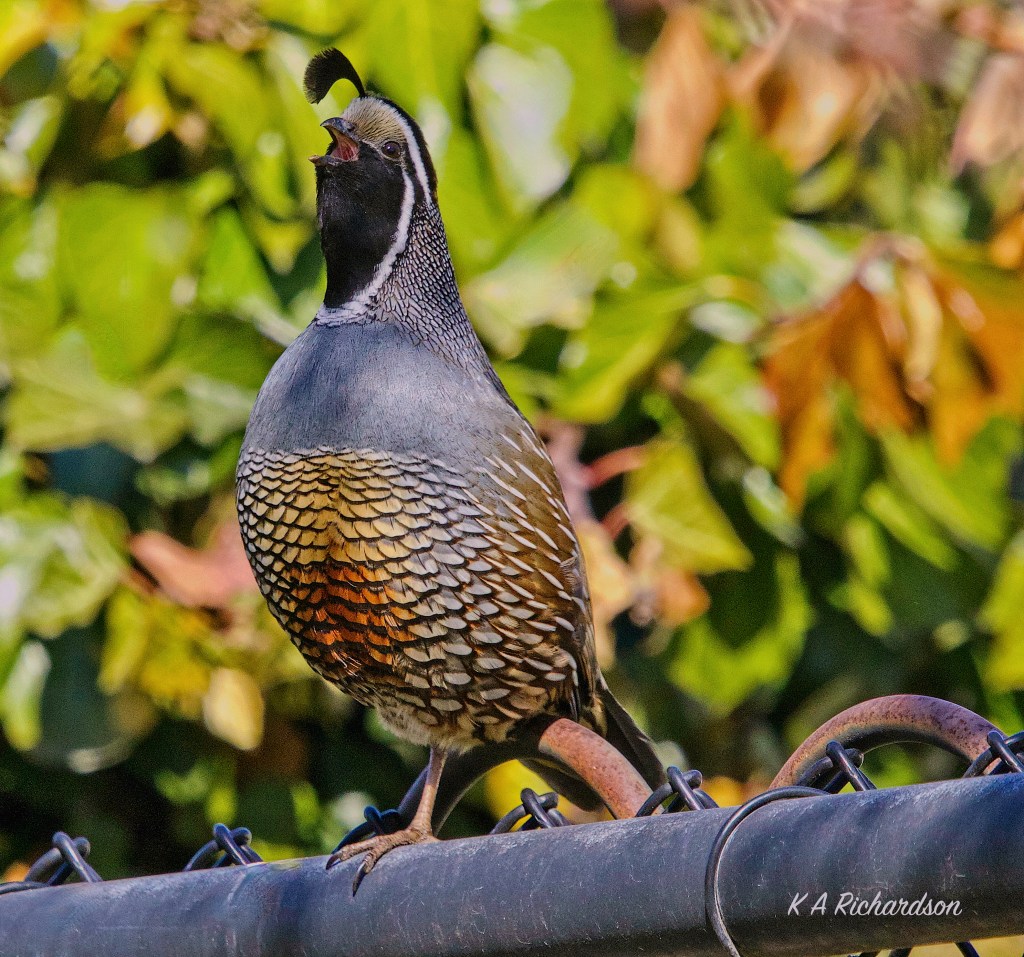
Our part of Kelowna has numerous coveys of California Quail, one of which likes to frolic in Belmont Park a few minutes walk north of our place. On Saturday, the 17th of April, as I took my route in a counterclockwise direction for a change, I heard this fella rehearsing his one note solo. Click the images to see details.

Johnny One Note practises for Spring! California Quail (Callipepla californica) Belmont Park, Kelowna, BC.

Or did I have it all wrong? Was he trying to warn me that my world was about the crumble?
My son left this world the next day.

2021 April ~ Part 2

Before the 18th: first week of April…

While my son soldiered on in early spring, we all knew he couldn’t hold out long, as his breathing became more laboured, and he lost the use of his right arm. And yet, we all tried to support him by respecting his courage. I wish I’d said, however, “To Hell with Covid!” and spent some time with him. We spoke frequently by phone, and while he went to work for one-on-one sessions with his golf clients, he didn’t want those of us still circulating among the general public to visit him at home. I should have gone anyway; I’ll regret that choice for the rest of my life.

For the first part of April, life continued fairly normally, Covid restrictions notwithstanding. I could still hike my beloved Thomson Marsh and environs, drive to Munson Pond and Park, or one of the other birding locales like Robert Lake or Beaver Lake Road where I was unlikely to run into many people. I got a lot of satisfying images, including some almost ‘nemesis birds’. I’m trying to focus on diversity here….

In the shot below, the little nuthatch has pulled something out of the bark and
is tossing it around before swallowing it.

I have photographed Red-breasted Nuthatches for many years, but much less frequently than I’d have liked.

This spring was a
spectacular exception.
If RBNUs were found here in springs past, I wasn’t aware of it. But I didn’t know what to listen for. This year I quickly discovered that they make a sound like a tiny tractor backing up — a nasal one- pitch ‘beep-beep-beep’. And once I’d discovered ’em, they became a joy to work with!

More RBNUs below….

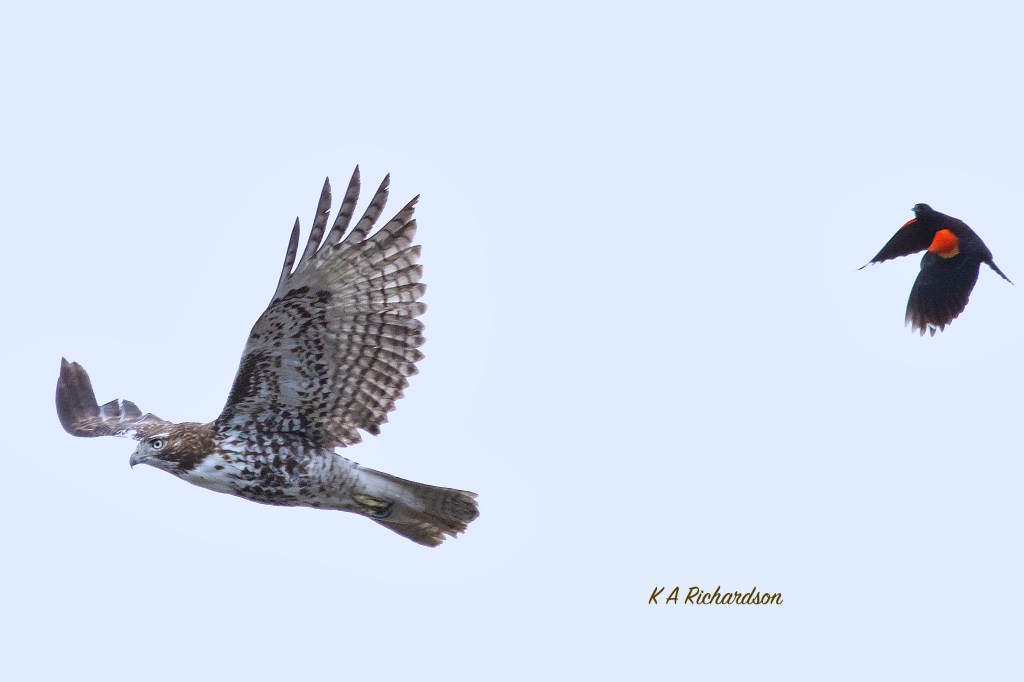
While pursuing a Cinnamon Teal, out of the corner of my eye I caught a Red-tailed Hawk over Michaelbrook Marsh being chased by a RW Blackbird. With no time to adjust my manual set up, I swung the camera up and hoped for the best. Only when I got home did I discover that it was our old friend Ready Eddie (Re’ddy with his white eyebrow and throat, a hawk I’ve been tracking for over 6 years) being harassed as he has been so many times over the years by Red-winged Blackbirds.
I first photographed this phenomenon in this area back in March 2016! (Scroll down the post.)
In the shot above the RWBL has backed off after successfully sending Re’ddy packing….
American Kestrels Kessie (right) and Amke (Falco sparverius) near their nesting site on the north side of Michaelbrook Marsh, Kelowna, BC. In the seven springs I’ve lived in Kelowna, Kessie has mated in this northwest sector of her territory every year. Whether her mate is the same one I’m not sure. This has become a rite of spring for me as much as for them.

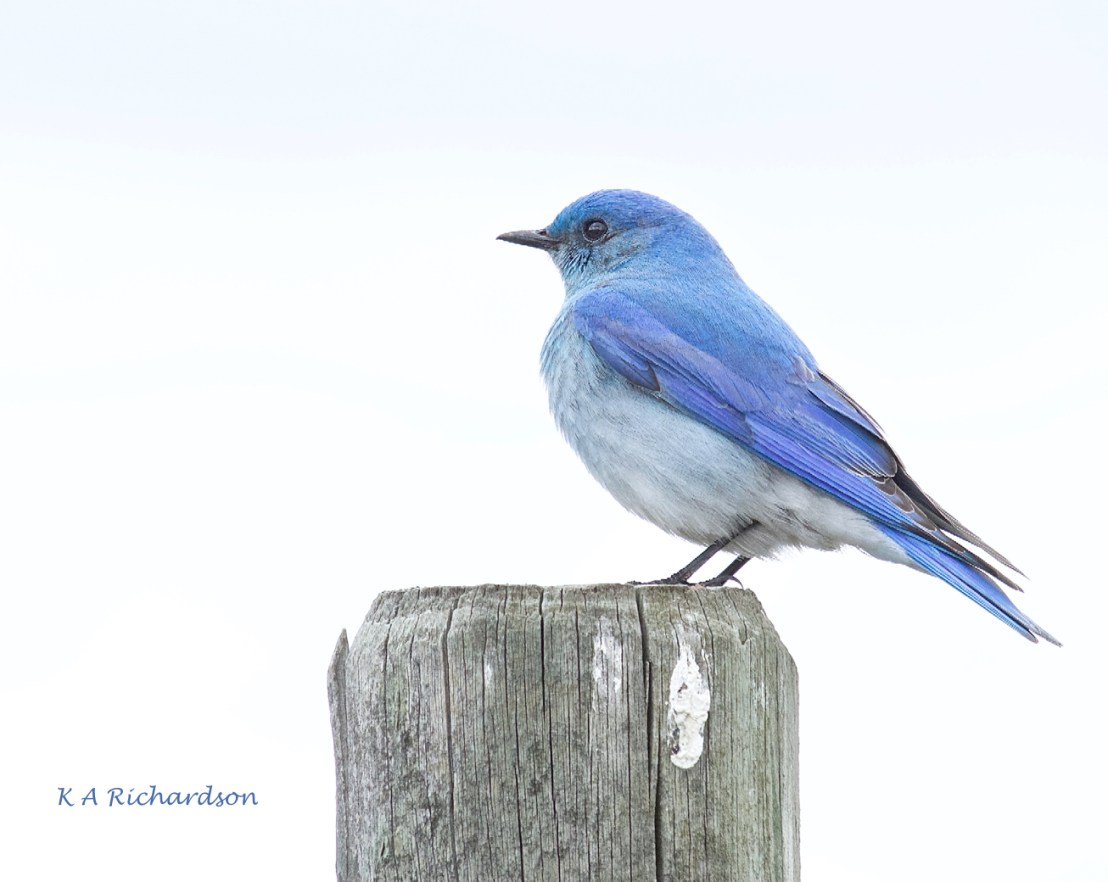
I love Mountain Bluebirds! They are found in many parts of the Okanagan from White Lake Grasslands Park, north-west of Oliver to Beaver Lake Road in Lake Country. In 2020, I discovered them even closer to Kelowna in an area only 15 minutes from home.

While Western Bluebirds also nest in these areas, I find them less photogenic than the MOBLs. Every year there’s a continuing challenge to discover where they will nest and to get the quality of images this species deserves!

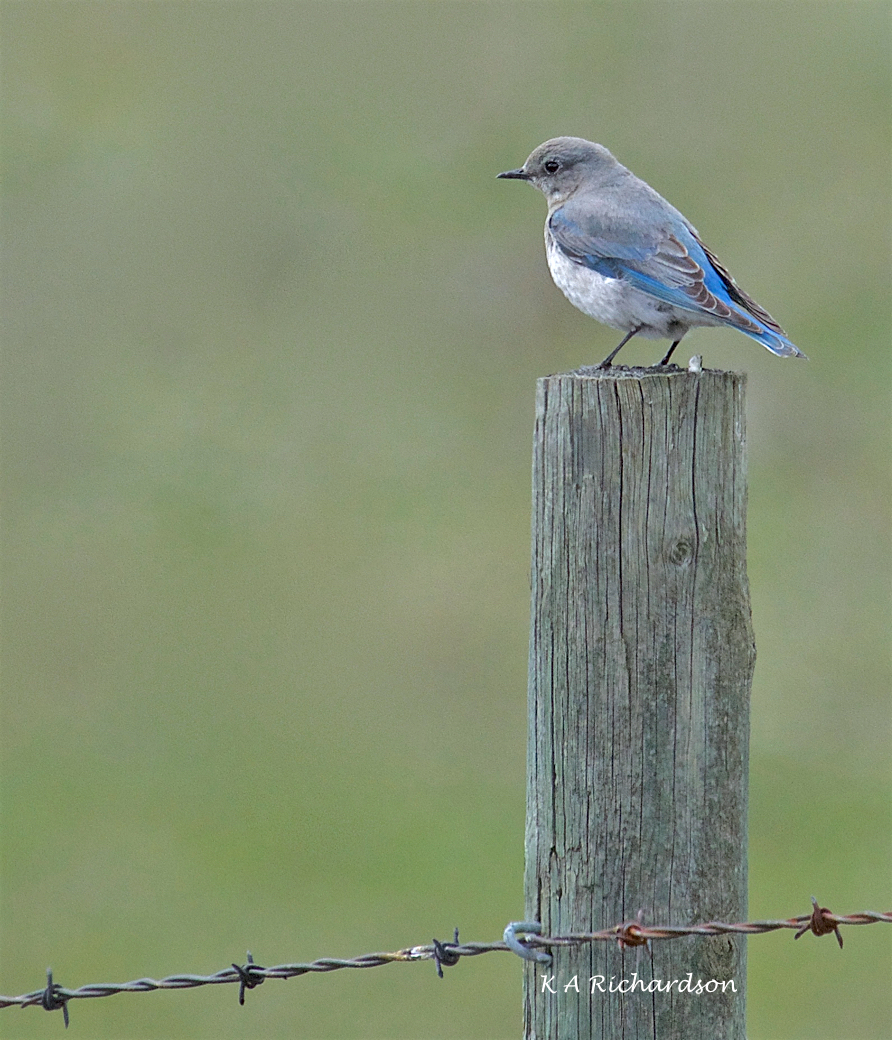
In most seasons, I’m most dedicated to the males . In 2021, however, I found a female to give them a run for their — er — feathers.
You’ll see later on….

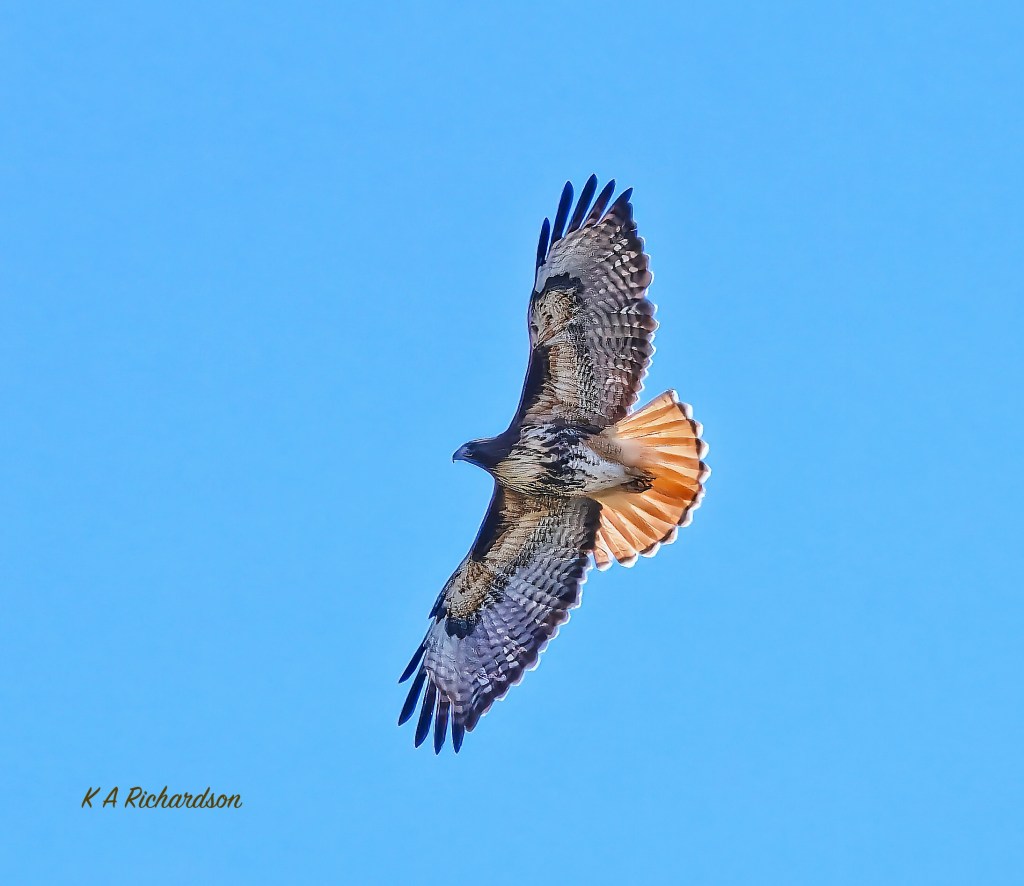
The Okanagan is blessed with an abundance of Red-tailed Hawks. Click here for my 2016 study of them.

An intriguing feature of this species is the great colour variability among its indvIduals. The harassed fella (posted above the kestrels above the bluebird), as you can see, has a white throat and overall lighter tones including a tail that’s not very ‘red’ compared to the one to the right here, soaring above Beaver Lake Road in Lake Country. This one has classic hues!

Some birds are more difficult to capture than others, of course.
Western Meadowlarks are often found in the same areas as our two bluebird species, but I find them much more flighty. Early spring, however, often brings opportunities as it did this April day. Of course, I’d prefer this bird to face me. S/he didn’t, but I would catch up with one more co-operative later in the month.

The Black-billed Magpie is another species I find challenging to photograph despite their relative abundance here. Finding them in the open in just the right light is certainly possible, yet I struggle to get my settings ‘just right’.

While this setting is far from pretty, it’s typical of where this youngster and his relatives hang out. He looks a little guilty about giving me as good an opportunity as even this!

One of our most colourful and controversial species, BBMAs never fail to get a reaction from onlookers. Personally, I like ’em and defend them against their detractors, which doesn’t make me very popular!

American Robins are one of the most familiar birds in North America. For many folks, the ‘first robin’ of a new year marks the beginning of spring.

Many bird photo-graphers I know don’t like to post images of commonplace birds.
I, contrarian, love the common birds with which, perhaps, I identify. And, as I’ve learned through travel to and living in ‘foreign lands’, what’s ‘common’ in one place is ‘exotic’ in another!

Pine Siskin (Spinus pinus) Belmont Park, Kelowna.
The Siskins in our area seldom pose for closeups.
This ‘keyhole shot’ has been edited to remove obstructions.

I must add, too, that, this bird was much lighter in colour than most Siskins.

The images below, while of low quality, were taken in low light as the bird was foraging in a shallow ditch.

On another day, I found a Pine Siskin sipping water from the ditch that runs through this part of Belmont Park. Very different ‘look’ in this spot, I think you’ll agree!

Red-breasted Nuthatches inhabit the same general area of Belmont Park. So, as promised above, here are three more images of them. They were sooo cooperative this year!

For reasons I find difficult to explain, I love Say’s Phoebes, despite their muted hues.
Perhaps it’s because they’re a western bird and it took me so many years to learn where they hang out. Regardless, I see several every year, now, and, again, why I don’t know, I have trouble getting the quality of image I want.

This bird was one of a pair nesting in the large back yard of a family dwelling near Vernon’s Swan Lake Nature Reserve.

For Part 1 of this series, click here.

For Part 3 of this series, click here.

BLRd Bonanza mid April: part one — MOBLs

For Navigation Help, click here.

Part 1 (below): Mountain Bluebirds.

For Part 2, Say’s Phoebe, click here.

April 15, 2007: Lots of photos here from my April 14th trip up Beaver Lake Road (out of Winfield, BC, just north of Kelowna). The goal was Mountain Bluebird (Sialia curricoides) images. Had quite a time paring down from the dozens I took. So, today, less text, more images! For more on Mountain Bluebirds, see my earlier post, here:

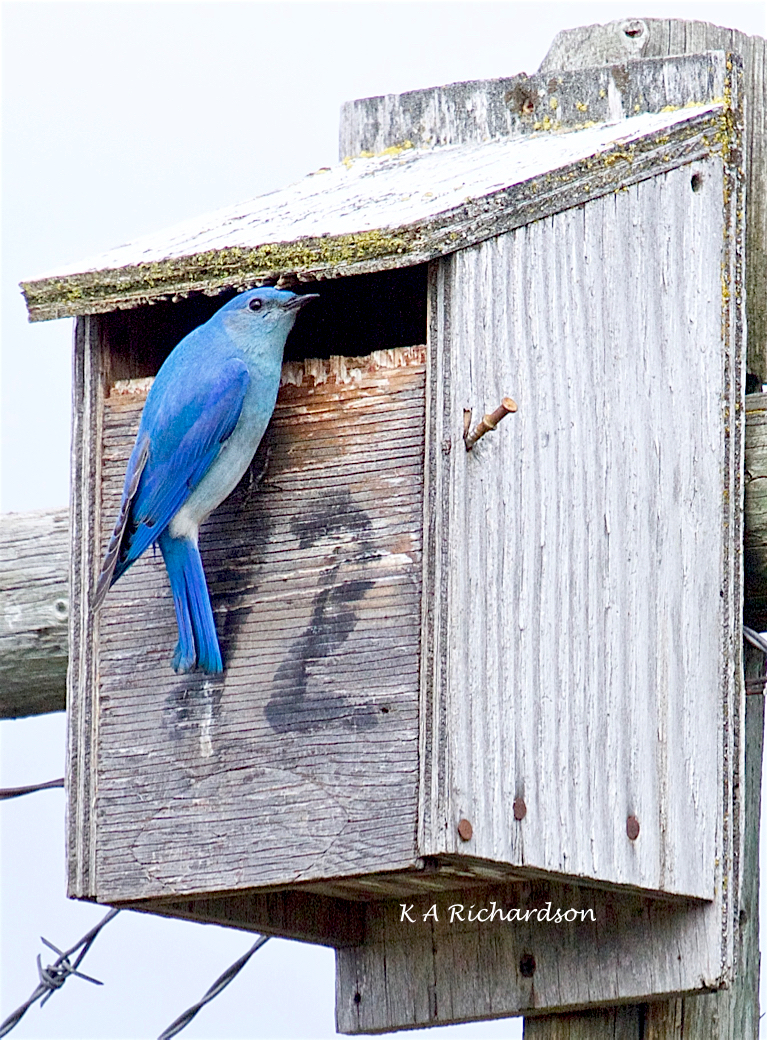
The pair at Nest Box 12 were still there, and on this day had some friends along. More on them in a bit! Click image below to enlarge it in a new tab. Scroll down on any enlarged cluster image, and click View Original Size to see it fully blown up!

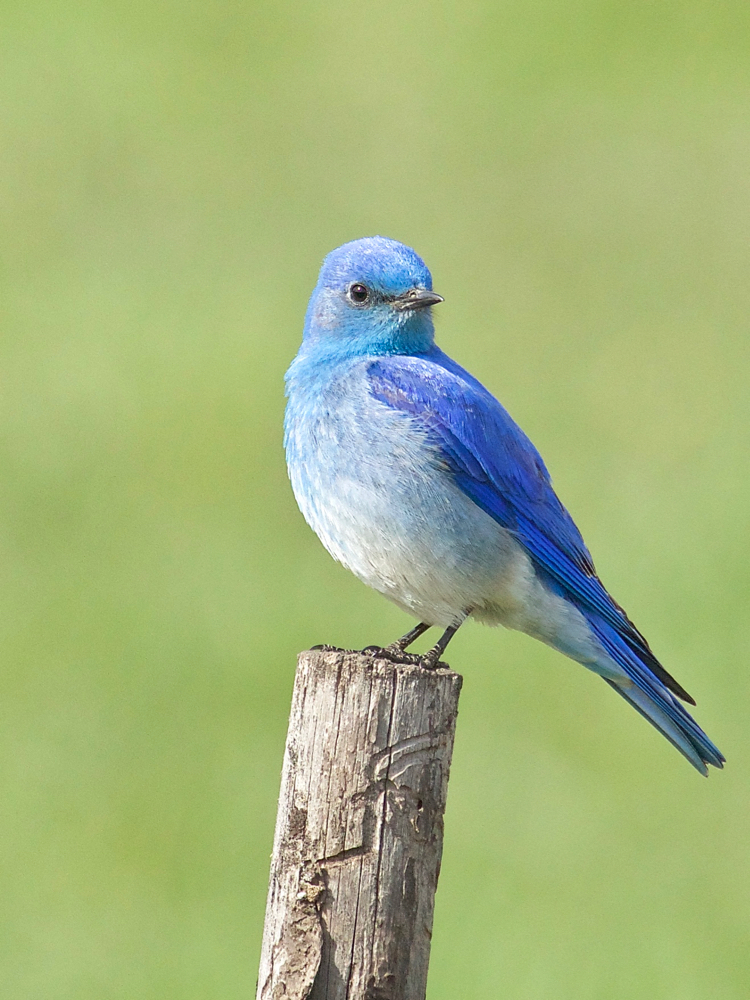
Mountain Bluebird male (Sialia curricoides) - 11
Best shot of the day, I think. Click image to enlarge in a new tab….

Mountain Bluebird male (Sialia curricoides) - 1
MOBL male at #12 nest box.

I was quite enjoying myself. There’s some challenge in getting this close to Mountain Bluebirds; over the years, I’ve gotten to know a few secrets…. On this occasion, I witnessed something for the very first time — a bird choking and coughing up the source of its distress. Sadly, the the images didn’t start out well, as the rail is in better focus than the bird. But all’s well that ends well, right? Check it out: click any photo in any cluster below to enlarge them all.

MOBLs are my favourite bluebird. I never tire of seeing them. Photographing them is always challenging, trying to get the right pose and right bokeh. Here are some against the hillside rather than the sky.

 And finally, for the male MOBLs, some Blue on blue images…. Did I say blue is my favourite colour?

I did not do so well with Moby’s mate this time out, as you can see in this pair of images:

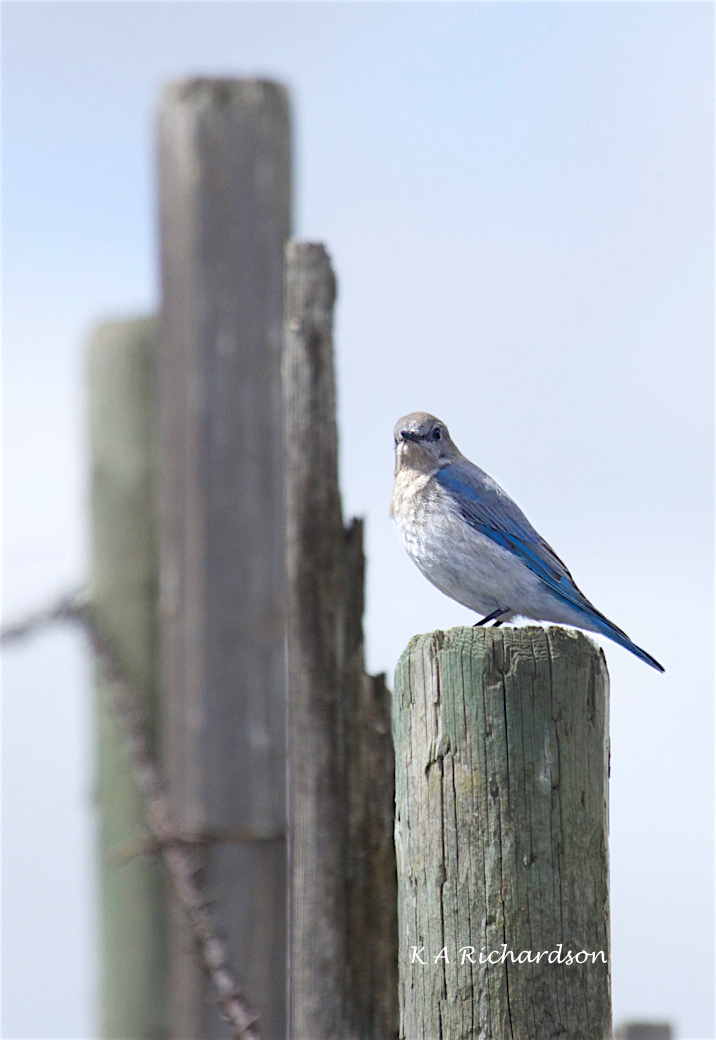
Mountain Bluebird female (Sialia curricoides) - 1
Female Mountain Bluebird, Beaver Lake Road near Winfield, BC. – 1

Mountain Bluebird female (Sialia curricoides) - 2
Female Mountain Bluebird, Beaver Lake Road near Winfield, BC. – 2

But the trip also revealed a couple of mutual friends of MOBLs and me, like this fellow below. The other friend is found in Part 2: click here.

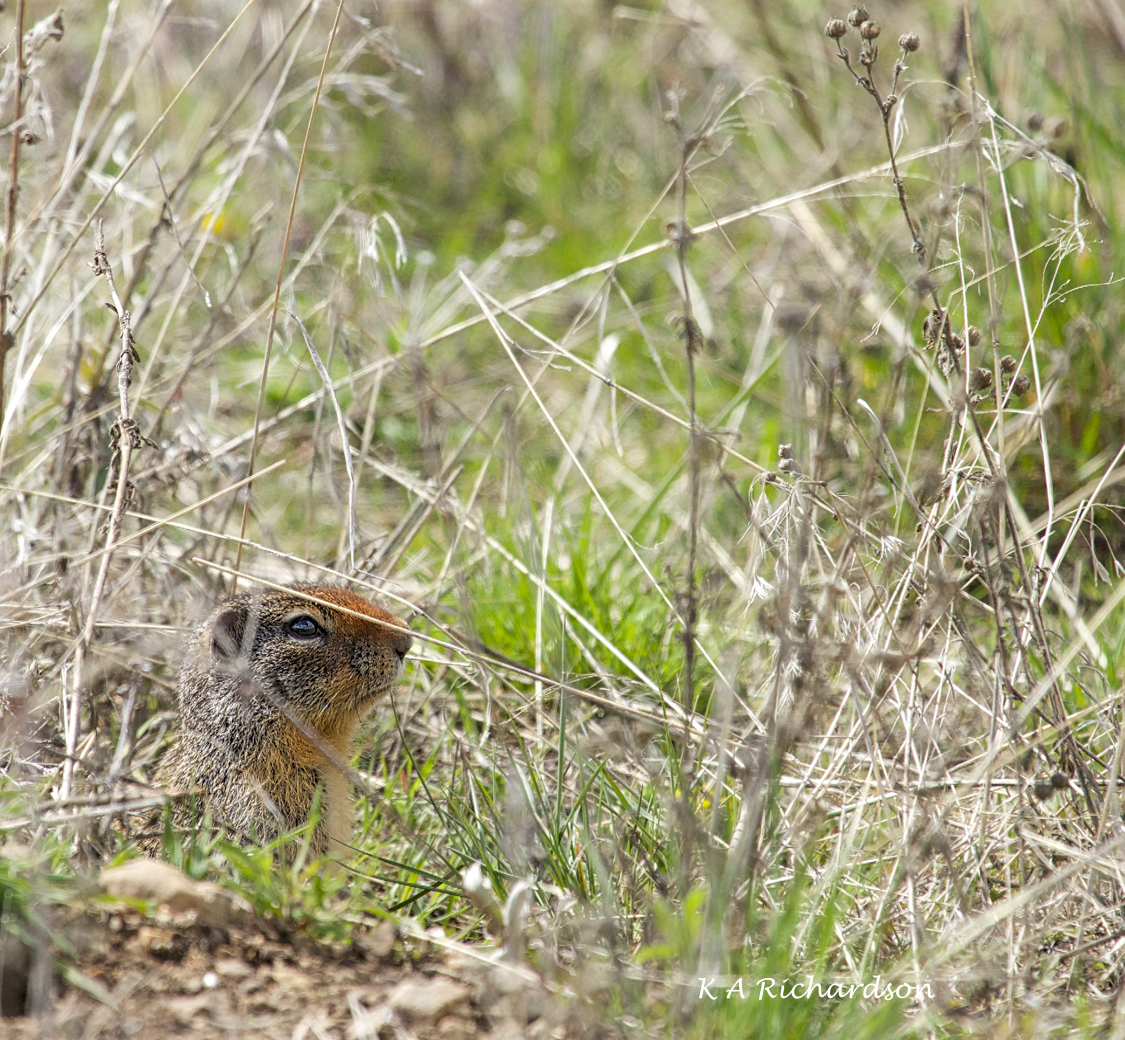
Columbian Ground Squirrel (Urocitellus columbianus).jpg
Columbian Ground Squirrels were abundant! I’ll get lots of photos of them here and elsewhere over Spring and Summer. In this one, was just trying to be creative….

Favourites‚ part two (and blue)….

No, not Ospreys part 2. That’s still in the works and won’t be ready for a bit….

Mountain Bluebird male
Mountain Bluebird

Instead, I want to confess to my preference for blue birds. My colleague Nick, who lives in Abbotsford, BC, shares this passion; in fact, he probably realized his before I did mine. Regardless, we’re nuts about bluebirds, Blue jays, jays that are blue, and even kingfishers and herons and Dippers that are blue-ish or almost so. In the 12 years that I lived at The Coast, I never saw a bluebird there, so I had to content myself with the occasional Steller’s Jay or Great Blue Heron.  When Mountain Bluebirds, Scrub Jays, and the occasional Blue Jay deigned to visit Greater Vancouver, I failed to photograph a single one! But since I’ve moved inland, it has been a different story. Even Nick, who never dipped when coastal accidentals appeared, has admitted that the opps for blues up here are pretty amazing.

So here’s to celebrating the blues!

Bluebirds: in the Okanagan we’re blessed to have two species to feast our eyes on—the Western Bluebird and the Mountain Bluebird. Love ’em both, but must confess I’m a little more partial towards the latter. WEBL males are very hard to capture to my standard. I’ve better luck with WEBL females, especially the one featured today who was a great poser. I discovered her at White Lake, west of Oliver, BC, and had two extended photo sessions with her several weeks apart. These shots were taken on the same day….

To see enlarged image, click on it. To return to this page click the x in the top right corner.

The shot below, also a female, was taken northeast of Kelowna along Beaver Lake Road, east of Winfield, BC—a very popular location for both species of bluebirds. Click to open enlarged image in a new tab….

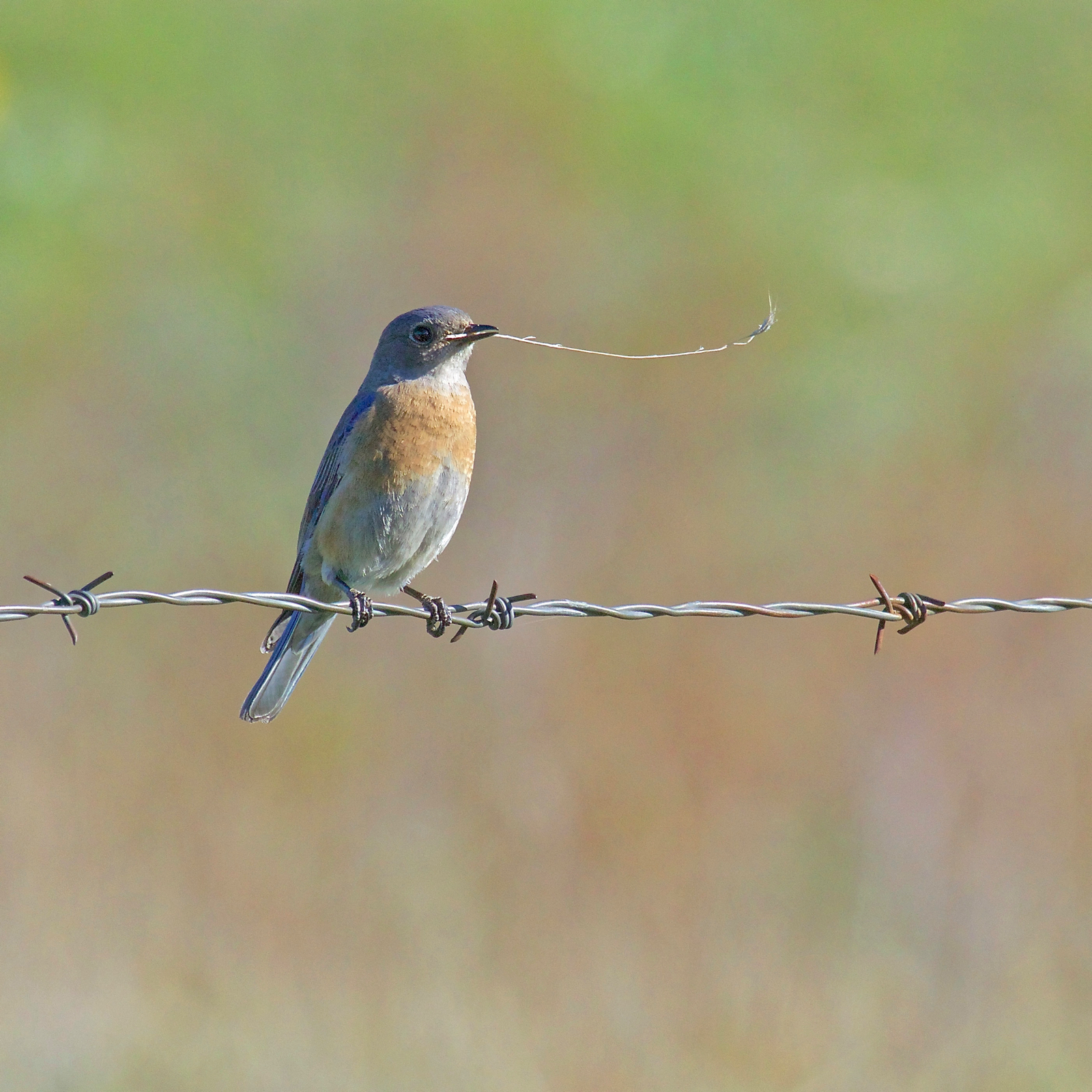
Western Bluebird
(Sialia mexicana) Beaver Lake Road, Winfield, BC. I like the way the bird appears to float on a strand of barbed wire. And yes, we bumpkins often like to chew on a haystalk….

The male WEBL (also at Beaver Lake Road) is much darker in colour:
To see enlarged image, click on it. To return to this page click the x in the top right corner.

Bluebirds, as you may know, are members of the Thrush family, which includes our common American Robin and the somewhat rarer Townsend’s Solitaire. It’s always a bonus to get a twofer, and especially so when they’re different species of the same family.

Two thrushes - Robin & W. Bluebird - 1
Another image taken at White Lake, BC.

Mountain bluebirds are found throughout the Interior and are especially available during the immigration in spring and the emigration in fall. My favourite place to photograph them is the Kane Valley, southwest of Merritt, a little over an hour’s drive from home. Beaver Lake Road also provides great photo opps as does the White Lake Grasslands Protected Area west of Okanagan Falls and Oliver.

Mountain Bluebird male – Version 2
Kane Valley Road has been very good to me! CLICK TO ENLARGE….

Well, that’s enough for this post. Will add more blue birds in a subsequent article.
Hope you enjoyed these ones!