Before the 18th: Early spring predators & ‘critters’
So far my posts on spring 2021 (up to the time of my son’s passing on April 18) have focused on birds. But I’m also quite interested in non-avian wildlife, and even plants — especially in the equinoctial seasons. So I’m going to include a couple of shots of raptors first and then some of the creatures that have to pay attention to attacks from the sky.
Turkey Vulture over Trapalanda Farm on the northeast sector of my beat.
The earliest of the larger butterflies of spring: the Mourning Cloak. New Growth Area above Crawford Falls (west side), Kelowna, BC.
In the first week of the month, spring temperatures toyed with our expectations, starting high, then falling then rising again. In the second week, however, temps dipped before rising dramatically after the 12th….
Still, for the beginning of April, these conditions felt more or less normal, and I went about, as in previous years, surveying the ponds and brooks and marshes on my beat, looking for ducks that had been more or less ‘away’ all winter.
Ducks are fine, of course, but spring is much more about migratory passerines, especially as warblers and goldfinches add fresh colour among permanent residents still in their winter plumage. I must admit, however, that there were fewer House Finches and warblers than I expected. In fact, the population patterns I’d come to expect over six previous seasons seemed ‘off’ for spring, summer, and fall.
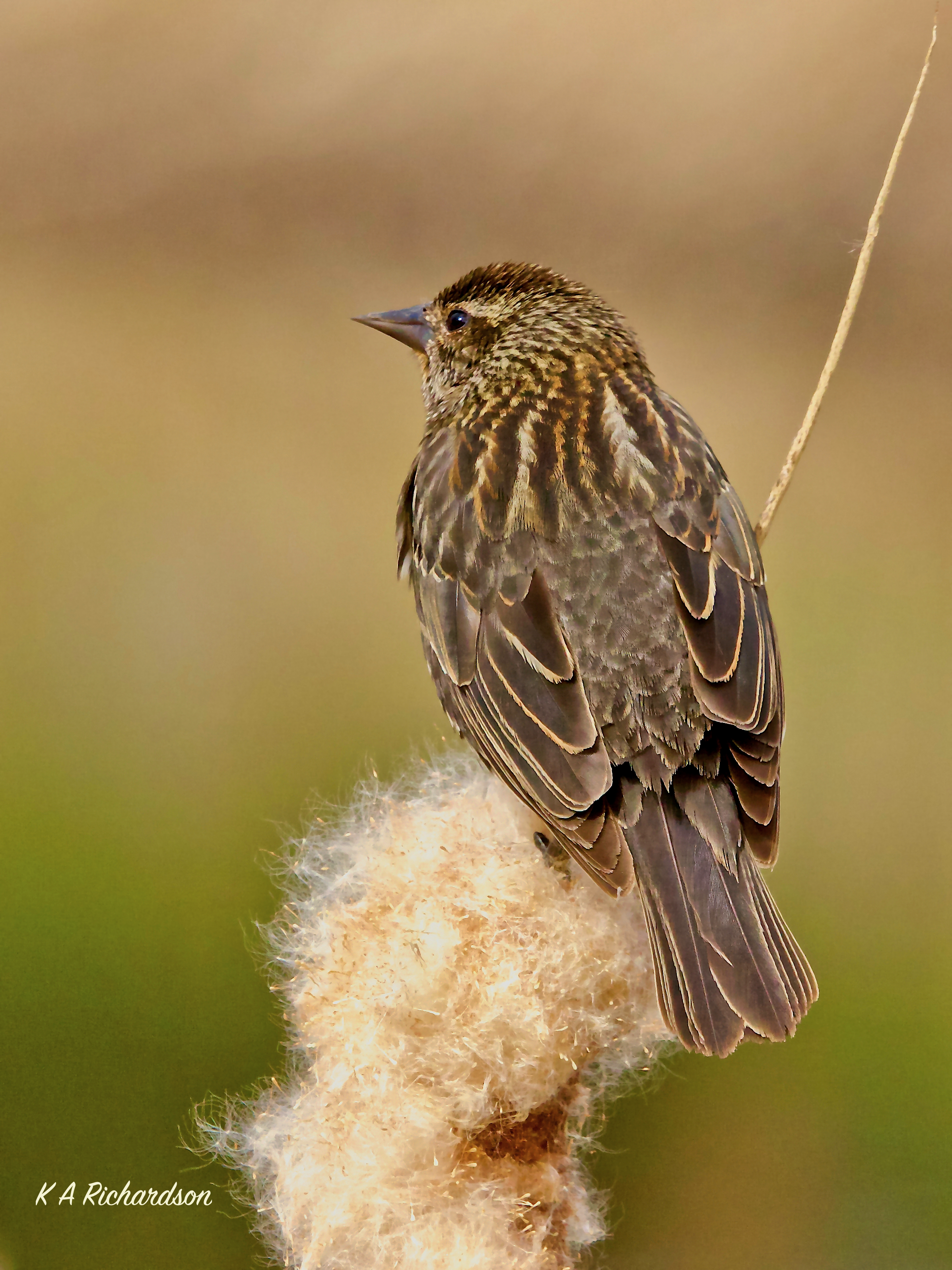
For all that, it seems there’s always an abundance of blackbirds, including, by mid-April females popping up one or two at a time, prompting great excitement among the brightly coloured males in the marshes. We can even begin wondering when the Yellowheadeds will make it back….
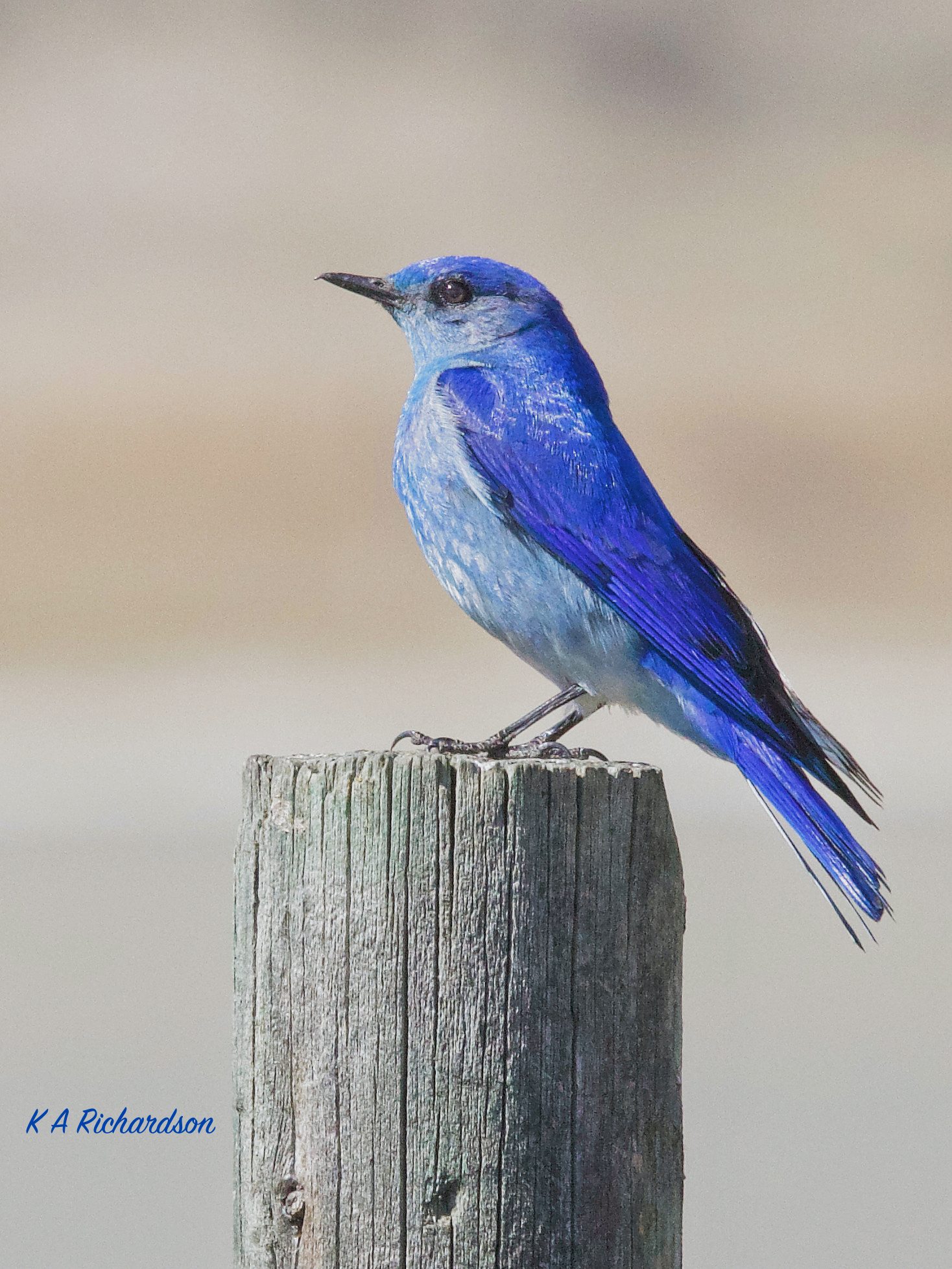
One of our favourite spots to visit as early in spring as we think the birds will be back is White Lake Grasslands Park, northwest of Oliver, BC. It’s a great spot for early bluebirds, both Westerns and Mountains, Western Meadowlarks, and Say’s Phoebes. As well, there’s often a chance to see some raptors, even a Golden Eagle if we’re really lucky. And if the birds are uncooperative, perhaps we can inspect some spring flowers.
For enlarged images, click on any one in the gallery.
*The official American Birding Association four letter abbreviation for Red-winged Blackbird(Agelaius phoneceus). For more examples and exceptions to the basic rule, click here.
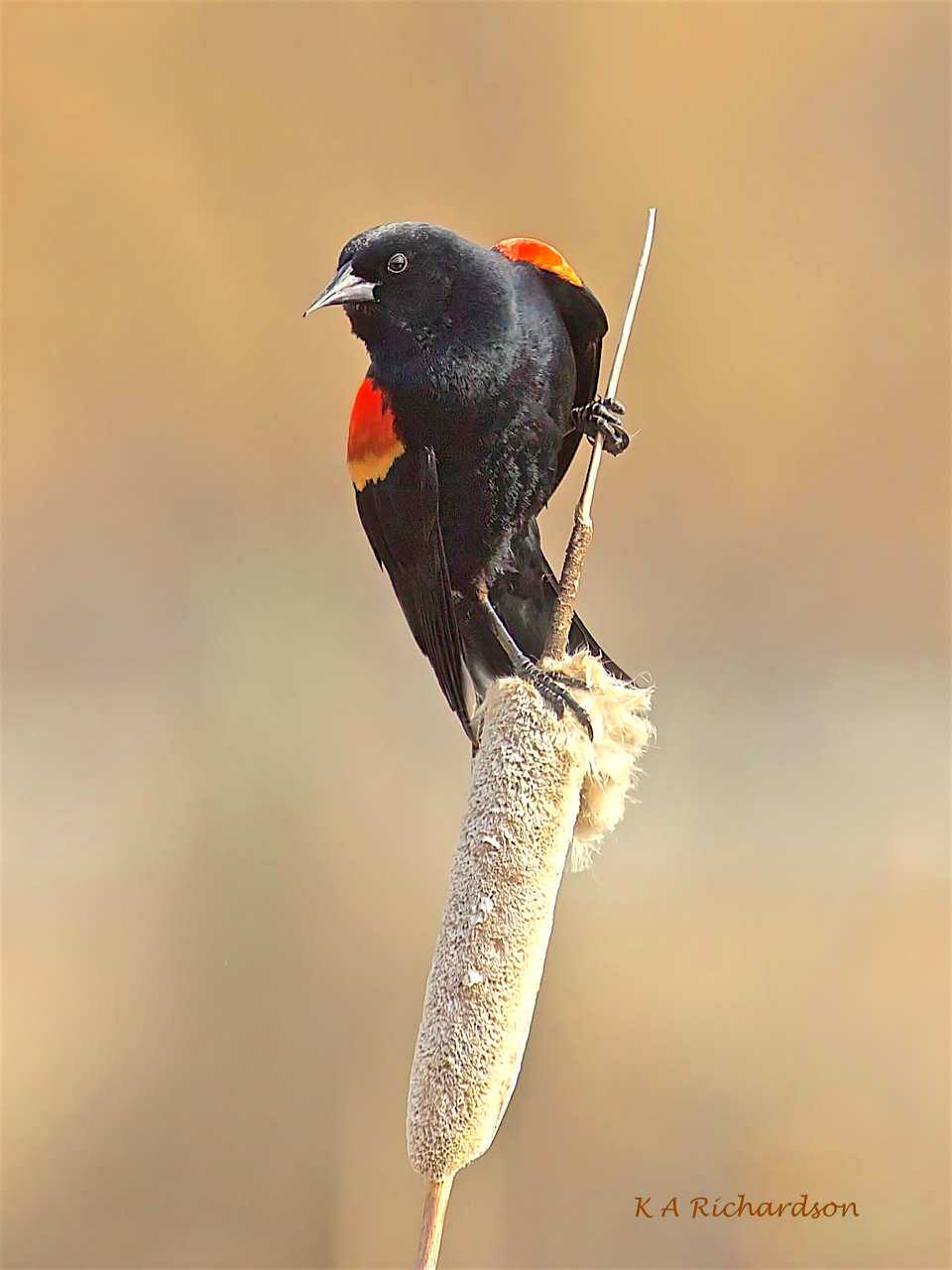
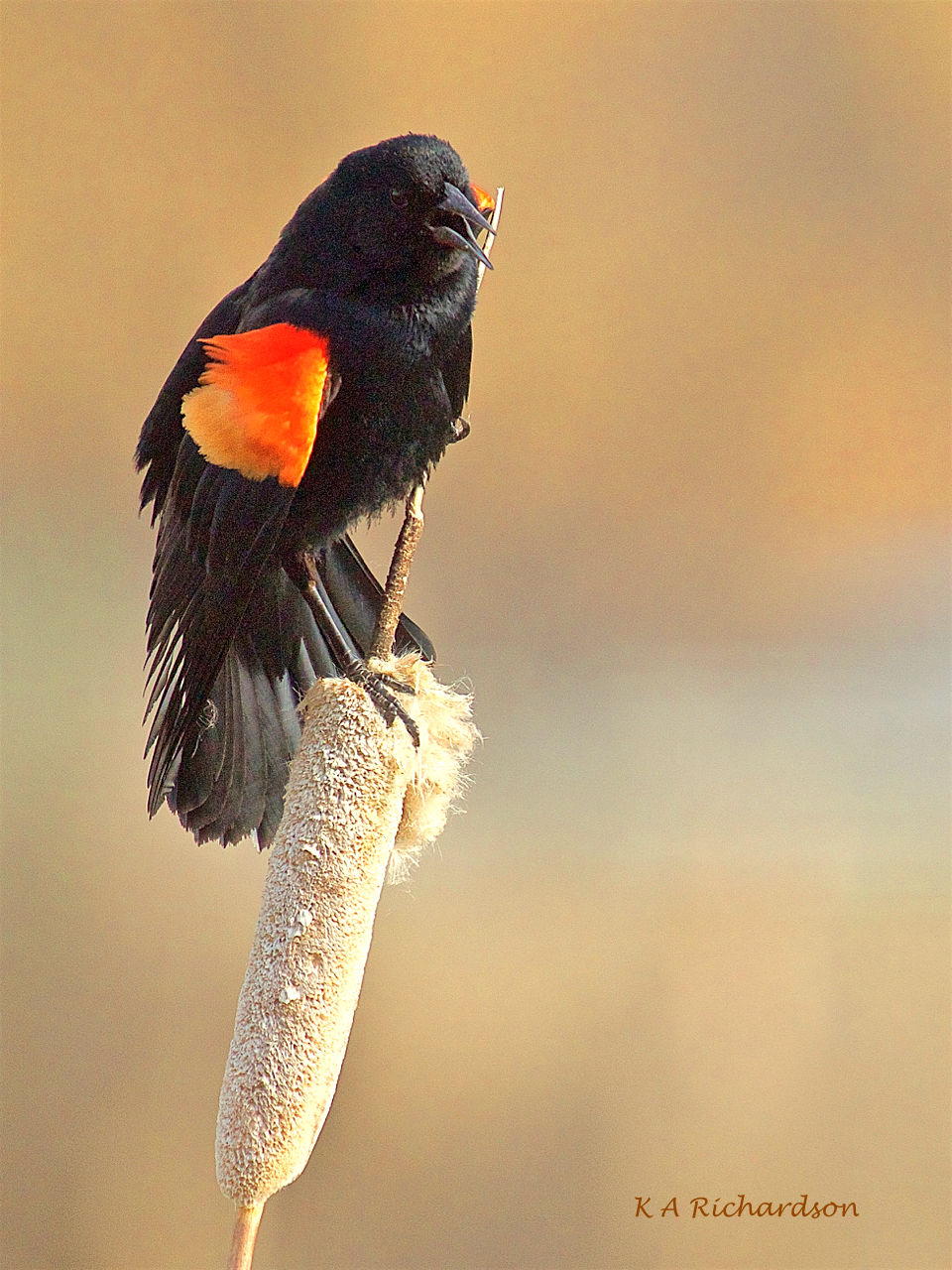
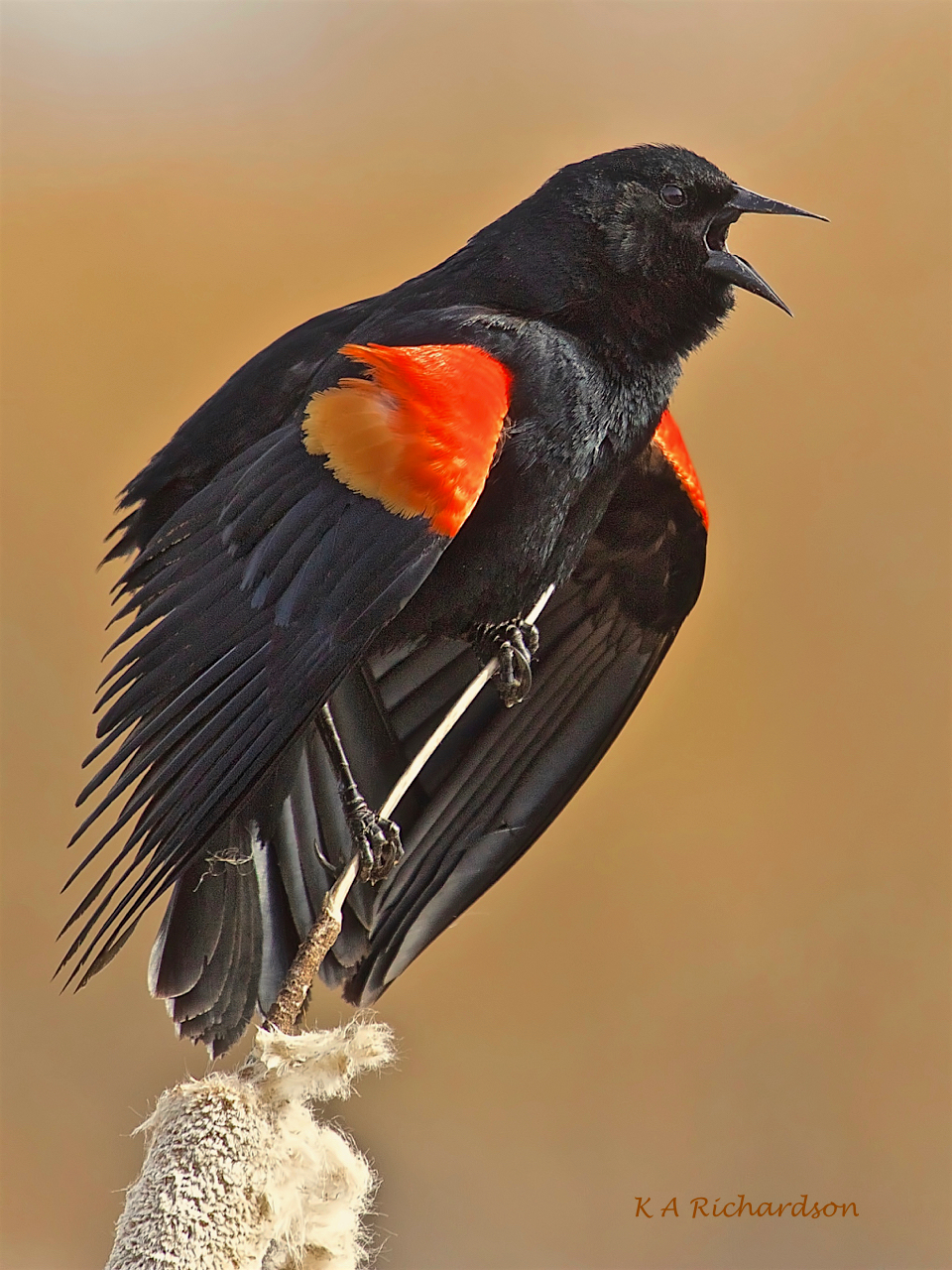
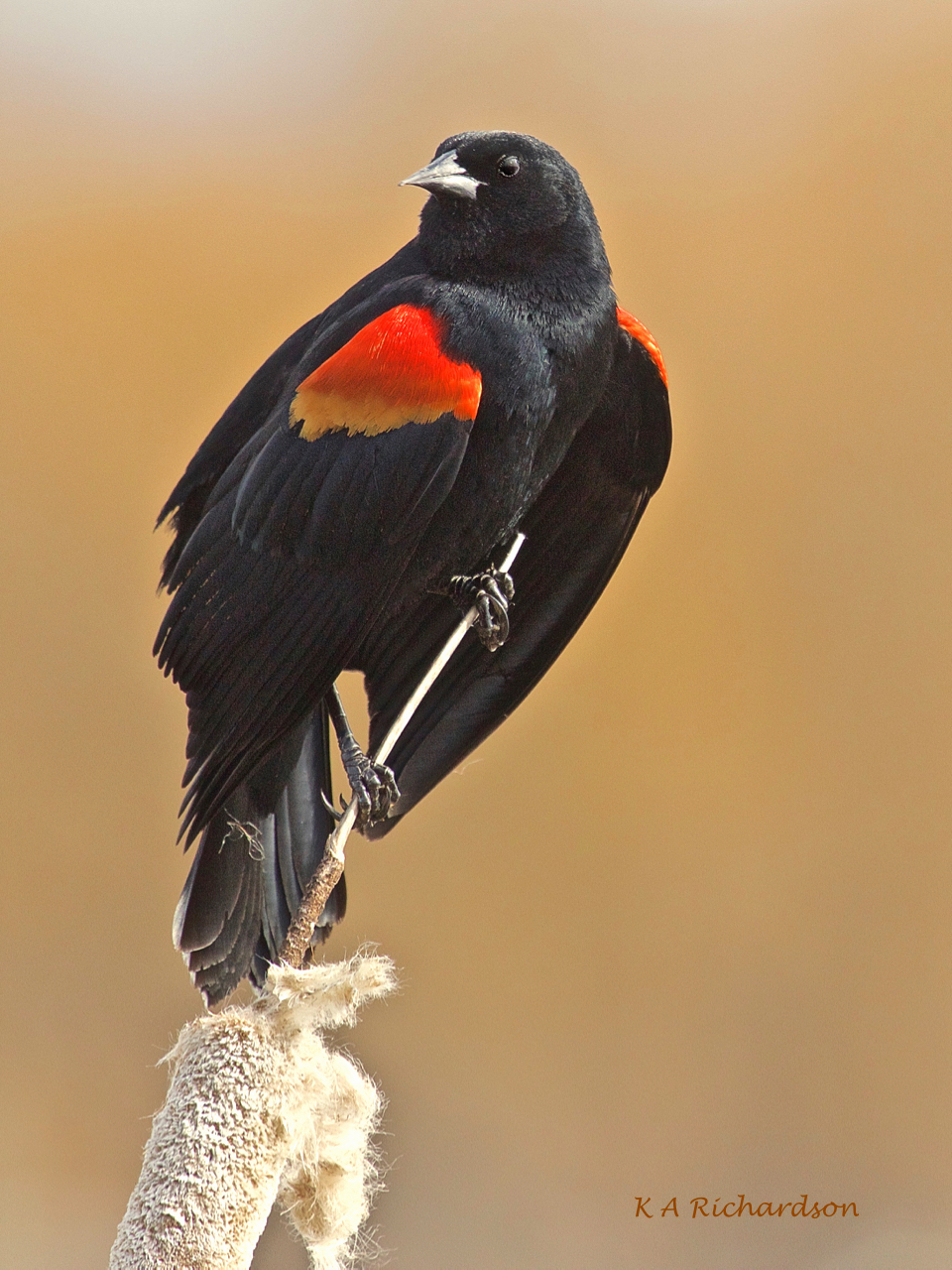
March 19, 2018. Thomson Marsh, where I do most of my weekly birding, is replete with male RWBLs this time of year. It’s a great location for trying to get that perfect RWBL shot — something I’ll never accomplish with my current equipment. I’m not complaining. Just the opposite, in fact! I’m enjoying the existential challenge of knowing that any small incremental improvement represents major progress.
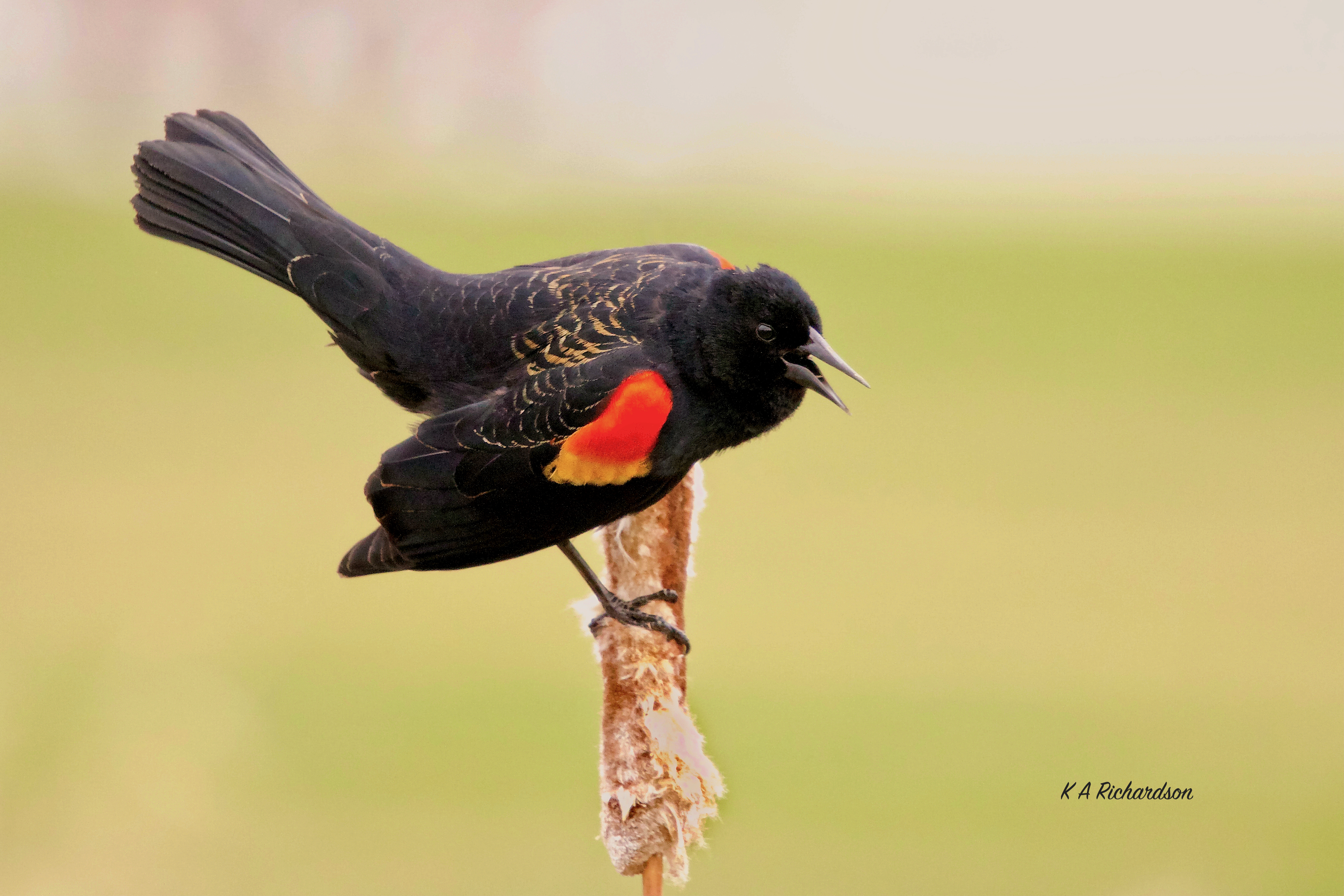
This post features Rebel, a bird who loves to perform, who’s easy to locate among the dozens who populate the Marsh, and whose “camera tolerance” is about as good as it gets!
Sitting calmly on a cattail, surveying the world, with blank eye.
Preparing to perform….
Opening salvo….
Full blast!
Repeat and repeat again!
Tail in for maximum power!
Smug satisfaction….
King o’ the World!
The last image has some nice sharpness in spots, but the cattail’s colour is blown out!
















 birds & musings