Author: keikelo

2016 Faves—Passerines, part 11: Y

End with a flourish,” I’ve read. So here goes.

The “Y” birds (Y not, you may ask) include three birds whose names begin with Yellow. One, the Yellow-headed Blackbird is a western bird.The other two, warblers, are found across the North American continent and coast to coast to coast in Canada.

Yellow-headed Blackbird – Version 2
Yellow-headed Blackbird puts his foot down!

Yellow-headed Blackbirds return to us from the southwestern US and Mexico in early April. Occasionally, they’ll land on a rooftop on their way further north, but their season starts for us when we see the first males in Thomson Marsh where the Red-winged Blackbirds by this time are already well established. The first few males are very quiet; we’re likely to see them before we hear them. Within a couple of weeks, the situation reverses, and we enjoy the cacophony of the clash of vocalizing RWBLs and YHBLs. As with RWBLs, YHBL females show up a couple of weeks after the males have established their territories.

I confessed in part 3 of this series that my favourite species in the summer marsh is the Eastern  Kingbird. The Yellow-headed Blackbird is a close second. The chief difference and factor that makes me lean to the EAKIs is that individual families are much easier to identify among the EAKIs. The pairs are devoted to each other in ways that the YHBLs are not. The YHBLs arrive earlier than the EAKIs and depart earlier, as well, at least the males. By late summer, the marsh is ruled by the RWBLs and the growing EAKI families. But last year, at least, I was able to identify a couple of females that continued hang around. Their offspring seem to become independent fairly quickly. It was surprising to find a couple of female YHBLs still being chased by a fledgling Brown-headed Cowbird that had “conned” one of them into raising. Although they’re not very attractive/photogenic at this time of year, I find “Yellow-heads” an interesting group to study….

From Yellow-headed Blackbird, Identification, All About Birds – Cornell Lab of Ornithology [with some editing by KAR]:

With a golden head, a white patch on black wings, and a call that sounds like a rusty farm gate opening, [male] Yellow-headed Blackbirds demand our attention. Look for them in western and prairie wetlands, where they nest in reeds [or cattails] directly over the water. 

[We don’t get to see them winter in Kelowna, but we do run into migrating flocks in Kane Valley early in the spring.] They’re just as impressive in winter, when huge flocks seem to roll across farm fields. Each bird gleans seeds from the ground, then leapfrogs over its flock mates to the front edge of the ever-advancing troupe.

Yellow-headed Blackbirds breed in loose colonies, and males mate with several females. During the breeding season, they eat insects and aquatic invertebrates. [See map for wintering grounds.] They form huge flocks in winter, often mixing with other species of blackbirds, and feed on seeds and grains in cultivated fields. 


yellow-rumped-warbler-in-spring
Springtime Butterbutt, Belmont Pond


Well, we’re quickly nearing the end of this final chapter of Favourite Passerine Fotos of 2017. Let’s talk about two of the warblers that we look forward to every year in Belmont Park and ponds and Thomson Marsh: I’ll take them in the order in which they appear, which means we look first at Yellow-rumped Warblers, another bird that’s distributed across the NA continent and coast to coast to coast in Canada.

Yellow-rumped Warblers are impressive in the sheer numbers with which they flood the continent each fall. Shrubs and trees fill with the streaky brown-and-yellow birds and their distinctive, sharp chips. Though the color palette is subdued all winter, you owe it to yourself to seek these birds out on their spring migration or on their breeding grounds. Spring molt brings a transformation, leaving them a dazzling mix of bright yellow, charcoal gray and black, and bold white.” (Cornell)

The first year here, I waited expectantly and failed to find many close enough to photograph well. In 2016, however, I learned where to locate them—closer to home, ironically, and am looking forward to similar opportunities this spring. In summer, the Butter Butts pretty much leave town and the heat of the valley bottom for the cooler hillsides. In autumn, in their new camouflage, they reappear along with Warbling Vireos and juvenile Waxwings in various locations, along the Creek, but also among the many weeds now offering their seeds and harbouring insects….

These photos are not outstanding, but may indicate the kinds of interesting challenges that Yellow-rumps offer in the waning months of the year. By late October, they’re gone.

The final bird of this long series is the Yellow Warbler. I’ve learned to be patient with this  species. It appears in different locations at different times from  spring through early autumn. Early and late summer into autumn afford the best photo opps in the Okanagan. YEWAs can be very difficult to capture due their rapid movement and propensity for cover, but I can usually count on excellent chances late in the season….

Two of the shots below are of males. I’ll leave it to you to figure out which is which.

Click the photos to see them enlarged.

Yellow Warblers forage along slender branches of shrubs and small trees, picking off insect prey as they go or briefly hovering to get at prey on leaves. Singing males perch near the tops of the bushes or trees in their territory.

As male Yellow Warblers are setting up territories they may perform a “circle flight” in which they fly toward a neighboring male or female in a horizontal, semicircular path. A male may also fly slowly with fast, exaggerated wingbeats away from a female he is courting or a male he is competing with. As these territorial encounters proceed, males start by singing at each other; as the dispute goes on, the songs get quieter or switch to chip notes as the males begin to chase each other.

Yellow Warblers typically form monogamous pairs that sometimes last more than one breeding season and reform the next. Yellow Warblers defend their nesting territories from many species, including other warbler species, chickadees, House Wrens, blackbirds, and Eastern Kingbirds. They may even chase off other warbler species while on their wintering grounds. Common predators of Yellow Warbler nests include garter snakes, red squirrels, jays, crows, raccoons, weasels, skunks, and domestic or feral cats.” (Cornell)

And finally, a note on conservation with regards to YEWAs, again from Cornell:

Yellow Warblers are one of the most numerous warblers in North America but their populations have been slowly declining, and have decreased by 25% between 1966 and 2014, according to the North American Breeding Bird Survey. Partners in Flight estimates a global breeding population of 90 million with 37% spending some part of the year in the U.S., 15% in Mexico, and 57% breeding in Canada. They rate a 6 out of 20 on the Continental Concern Score and are not on the 2014 State of the Birds Watch List. In the western U.S. the grazing of rangelands can degrade Yellow Warbler nesting habitat, particularly stands of willow trees along creeks. The Brown-headed Cowbird lays its eggs in the nests of many species including Yellow Warblers, and this can reduce their breeding success. Like many migratory songbirds that move at night, Yellow Warblers are at risk of collisions with buildings; they can be attracted to and killed at tall, lighted structures such as TV towers and tall buildings.” We all hope this delightful, beautiful, interactive songster is able to survive in its Okanagan breeding grounds for years to come!


2016 Faves—Passerines, part 10: V–W….

The penultimate page for passerines includes some of the prettiest or cutest species we see up here. Most of them can be seen quite close to home, although a couple require a trip up to Beaver Lake Road.

We’ll begin with one of our most colourful swallows, the Violet-green, which for the two springs and summers we’ve spent here, have nested in the foundation blocks of our condo. With a new three-storey, 18 unit townhouse development under construction on the other side of the lane, I fear that the cruising space our little swallows need to access the foundation will be lost, and they will have to look elsewhere to establish their breeding colony…. I’ll miss them greatly should that fate occur! Who’s going to eat the mosquitos that breed on Belmont Pond?

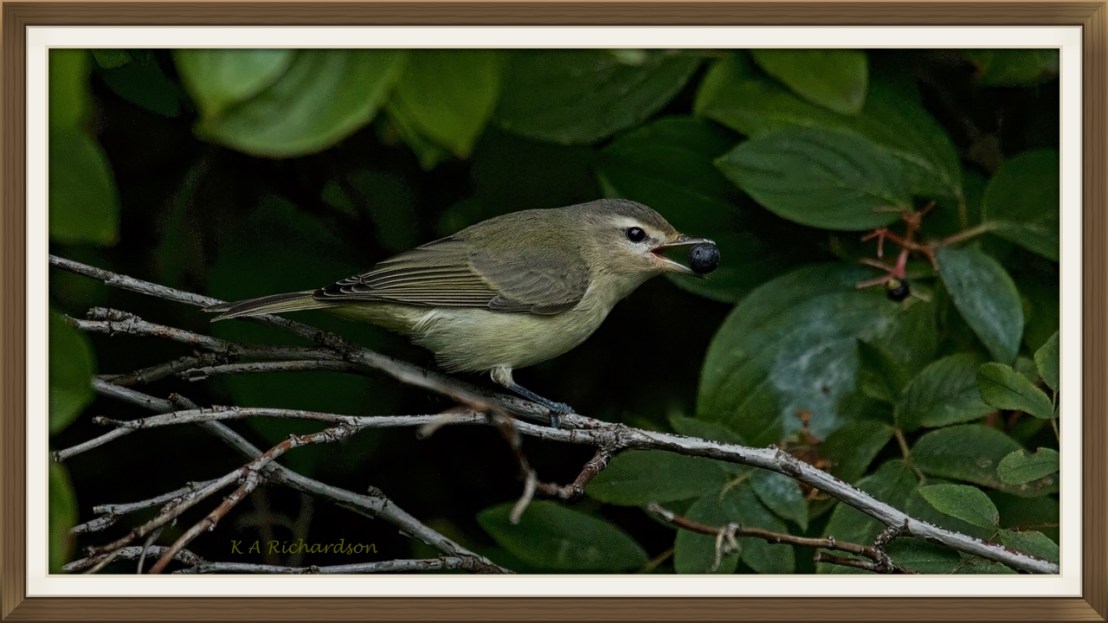
A bird that I know returns to area in May, finds ways to keep out of sight, it seems, until late August and early September when I usually get my photos of them in Thomson Marsh—the Warbling Vireo.

Warbling Vireo
Click to enlarge—open in a new tab. Warbling Vireo with Black Elderberries.

Another drab bird compared to the brighter species so often found in Eastern Canada and so much of the US, it is, nonetheless, one that I love to watch when I get the chance as I did a week apart in the first half of September 2016. I’d almost concluded that I’d missed the quality opportunities of 2015, when suddenly my luck changed on September 7 and I got some shots in the shade, late in the afternoon.

A week later, I spent fifteen minutes or so with a couple of WAVIs and an entertaining troupe of Yellow-rumped Warblers stocking up on energy before the fall migration.

The “W” category also includes a springtime favourite that can be seen all summer long, the Western Bluebird, which I covered in more detail on my separate Bluebirds post. Here’s one more look at one of my favourites from that presentation a colourful female who posed for several minutes. Photo from White Lake Grasslands Park, west of Oliver, BC.

western-bluebird-female-speaking-to-god
Western Bluebird female speaking to God….
western-kingbird-juvenile
Western Kingbird juvenile pays a brief visit to Thomson Marsh.         Click to enlarge.


While we get to observe many Eastern Kingbirds in Thomson Marsh, it’s very rare that Western Kingbirds with their lovely lemon lite hues drop in for a visit, although there are lots off WEKIs in the Kelowna area and in the Okanagan. This youngster surprised me one day, allowed me a couple of photos, then flew off and did not, to my knowledge return.


I have mentioned, several times now, Beaver Valley Road east of Winfield, 30 minutes drive north of home. In Spring, it’s a fabulous location for a great many species, including the Western Meadowlark. Both of these photos were taken there a little over a month apart. There are lots of individuals and plenty of opportunities to capture them in a variety of behaviours. Click the photos to enlarge them in place.

 White Lake is another wonderful spot to observe Western Meadowlarks in early spring.

While I want this next shot to appear in this post, I have to admit that it’s a bit of a disappointment to me. Click image to enlarge it in a new tab.

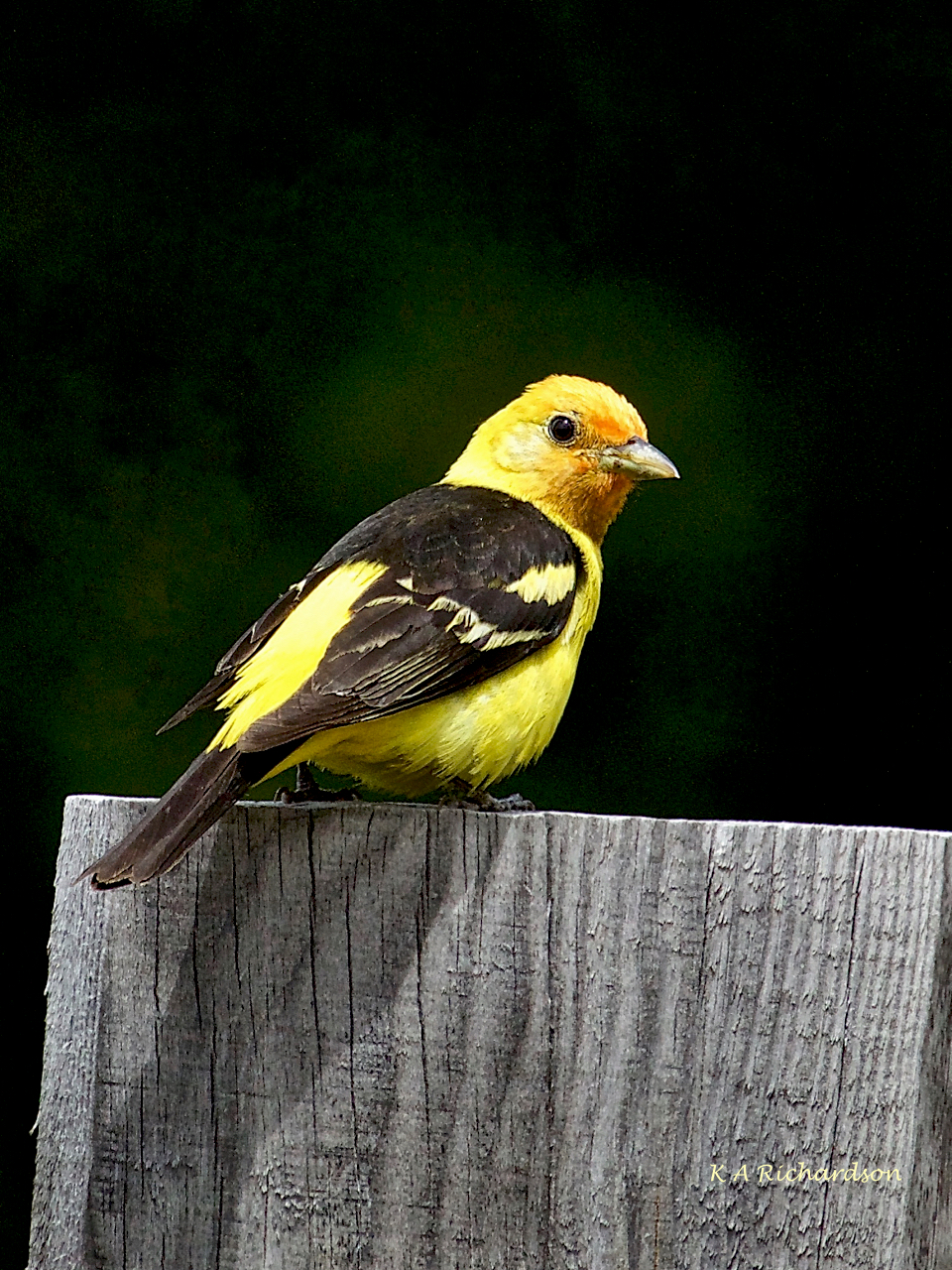
Western Tanager
Beaver Lake Road, near Winfield, BC.

The wonderfully varied hues of a Western Tanager make it a target bird every year. When the grandkids and I unexpectedly came across this one in late June, we were ecstatic; when we got home, our photos all seemed a little below the standard of excellence we aspire to. In part, I suspect, the WETA is just one of those birds, like waxwings, where it’s difficult to capture their plumage as well as we’d like. (Photogenic people are often those who don’t look as great in the flesh as they do in photos, and truly beautiful folks sometimes don’t look as amazing in photos as they do when we meet them.) WETAs are like that, too!)

This one posed in a variety of perches before dropping to the ground to fill up on ants. We had every opportunity to get great shots, yet we didn’t; I dare not say ‘couldn’t.’

Among the “W” species we saw this year was this White-breasted Nuthatch. Not a lifer by listing, it was definitely a first for my camera. We were not surprised to find one, several actually, near Mahoney Lake, but very pleased to have the chance to meet this one, after some careful stalking, up close and personal.

white-breasted-nuthatch
White-breasted Nuthatch doing what nuthatches do!

From Cornell’s Lab of Ornithology:
“The White-breasted Nuthatch is normally territorial throughout the year, with pairs staying together. The male has to spend more time looking out for predators when he’s alone than while he’s with his mate. That’s the pattern for most birds, and one reason why birds spend so much time in flocks. But the female nuthatch has to put up with the male pushing her aside from foraging sites, so she spends more time looking around (for him) when he’s around than when she is alone.

WBNUs forage up, down, and sideways over tree trunks and around large branches. They often start high in trees and move down them head first, pausing to crane their necks up and back, toward the horizontal, for a look around.

They probe into bark crevices or chip away at wood to find food. When they find large nuts and seeds, they jam them into the bark and hammer them open. WBNUs often store seeds and insects one at a time, and somewhat haphazardly, under loose bark on their territory. They typically hide the food by covering it with a piece of bark, lichen, moss, or snow.
WBNUs live in pairs year round and chase other nuthatches from their territory. Agitated birds fan their tails, flick their wings, or raise the feathers of the back. A bird backing down from a confrontation typically raises its bill and tail, and droops its wings. In winter WBNUs join groups of chickadees, titmice (not found in BC), and woodpeckers to forage.”

One of our prettiest sparrows out here is the White-crowned Sparrow. Distributed continent-wide, their numbers fluctuate from year to year and season to season as the flocks search for better foraging grounds. In the two and a half years we’ve been here, we’ve been fortunate to have many coming and going in our neighbourhood. Some of the other areas I monitor had very few in 2016. In 2015, I had better photo opps with them than last year, but I’m happy enough with these images…. Click to enlarge.

And finally, in the “W” category, we come to a delightful, if, again, “drab looking little flycatcher” (Cornell Lab of Ornithology), the Willow Flycatcher, not to be confused with the Alder Flycatcher, which is not endemic to our section of BC, but does compete with the WIFL in many parts of Canada.

Click images to enlarge in a new tab.

willow-flycatcher-3
Willow Flycatcher, Thomson Marsh.

Cornell offers further details:
Flycatcher songs are innate, not learned like those of most songbirds. Young Willow Flycatchers reared in captivity with Alder Flycatcher tutors sang typical Willow Flycatcher songs.


When the two species are found together, the Willow Flycatcher will keep Alder Flycatchers out of its territory. But it expends more effort to keep out other Willow Flycatchers.

If a Brown-headed Cowbird lays its eggs in the nest of a Willow Flycatcher, the flycatcher may bury the cowbird eggs in the nest lining, or even build a completely new nest over the top of the first one.

Willow Flycatcher - 1
Mahoney Lake area, Oliver, BC.


The oldest recorded Willow Flycatcher was a female, and at least 11 years old when she was recaptured and rereleased during banding operations in California.

Willow Flycatcher - 2
Willow Flycatcher singing his heart out! Munson Pond, Kelowna, BC.

2016 Faves—Passerines, part 9: S–T

Lots of stars in this group…. So let’s get to ’em!

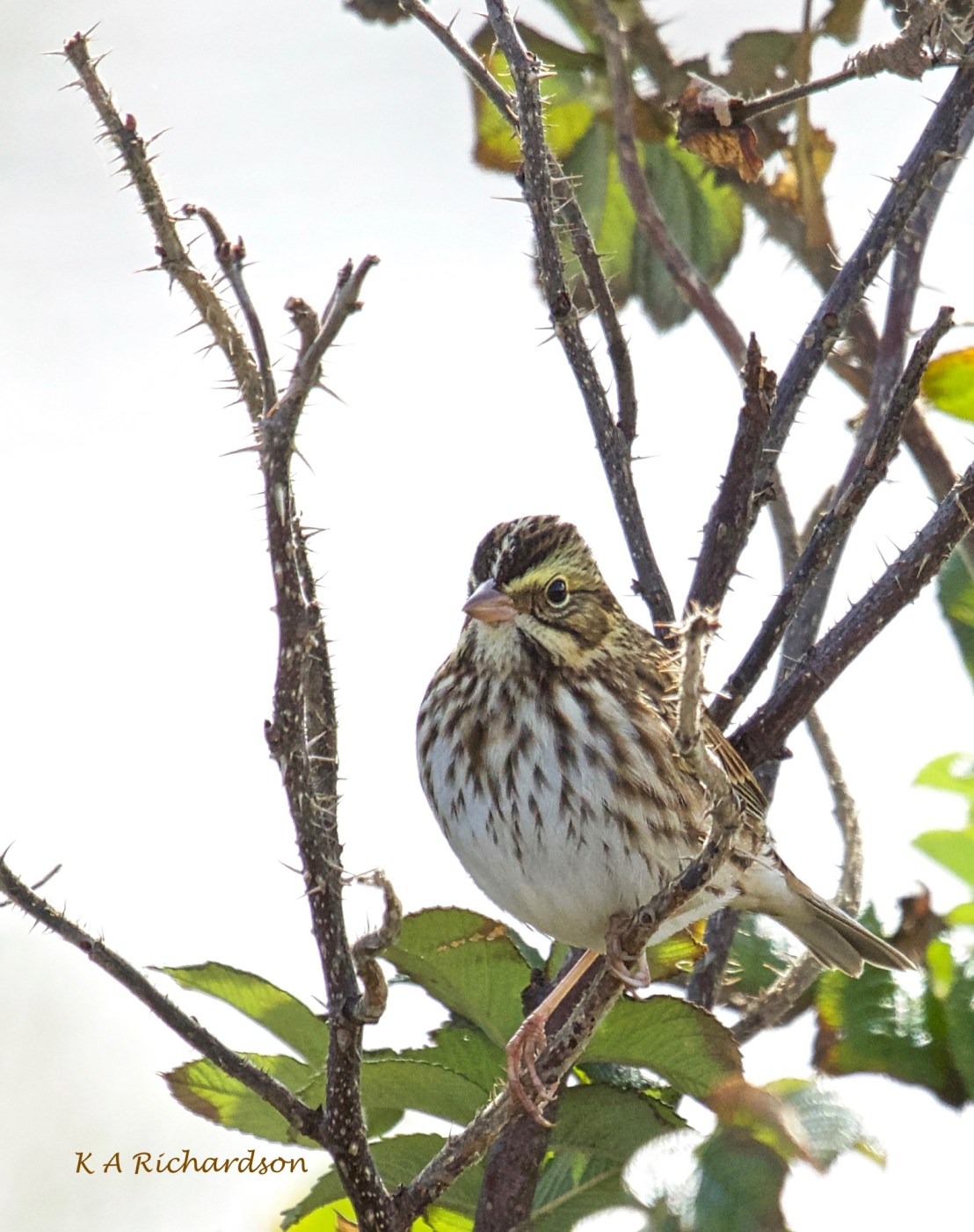
To lead off, a species that stretches from coast to coast to coast in Canada: the Savannah Sparrow. Unspectacular plumage, perhaps, although the one I found (on our fall trip) in Nova Scotia on Digby Neck at Gulliver’s Cove (you have to like the names) did stand out. It was my first real opportunity to get out with my long lens after two weeks of driving scenery shooting. There was a sizeable flock obviously migrating and foraging furiously.

I really appreciated the willingness of the individual below to take a few seconds out of his busy day for this eager birder’s amusement….


Savannah Sparrow cleaned up

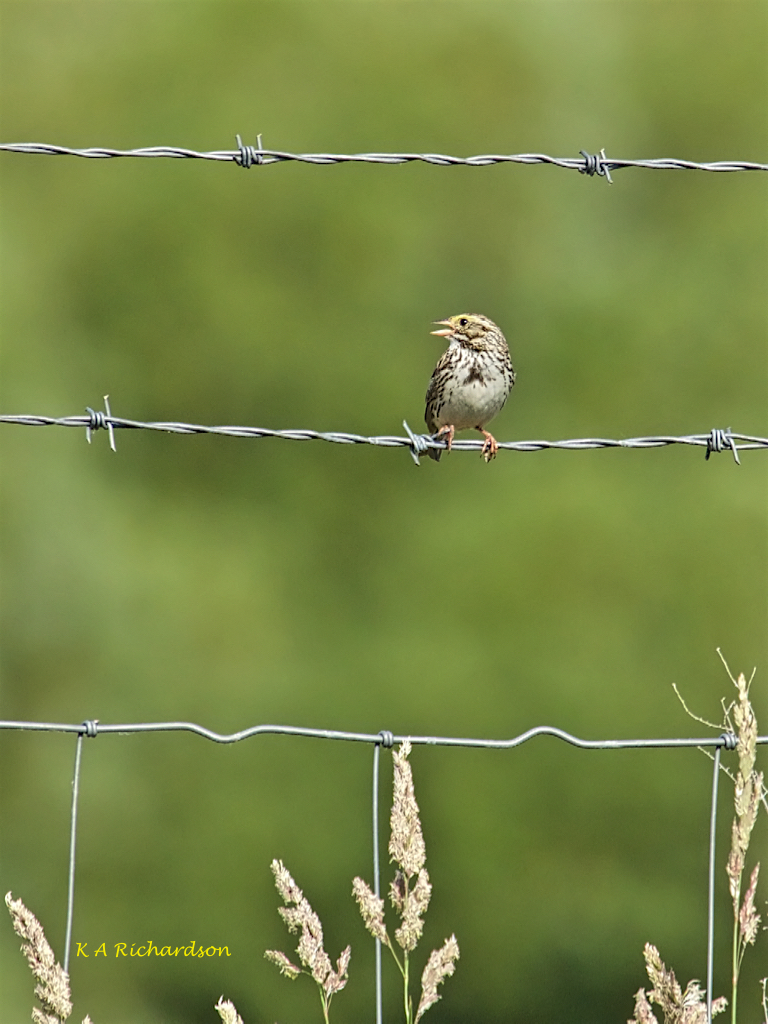
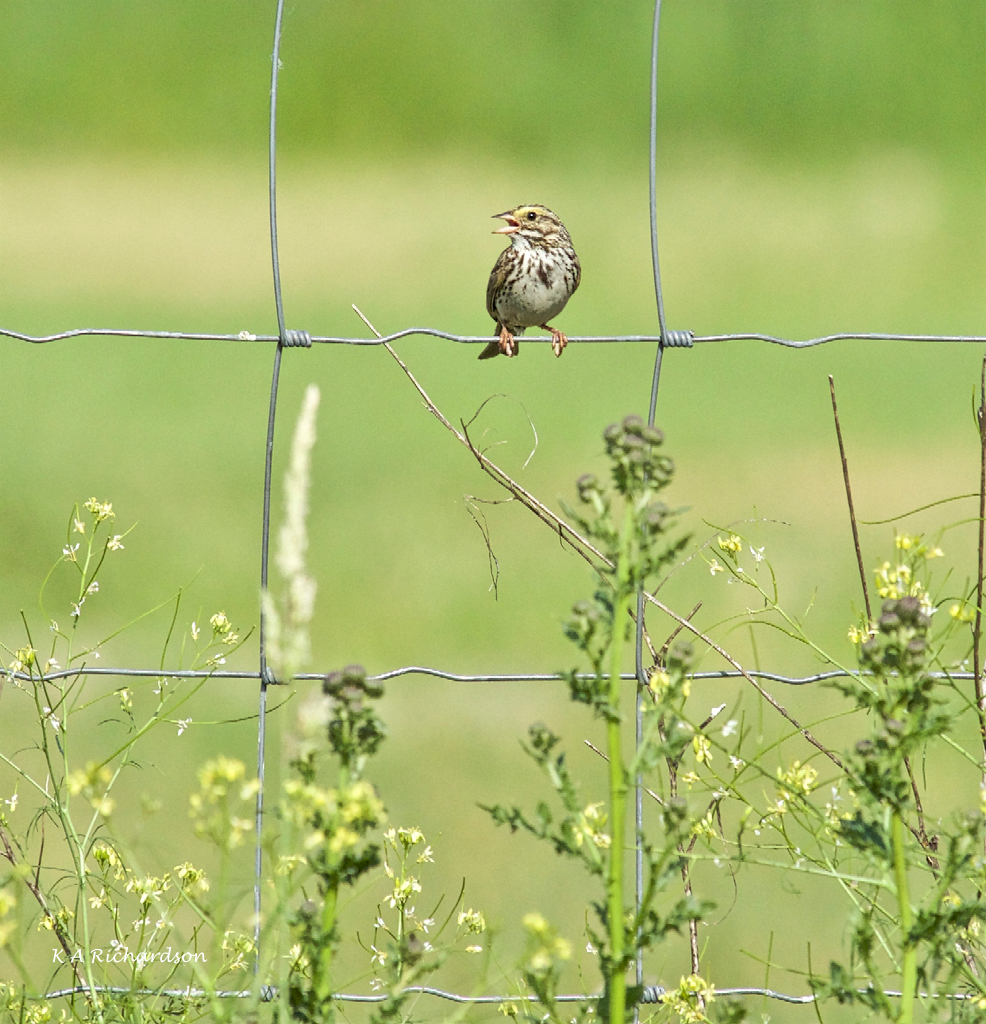
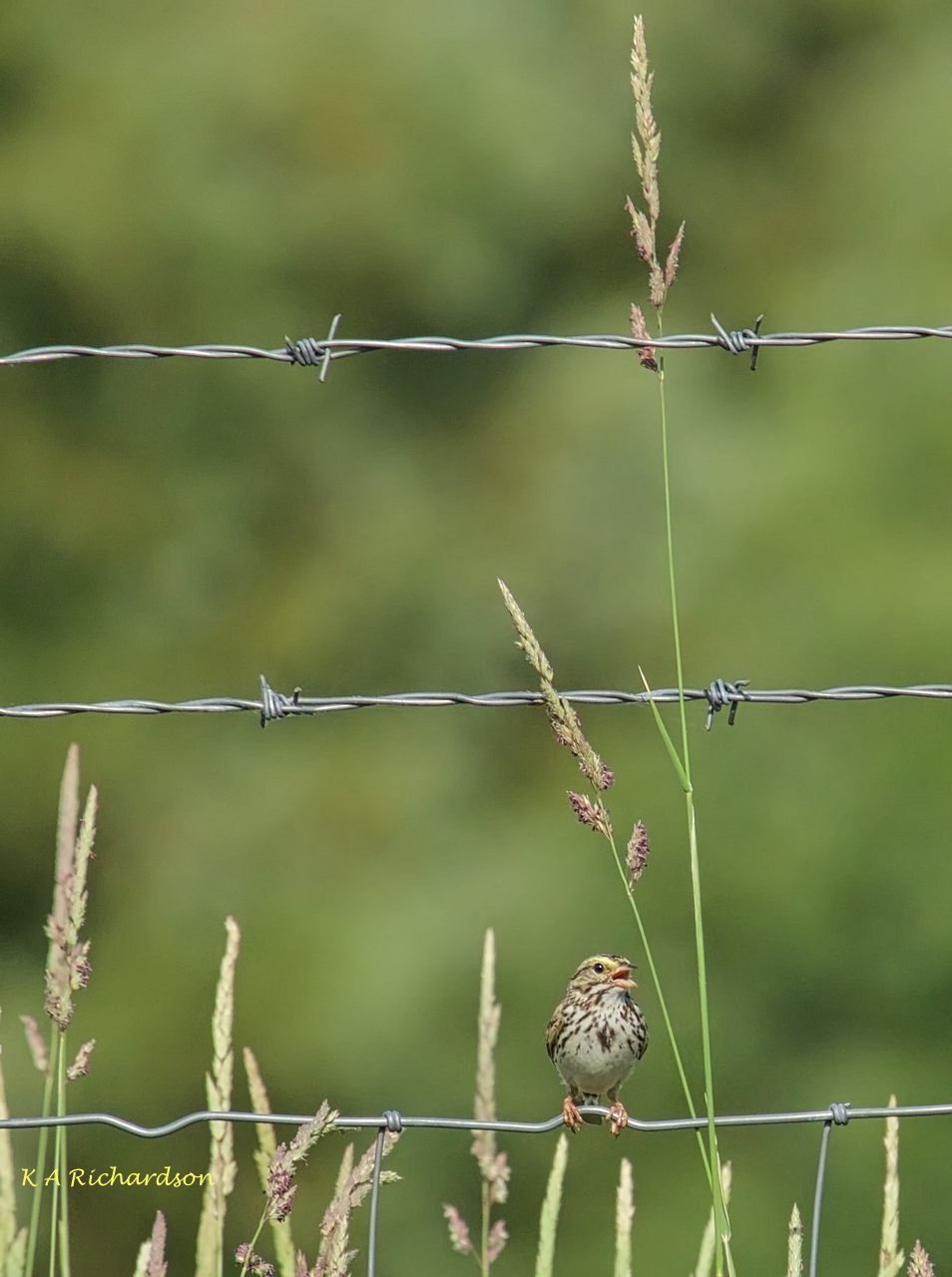
Every year I try to get a few shots in the style of Robert Bateman, where the bird is shown at reduced size in its environment. This bird sitting on the fence above Thomson Brook began at the bottom and slowly worked his way to the top, in accordance with Kelowna work ethic requirements. You, too, can experience this moment by scrolling down, and then back up again!

Savannah Sparrow climber 4
‘Look sharp, feel sharp!’ I always say!
Savannah Sparrow climber 3
I’m getting so high, I practically have vertigo!
Savannah Sparrow
I think I’ll start at the bottom and work my way up!


A bird I had searched for over a period of decades on trips west of my childhood home in Manitoba turned out to be very common and observable in the Okanagan, right in our suburb! Click on the images below to enlarge them.

The Say’s Phoebe could be described as plain looking but charming. Often, up close, it’s less photogenic than it is at a distance. Regardless, when I discovered a pair nesting in the neighbourhood in 2015, I was ecstatic, and able to observe to my heart’s content until they migrated in the fall. In 2016, the SAPH reappeared at the same location on exactly the same day I first saw it the year before. It checked out the old nest but decided not to renew its lease. I got this shot before it “moved” and seldom saw it through the rest of the season. There are other good spots for them; be sure I’ll be watching for them in the first week of April this year!

So common that most birders and bird-photographers eschew them (love that word: es-shoo; sounds like a weak sneeze!). Of course we’re talking about the familiar Song Sparrow, which like many species that span the continent, look a little different from one location, or even one season, to another. Ever since I realized that they were great subjects to practise with, I’ve been changing my opinion. Now the goal is to draw them out, in the right environment and see how artistic an image they and I can create together…. Here are two that I quite liked from 2016:

Finally, one last S bird, the Steller’s Jay which was featured in an earlier post on blue birds….

stellers-jay-thief-nay-beggar
Not a thief, but a demanding beggar! I had no choice but share my biscuit!

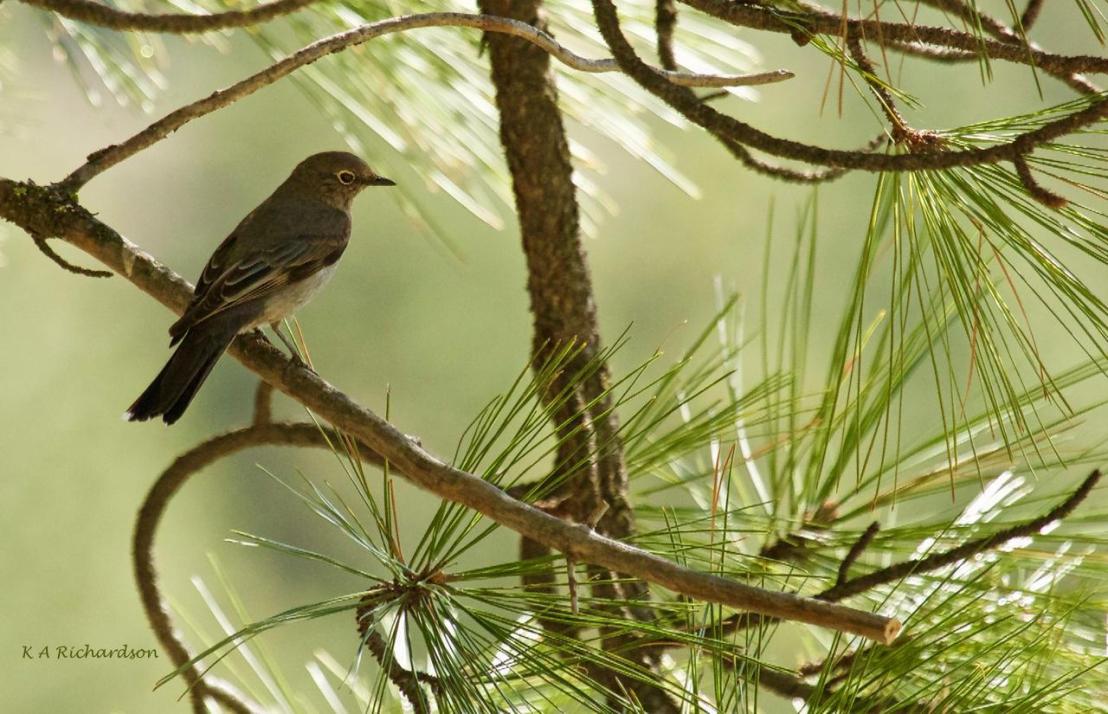
A bird that’s more common up here in the Okanagan than one might expect is the Townsend’s Solitaire. Always fun to find and challenging to do justice to, I pulled this image out of the small pile because I like the light and the lines; it was taken in April near Mahoney Lake, BC.
townsends-solitaire

And finally, no list of T birds is complete without at least a couple of these streamliners:

The Tree Swallow: often more beautiful to the naked eye than the camera can comprehend.

2016 Faves—Passerines, part 8: skip to R….

Quails were covered in part 2, as our species is the California Quail, introduced into our fair province many years ago…. So we skip to R, which offered three species last year, including one that I had never photographed before, the Red Crossbill.

red-crossbill-range-cornellAlthough it’s spread across the continent, many folks have never seen one, and this Cornell note suggests why. “A stocky finch of mature coniferous forests, the Red Crossbill is dependent on the seed cones that are its main food. Its peculiar bill allows it access to the seeds, and it will breed whenever it finds areas with an abundance of cones. It may wander widely between years to find a good cone crop.” When a couple of my colleagues found out I was twitching RECRs, they did their best to help me, as they were having good success at their homes. Eventually, Matyas, a teenage birder who lives not far away, after several attempts to alert me when the flock dropped into the big pines and firs of his neighbourhood, called me and I was able to get these photos. Later, I found them on my own at Bertram Creek Park. Will they return next year? Not necessarily….

I have seen much better images of this species in a more conventional pose, but was quite happy to come away with these portraits of RECRs fastidously foraging on fir cones!

Having lived here now through eight consecutive seasons, I have photo records that guide my expectations for when to expect species. Although most of our passerines migrate, a few try to hang on through our winter if it’s not too severe (as 2015 and 2016 were not). Red-winged Blackbirds fit this pattern. In the winter, many  head for the Landfill at the north end of Kelowna while a few stay close to feeders. Sometime in February, however, we start to see large flocks of male RWBLs and European Starlings descend on the Marsh and the Rec Fields before saying goodbye to those for whom this is there destination for the next six months.

The male RWBLs spend up to six weeks establishing themselves before the females arrive to take charge. It’s great fun to watch the males competing for territory and then to become less dominant as the ladies take over. No doubt whose boss by mid June and July! As for the non-dominant males, the “skulkers” I call them, they hide in shrubbery and make plaintive noises as they serve their time in their subordinate roles.

Many people enjoy hand feeding birds, usually Chickadees of various species or the occasional nuthatch. In Ottawa this fall, I had two Downy Woodpeckers eat seed from my hand. But the most fun I’ve had hand feeding has been with RWBLs that are so inclined. I’ve enjoyed this at Jericho and Stanley Park in Vancouver, Iona Beach in Richmond, and in 2016 with grandkids at Piper Spit on Burnaby Lake.

NOTE: ALTHOUGH HUMMINGBIRDS ARE NOT CONSIDERED PASSERINES, I have included one here because it doesn’t fit into the other broad categories that I’m using. This is NOT intended to be a scientific blog; it’s a highly personal one. Please don’t get too bent out of shape by this issue.

The final “R” species that honoured me with photo opps this year was the Rufous Hummingbird, which I encounter both in urban settings and, happily, in more wild locations. Certainly, it’s easier to get flight shots at feeders or in urban gardens, as the photo below on the left illustrates. But I’m more proud of the two males that I was able to stalk and capture in non-urban environments earlier in the spring.

2016 Faves—Passerines, part 7: O–P….

This post highlights another woodpecker—NOT technically a passerine (see note when you get to it!), but included here because it doesn’t fit in other unscientific categories, either—our largest and most exciting for many birders, the Pileated Woodpecker, and one of our smallest passerines the Pygmy Nuthatch.

And let’s not overlook the Pine Siskin, a friendly and frequent visitor to our back yards.

Orange-crowned Warbler – Version 2a
Orange Crowned Warbler  (inc).          Click to enlarge.

But what about Orange-crowned Warblers and Ovenbirds and other birds whose names begin with O? Well, truth be told (and shouldn’t it almost always?) I just didn’t come up with many this year. I saw OCWAs both in spring and autumn, but the results just weren’t good enough. In one case in the spring, when I was having success with Orioles of the Bullock’s variety and a Black-headed Grosbeak, I did find an OCWA. When I got home, the background was so distracting that I tried to turning it into art, and am not sure how well that worked out…. Here’s the incomplete result for what it’s worth. This year (2017) will be better!

Most people know the Pileated Woodpecker by its printed name and its appearance, but not all agree on how to pronounce the name. I’ve heard Piley-ated, which is pretty close to what my Mac’s Dictionary recommends, if you can read the pronunciation guide (ˈpīlēˌātid), but I’ve been taught to say “Pilly-ated.”So which way is correct? Well, as with so many words in Canada and the US, it really doesn’t matter, it seems. Again, from Cornell, ““PILEATED (Woodpecker) – PIE-lee-ay-tid, PILL-ee-ay-tid (having a pileus or cap). This and the next two are commonly pronounced as the two alternate versions listed from the dictionary. If it bothers you when people say it differently than you do, lighten up. They’re just birds, for goodness sakes, and THEY don’t care what you call them.” http://www.birds.cornell.edu/crows/birdname.htm

If you do take the time to look this up, you’ll find a somewhat clever, entertaining in the style of humorist Dave Barry, take on bird names and pronunciation:

Dr. Language Person’s Guide to Bird Name Pronunciations

by Kevin McGowan (with apologies to Dave Barry)

You say PLUH-ver and I say PLO-ver,

You say pro-THON-a-tery and I say pro-theh-NO-tery,…

If you spend time birding with other people (and you should), you will find that not everyone agrees on how to pronounce certain bird names. The differences can be as obvious as a southern drawl adding a few more syllables than seems necessary, or they can be as arbitrary (and entrenched) as the to-MAY-to, to-MAH-to debate of the old song. (My old doctoral advisor tells the story of how in his first year in Florida from the north he was mystified by the report from another birder of seeing a puh-ray-uh-ree. He spent the next hour looking for this exotic sounding bird, but could only find the common Prairie Warblers.) But even if you get past the disparate accents and regional dialect problems, still you hear many different versions of common birds. Is it “pa-RU-la” or “PAR-u-la”? Is it “PIE-le-at-ed” or PILL-e-at-ed”?

If you’re a beginning birder, you might be afraid of embarrassing yourself in front of other, more experienced birders by choosing the wrong pronunciation. Well you should be; we birders are a pretty snotty lot, never afraid to snigger at a novice’s mistakes. No, that’s not true. Actually, we’re very nice and helpful. But, never fear, Dr. Language Person is here to set you straight about these nagging doubts. I will give you the definitive pronunciations of the most commonly mispronounced birds, as well as some others that you never thought about mispronouncing, just to make you self-conscious so that you’ll make more mistakes, HAH-HAH! No, wait. In keeping with the scholarly tone of this fine publication, I will give you the information as I see it, and then you can make your own decisions.

First, English is slippery language. In fact, all language is slippery. No accepted absolute standards exist, in contrast to official measurement standards, like meters. So you have to rely on either (is that I-ther or EE -ther?) some authority or on common use. Without a widely accepted authority, all language drifts and people begin to subtly change the way they pronounce things. Languages, like populations of organisms, change and evolve over time…. (The article continues this way at length! And because of its Eastern bias, there’s no discussion of Lazuli Bunting, but I covered that in Part 5 of this series….)

NOTE: ALTHOUGH WOODPECKERS ARE NOT CONSIDERED PASSERINES, I have included one here because it doesn’t fit into the other broad categories that I’m using. This is NOT intended to be a scientific blog; it’s a highly personal one. Please don’t get too bent out of shape by this issue.

But you’re here for photos, I hope, so let’s get started: This bird was the star performer for the two weeks of April 2016 in a lovely place for a hike just west of Mahoney Lake in the White Lake Grasslands Park. The framed photo was to be the only one presented here, but when I looked at the shot from a week later where Mr. P was practising his best Usain Bolt impersonation, I couldn’t resist including it as well…. Any day we come across an accommodating  PIWO is a great day!

In case you’re wondering if he’s really a male, you can be sure because a female doesn’t have the red whisker (malar) stripe on her face. PIWOs are well distributed throughout Canada except in southeastern Alberta, southern Saskatchewan, and southwestern Manitoba.

Pine Siskin - 3
Hiding his wings!!

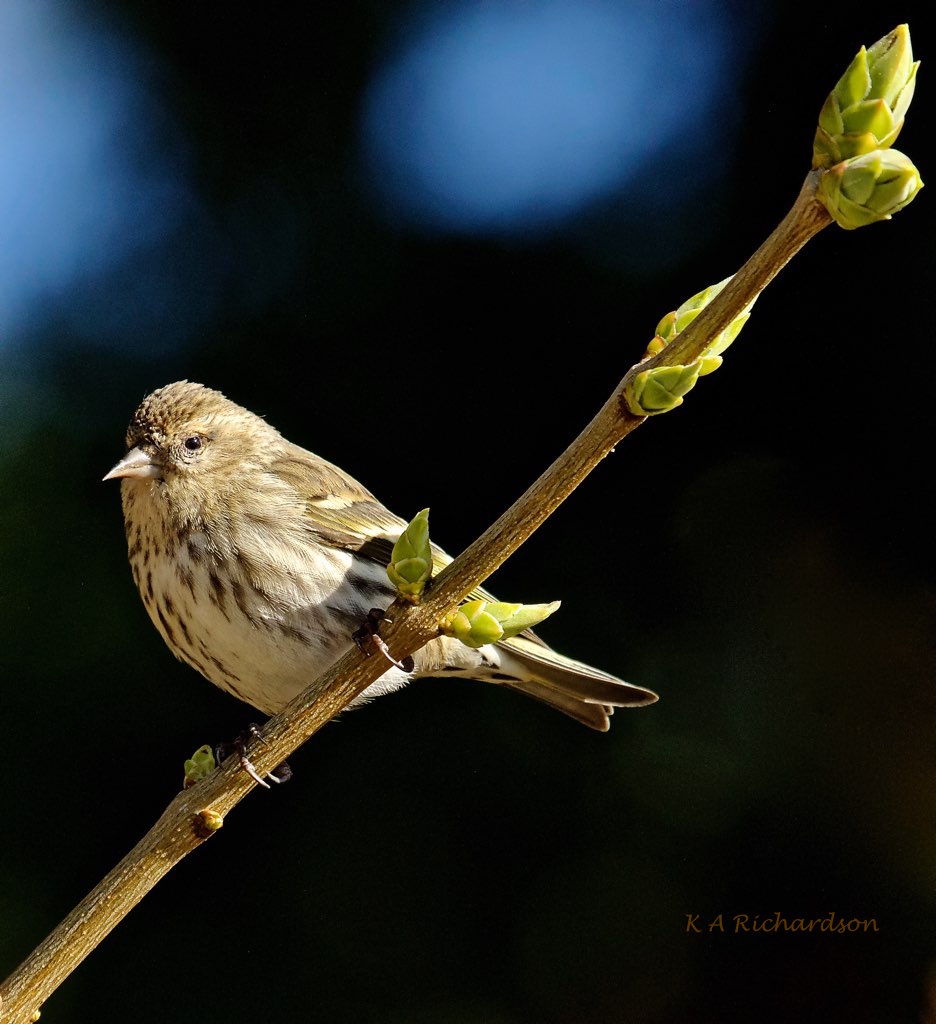
The Pine Siskin is found south of the tundra throughout North America. PISIs “often visit feeders in winter (particularly for thistle or nyjer seed) or cling to branch tips of pines and other conifers, sometimes hanging upside down to pick at seeds below them. They are gregarious, foraging in tight flocks and twittering incessantly to each other, even during their undulating flight.” (Cornell)

I see them often, but find that photographing the male displaying colour in his wings is a challenge that I frequently fail at. Perhaps in 2017!

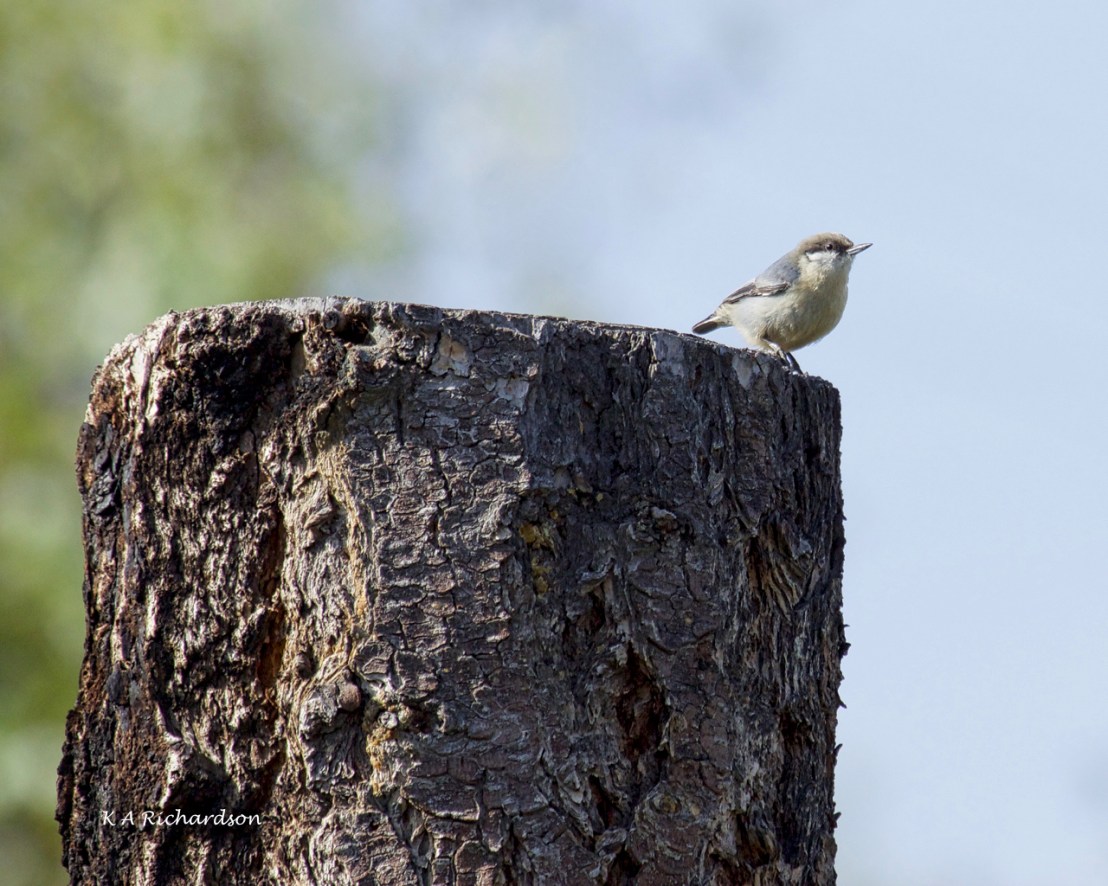
Finally, an Interior Bird that, at various times of the year, and especially in spring, is abundant in the Okanagan, yet notoriously difficult to photograph well because of its size and its hyperactivity, the Pygmy Nuthatch. Smaller even than the Red-breasted and White-breasted species, this wee one is a delight to watch throughout the year. Our best chances to photograph them, in my opinion, occur once mating occurs and they’re settled into creating a nest, often in a burnt out pine tree, Ponderosa, preferably….

Click to enlarge the photos. Once enlarged, scroll down and click again to view full size.

Pygmy Nuthatch
How tiny he is!


2016 Faves—Passerines, part 6: M–N

Trying hard to stick to the plan of highlighting only a very select number of shots of specific species is a challenge for me. So far, so good, I hope…. (Well, I know the writer of this blog, and he’s about to fail big time in this section!) Down alterego, down!

Some species you might expect to find here you won’t—because meadowlarks, out here, are actually Western Meadowlarks, and magpies are Black-billed Magpies. Both are dealt with in the sections featuring the first letters of their names: W and B.

So what have I got for you? Well, how about a species that I covered in some detail in an earlier post about bluebirds, namely the Mountain Bluebird? One of my all time favourites, it’s another western bird that I have seen in various parts of the BC Interior and as far east as Saskatchewan and Manitoba. I love the various shades of blue in the males and blue and grey in the females. As with many birds, their brightness varies with the season and location, the age of the bird and whether or not it’s a dominant member of flock or mix of species in its area.

mountain-bluebird-range-cornell

I like the way Cornell’s website describes the MOBL:

“Male Mountain Bluebirds lend a bit of cerulean sparkle to open habitats across much of western North America. You may spot these cavity-nesters flitting between perches in mountain meadows, in burned or cut-over areas, or where prairie meets forest—especially in places where people have provided nest boxes. Unlike many thrushes, Mountain Bluebirds hunt insects from perches or while on the wing, at times resembling a tiny American Kestrel with their long wings, hovering flight, and quick dives.”


So here they are, a reprise of a male in two poses and a female featured in the earlier post.

The larger image is my favourite MOBL ever. I was so blessed to have his undivided attention for several minutes. The female bird, at a different location and time was equally patient.

NOTE: ALTHOUGH DOVES ARE NOT CONSIDERED PASSERINES, I have included one here because it doesn’t fit into the other broad categories that I’m using. This is NOT intended to be a scientific blog; it’s a highly personal one. Please don’t get too bent out of shape by this issue.

Another “M” bird, though very common up here and throughout the country, is one I’ve come to enjoy since me moved up here. I love their delicate tones, and at various times of the year their friendly interaction. In 2016 I was lucky twice to stumble over a nest brimming with about-to-fledge chicks. The bird is the Mourning Dove:

Some interesting facts about MODOs from Cornell Lab of Ornithology:

“During the breeding season, [we] might see three Mourning Doves flying in tight formation, one after another. This is a form of social display. Typically the bird in the lead is the male of a mated pair. The second bird is an unmated male chasing his rival from the area where he hopes to nest. The third is the female of the mated pair, which seems to go along for the ride.

Mourning Doves tend to feed busily on the ground, swallowing seeds and storing them in an enlargement of the esophagus called the crop. Once they’ve filled it (the record is 17,200 bluegrass seeds in a single crop!), they can fly to a safe perch to digest the meal.

Mourning Doves eat roughly 12 to 20 percent of their body weight per day, or 71 calories on average.

Perhaps one reason why Mourning Doves survive in the desert: they can drink brackish spring water (up to almost half the salinity of sea water) without becoming dehydrated the way humans would.

The Mourning Dove is the most widespread and abundant game bird in North America. Every year hunters harvest more than 20 million, but the Mourning Dove remains one of our most abundant birds with a U.S. population estimated at 350 million.

The oldest known Mourning Dove was a male, and at least 30 years, 4 months old when he was shot in Florida in 1998. He had been banded in Georgia in 1968.”

The next group, the “N” birds, both have a name in common, yet they’re not at all related. That name is “Northern.” There are some ‘Northern’ birds in other categories besides passerines.

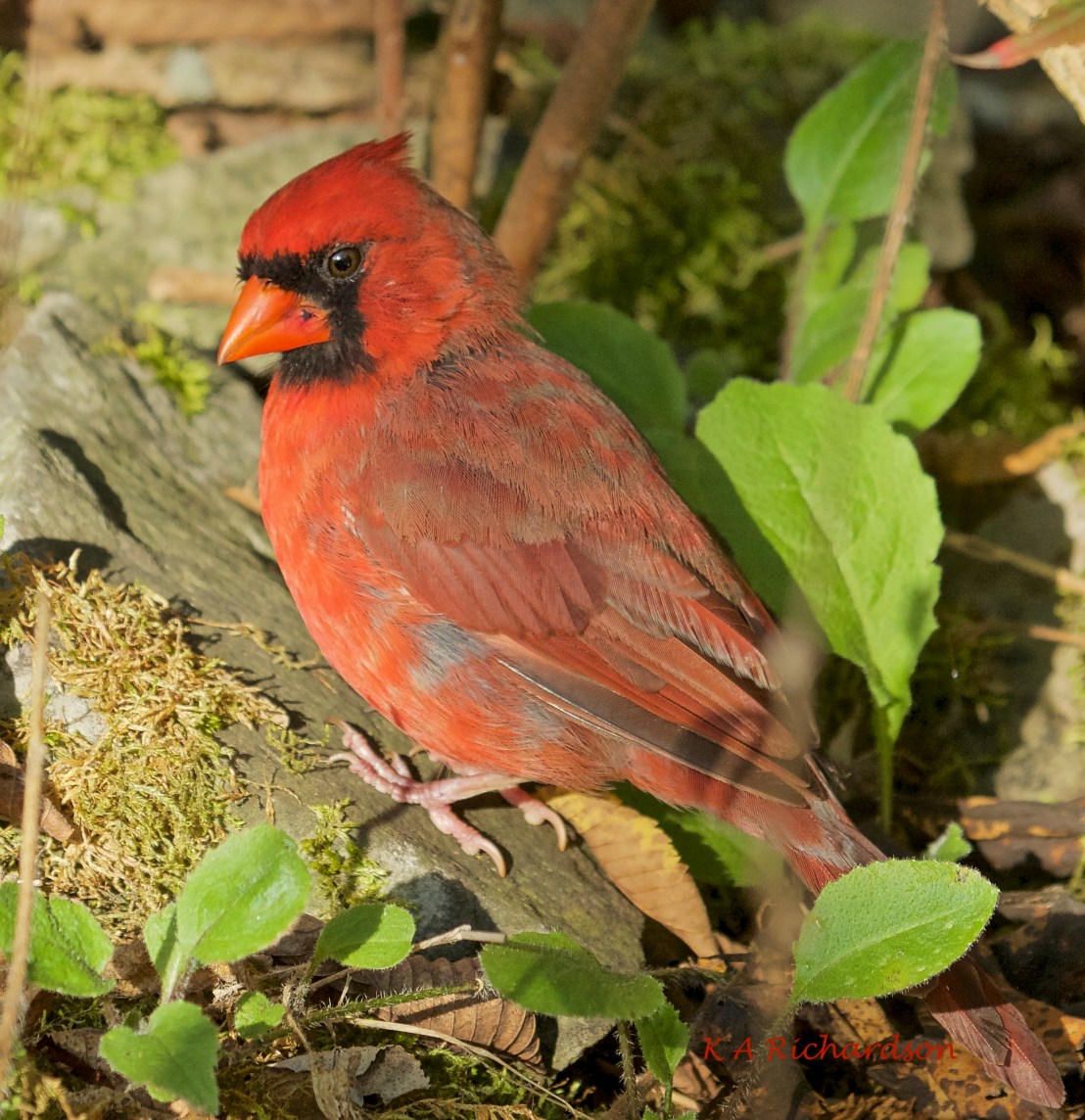
Northern Cardinal male.jpg
Northern Cardinal, a special find far from home in 2016. Click to enlarge.

In autumn 2016 Nana and I flew east and drove from Ottawa to the three western Atlantic provinces and then back to Ottawa via Maine, New Hampshire and Vermont. While birding was not a priority, we did hope to photograph two species, Blue Jays and Northern Cardinals. I covered the Blue Jay in Part 1 of this series. The NOCAs didn’t show up until we were departing Vermont, and I didn’t get the photos I wanted until our final day back to Ottawa, the afternoon before we returned home. Having done some homework and I was ecstatic to find a male and a juvenile right where I expected. And while I came down with a definite case of “buck fever,” I was able to claim this shot at least for my year’s favourites!


NOTE: ALTHOUGH WOODPECKERS ARE NOT CONSIDERED PASSERINES, I have included one here because it doesn’t fit into the other broad categories that I’m using. This is NOT intended to be a scientific blog; it’s a highly personal one. Please don’t get too bent out of shape by this issue.

The second Northern bird is one that, while found across our continent is particularly abundant at home. The Northern Flicker (Colaptes auratus) was once thought to be two different species because it looks different depending upon which part of the country you find them in. Again, from Cornell, “Northern Flickers are large, brown woodpeckers with a gentle expression and handsome black-scalloped plumage. On walks, don’t be surprised if you scare one up from the ground. It’s not where you’d expect to find a woodpecker, but flickers eat mainly ants and beetles, digging for them with their unusual, slightly curved bill. When they fly you’ll see a flash of color in the wings – yellow if you’re in the East, red if you’re in the West – and a bright white flash on the rump.” In addition, the red-shafted variety we see mainly west of the Rockies has a different face and back of the head from his eastern counterpart. Adding to the curiosity is the frequent occurrence, especially here, of Intergrade species with characteristics of both birds; ours still are most likely to have red-shafts. What marks them as Intergrades is the red flash on the back of the head which is characteristic of yellow-shafted birds but not red-shafts.

“Although it can climb up the trunks of trees and hammer on wood like other woodpeckers, the Northern Flicker prefers to find food on the ground. Ants are its main food, and the flicker digs in the dirt to find them. It uses its long barbed tongue to lap up the ants.”

2016 Faves—Passerines, part 5: skip to L….

No Indigo Buntings or juncoes to show, unfortunately. Besides, Juncoes, my nemesis bird up here (oh, there are plenty of them, I just can’t get great shots as I did at The Coast) are actually called Dark-eyed Juncoes, so when I do get a cooperator, (s)he’ll be in Part 2!

So, again, we skip to my Loo! Two of my favourite birds of the spring and early summer are the Lazuli Bunting and the Lewis’s Woodpecker. Both are distinctly western species. Although I often feel we’re shortchanged west of the Rockies and north of the 49th Parallel when it comes to colourful warblers and woodpeckers and even birds with blue, these two help considerably to make up for it:

The Lazuli Bunting is available at The Coast, but it’s really more of an Interior bird. By the way, pronunciation of this name varies among birders. While many say “La-ZHOO-lee,” I prefer “LAZ-you-lee,” as the name comes from the lapis lazuli gemstone of the similar blue colour. To be fair, I used to say LAZ-you-LIE, but that’s not approved, apparently!

It’s taken a while, but I now know where I can reliably look for them here, although the time window is a bit narrow. They’re more likely to be seen in the early breeding season. Cornell’s Lab of Ornithology offers some tips:

“Bushy hillsides, riparian habitats, wooded valleys, sagebrush, chaparral, open scrub, recent post-fire habitats, thickets and hedges along agricultural fields, and residential gardens.” (Don’t find many in town up here, but they’re out there on the periphery.)

When we know what to listen for, we can often hear Lazuli’s before we see them:

“Each male Lazuli Bunting two years of age and older sings only one song, composed of a series of different syllables, and unique to that individual. Yearling males generally arrive on the breeding grounds without a song of their own. Shortly after arriving, a young male develops its own song, which can be a novel rearrangement of syllables, combinations of song fragments of several males, or a copy of the song of one particular older male.

Song copying by young male Lazuli Buntings can produce song neighborhoods, in which songs of neighboring males are similar.” (Cornell LoO)

I am the target text.

NOTE: ALTHOUGH WOODPECKERS ARE NOT CONSIDERED PASSERINES, I have included one here because it doesn’t fit into the other broad categories that I’m using. This is NOT intended to be a scientific blog; it’s a highly personal one. Please don’t get too bent out of shape by this issue.

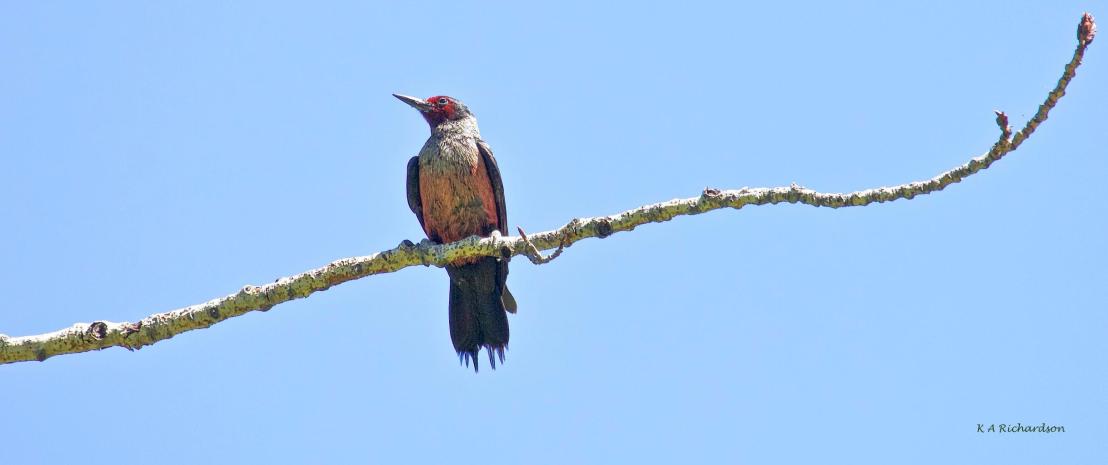
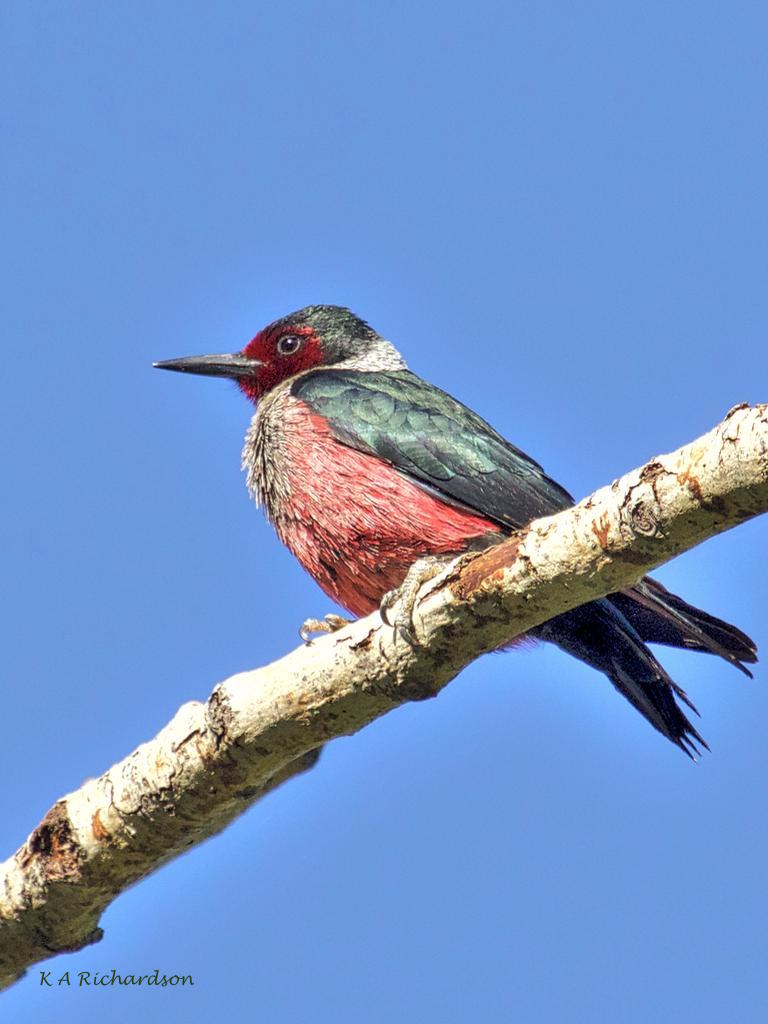
The Lewis’s Woodpecker, on the other hand, is not known for vocalizing, but for its distinctive colouring, and its flycatcher like hawking* (mixed metaphor? see below) of insects. We often see them interacting with other birds that forage in the same range of the food chain. One notable example, last year, involved Lewis’s, Eastern Kingbirds, Yellow Warblers, and Bullock’s Orioles in competition at Okanagan Lake Park, just south of Kelowna. My photo capture of a Lewis’s being dive-bombed by the EAKI are not good enough to publish, but the moment was one to cherish!

lewiss-woodpecker-on-the-long-branch
Lewis’s Woodpecker on the Long Branch
lewiss-woodpecker
LEWO closeup….

*Hawking: a feeding strategy in birds involving catching flying insects in the air. The term usually refers to a technique of sallying out from a perch to snatch an insect and then returning to the same or a different perch. This technique is called “flycatching” and some birds known for it are several families of “flycatchers”: Old World flycatchers, monarch flycatchers, and tyrant flycatchers. Other birds, such as swifts, swallows, and nightjars, also take insects on the wing in continuous aerial feeding. The term “hawking” comes from the similarity of this behaviour to the way hawks take prey in flight, although, whereas raptors may catch prey with their feet, hawking is the behaviour of catching insects in the bill. Many birds have a combined strategy of both hawking insects and gleaning them from foliage. (Wikipedia)

lewiss-woodpecker-range-cornel

The list above does not mention Woodpeckers! But it should mention Lewis’s Woodpeckers which really do exhibit this behaviour!

Last spring, on Beaver Lake Road, we ran into a couple of ardent middle-aged bird watchers from Alberta who had sneaked away from a wedding they were in town for and had found a single Lewis’s in the area. They were ecstatic because this species is very rare where they’re from. And their enthusiasm infected us, as well, for we had never seen one in the BLR area before. How great to learn from the visitors! Seen only occasionally at The Coast, the Lewis’s was one of several birds that brought us up here!


2016 Faves—Passerines, part 4: skip to H….

While there are numerous birds between E and H, none of the ones I’ve photographed fall into the perching / passerines category. AND, to be fair, the first one here doesn’t fit the passerine category either—to begin with, its feet are wrong .

“Most songbirds [passerines] have three forward-facing toes and one backward-facing toe. Most woodpeckers, however, have two toes facing forward and one [or two] facing back. This is known as a zygodactyl foot and allows woodpeckers to easily climb and grasp trees and other structures. Woodpeckers move up a tree by hopping and depend on their especially stiff tail feathers to serve as a prop. They work their way up a tree, peering and poking into every nook and cranny, and then either fly in an undulating fashion to a new area or glide down to a neighboring tree to begin their foraging anew.” (Cornell Lab of Ornithology)

So, for those who prefer bold print:
NOTE: ALTHOUGH WOODPECKERS ARE NOT CONSIDERED PASSERINES, I have included one here because it doesn’t fit into the other broad categories that I’m using. This is NOT intended to be a scientific blog; it’s a highly personal one. Please don’t get too bent out of shape by this issue.

So H brings us three birds, one a well-known woodpecker, a common but colourful finch, and last, but certainly not least, a somewhat drab but very entertaining wee performer.

hairy-woodpecker
Hairy Woodpecker at Harmon Lake, BC.

This handsome Hairy Woodpecker allowed me a front row seat to his excavation at Harmon Lake, BC.  Much larger than the similar Downy Woodpecker, portrayed in Part 2 of this series, the Hairy’s bill is nearly as long as the width of his head. This guy gave me a great look at his endeavours!

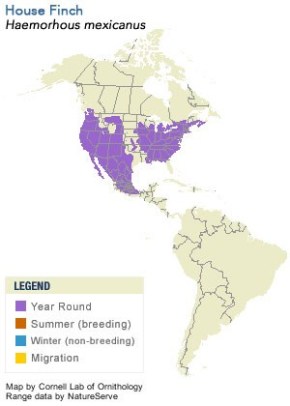
house-finch-range-cornell
The House Finch is taken for granted in southwestern BC, and southeastern Canada….

The following account from  the Cornell Lab of Ornithology website betrays an American (i.e. US bias. They’re not found in most parts of Canada.
“The House Finch is a recent introduction from western into eastern North America (and Hawaii), but it has received a warmer reception than other arrivals like the European Starling and House Sparrow. That’s partly due to the cheerful red head and breast of males, and to the bird’s long, twittering song, which can now be heard in most of the neighborhoods of the continent. If you haven’t seen one recently, chances are you can find one at the next bird feeder you come across.”

In actuality, the map may be changing more rapidly than I know. Certainly, HOFIs are common at The Coast and up here in the Okanagan, especially in our exurbs. We are particularly blessed in our neighbourhood where I’ve been able to take scores of photos like these. They are year-round residents, but on the coldest winter days they make themselves scarce. Give us a warm spell, however, and they soon reappear….

Our final “H” bird is the House Wren, which folks where I grew up in Manitoba used call the “Jenny Wren.” More widely distributed in Canada, chances are that you’ll hear one before you see it: Again from Cornell’s website:

“A plain brown bird with an effervescent voice, the House Wren is a common backyard bird over nearly the entire Western Hemisphere. Listen for its rush-and-jumble song in summer and you’ll find this species zipping through shrubs and low tree branches, snatching at insects. House Wrens will gladly use nestboxes, or you may find their twig-filled nests in old cans, boots, or boxes lying around in your garage….
In summer, House Wrens are at home in open forests, forest edges, and areas with scattered grass and trees. Backyards, farmyards, and city parks are perfect for them. In winter they become more secretive, preferring brushy tangles, thickets, and hedgerows.”

Ironically, here in the  Okanagan, I rarely see them in town. There are a couple of reliable locations, however, where they are wonderfully accessible: the amazing Beaver Lake Road area and Bertram Creek Park, both of which have provided many of the photos in this blog.

I’d love to post a lot more shots of each species, but that was not the plan, so I won’t….

2016 Faves—Passerines, part 3: E….

If I have to choose a favourite summer passerine, I would go with the Eastern Kingbird, partly because there are so many to study in the marsh/arboretum near home, but mainly because their so friendly and cooperative. I greatly admire the character of this species—determined yet laid back, excellent mates, and devoted parents. Watching them build their nests and raise their broods between May and July is an annual treat. Less colourful than Robins, perhaps, but elegant and proud to a greater degree. The more I observe them, the better I’m able to identify individual idiosyncrasies that endear some even more than others. Last summer we were treated to four pairs in Thomson Marsh, fairly evenly spaced around the walking path that borders Thomson Brook on the south and eastern sides of Mission Recreational Fields. Three of the four pairs successfully raised youngsters. Sadly, the pair that began the latest and that built what I thought was the most luxurious nest, had it destroyed by predators after the young had hatched. I didn’t see which predator, but I suspect magpies. It was very sad to see the adult birds, completely at a loss the day after the predation, hanging around in the area but too late in the season to make another attempt….

Sometime in the future I’ll write a post that follows the progress of the EAKIs’ summer….

ecdoveexpansion-greene
Eurasian Collared Doves spreading rapidly across North America! (Cornell Lab of Ornithology) …….Click to enlarge in a new tab.

Another “E” bird that is becoming more common in our neighbourhood is the European Collared Dove, an invader introduced into the Bahamas from Asia. When several ECDOs escaped captivity there in 1974, some found their way to Florida. Wikipedia tells the story below, but first, this important admission:

NOTE: Although DOVES  ARE NOT CONSIDERED PASSERINES, I have included one here because it doesn’t fit into the other broad categories that I’m using. This is NOT intended to be a scientific blog; it’s a highly personal one. Please don’t get too bent out of shape by this issue.

“The collared dove is not migratory, but is strongly dispersive. Over the last century, it has been one of the great colonisers of the bird world. Its original range at the end of the 19th century was warm temperate and subtropical Asia from Turkey east to southern China and south through India to Sri Lanka. In 1838 it was reported in Bulgaria, but not until the 20th century did it expand across Europe, appearing in parts of the Balkans between 1900 and 1920, and then spreading rapidly northwest, reaching Germany in 1945, Great Britain by 1953 (breeding for the first time in 1956), Ireland in 1959, and the Faroe Islands in the early 1970s. 

Subsequent spread was ‘sideways’ from this fast northwest spread, reaching northeast to north of the Arctic Circle in Norway and east to the Ural Mountains in Russia, and southwest to the Canary Islands and northern Africa from Morocco to Egypt, by the end of the 20th century. In the east of its range, it has also spread northeast to most of central and northern China, and locally (probably introduced) in Japan. It has also reached Iceland as a vagrant (41 records up to 2006), but has not colonised successfully there.

In 1974, less than 50 Eurasian Collared Doves escaped captivity in Nassau, New Providence, Bahamas. From the Bahamas, the species spread to Florida, and is now found in nearly every state in the US, as well as in Mexico. In Arkansas, the species was recorded first in 1989 and since then has grown in numbers and is now present in 42 of 75 counties in the state. It spread from the southeast corner of the state in 1997 to the northwest corner in 5 years, covering a distance of about 500 km at a rate of 100 km  per year. This is more than double the rate of 45 km per year observed in Europe. 

Interestingly, as of 2012, few negative impacts have been demonstrated in Florida, where the species is most prolific. However, the species is known as an aggressive competitor, and there is concern that as populations continue to grow, native birds will be outcompeted by the invaders. However, one study found that Eurasian collared doves are not more aggressive or competitive than native mourning doves, despite similar dietary preferences. 

Population growth has ceased in areas where they’ve been established the longest, such as Florida, but is still growing exponentially in areas of more recent introduction. Carrying capacities appear to be highest in areas with higher temperatures and intermediate levels of development, such as suburban areas and some agricultural areas.

While the spread of disease to native species has not been recorded in a study, Eurasian Collared Doves are known carriers of the parasite Trichomonas gallinae as well as Pigeon Paramyxovirus. Both Trichomonas gallinae and Pigeon Paramyxovirus can spread to native birds via commingling at feeders and by consumption of doves by predators. Pigeon Paramyxovirus is an emergent disease and has the potential to affect domestic poultry, making the Eurasian Collared Dove a threat to not only native biodiversity, but a possible economic threat as well.”

Eurasian Collared Dove
One of the two Eurasian Collared Doves that have located themselves in Belmont Park.

Finally, another species introduced from Europe that has now spread throughout North America—the European Starling. From a distance, their unattractive profile often provokes the “Oh, it’s just a Starling” response. Occasionally, when a large flock flies as a murmuration, they can be quite entertaining. But every so often, we get close enough to see a mature adult’s special colours and pattern, and we’re reminded that it’s usually a good idea to be fully informed before we jump to conclusions….


2016 Faves—Passerines, part 2: C and D….

For viewing instructions, see Passerines, part 1.

The first bird in this post is NOT one we would normally classify as a passerine or perching bird or song bird. to begin with, its feet are wrong . “Most songbirds [passerines] have three forward-facing toes and one backward-facing toe. Most woodpeckers, however, have two toes facing forward and one facing back. This is known as a zygodactyl foot and allows woodpeckers to easily climb and grasp trees and other structures. Woodpeckers move up a tree by hopping and depend on their especially stiff tail feathers to serve as a prop. They work their way up a tree, peering and poking into every nook and cranny, and then either fly in an undulating fashion to a new area or glide down to a neighboring tree to begin their foraging anew.” (Cornell Lab of Ornithology)

However, the California Quail does perch-er-roost in trees, and it does offer distinctive vocalizations that might, to some folks, pass as songs…. So, we’ll treat it here, for our purposes, as a passerine of sorts, even though it isn’t. Try not to get too bent out of shape about this. 😜

Environment Canada, in its inimitable taciturn prose, tells us this about the bird above:
“Native to Oregon and California, the California Quail is an introduced species in Canada. Most of the Canadian population is in the British Columbia interior, where Breeding Bird Survey data indicate that populations have shown large increases since 1973. Populations on the British Columbia coast are not faring as well. The reasons for the difference between the two population trends are unclear.

The California Quail was introduced to British Columbia several times between 1860 and 1912 (Campbell et al. 1990). Wet springs reduce breeding success (Calkins et al. 1999) and cold, snowy winters can have a significant negative impact on local populations (Cannings et al. 1987). There are no conservation concerns for this introduced species.”

For a far more engaging account (by journalist John Macdonald)  of this wonderful Okanagan transplant (can’t call it an invader if it was brought here to populate the area!) click the link below:
Everything you need to know about quail in the southern interior

CAQUs’ keys to survival here are the relatively dry climate and their prolific breeding—up to three enormous broods a year. Their numbers are held in check by predators, both mammals and raptors that eat them, especially the youngest, weakest members of the brood. Because it’s Nature’s Way, we can appreciate both the birds that survive and the creatures who harvest the non-survivors…. Certainly, visitors to the Okanagan almost always find this species an entertaining surprise!

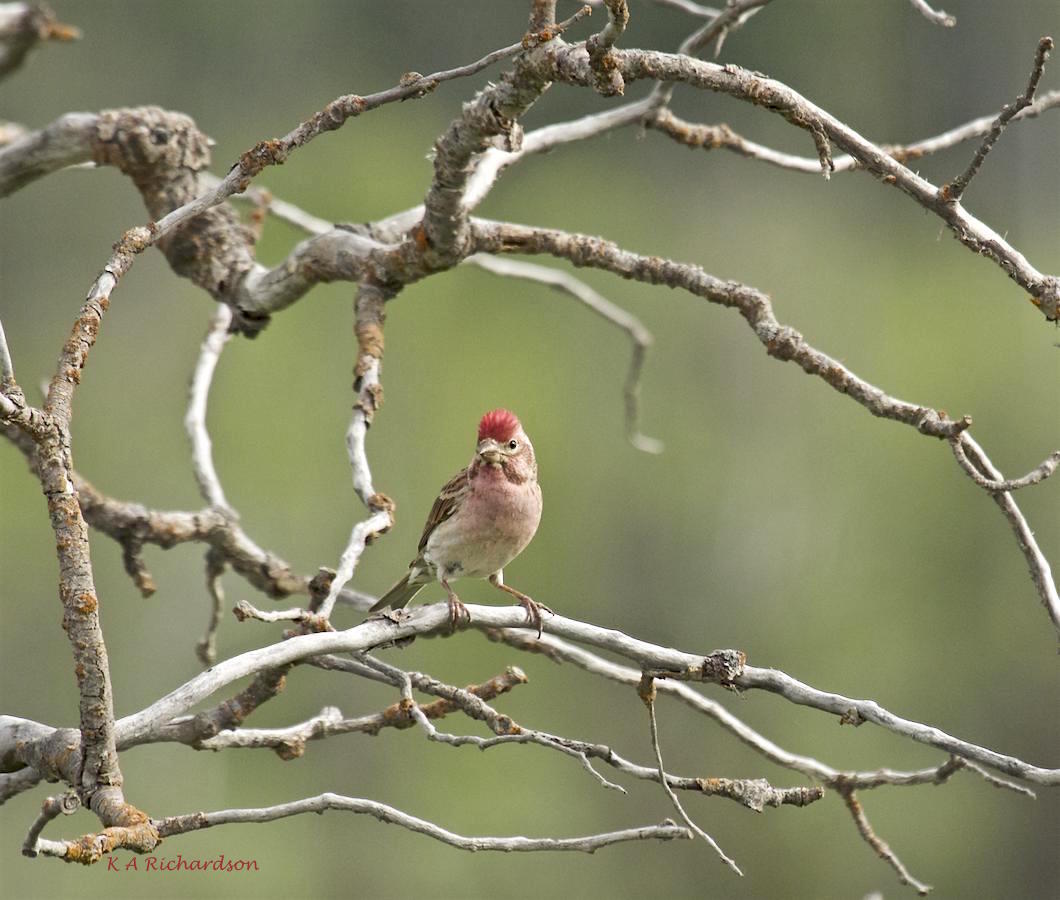
A bird that is less commonly seen, but thrives in the Interior, is a finch that is sometimes mistaken for species more common, the House Finch and the Purple Finch, both of which are quite familiar to British Columbians at The Coast. In my eyes, however, once we’ve seen a Cassin’s Finch in breeding season, we’re unlikely to mistake it for one of its cousins:

cassins-finch-male
Cassin’s Finch in breeding plumage…. It’s all about the cap!

Waxwings, in Kelowna, vary with the season. In winter, we’re blessed with Bohemians, which are a circumpolar species. I’ve covered them in a separate post. In spring, the BOWAs rather quickly give way to the CEWAs, Cedar Waxwings that breed locally and stick around through until their fledglings are ready to head south. Occasionally, one or two will try to stay through the coldest months.

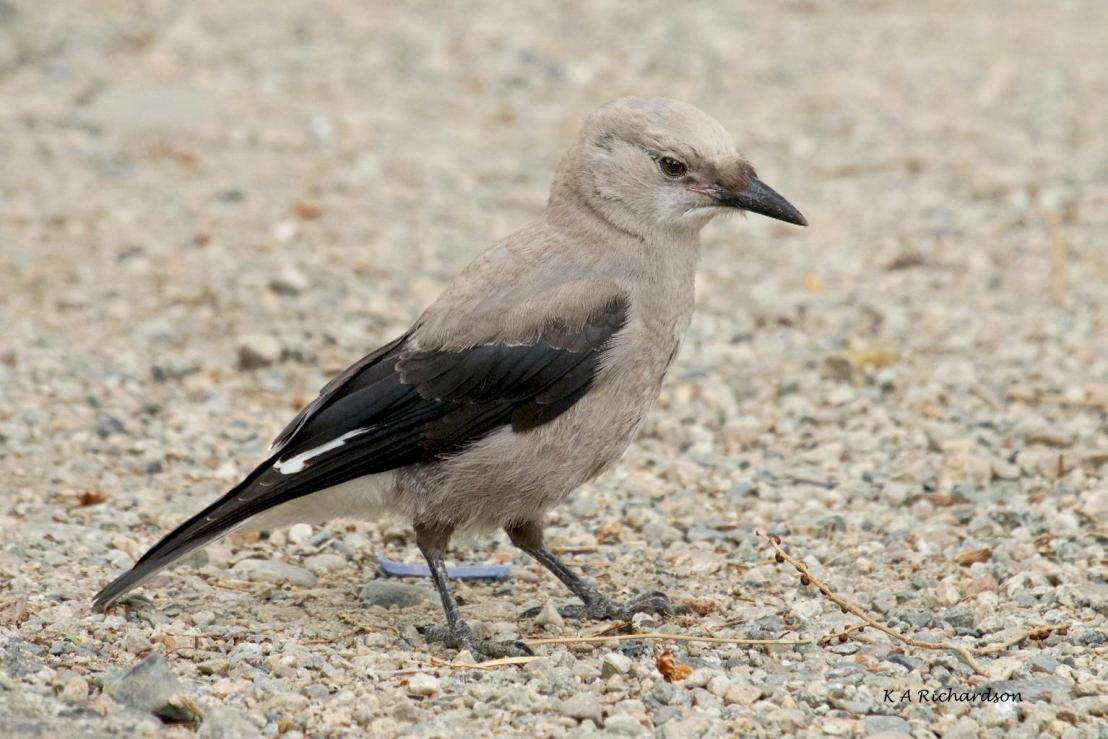
While the next species is found throughout the region and throughout the year, I see it mostly in spring and early summer. A corvid, the Clark’s Nutcracker often shows up in small, noisy flocks, as this individual did at Okanagan Lake Park in June.

clarks-nutcracker
Clark’s Nutcracker, probably a juvenile or second year bird….

NOTE: ALTHOUGH WOODPECKERS ARE NOT CONSIDERED PASSERINES, I have included one here because it doesn’t fit into the other broad categories that I’m using. This is NOT intended to be a scientific blog; it’s a highly personal one. Again, don’t get too bent out of shape by this issue.

downy-woodpeckers
An active pair of Downy Woodpeckers in Belmont Park.

I am the target text.

Downy vs Hairy Woodpeckers

While most of Canada is blessed with an abundance of woodpeckers, there are significant variations in the species east and west of the Continental Divide. Some, like these Downy Woodpeckers, however, are found in virtually all parts of Canada. For some reason, just seeing one makes me happy; when I get to see a pair interacting, cavorting, actually, the thrill is even greater. Males stand out with a flash of red on the back of their head. Downies resemble their larger cousins, Hairy Woodpeckers. A key diagnostic, if one is not sure which species (s)he’s seeing, is the length of the bill, which is less than half the width of the head in the case of the Downy, and much more elongated in the Hairy.
Find photos of other woodpeckers in series parts that contain their first names….
Hairy  ……..
Northern Flicker ……..Pileated