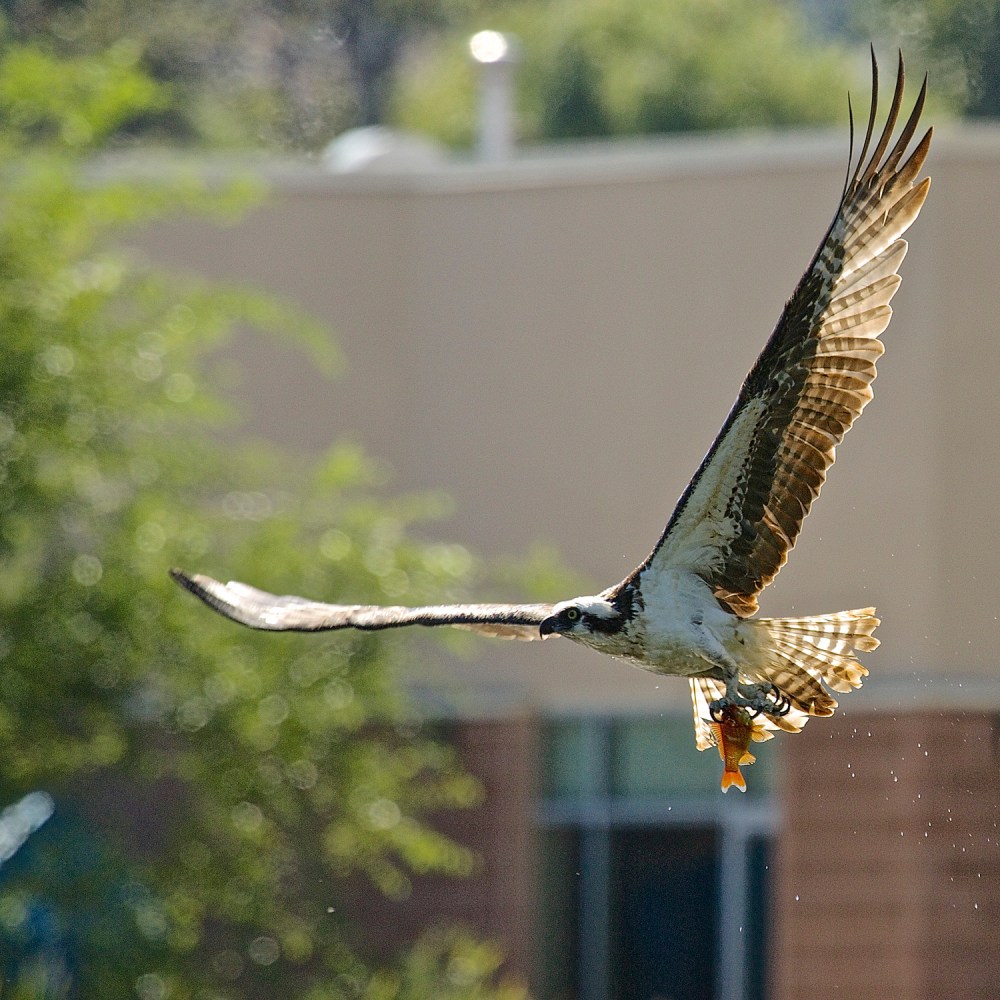
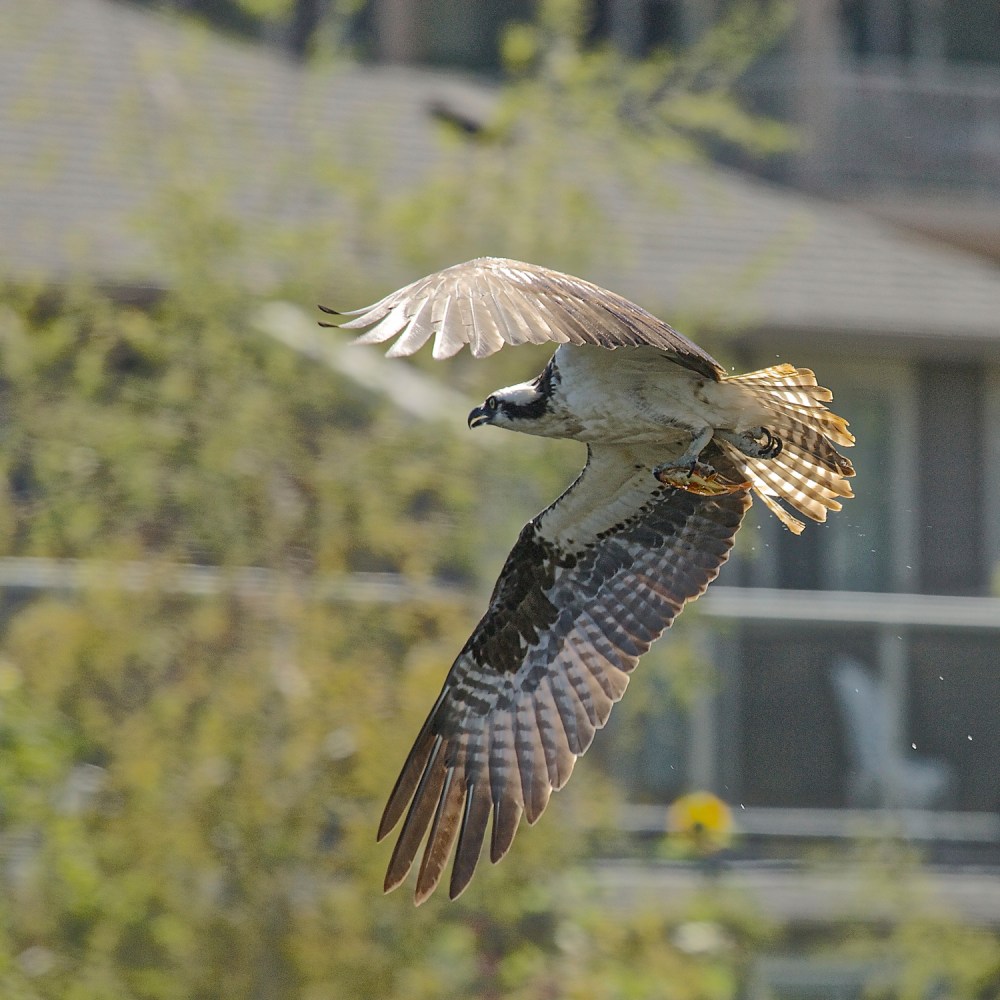
Author: keikelo

Violence and abuse are never the answer!

Thoughts on The US OPEN TENNIS FINAL, September 8, 2018

180908_williamsracquet_epa.jpg

To many spectators both at the Billy Jean King National Tennis Center and watching on television, the US Open Women’s Final Match of 2018 was a great disappointment. 

The match should have been historic — the first Japanese-Haitian, 20 year old challenger in her first Grand Slam final, and more importantly, her brilliant play against an opponent widely described as the best-ever women’s tennis champion (who had won her first Grand Slam tournament before her younger opponent’s second birthday) attempting, in the year after her daughter’s birth, to equal the record for most US Open victories by a female. 

Young Naomi Osaka handily won the first set (6-2) against Serena Williams, amazingly back in this final 18 days short of her 37th birthday,. What happened in the second set, however, became historic for unexpected and regrettable reasons. 

The hitherto “distinguished chair umpire,” George Ramos, made questionable choices that interfered with scoring in the match, and threw shade over Osaka’s victory in the minds of Williams’ fanatics. Why the United States Tennis Association chose a male umpire to officiate in this match is a mystery to me. The more significant mystery, however, is why he chose, in a final match, to rule against “coaching from the stands,” which, by the rules of the USTA, is “illegal” but apparently indulged by nearly every player and his/her team and almost never called. This issue has long been debated in the professional tennis community as you can see for yourself with a simple Google check. This online article is very informative: Wimbledon 2015 – Novak Djokovic: yes, I communicate with Boris Becker, but you can’t call it cheating | The Independent

[“In the last five years [2011-2015] 24 fines have been issued to male players at Grand Slam events for on-court coaching. Djokovic has been fined twice – at the 2011 Australian Open and 2013 US Open…

Rafael Nadal has also been fined twice for coaching over the same period. The Spaniard received the biggest coaching fine to be issued since 2010 when he was penalized $4,000 at last year’s Australian Open. Tomas Berdych, David Ferrer and Richard Gasquet are among those who have also fallen foul of the rules.”]

When it was over, Patrick Mouratoglou, Williams’ coach, admitted coaching with a hand gesture. During the match, commentator and former great women’s champion Chris Evert had noted that his action coincided with an adjustment in court position by Serena that helped her game. Evert also mentioned, after the chair umpire ruled that the signal was a “code violation,” that this penalty is rarely called. 

Williams chose to perceive the call as an attack on her honour, protesting that she’s “not a cheater” and that she’d “rather lose than cheat.” It appeared to viewers that while the umpire understood her feeling, he was not about to reverse his decision. He did not, as he could/should have, warn her that a continuing outburst would cost her a game. Perhaps she might have calmed down if he had. Regardless, rather than put the incident behind her, it seemed to me that Williams, fuming, preferred to play the victim. Osaka, meanwhile, undaunted by trailing 3-1 in the second set, battled back brilliantly, and aided by double faults from Williams, broke serve and strove to catch up. She won the fifth game.

At this point, I’ll pick up the narrative from ESPN:

Then, during the changeover at 3-2, the fireworks began. After Osaka broke her in the fifth, Williams smashed her racket and was penalized a point for a second code violation. Before the start of the next game, Williams walked to the chair to plead with Ramos again to tell the crowd she [had not been cheating at the time she was charged with the first code violation].

“I didn’t get coaching. You need to make an announcement that I didn’t get coaching,” Williams said. “I didn’t cheat. How can you say that? I have never cheated in my life. I have a daughter, and I stand for what’s right for her. You owe me an apology.”

At that moment, the boos — which had started after the initial warning — became so deafening they delayed play. On every serve. After a few points, Ramos stopped his attempts to settle the crowd. Through it all, Osaka impressively held her focus and won the next two games. At 4-3, she was two games from the title.

But Williams couldn’t let that earlier warning go. Again, she walked to the chair and exchanged words with Ramos. “You stole a point from me,” she said. “You’re a thief.” Before fans knew what was happening, Ramos called both players to the chair and docked Williams a game penalty for verbal abuse: 5-3 Osaka.

Had Williams let it go — or had Ramos let the match play out — maybe Williams could have forced a third set. The way Osaka was playing, it’s unlikely, but Williams is a 23-time Grand Slam champ for a reason. She knows how to find that next gear. “It’s hard to say, because I always fight ’til the end, and I always try to come back, no matter what,” Williams said after the match. “But [Osaka] was also playing really, really well. She played an amazing match. She deserved credit, she deserved to win. At the end of the day, that’s what it was.”

So what’s my takeaway from this? I agree that the umpire badly miscalculated in his decision to penalize what he perceived as coaching. Although Williams’ coach acknowledged, at the end of the match, that he had been trying to coach his player with a hand gesture, he used the old “everybody does it” excuse. 

I’m even willing to give him the benefit of the doubt on this point. In fact, I think tennis must get rid of the “no coaching” rule that is so difficult to enforce and so blatantly ignored by the top teams in the sport. Tennis purists, who argue that the players should, like gladiators, play their own game with no outside input, are sleep walking. Coaching is allowed, for goodness’ sake, in the qualifying rounds at the US Open. 

I can see that tennis fans don’t really want the kind of spectator “cheering” that’s common at baseball and football and soccer and hockey and rugby games (think Boston or New York!). Tennis is better enjoyed by watchers being able to hear the smack of the racket against the ball, or the ringing of the bell on serves that touch the net. Whether we need to hear the grunts of players is a topic for debate in another time and place. I don’t think we want to hear coaches calling out instructions to the players. I’m sure the players don’t either. But players do look to their coaches between serves either to plead excuses for mistakes or to read silent signals that will help them improve. Allow coaching! 

Second, I applaud Serena for trying at the end of the match not to deprive Naomi of enjoying her historic moment. Although I doubt she’d ever admit it, I think Serena knew deep down that she was being defeated on this day by the better player. Could she have come back? Maybe. After the third violation, Serena won the next game easily (did Osaka let up for that game?) to bring the score to 5–4 with Osaka serving. Osaka’s game winning point, however, was a near ace that Williams just couldn’t handle. At the presentation, Serena did what she couldn’t do during the match — rise above her emotions and put sportspersonship ahead of “winning.” Remember what she said, post-match: “…[Naomi] played an amazing match. She deserved credit, she deserved to win.”

I think, however, it’s time that in all sports, athletes recognize that it’s a privilege to “play” for the outrageous amount of money the “game” provides them, and that displays of “unsportsmanlike conduct” should receive wider sanctions for all — male or female, intensely emotional situations or not. Williams wants to argue that because men “act out” and get away with it, she and all women should, too. Logically, that makes sense. What I want to argue, however, is that violently smashing rackets and angrily calling out referees and umpires should be sanctioned consistently and forcefully in all sports regardless of the players’ genders. Athletes should accept the mantle of leadership that comes with their privilege and try to teach crowds and youngsters watching that abusive behaviour is never justified just because emotions have boiled over — especially in the public arena where a “game” is being played. The ideal of “winning at any cost” should be replaced with “winning with dignity”; we’re talking about a game here, not a war!

So, you ask, what should be done if a player smashes a racket? Should there be a penalty at all, and if so, what should it be? I think that any tennis player, regardless of gender, who “abuses a racket” should have to continue playing with it for the remainder of the game or through the next game, after which they could change to a new one. Rackets could continue to be changed during games only if they were not the result of player induced rage. Of course, most often a player could not hope to play with a racket as mangled as the one Williams picked up after hurling it into the hard court; the effect of the rule would be the forfeit of the game. (“Game,” here, in the tennis sense of game, set, match. Just forfeit the game). In golf, if a player destroys his putter (or any club) during a round, s/he doesn’t get to replace it. Would I like to see similar penalties to other athletes who destroy equipment in fits of pique? Yes! But this is not the time to digress into that morass. This piece is about tennis only.

“Verbal abuse” is a much more difficult matter to determine. Where is the line between an appropriate and sporting objection to a call and verbal abuse of another player or an umpire or line judge? Remember Serena’s outrageous threats against the line judge when she was assessed a “foot fault” at the 2009 US Open semi-final? My solution for this problem would be to make much better use of technology. Reduce the dependency on humans to call “faults” and let the same tech that is currently used to resolve disputes, such as the “Chase review” for line rulings, make every call. We’ll likely still need a chair umpire, but do we still need line judges? How silly would a player look arguing his/her case with a machine?

Some will argue that using technology this way will slow down the game. I disagree. The rulings will be just as quick as the display of service speed on the IBM monitor. The rulings will be called out instantly by a computerized voice without any trace of human emotion. No more half-second-delayed calls while the line judge tries to recall what s/he just saw….

Let’s apply my ideas to the 2018 US Open Women’s final. If coaching were permitted, Williams’ first code violation would have been moot. Serena would not have had a reason to go ballistic towards the umpire. If, after she lost the fifth game, she had smashed her racket in disgust at her own play failures, she would have been penalized one game (or allowed to continue for one game with the damaged one) which would have tied the match at 3-3. We don’t know how Serena would have dealt with her emotions, but if she had acted “unsportspersonlike,” at least she would have had only herself to blame…. Had Naomi continued to play with the cool she displayed throughout the entire match on Saturday — and won, she could have enjoyed her victory with all the honour she was due.

Postscript: As I was writing this piece, I kept expecting someone else to publish a similar response. Just as I thought I was finished (including the further research section below), it arrived — from none other than Martina Navratilova, writing in the Washington Post, September 10, 2018): Her piece echoes my thoughts, although she doesn’t cover all of the remedies I’ve outlined (we do agree on allowing coaching): Here’s the most important excerpt in my opinion:

It’s difficult to know, and debatable, whether Ms. Williams could have gotten away with calling the umpire a thief if she were a male player. But to focus on that, I think, is missing the point. If, in fact, the guys are treated with a different measuring stick for the same transgressions, this needs to be thoroughly examined and must be fixed. But we cannot measure ourselves by what we think we should also be able to get away with. In fact, this is the sort of behaviour that no one should be engaging in on the court ). There have been many times when I was playing that I wanted to break my racket into a thousand pieces. Then I thought about the kids watching. And I grudgingly held on to that racket (my emphasis).

If you’re in a mood for further research, I strongly recommend that you read the article listed below (and others) about The IceBorg, Bjorn Borg, the Swedish tennis superstar who won Wimbledon five times in a row (1976–1980) along with six French Open titles (1974-1981). He never won the US or Australian Opens. 

Except from The silence of Borg that was misunderstood | Sport | The Guardian (2007):

“Borg was called a machine. His detractors, and some of his admirers, said he had no pulse (it was actually recorded at 35 bpm), no fear, no heart. How wrong they were.

His game was built on emotional restraint — an asceticism never since seen on court — and yet he was the most emotional player of them all. While his contemporaries raged and hollered, he internalized. Through his five Wimbledon triumphs and six French Open wins he barely uttered a word, let alone questioned a decision.

If he had not existed, Ingmar Bergman, his fellow countryman, would have had to invent him. There was so much going on in those silences. Out on court he seemed to be groping for the very meaning of life.

You just knew his silences were rooted in some deeper struggle. After he quit he admitted that at the heart of it had been his determination to master a suspect temperament. At 14 he had been punished for racket abuse and shouting. His parents told him he was finished with tennis unless he could control his temper “(emphasis mine).

While much of Borg’s post-tennis life was ‘a mess,’ he is today, at 62, a fine representative of the sport he loved. In December 2014 he was elected Sweden’s top sportsperson of all time by the newspaper Dagens Nyheter…. Arthur Ashe told Sports Illustrated (May 6, 1991) “I think Bjorn could have won the U.S. Open. I think he could have won the Grand Slam, but by the time he left, the historical challenge didn’t mean anything. He was bigger than the game. He was like Elvis or Liz Taylor or somebody. (From Borg’s Wikipedia entry.)

Finally, full disclosure, I have struggled all my life to control my temper — and often failed. That said, I make no excuses for that failing, and as I continue to try to reign in my own emotions, I urge everyone to find appropriate ways to deal with theirs…. 

Violence and abuse are never the answer!

Scroll to the bottom for comments.

Spring Wood Ducks of Belmont Ponds, 2018

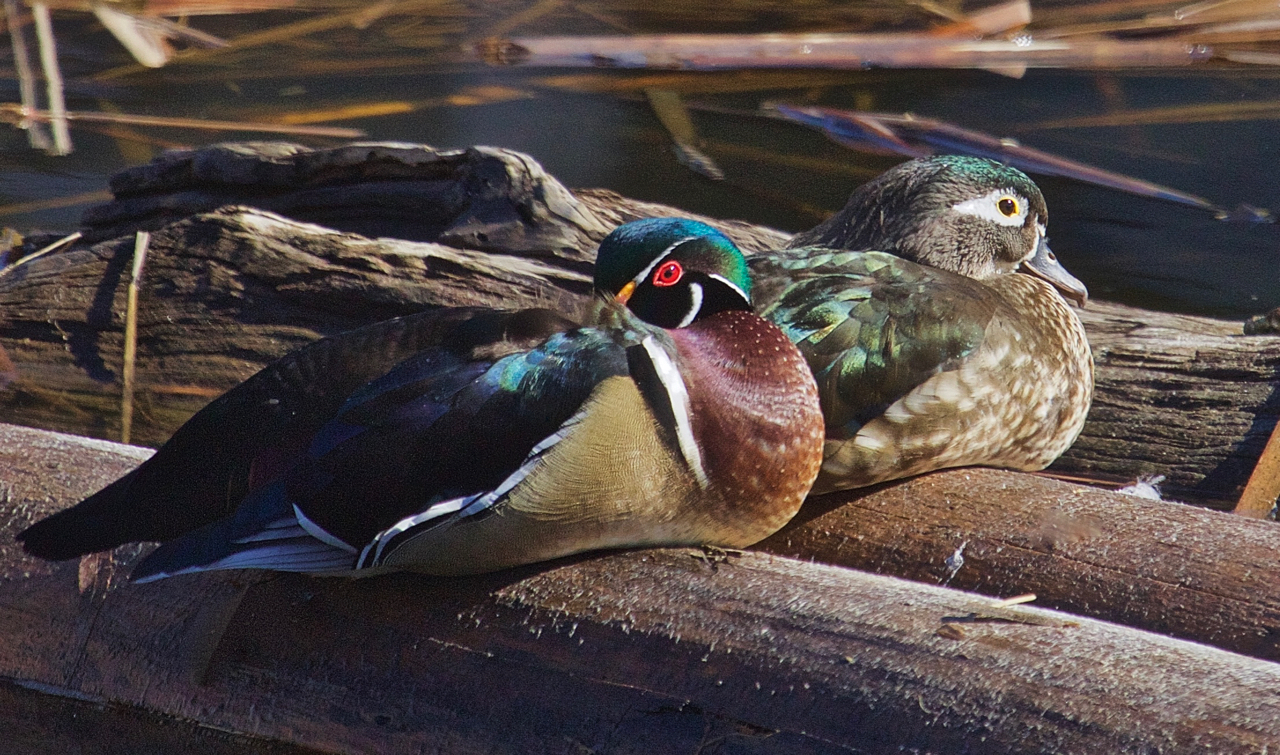
If you’ve visited this blog before, you probably know I’m a huge fan of Wood Ducks,  by far the most colourful waterfowl we see here. As this shot from last fall shows, each adult in a pair has quite distinctive and different colouring as shown below
(Click any image to enlarge it in a new tab):

Wood Duck pair (Aix sponsa) -07.jpeg
This pair, surprisingly, were photographed on November 26 in Teal Pond, Thomson Marsh, Kelowna, BC.

Relatively rarely, however, have I seen or photographed them in the Marsh. More often I see them in one or both of the Belmont Ponds that are only a couple of hundred metres from home. And every Spring and Fall they are a highlight of the season for me and many others who may not really be “birders” in the usual sense.

Here are some highlights of the small band that visited us from March into May 2018. Most of the shots that follow are from the end of March and early April. At the end of this post, however, there’s something special — a first for my observations in this location….

My first glimpse of the WODUs’ return happened in Thomson Marsh, on the Ides of March, before all the ice was gone there or on Belmont Ponds: unexpected — and exciting:

Wood Duck pair (Aix sponsa) -03.jpg
So great to see them here again at the beginning of Spring. They would stick around long enough (at least she would) to raise a brood into the summer of 2018.
Wood Duck drake (Aix sponsa)  FOY Belmont Pond.jpg
On March 15, I photographed this fella and wrote on my Flickr page, “Large Belmont Pond, Kelowna, BC. Record shot only.  
This fella was following his mate, more hunched up than usual for a drake…. Looks a little dazed, or is that dazzled…?
Here we are in mid-March. The snow is 85% gone, and Thomson Marsh again is ice free. Michaelbrook is only 50% thawed, but will come along quickly now.
The larger Belmont Pond is 80% ice free (it thawed suddenly over two days, and will be all gone the day after tomorrow). Today, we had two pairs of WODUs, one pair of COGOs, a couple of pairs of Mallards, and, of course, Ralph, the GBHE….
It really feels as if Spring has arrived at last — the first Violet Green Swallows over the marshes, and even a couple checking out the foundation wall of our condo despite the new townhouses crowded onto the old vacant lot over which they used to cruise after filling up on insects over Belmont Ponds. Should know in a few days if they’re prepared to adapt to the changed environment or not.
Also saw a flock of waxwings, possibly CEWAs flying in and around the TM Raptor tree. The BOWAs are still hanging around Mission Creek, and should be checking out soon….

Better images followed:

Wood Duck pair (Aix sponsa)  -0.jpg
For several days, this pair seemed content to spend an inordinate amount of time doing just this!

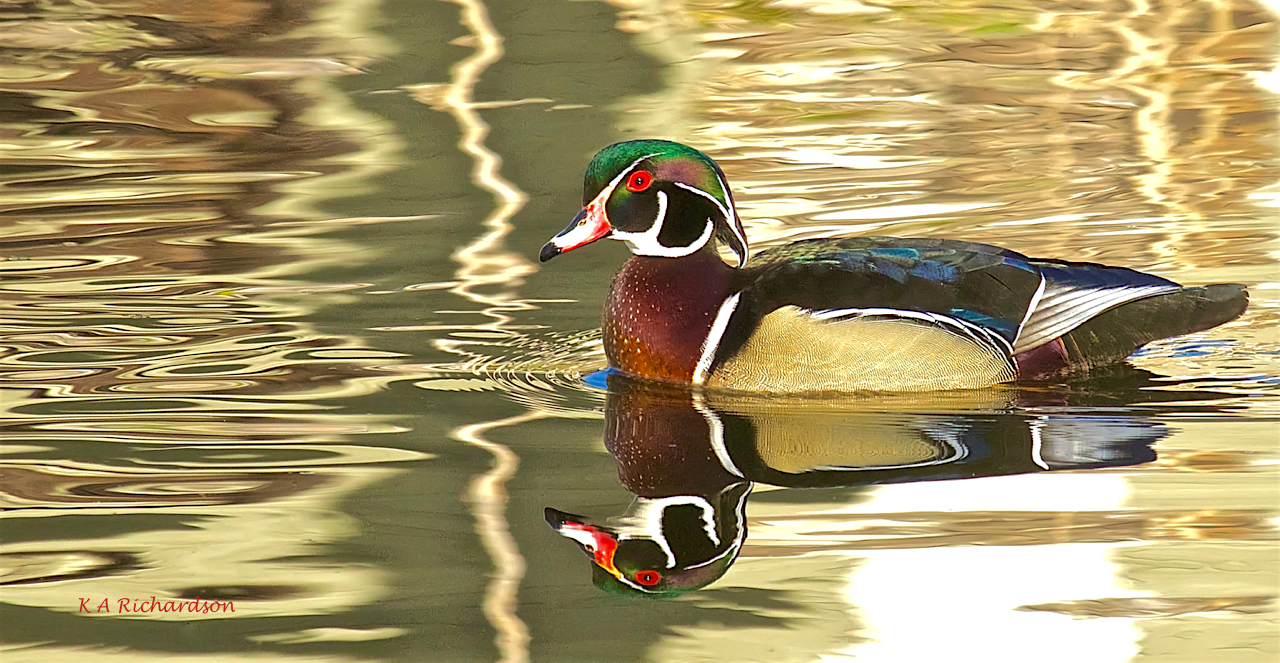
The lady of this species is often overshadowed by her more colourful mate.
Here’s a set from March 20 to address that oversight…
Click any of the images below to view it fully & enlarged in a separate window….

Wood Duck drake (Aix sponsa) -01.jpg
March 25: Of course, the drake also demands his due….
Wood Duck drake (Aix sponsa) -06.jpg
There were a couple of pairs around, but only one stayed. The drakes’ duck-tail ‘dos were slightly different…. Not sure that’s an important detail, however….
Wood Duck drake (Aix sponsa) -04.jpg
March 28: “Cross this line & enter a whole new dimension of time and space!”

Click either image below to view it fully & enlarged in a separate window….
(from March 28 also)


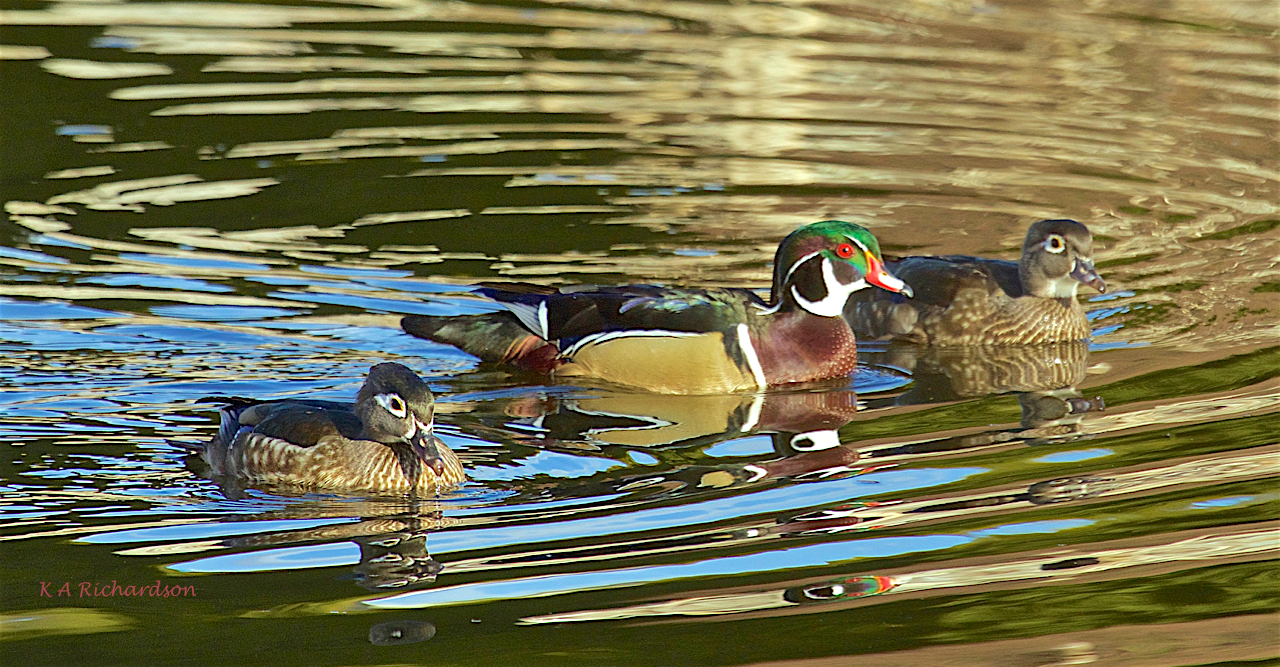
But there was a little trouble brewing in Pond City. A single female was attempting to turn one pair into a threesome. Ironically(?), it was the drake that put an end to it. In the process, our “unloved duck” lost a few head feathers….

Wood Duck pair (Aix sponsa) -03.jpg
The duck on the left in the photo attempted to ingratiate herself into the family…
Wood Duck pair (Aix sponsa) -04.jpg
But the drake was having none of it….
Unloved Wood Duck hen (Aix sponsa) -02.jpg
Hester has a haircut….
Wood Duck drake (Aix sponsa) - special.jpg
While I probably don’t need any more Wood Duck shots, couldn’t resist trying to create something more artistic. 
Will leave viewers to decide if I succeeded….
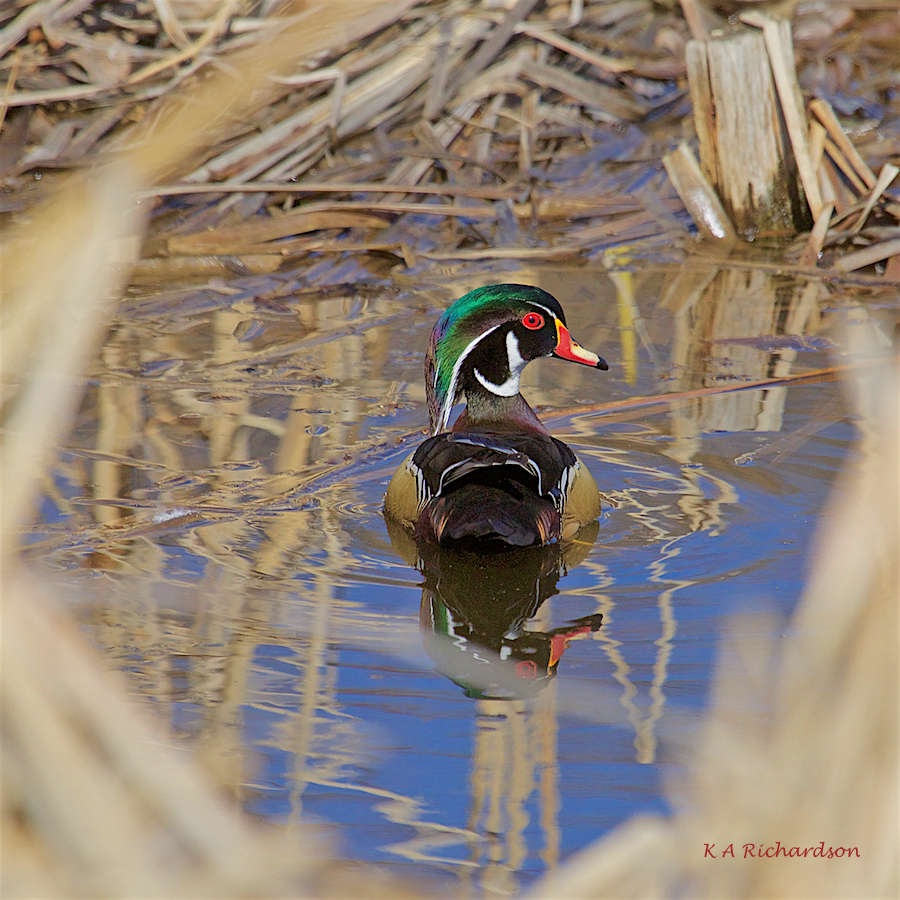
Wood Duck drake (Aix sponsa) -08.jpg
I was still trying as with this natural vignetted shot through the Cattails on the south end of the larger Belmont pond….

And, now we’ll end this saga from Spring 2018 with this set all from April 20 dealing with a recurring theme in my Belmont photos — Wood Ducks minding turtles — starring William Wodu and a trio of Western Painted turtles,
Melbert on the left end, Malcomb in the middle and Mini-Mickey…..
Click images to enlarge in a new tab.


Wood Duck drake (Aix sponsa) -03.jpg
“Well, thank goodness that’s over! Now for a nice sitz bath.
You might say this is like having your lake and logging in, too!”

Early Spring Highlites, 2018

A few images taken around home and in the Okanagan region in April prior to our departure for Texas on the 24th. Click any image to open it, enlarged, in a new tab.

Killdeer (Charadrius vociferus) -02a.jpg
Killdeer returning to Thomson Marsh marks the official beginning of Spring….
American Wigeon drake (Anas americana)-04.jpg
American Wigeons show up in Spring and add some new colours and patterns to the Marsh.
American Wigeon drake (Anas americana)-01.jpg
Every so often they move out of the Marsh and into the Rec Fields where they strut around like royalty….
American Wigeon (Anas americana) takes off!.jpg
Here for a couple of weeks, it seems, and then they’re off to breed elsewhere….
Northern Pintail drake (Anas acuta) -08.jpg
Northern Pintails rarely come close enough to the Marsh to be photographed. In 2018, I learned that I could get shots in fields north of Munson Lake….
Ring-necked Duck pair (Aythya collaris)  with Bufflehead hen (Bucephala albeola).jpg
Sexually dimorphic Ring-necked Ducks and a female Bufflehead spent a couple of days in Thomson Marsh in mid March, giving me this closeup opportunity….
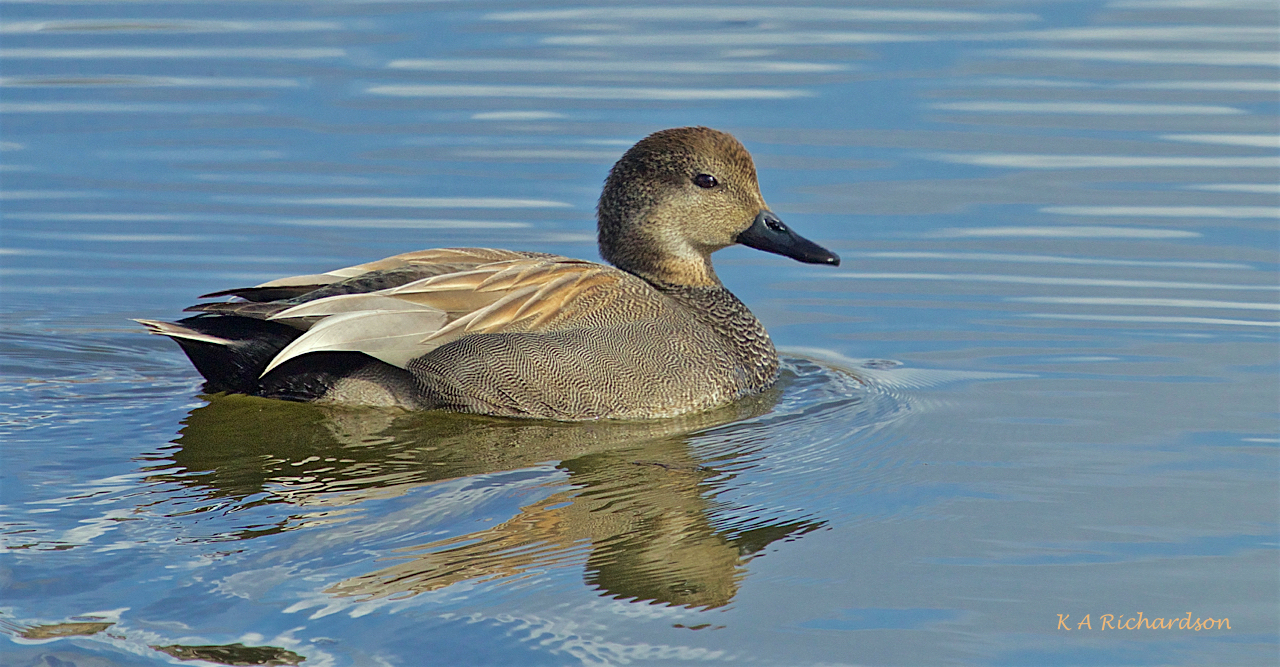
Gadwall drake (Anas strepera) -01.jpg
Gadwall Drake on Golden Pond, Thomson Marsh, Kelowna, BC. Year-round residents, really, we see them in breeding plumage this time of year and they feel like visitors.
American Coot (Fulica americana) -06.jpg
American Coots are seen on my beat frequently in Spring, less commonly in other seasons….
Mooch, the Gadwall drake (Anas strepera), & Meek, the Coot -04.jpg
A behaviour I noticed for the first time this Spring involves an odd relationship between Coots and Gadwalls where the latter waits for the Coot to dive down and retrieve succulents that the Gadwall craves. Because the Coot usually brings up more than it can devour, the Gadwall moves in and appropriates a share. I watched a pair of GADWs do this for several days with a pair of Coots, with no serious complaints from the AMCOs….
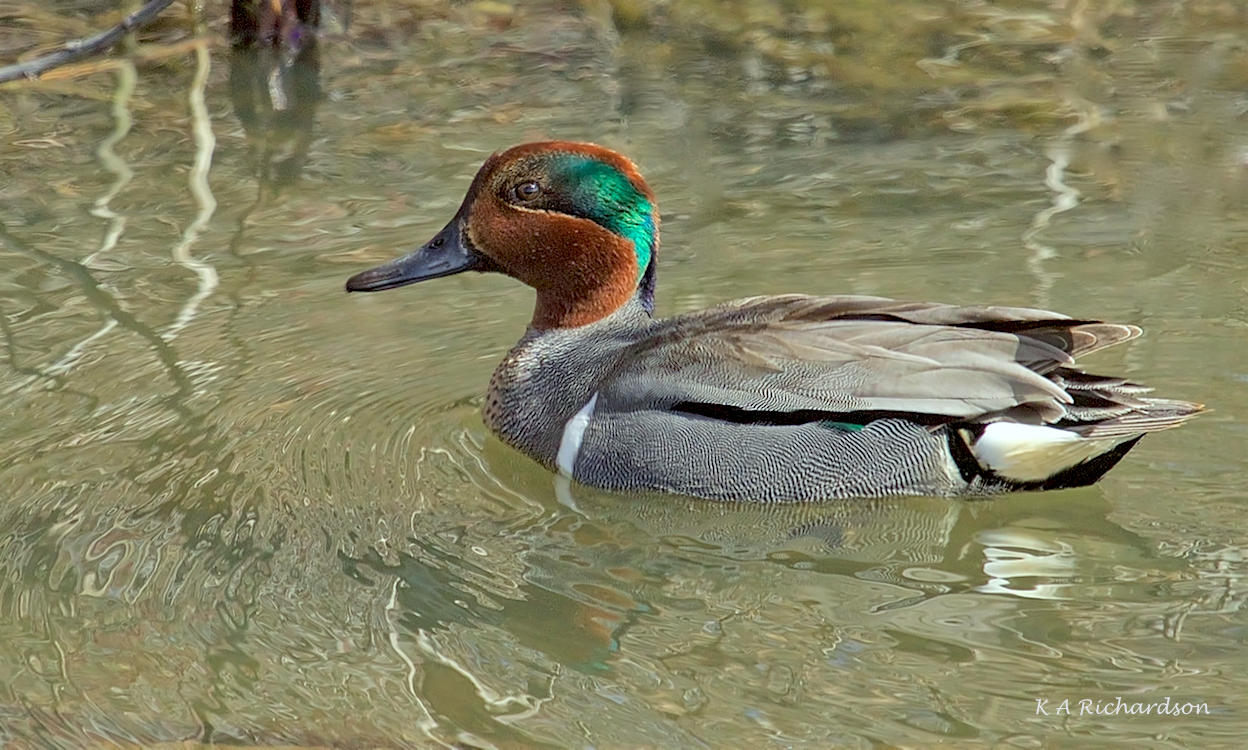
American Green-winged Teal drake (Anas crecca carolinensis).jpg
Thomson Marsh, Kelowna, BC.
For all my Coastal friends who can walk right up to these gorgeous little ducks at, say, Piper Spit in Burnaby, let me tell you that getting this shot required 20 minutes of hard work! 
The brook here is very narrow, so the teals, especially, cling to the shadowed side with its tangle of underbrush. Occasionally, if they flush, they’ll land in a slightly more accessible part like this. 
On my camera tolerance scale where 1 is “here this second; gone the next,” and 10 is “I’ve got all day; knock yourself out!” they’re a 3…. 
Getting the shot, in the end, is very satisfying….
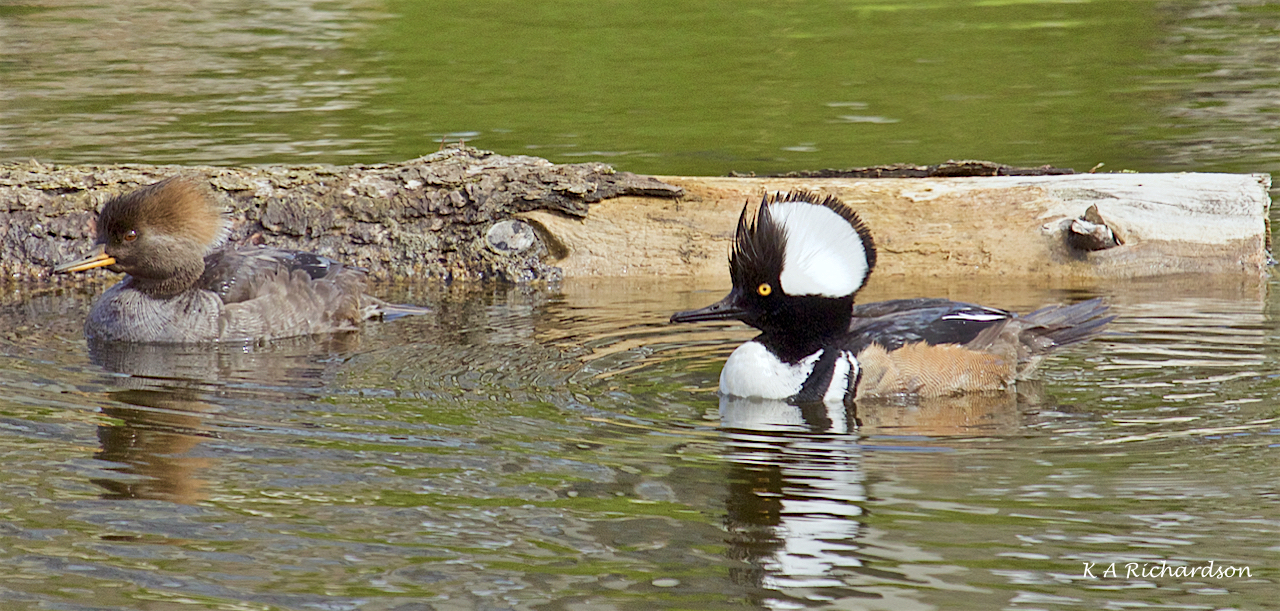
Hooded Merganser hen bathing (Lophodytes cucullatus) -01.jpg
Hooded Merganser female who showed up alone in Belmont Pond, just behind our condo, and spent several days grooming herself as if waiting for a mate to join her. The same situation occurred last year.

Click any image in the group below to enlarge the whole group and view one by one.

Hooded Merganser hen logged on (Lophodytes cucullatus).jpg
Now it’s time for Hilda to sit back and wait for His Nibs to show up….
Hooded Merganser (Lophodytes cucullatus) -02.jpg
Belmont Pond, Kelowna, BC.
Well, Hilda clearly knew he was coming, and now that’s he’s logged on, she’s really trying to impress!
Hooded Merganser (Lophodytes cucullatus) -01.jpg
Belmont Pond, Kelowna, BC.
“Okay! I’m here! What now?”
They stayed for a few days and then they were gone,
not to be seen again until Autumn….
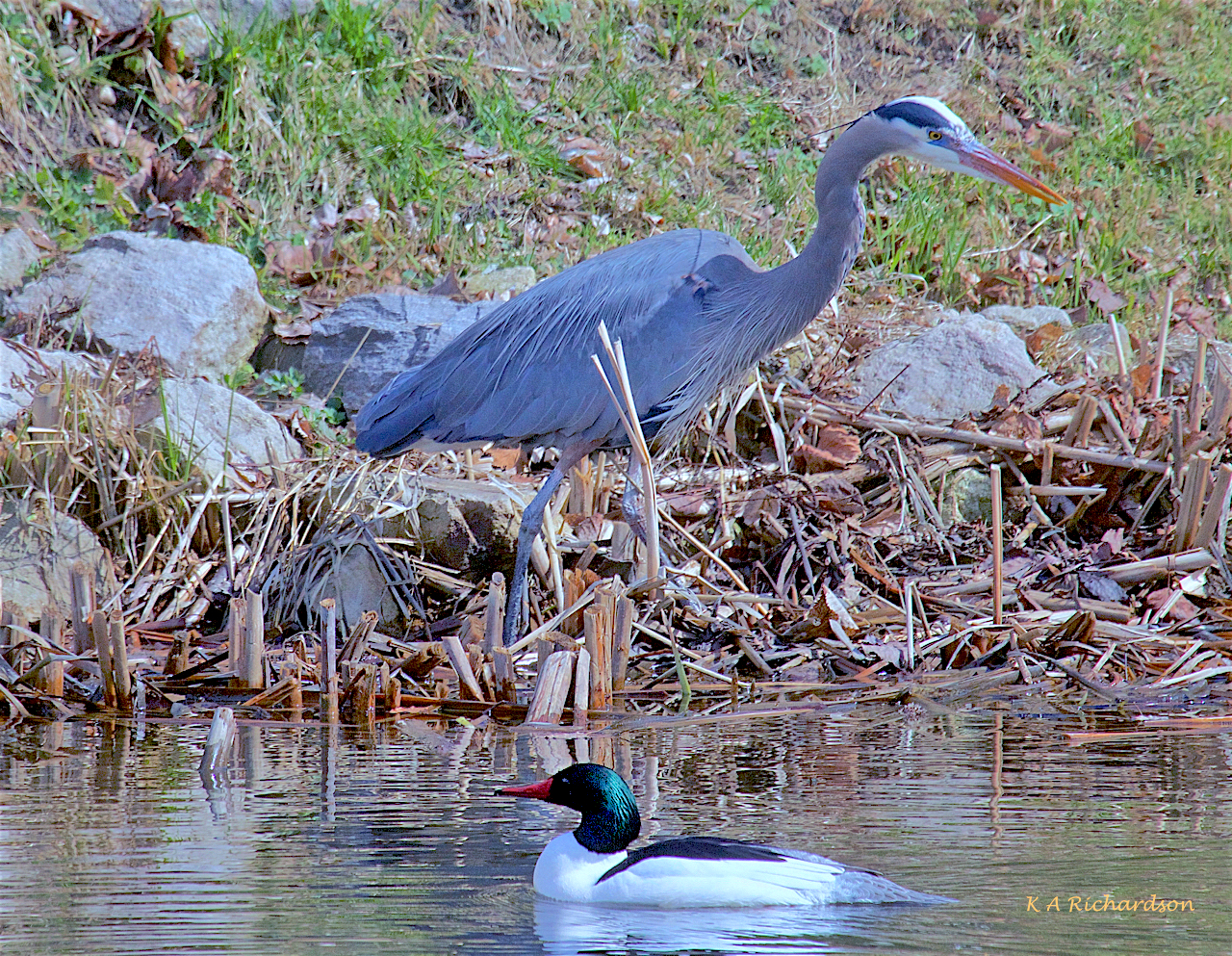
Common Merganser drake (Mergus merganser).jpg
While 2017 was a better year for Common Mergansers here and in several other ponds I monitor,  we were graced in early April by this fella’s a visit. Unfortunately, this year he didn’t bring a mate…. Did see a pair and a singleton in Thomson Marsh, but here in Belmont Pond, we have a much better chance to get close enough for a good look….


Noogye -05b.jpeg
Belmont Pond, where Noogye, a young Great Blue Heron 
now fully promoted to adulthood, exchanged pleasantries with 
Como the Common Merganser:
Como: “You fish your way…”
Noogye: “…and I’ll fish mine!”
Como: “Er, that’s just what I said…. (Sheesh! Herons!)”

In the next post, I’ll take a look at Spring Wood Ducks of Belmont Ponds…..

Summer brings me back to blogging….

calvin-and-hobbes-writers-block.jpgJust as on Winter’s most miserable days, Summer’s afternoon imitations of Hell send me back to this place to do some writing.

Haven’t posted anything since March! Certainly not because there’s nothing to write about. More because the past three months have been busy enough for Nana and me that writing here was pushed to the bottom of the priorities list.

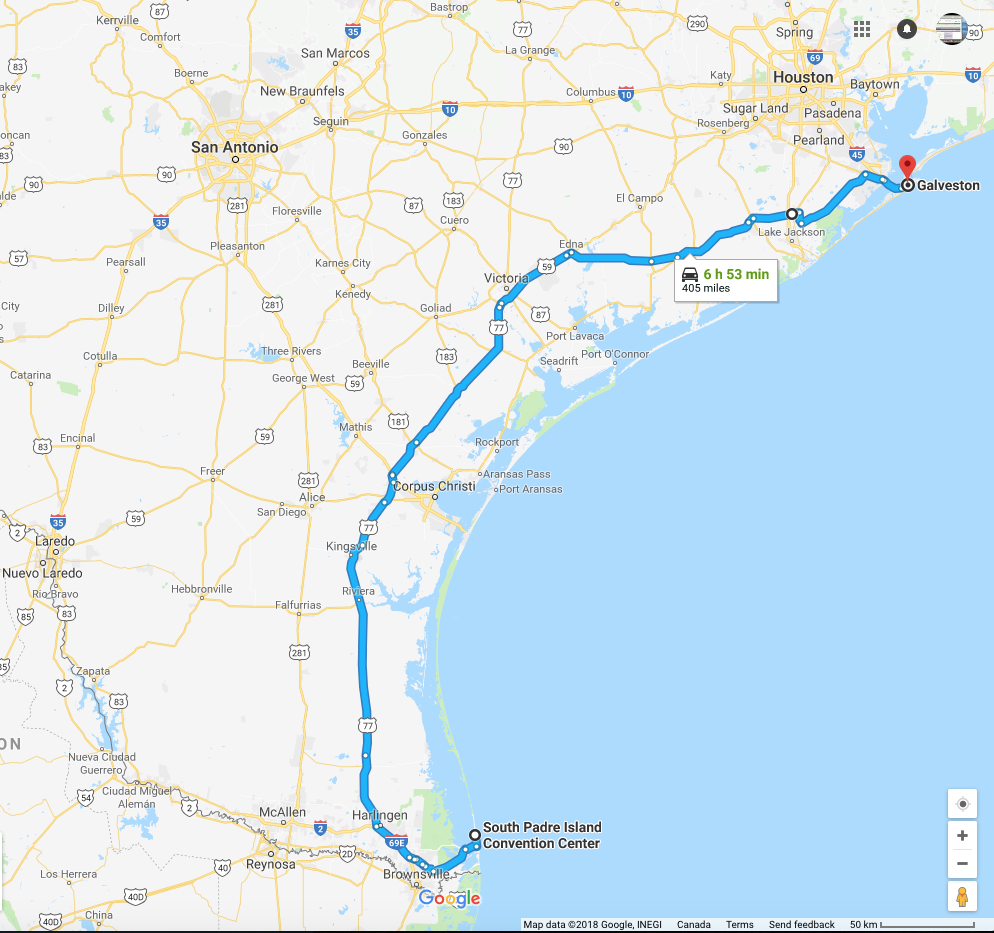
Texas Birding Trip 2018 "Galveston to South Padre Island".png
Click image to open enlarged in a new tab.

In early April when we weren’t planning our trip to Texas, I was out enjoying the return of our first Spring migrants, and Nana was beginning to plan her first garden in Kelowna.

From April 24 to May 8 we were in Texas on the most fabulous birding experience of our lives. The next three weeks I spent sorting and posting (to Flickr) images from our trip. More on this later….

In June we prepared for and enjoyed two weeks with grandchildren from Japan, including our youngest, only seven, in Canada for the very first time. It’s the third time our grandchildren have made the trip over without an accompanying parent. They’re an amazing bunch, for sure!

My three girls.jpg
My three girls…. Click image to open enlarged in a new tab.

After a rather cool and mixed-weather Spring, we’re anticipating another hot, dry summer, and hoping that, as we were spared serious flooding this year, the wildfire season will far less difficult and dangerous than 2017. Last year’s big fires began right around this time….

Flood-and-Fire.jpg

http://armedwithvisions.com/2012/02/09/sasha-paris-flood-and-fire/
(Used without permission)

Iron-gray clouds hang heavy across the sky
Cold rain pours, patters, pours again
Creeks become raging brown torrents
Cascading in white falls of roaring mist
The swollen lake is beige for days

Elsewhere…
Relentless drought withers plants and people alike
Fires race insatiable, unstoppable, turning all to lifeless ruin
Rivers trickle, streams and ponds are but cracked earth
Water is priceless yet pricey, a treasure to kill for
This rain cannot quench that fire
Flood here won’t water crops across mountain or sea.

Here too much
There too little
Balance is gone

Sasha Paris
Beltane 2010 Earth First!

Breeding Season and the Challenges of Understanding Nature….

In the last year or so, I’ve been working at becoming a naturalist — one who studies and attempts to learn from the world of “nature,” which I’ll define as “the phenomena of the physical world collectively, including plants, animals, the landscape, and other features and products of the earth, as opposed to humans or human creations.” (Macintosh Dictionary app).

Like most of you who visit this site, I’m deeply interested in wildlife, especially birds. I enjoy what I perceive as their beauty, and am fascinated with their behaviours, especially interactions with each other, ranging from competitive, even predatory, to cooperative, even symbiotic.

Here we have the first family of Mallard ducklings on Belmont Pond for 2016….

But, like you, I also recognize that not everything in “nature” is pretty or inspiring or even easy to witness, let alone study. In fact, that’s the focus of this post….

It’s impossible not to be tempted to dwell upon wholly “unnatural” interaction between wildlife and civilized humans, which often gives rise to anthropomorphism (“the attribution of human characteristics or behaviour to a god, animal, or object), and which, while it may make for entertaining fantasy, needs to be controlled or even avoided if understanding nature is really the goal….

So, the appearance of new life in Belmont Pond annually raises some interesting internal conflicts in my aging mind. No matter how hard I try to see the sudden appearance of ducklings as a mere “natural phenomenon,” I find myself attaching human attributes to natural creatures and processes that I have no right doing. As a naturalist, I need to strive for an “objective understanding” of the forces at work without being judgmental (definitely not something I’ll ever succeed at—because I don’t believe full objectivity is ever possible! Subjectivity trumps! But that dilemma is for another day…).

This comment from Emily Nagoski, (quoted online at http://www.washingtoncitypaper.com/blogs/sexist/2010/04/22/is-duck-rape-rape-rape/) is one that I’d like readers/viewers to keep in mind as they look at the photos that follow:

“It’s not so easy to avoid imposing human moral standards on [primates like] orangutans (sic) and chimps; they’re so like us, they’re so close to human. But we must avoid it. It’s not appropriate to overlay moral meaning on animal behaviour; chimps commit infanticide, but that’s just part of being a chimp. It’s not immoral or wrong, it’s just…chimpanzeedom.

There’s something in us, some apparently innate tendency, to find lessons and moral standards in nature. This is, in part, the naturalistic fallacy—the conclusion that if something is nature it must be right or good. Just as mistaken is the conclusion that something in nature is bad or wrong because it violates a human moral standard.”

All of which brings me to the issue at hand—the activities on the pond, particularly the breeding behaviours of Mallard ducks….

Mallard family
This image is rare for a couple of reasons: first, the enormity of the brood (14!) and second, the fact that the drake appears to playing an active role in rearing the ducklings. While I have seen this before, as the Wikipedia article below explains, that’s not usually the rule….

From Wikipedia:
“Mallards usually form pairs (in October and November in the Northern hemisphere) only until the female lays eggs at the start of nesting season which is around the beginning of spring, at which time she is left by the male who joins up with other males to await the moulting period which begins in June (in the Northern hemisphere). During the brief time before this, however, the males are still sexually potent and some of them either remain on standby to sire replacement clutches (for female Mallards that have lost or abandoned their previous clutch) or forcibly mate with females that appear to be isolated or unattached regardless of their species and whether or not they have a brood of ducklings….

Mallard family

The drake is nowhere to be seen as the mother duck does her best with the 14 after moving them from the larger pond into this smaller one. To be fair, he did fly in shortly after I took the shot….

“The nesting period can be very stressful for the female since she lays more than half her body weight in eggs. She requires a lot of rest and a feeding/loafing area that is safe from predators. When seeking out a suitable nesting site, the female’s preferences are areas that are well concealed, inaccessible to ground predators, or have few predators nearby. This can include nesting sites in urban areas such as roof gardens, enclosed courtyards, and flower boxes on window ledges and balconies more than one story up, which the ducklings cannot leave safely without human intervention. The clutch is 8–13 eggs [apparently someone forgot to inform the duck in my study—KAR], which are incubated for 27–28 days to hatching with 50–60 days to fledgling. The ducklings are…fully capable of swimming as soon as they hatch. However, filial imprinting compels them to instinctively stay near the mother not only for warmth and protection but also to learn about and remember their habitat as well as how and where to forage for food. When ducklings mature into flight-capable juveniles, they learn about and remember their traditional migratory routes (unless they are born and raised in captivity). After this, the juveniles and the mother may either part or remain together until the breeding season arrives (citation needed).

“During the breeding season, both male and female mallards can become aggressive, driving off competitors to themselves or their mate by charging at them. Males tend to fight more than females, and attack each other by repeatedly pecking at their rival’s chest, ripping out feathers and even skin on rare occasions.” There was one occasion on a pond in New Westminster where human observers witnessed the mother of the first of three broods systematically drown all nine of the second family within the first day of their lives….

“When they pair off with mating partners, often one or several drakes end up left out. This group sometimes targets an isolated female duck, even one of a different species, and proceeds to chase and peck at her until she weakens, at which point the males take turns copulating with the female. Lebret (1961) calls this behaviour ‘Attempted Rape Flight’ and Cramp & Simmons (1977) speak of ‘rape-intent flights’.”

What happened in Belmont Pond….

“Male mallards also occasionally chase other male ducks of a different species, and even each other, in the same way. In one documented case of “homosexual necrophilia”, a male mallard copulated with another male he was chasing after the chased male died upon flying into a glass window. This paper was awarded with an Ig Nobel Prize* in 2003.”

stinker-250.gif
“The Stinker,” the official mascot of the Ig Nobel Prizes.

* The Ig Nobel Prizes honor achievements that make people LAUGH, and then THINK. The prizes are intended to celebrate the unusual, honor the imaginative — and spur people’s interest in science, medicine, and technology. 

Every September, in a gala ceremony in Harvard’s Sanders Theatre, 1100 splendidly eccentric spectators watch the new winners step forward to accept their Prizes.  These are physically handed out by genuinely bemused genuine Nobel Laureates. Thousands more, around the world, watch our live online broadcast. “(https://www.improbable.com/ig/ )

But the question that needs to be asked is whether or not the behaviour I’ve documented is something about which we, as “naturalists,” not simply caring humans, should become emotionally responsive. It’s so hard not to feel that nature is “wrong” when we see animals acting “cruelly” towards one another, but, and you may not like my saying so, I think we have to restrain such sensibilities….

From the previously cited website, again:

“Forced copulation is a regular feature of sexual activity among ducks [especially Mallards]. In the phenomenon known as “rape flight,” several Mallards will aggressively peck at a female duck until she submits to sex (or dies). There’s reason to believe that female ducks very much do NOT enjoy this; the duck vagina has developed in a “rape-specific way” which allows female ducks to prevent pregnancy from this forced sexual contact*. But can we compare this animal behavior to the human conception of rape? Nagoski argues that there’s no such thing as “duck rape” for the same reason that meat isn’t murder—animals are incapable of consenting (or not consenting) to sex….”

Now the site cited below and several others that I looked at go much deeper into this issue than most of us would like to, and I don’t want to upset anyone, let alone ruin their day. Still, as an observer, I want to share with you what so many of us witness around breeding seasons, and if the content only makes you take a moment to think or reflect on a deeper level about “nature” and “human nature,” I’ll be satisfied….

*See this 2007 article from the website New Scientist: https://www.newscientist.com/article/dn11764-female-ducks-fight-back-against-raping-males/

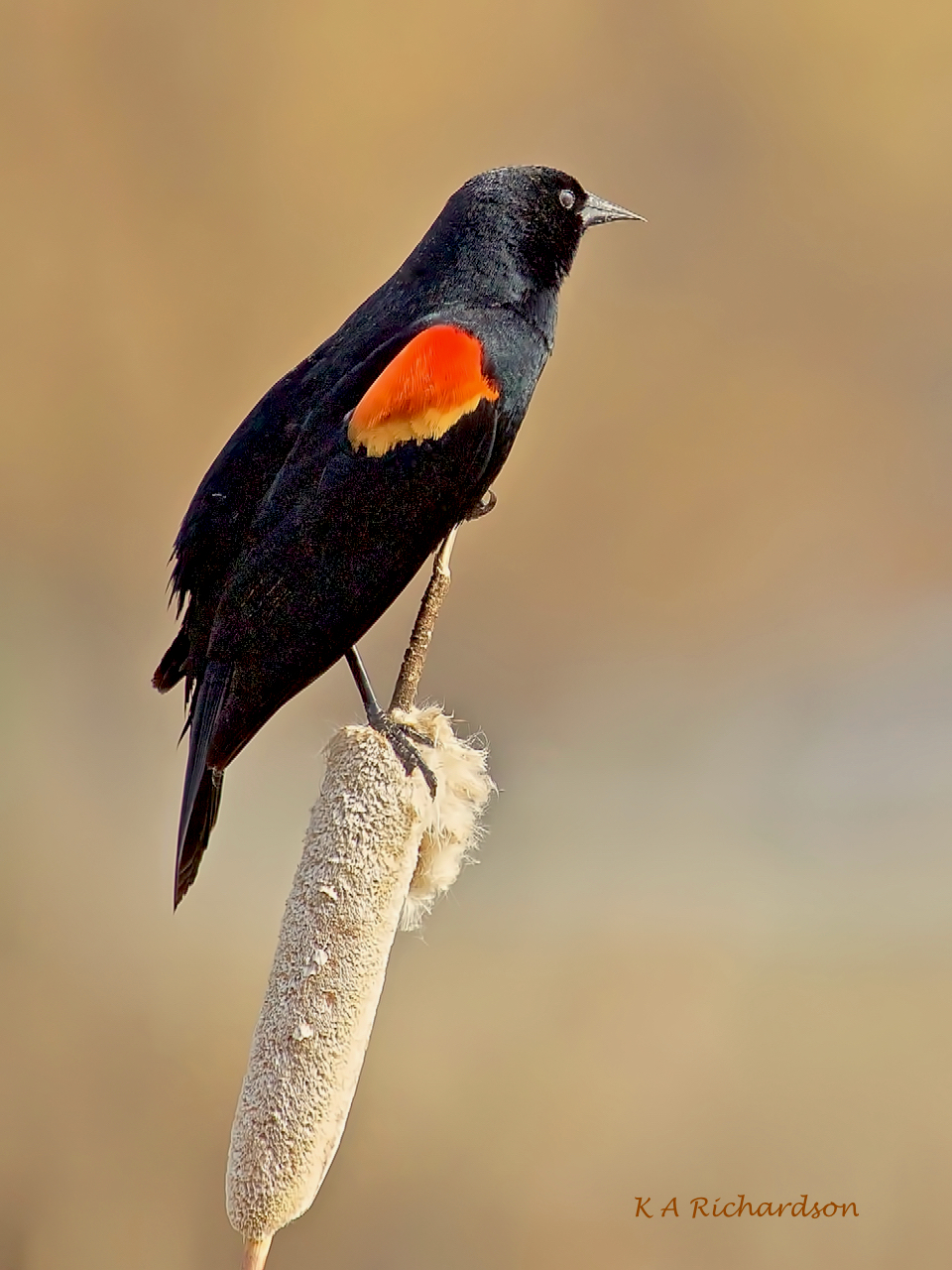
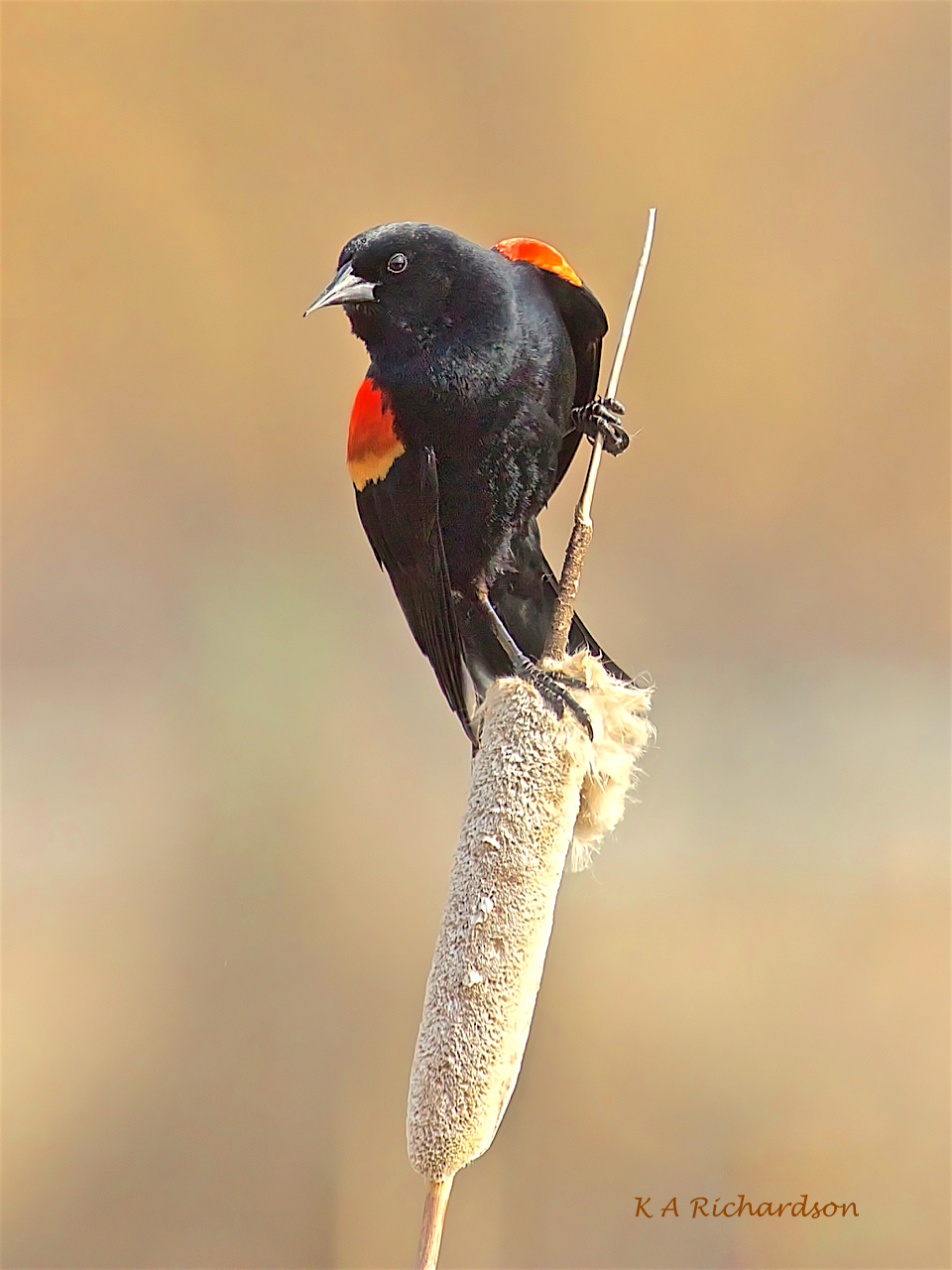
Rebel the RWBL*

*The official American Birding Association four letter abbreviation for Red-winged Blackbird (Agelaius phoneceus). For more examples and exceptions to the basic rule, click here.

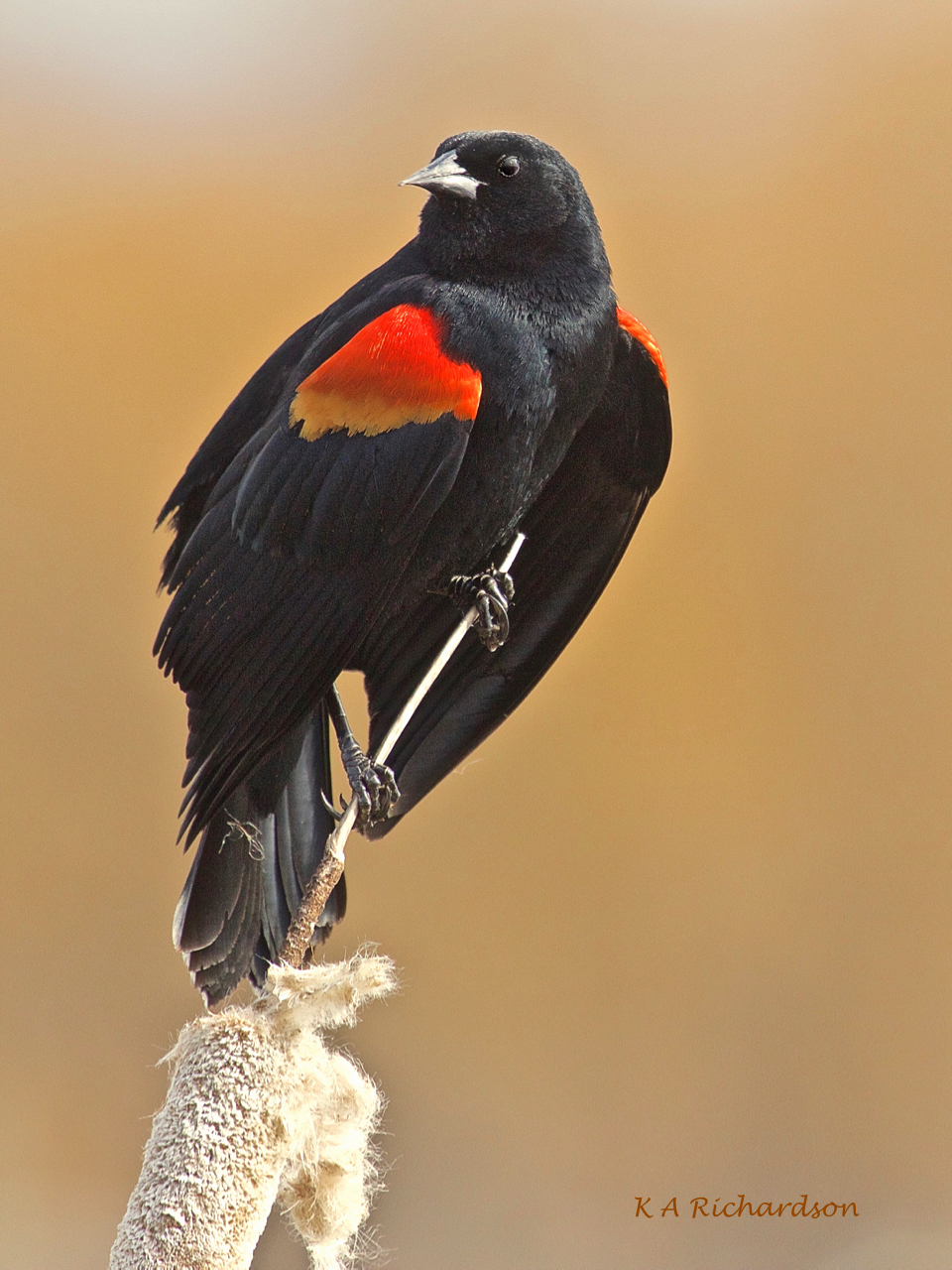
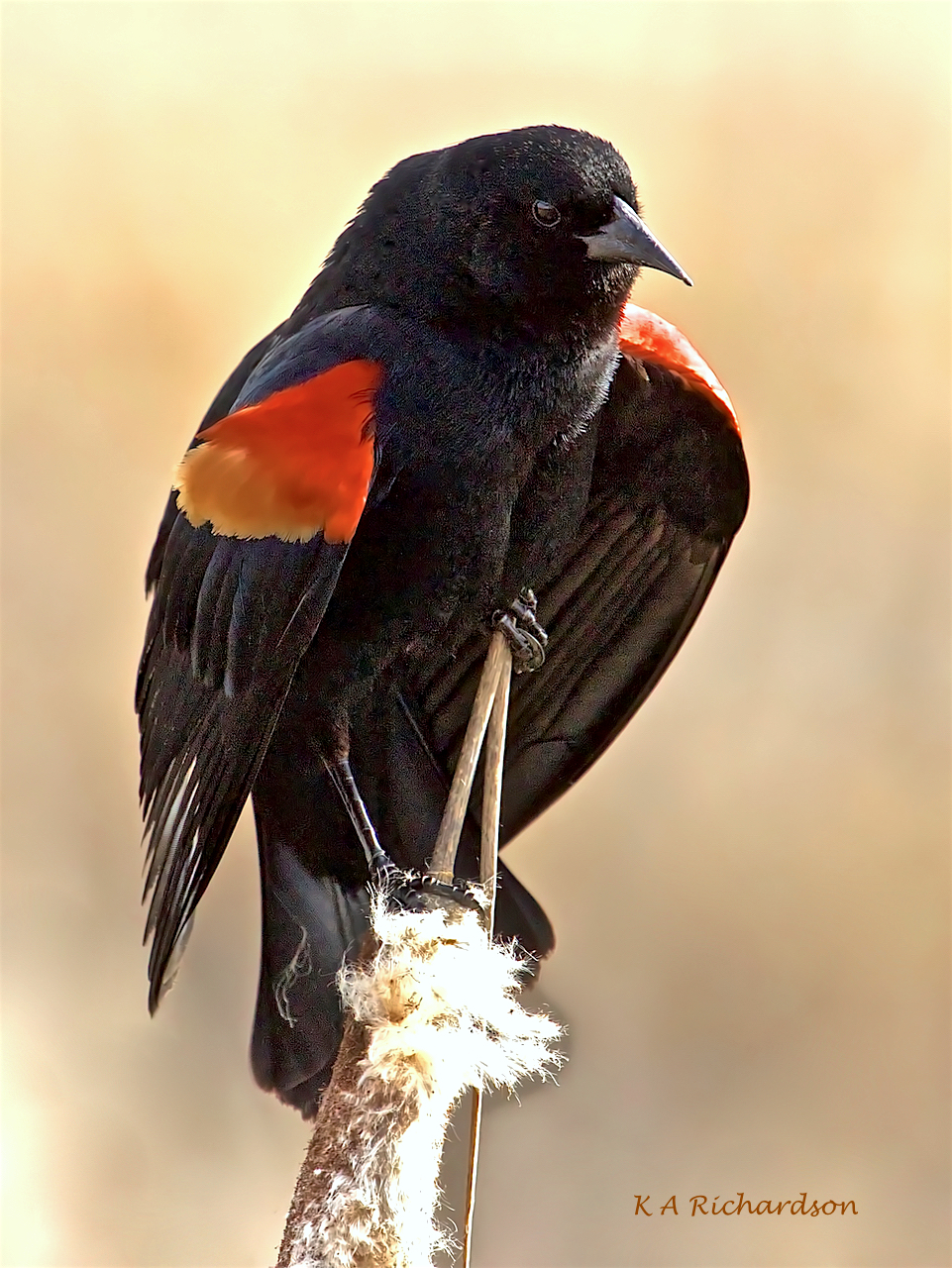
March 19, 2018. Thomson Marsh, where I do most of my weekly birding, is replete with male RWBLs this time of year. It’s a great location for trying to get that perfect RWBL shot — something I’ll never accomplish with my current equipment. I’m not complaining. Just the opposite, in fact! I’m enjoying the existential challenge of knowing that any small incremental improvement represents major progress.

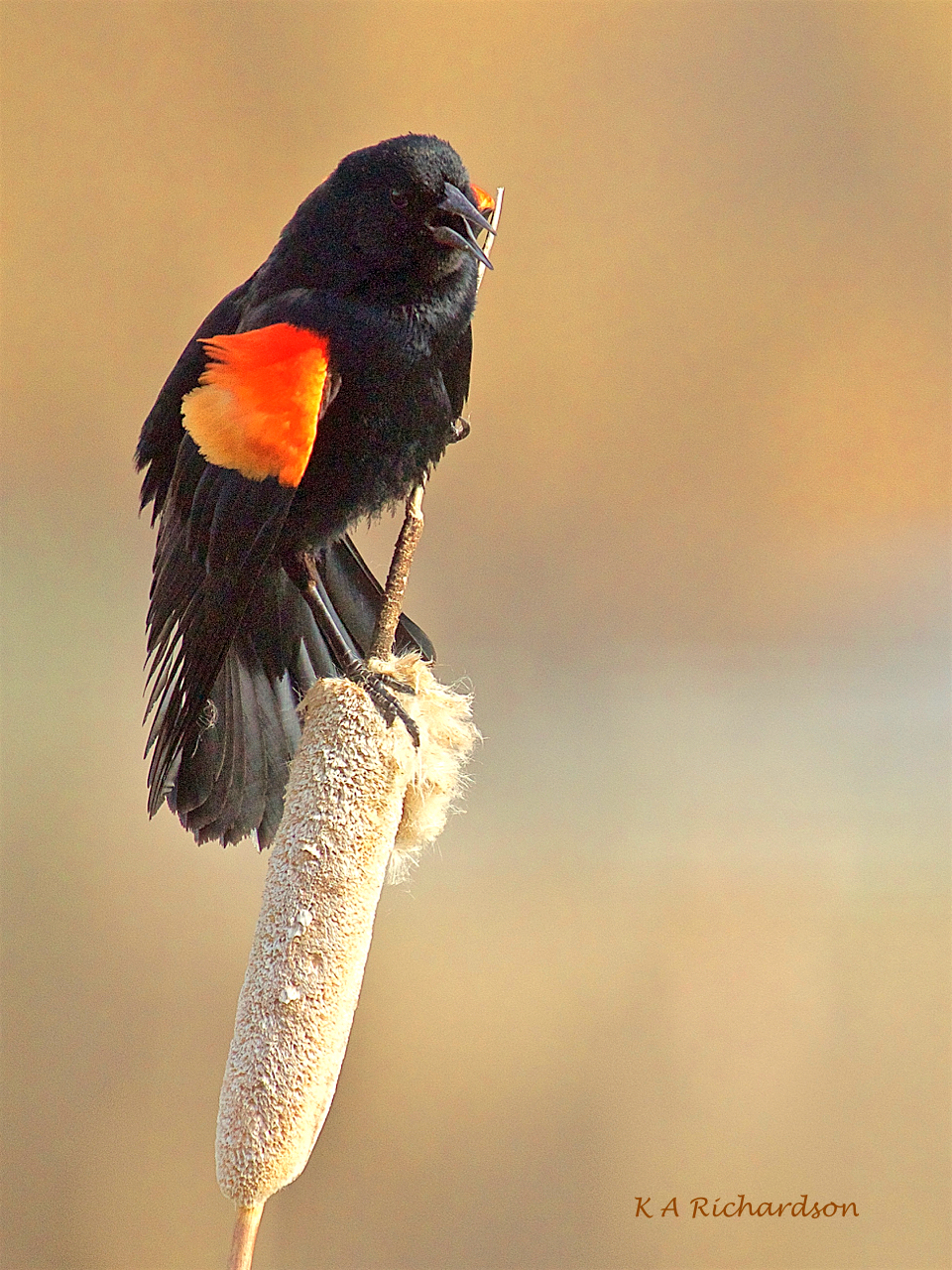
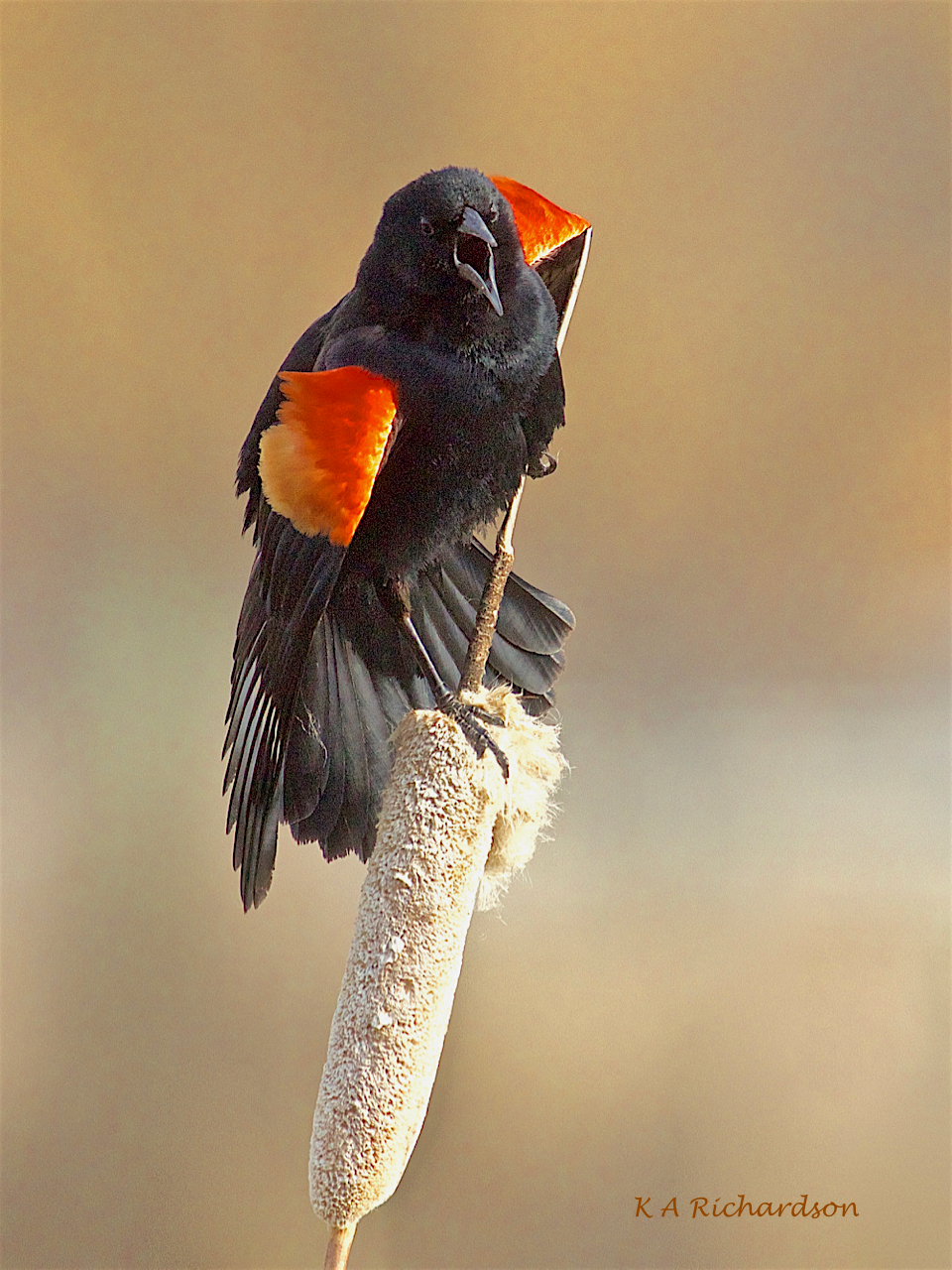
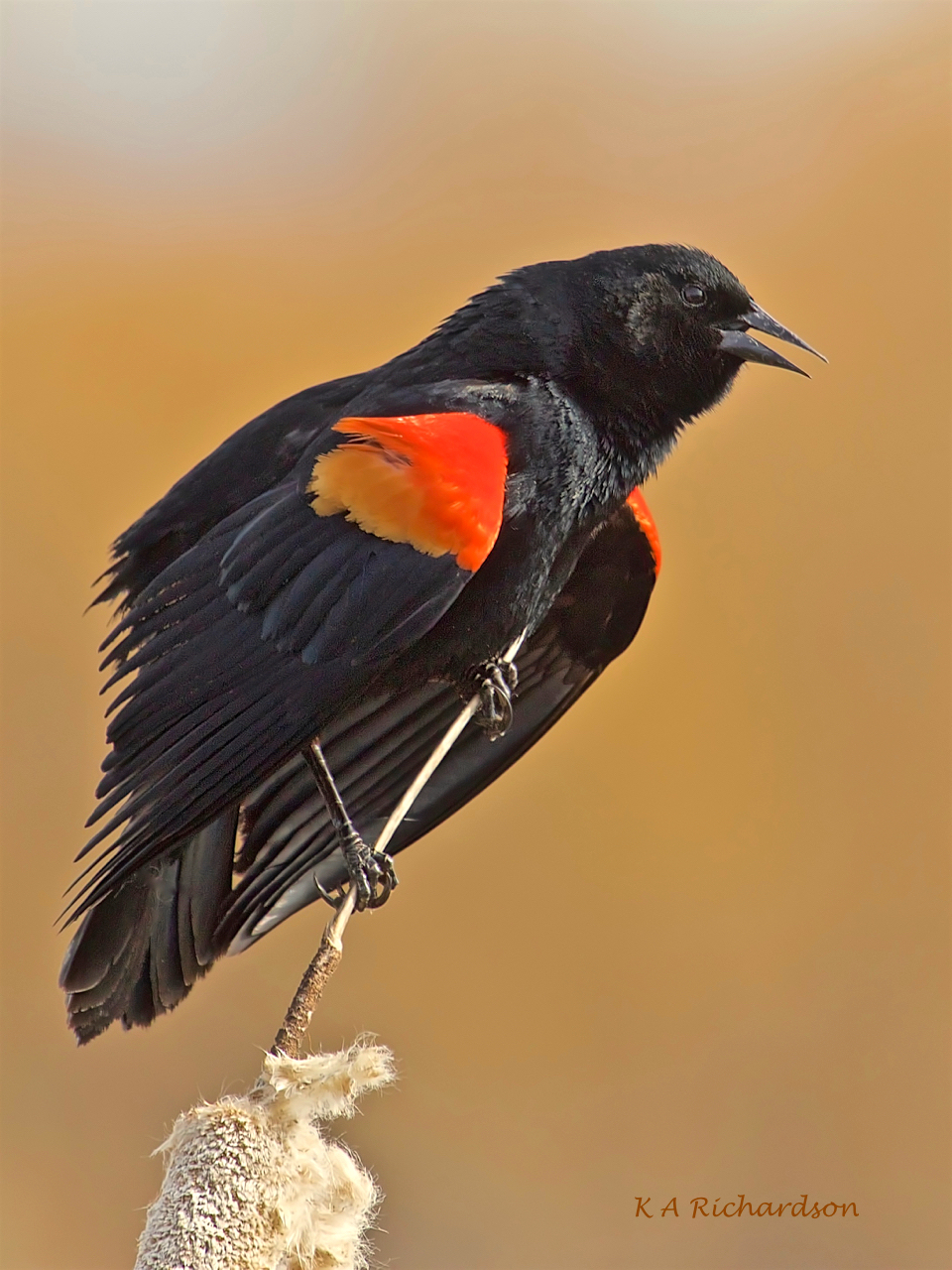
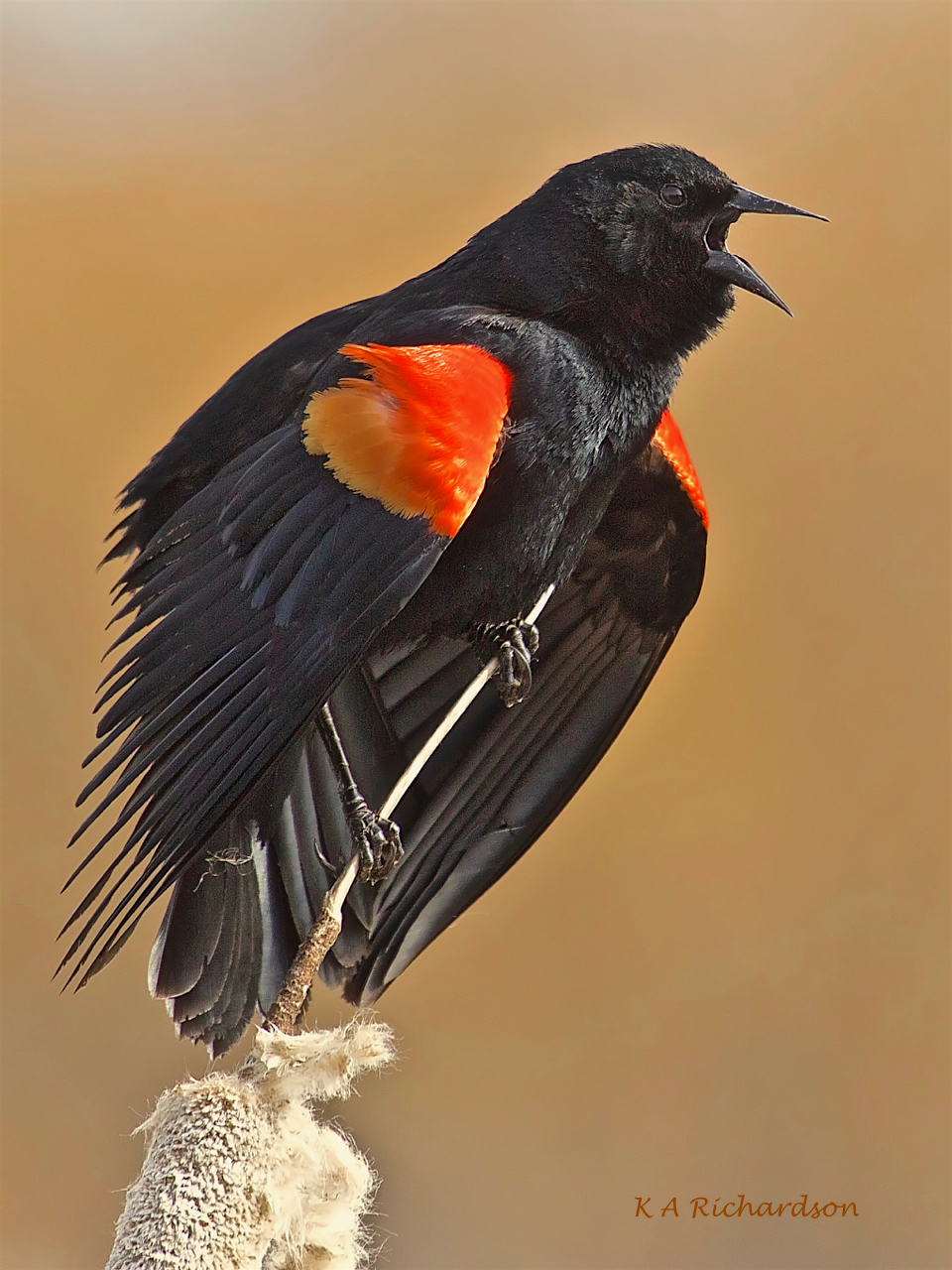
This post features Rebel, a bird who loves to perform, who’s easy to locate among the dozens who populate the Marsh, and whose “camera tolerance” is about as good as it gets!

Rebel the RWBL-04
Sitting calmly on a cattail, surveying the world, with blank eye.
Rebel the RWBL-03
Preparing to perform….
Rebel the RWBL-01
Opening salvo….
Rebel the RWBL-02
Full blast!
Rebel the RWBL-07
Repeat and repeat again!
Rebel the RWBL-08
Tail in for maximum power!
Rebel the RWBL-10
Smug satisfaction….
Rebel the RWBL-11
King o’ the World!

The last image has some nice sharpness in spots, but the cattail’s colour is blown out!

Back to the drawing board!

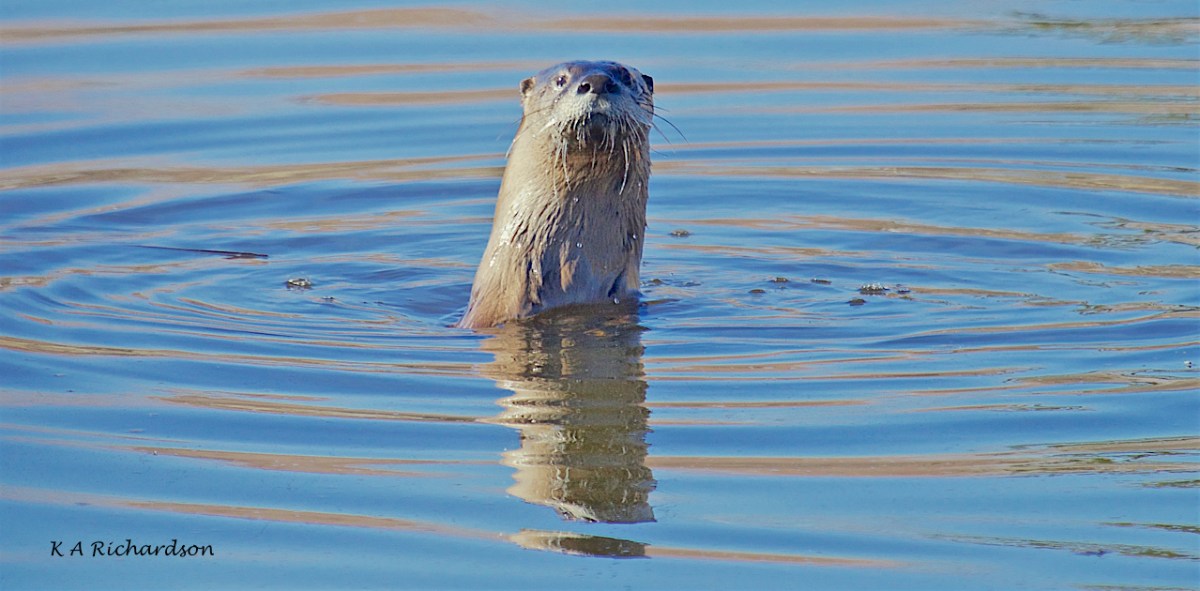
More otters!

Otters 2 - 05
Otters of January 2015

For the 2015 adventure, click here.

Also see Postscript at the end of this post….

March 16, 2018: I was just mumbling to myself the other day, that since our first winter here (2014-15), the Marsh had become somewhat less exciting, what with no harrier, fewer hawks, fewer finches, and no, repeat no otters!

Then I did a little rethinking (I recommend this custom) and acknowledged that this year I’ve enjoyed exceptional opportunities with a Northern Shrike and great luck with a number of ducks that I didn’t see that first winter.

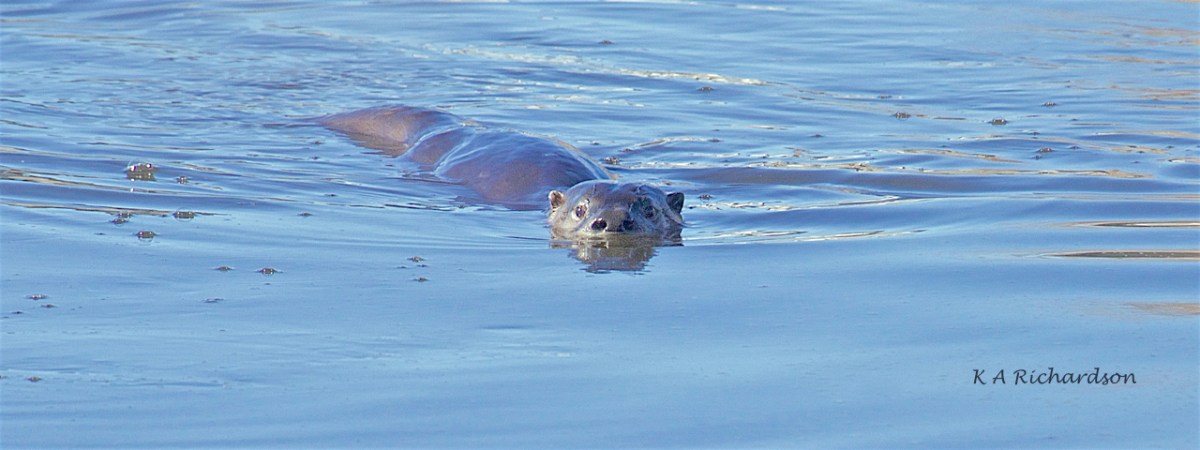
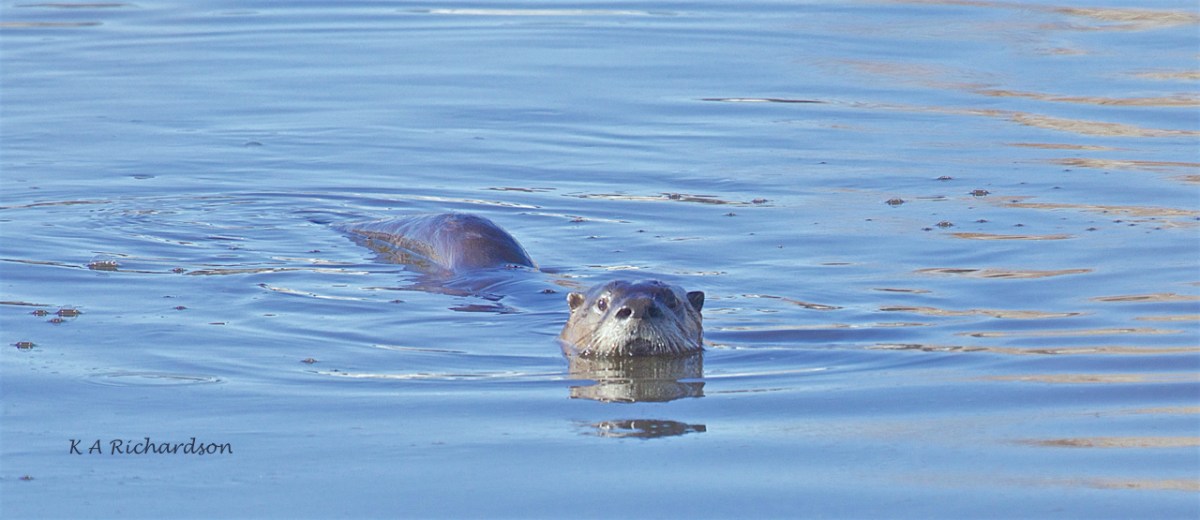
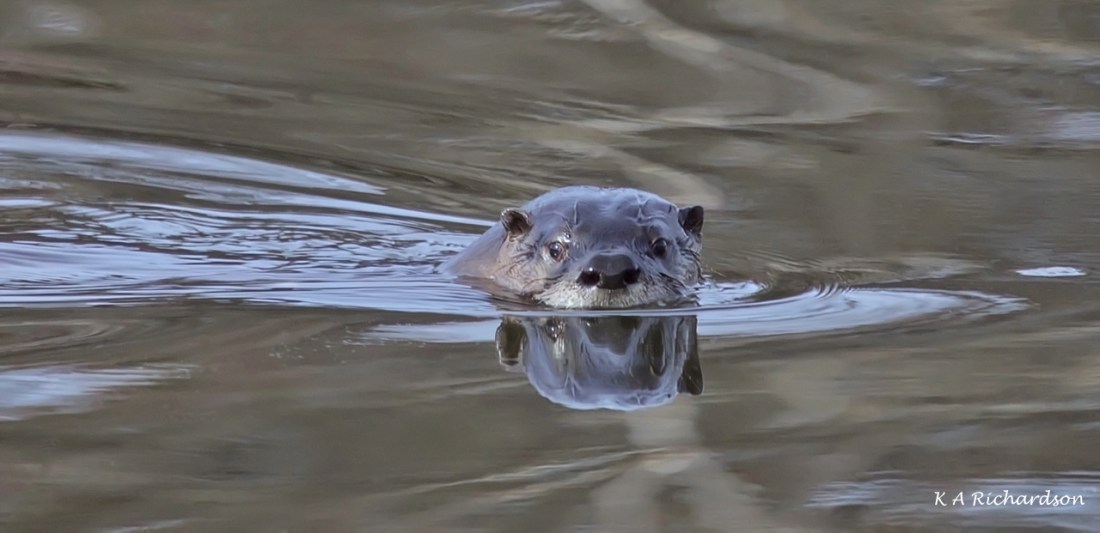
And, today, 2018 wrangled a whole new lease on my affections with the reappearance in Thomson Marsh, West Pond, this time, of four North American Rivers Otter (Lontra canadensis). I had headed out earlier than I’d been going recently, and that turned out to be a blessing. I’d seen an otter’s wake a few days ago, but not the beast. Yet I had no premonitions, as happens occasionally, for this day.

I always check out West Pond these days as it’s not unusual to see a migrant drop in for a day or two, a Barrow’s Goldeneye, say, or some Scaups, or even a Redhead (the duck, you ninny!). As I scanned the surface today, there was no doubt about the wake again, and this time the critter revealed itself — along with three other family members.

So, without further ado, here are today’s highlights: To enlarge it in a new tab, click image.

North American River Otter (Lontra canadensis) -01
First look: a profile view….
North American River Otter (Lontra canadensis) -02
It didn’t take long for the otters to spot me!
North American River Otter (Lontra canadensis) -03
Unlike some wildlife, the otters’ curiosity is stronger than their wariness —
at least when they’re in the water and their chronicler is on land….
North American River Otter (Lontra canadensis) -04
Powerful swimmers, they appear very much in command of the situation….
North American River Otter (Lontra canadensis) -07
This one entered the very narrow channel and pulled up onto some snow-crushed cattails.
North American River Otter (Lontra canadensis) -08
S/he was almost as interested in her/his own reflection as my existence….
North American River Otter (Lontra canadensis) -10
Difficult light at this time of day, but we did the best we could….
North American River Otter (Lontra canadensis) -11
Back in the water, this one tried his darnedest to levitate!
North American River Otter (Lontra canadensis) -12
There’s something almost snakelike about otters when they stretch out like this in the water….
North American River Otters(Lontra canadensis) -12
And, like the first time I photographed them in January 2015, they liked to have group photos, too.

Don’t know if they’ll be back tomorrow, but I know I will….

Postscript (as we used to say….) And I did return the next day (Saturday, March 17).
Found them again, this time in the Raptor Tree Pond. Still just four. This time they were enjoying a feed of carp — at least one was — no leftovers for juniors!

North American River Otter (Lontra canadensis) -01.jpg
I’m indebted to my Flickr friend Heather for this caption: Carp diem!

Although I took more photos, they weren’t as interesting as the ones I got the next day, (Sunday). I went a little earlier each day, and this time caught them returning from West Pond en route to Raptor Tree Pond, which means that I had a couple of chances to view them at close range in the narrow channel that leads into the big pond. They were too smart for me, however, and chose to cover that section either under water or very close to the far shore!

Still, once back where I believe they have a temporary den (used periodically over the years), they did give me a few more shots that I’d like to share:

Sunday North American River Otter (Lontra canadensis) -02
Sneaking past, close to the cattails….

Click either image below to enlarge both in a new tab:

Sunday North American River Otter (Lontra canadensis) -07
“Are you the Candid Camera guy? I’m smilin!'”
Sunday North American River Otter (Lontra canadensis) -09
Denoising the image makes him look like Slick Willie!

Not sure about more photos, but the past three mornings have been a dream come true!

For the 2015 adventure, click here.


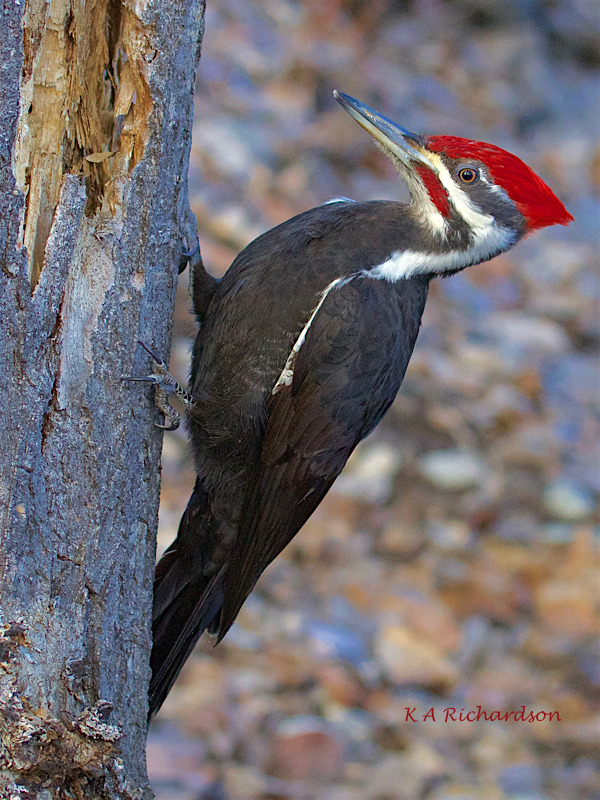
What a Glorious Day for PIWOs!


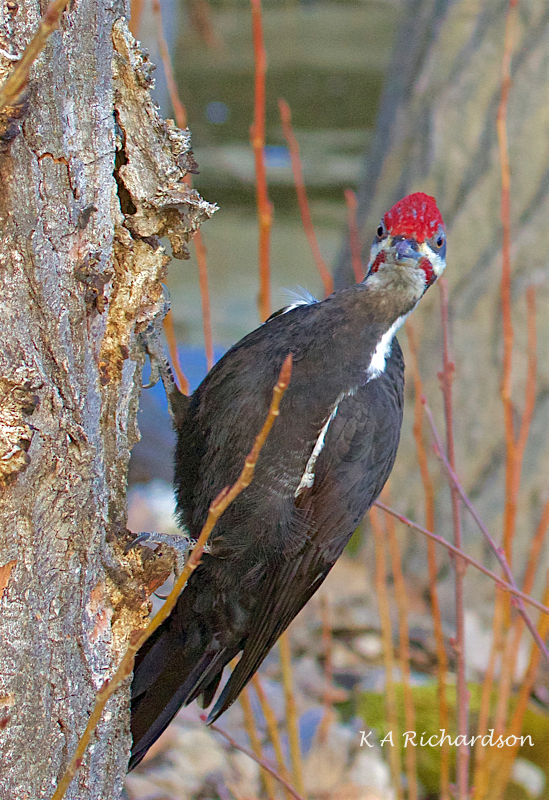
Pileated Woodpecker male (Drycopus pileatus) -04
Mission Creek, Kelowna, BC. near Gordon Bridge. 
Fearless Foz:
Click photo to enlarge in new tab.

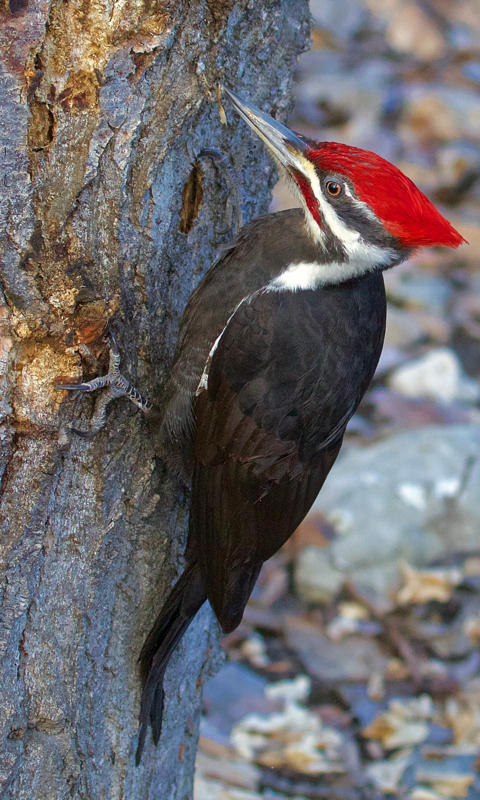
March 2018: For the uninitiated, a PIWO is a PIleated WOodpecker, the largest of the seven species of woodpeckers we see up here most frequently. They’re colourful and industrious and often very willing to be observed and photographed — especially if they’re committed to an excavation!

On Friday, March 9, I was heading home after a walk around my beat. I’d enjoyed a lovely variety of birds, and thanks to a tip from a neighbour, had been able to check out a Bald Eagle that may be returning an old nest above Mission Creek. Although I was unable to get decent photos of it due to the thick branches in the way, I was glad to see him again.

As I approached Gordon Bridge where I would normally head south along the Road back to our condo, I ran into a fellow birder who asked if I had seen the PIWO on the other side of the bridge. It was working down low, she told me.
We parted, and I took a look, but made my search more difficult than it needed to be and would have missed the bird had I not run into to my colleague again not the bridge after I had given up. She just pointed down to the bird at work, and I was on my way….

What follows describes the process of trying to get the shot that you see above — especially when, at first, it seems nearly impossible. Let me give you a hint: success requires effort on the fotog’s part and considerable cooperation from the bird!

One never knows for sure whether a bird will stay put or immediately flee. The second option is the more likely to occur most of the time. Fortunately, this particular PIWO is accustomed to people poking into his private affairs; my task was actually pretty easy. But one only knows this when the encounter is over!

Pileated Woodpecker male (Drycopus pileatus) -01
First lookout Fearless Foz: not terrible, but those branches are really annoying!

The name, Fearless Foz came to me from a remark my birder friend made about our bird of the day: “He likes people,” she said. “He’s fearless!” And so Fearless he became.
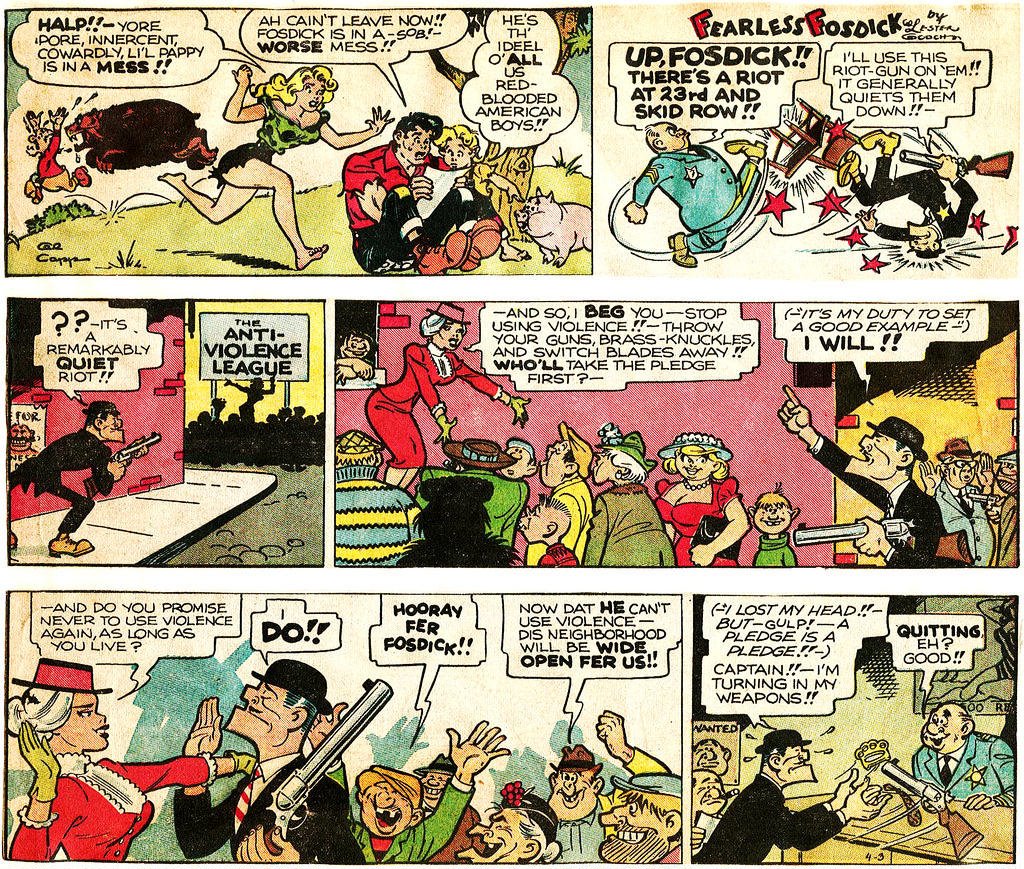
Fearless Fosdick came to mind — a flashback from my days reading comics as a kid. You may remember Al Capp’s syndicated cartoon strip, Li’l Abner, which had as a cartoon within the cartoon, a Dick Tracy parody cop called Fearless Fosdick. More on him at the end of this post….

Pileated Woodpecker male (Drycopus pileatus) -02
A look one seldom sees. He knows I’m here, yet soldiers on….
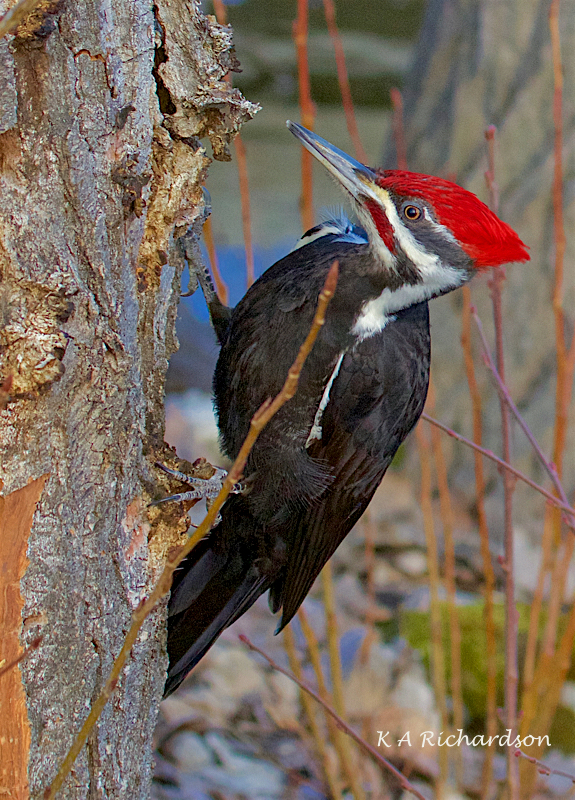
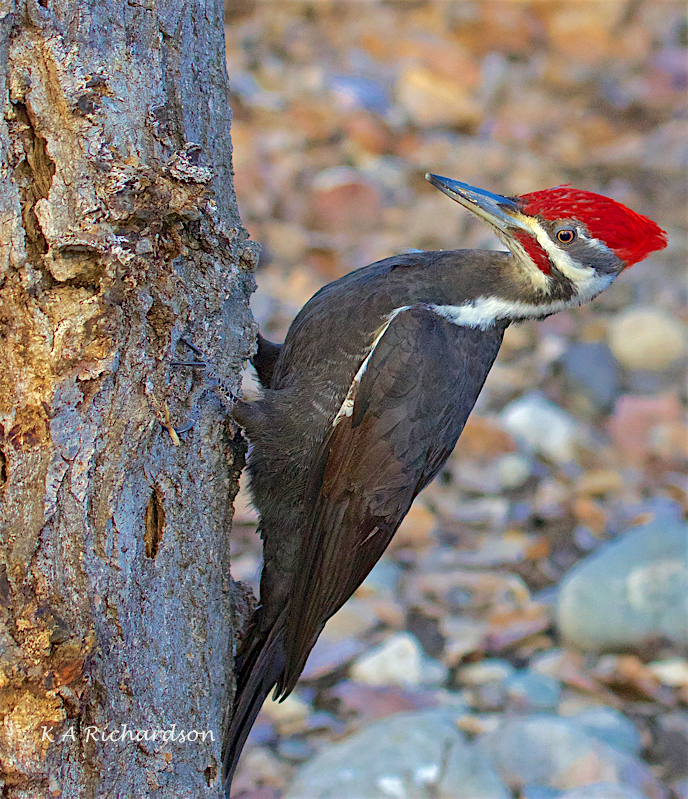
Pileated Woodpecker male (Drycopus pileatus) -04
Reprise: So how to get this shot from the branchy one above?

Well the trick was simply to get closer than he was comfortable with in the moment, see if he would withdraw to a more favourable location, take a shot, then back off and let him get back to work. All of this assumed, of course, that he wouldn’t simply back off and fly away! Having worked with him 14+ months ago, I bet on his staying focused….
Click any of the images below to enlarge the whole cluster.

In the sequence above, you can see, how after retreating at first to the other side of the tree, he peeks back around again, and slowly finds his way back to the excavation….

Pileated Woodpecker male (Drycopus pileatus) -08
He’s almost there. I’m happy to have a good shot of his grasp and his full body. The plumage details worked out well, too.

At this point, I decided I to allow him to get back to his cavity work as I attempted to photograph him at work. This required my moving down the slope, around one large tree, through some saplings, and then resting against another tree, which, had it not been there, would have meant my tumbling all the way down into the creek!

Of course, all my movement meant we had a little more negotiation to complete
before we were both where we wanted to be. I took advantage, continuing
to shoot even as I edged myself into place. He backed off briefly, then, once I was settled, resumed his business, which he continued to work at until I left. Elapsed time for the entire encounter: 12 minutes.

Click any image in the cluster below to open them all in a new tab.

As you can see above, I was able to persuade him to move a bit from time to time
so we could inspect his work. He was most obliging!

And so we concluded with one parting profile shot on the trunk of the tree.

Pileated Woodpecker male (Drycopus pileatus) -21
Click the image to enlarge it in a new tab.

Then it back to work for him and homeward bound for me.

Oh yeah! Almost forgot my promise to show you Fearless Fosdick the first!

Fearless Fosdick
Click to enlarge in a new tab
Fearless Fosdick & Wildroot Cream-oil
The Good Ol’ Days!

Ospreys fishing —Part 1….

Although these older photos are not signed, I assure you that they’re all mine….
Each image can be enlarged in a new tab just by clicking on it.

Iona Osprey fishing - 24
Osprey hovering above Thomson March, preparing to drop and catch….

My first recollection of Ospreys fishing go back to my days at 108 Mile Ranch/Resort where I lived for 15 years in the 70s and 80s. The golf course, where I spent a lot of my summer vacation days, overlooks 108 Lake and a small pond that separated the second and third holes back in those days. Nothing could distract me more than picking up on a Osprey hovering and then plunging almost vertically into the lake before lifting off with a big fat Rainbow!

Osprey with catch - 2
Adult Osprey takes a large trout from Kentucky Lake, Kentucky-Alleyne Prov. Park….

But I never studied these magnificent birds. I took their avian performances for granted.

Nana and I thrilled to spectacle of Ospreys hunting on the Teshio River in Northwestern Hokkaido. When we settled in New Westminster, I used to travel 25 km either to Iona in Richmond or Grant’s Narrows in Pitt Meadows to enjoy the fish hawks in action, usually at considerable distance — perhaps a couple of times a year….

When planning our move to Kelowna, we were delighted, in late September 2014 (unusually late, but we didn’t know that then), on one of our first hikes along Mission Creek, not far from our current home, to discover this youngster atop a hydro pole feasting on a spawning Kokanee.

Osprey w/Kokanee - 3
“You shoulda seen the one that got away! It was at least this big!!”

Soon, we were surprised to find several Osprey nests in locations that we often visited. Best of all, from 2014 through 2016, a pair of Ospreys nested in the largest Rec Field light, which we can see from my home office. At last, I was ready, willing, and able to do a little more serious study of the habits and talents of these awesome predators.

Osprey - "Mom said to ask you! Can I fly?"
Poppa and twins atop the Lightship Nest….
“Mom said to ask you, are we cleared to fly yet?”

The story of the raising of the twins (above) in the Spring and Summer of 2016 is told in another post. Today’s episode is dedicated to observations of Osprey in action, especially the father above (Poppa) in Belmont Pond which is only five or six stones throws from our condo and of the twins, once they learned to fly, learning how to do what Poppa does….

A brief word about Belmont Pond. It’s not very big, but it’s full of fish that feed mergansers and our Ospreys. But perhaps not quite what you think. Apparently, it’s an old quarry, not terribly deep, however. And the fish are distinctly non-native. More on this in a bit…. Here’s Poppa Osprey preparing for to catch lunch….

On two separate occasions from this very location, I’ve been privileged to watch both Poppa and Momma go about their predation. It usually takes them a couple or more tries, because, as you’ll see, their target is not very big, but it is very visible from up here!

Hover and drop is not the preferred technique, here.
Rather, the birds use a shallow dive, eagle-like, to grasp their prey in this pond….
The young ones, when they’re ready, will learn this method first, too….

Poppa OSPR fishing - 1
Just after capture — what’s he got?
Poppa OSPR fishing - 2
Yes, indeedy, it’s a Goldfish!
Poppa OSPR fishing - 3
Securing his grasp…
Poppa OSPR fishing - 4
…turning…
Poppa OSPR fishing - 5
…”Look what I got!” …
Poppa OSPR fishing - 7
…across the pond…
Poppa OSPR fishing - 8
…up, dammit, up…
Poppa OSPR fishing - 9
…a quick peek into the houses, then up, up, and away!!

This capture went quite smoothly.
But on another day, there was considerably more excitement,
which is covered in this post….

Riding the Elefunk….

February 17, 2018: As I stare out the window at an all-day blizzard, and daydream of Spring around the corner, my mind drifts to new life and ducklings, and trips over this memory of a humorous encounter from two days before Mother’s Day, 2015.

My Beat north labelled.png
Click image to enlarge in a new tab.

There’s a spot on the southwest side of Michaelbrook Marsh, where, if we leave the open playing field and sneak through the long grass, and carefully make our way around the wild roses, we can observe a log that often hosts a Great Blue Heron using it as hunting platform. More likely, though, it’s occupied by bale of Western Painted Turtles.

Rush hour traffic.jpg

On this day in May, however, approaching very cautiously, I was delighted to find a mother Hooded Merganser and her chicks sitting between a pair of turtles. Fascinated, I recorded the scene. When I got home, my imagination took over, and this fantasy played out. And, while admitting that I speak neither Merganserese or Turtleian, I’m confident that this is what was happening….

So the turtles were acting as guards, lookouts, really. Mom was busy just watching over her babies. Boyfriend Pete is, as is the Hoodies’ custom, nowhere to be found at this time.

Among the chicks, most, as is normal, were simply sunning and being good.

But Georgetta and Herman (on the right) were restive, the brother, in particular.
Click any image below to enlarge it in a new tab.

Latest releases on the shelf.jpg
Mom and chicks between the lookouts. Herman and Georgetta are on the right. 
Click images to enlarge in a new tab.
Guard on the left“Jeeze, I wish Frank didn’t have his butt right in my face.”
Mom: “Such a lovely day. And such a lovely family. I’m so lucky!”
Georgetta: “Wanna go swimmin, brother?”
Herman: “Stop crowdin’ me, Georgetta. I don’t wanna go swimmin’ again!”
Guard on the right: “Man, I hate Merg Duty, especially when there’s so many of these little brats!”
Hoodie babies - 1.jpg
Herman: “Oh wow! Mom got me a pony!” 
Georgetta: “That’s not a ponee; it’s a elefunk!” 
Mom: “Oh dear!” 
Guard: “Must keep a stiff upper lip!” 
Hoodie babies - 2.jpg
Herman: “I don’t care what you say, girl! I’m goin’ for a ride!”” 
Georgetta: “I bet you can’t stay on for five seconds….” 
Mom: “Oh dear!” 
Guard: “That tickles! Must keep a stiff upper lip!” 
Hoodie babies - 4.jpg
Herman: “This has to be the most boring pony EVER!!” 
Georgetta: “I told you—it ain’t a ponee; it’s a elefunk!” 
Mom: “Oh dear!” 
Guard: “What do they think I am, a pony?” 
Hoodie babies - 5.jpg
Georgetta: “Maybe you need a push!” 
Herman: “Maybe this IS a elefunk! It sure is slow!” 
Mom: “Oh dear!” 
Guard: “One-a-these-days, I’m gonna….!”
Hoodie babies - 6.jpg
Herman: “How do I make this guy go?”
Georgetta: “MO-OM! Herman’s not sharing the elefunk!”
Mom: “Oh for Pete’s sake! Speaking of Pete, he’s gonna get an earful if he ever comes back. 
Nobody told me there’d be days like this!”
Guard: “My lips are numb!”
Hoodie babies - 7a.jpg
Well, Herman managed to fall off and had to climb back up onto the log,
Georgetta quit pestering to ride, and
Mom put her hair up to warn the other chicks not to do anything foolish!
As for the guard, he never let on another thing!

A couple of days later, this incident apparently forgotten, I observed the chicks having a ball in their bathtub, making as many bubbles as they possibly could….

HOME chicks making bubbles.jpg
Bubbling with enthusiasm!

~~ The end…. ~~