Before the 18th: first week of April…
While my son soldiered on in early spring, we all knew he couldn’t hold out long, as his breathing became more laboured, and he lost the use of his right arm. And yet, we all tried to support him by respecting his courage. I wish I’d said, however, “To Hell with Covid!” and spent some time with him. We spoke frequently by phone, and while he went to work for one-on-one sessions with his golf clients, he didn’t want those of us still circulating among the general public to visit him at home. I should have gone anyway; I’ll regret that choice for the rest of my life.
For the first part of April, life continued fairly normally, Covid restrictions notwithstanding. I could still hike my beloved Thomson Marsh and environs, drive to Munson Pond and Park, or one of the other birding locales like Robert Lake or Beaver Lake Road where I was unlikely to run into many people. I got a lot of satisfying images, including some almost ‘nemesis birds’. I’m trying to focus on diversity here….
In the shot below, the little nuthatch has pulled something out of the bark and
is tossing it around before swallowing it.

I have photographed Red-breasted Nuthatches for many years, but much less frequently than I’d have liked.
This spring was a
spectacular exception.
If RBNUs were found here in springs past, I wasn’t aware of it. But I didn’t know what to listen for. This year I quickly discovered that they make a sound like a tiny tractor backing up — a nasal one- pitch ‘beep-beep-beep’. And once I’d discovered ’em, they became a joy to work with!
More RBNUs below….
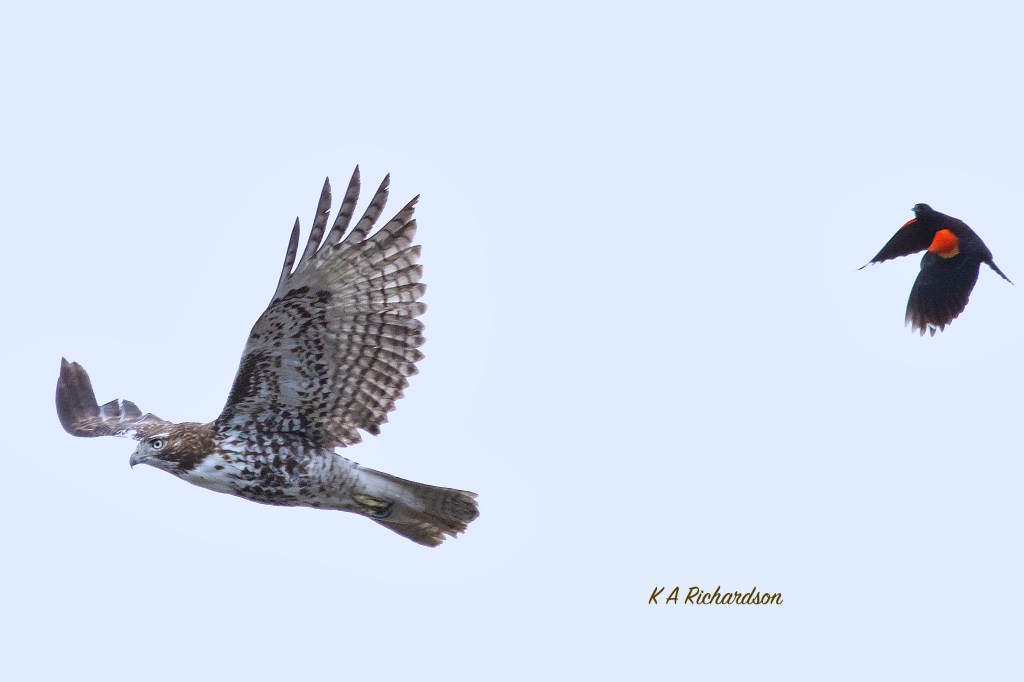
I first photographed this phenomenon in this area back in March 2016! (Scroll down the post.)
In the shot above the RWBL has backed off after successfully sending Re’ddy packing….


I love Mountain Bluebirds! They are found in many parts of the Okanagan from White Lake Grasslands Park, north-west of Oliver to Beaver Lake Road in Lake Country. In 2020, I discovered them even closer to Kelowna in an area only 15 minutes from home.
While Western Bluebirds also nest in these areas, I find them less photogenic than the MOBLs. Every year there’s a continuing challenge to discover where they will nest and to get the quality of images this species deserves!
In most seasons, I’m most dedicated to the males . In 2021, however, I found a female to give them a run for their — er — feathers.
You’ll see later on….
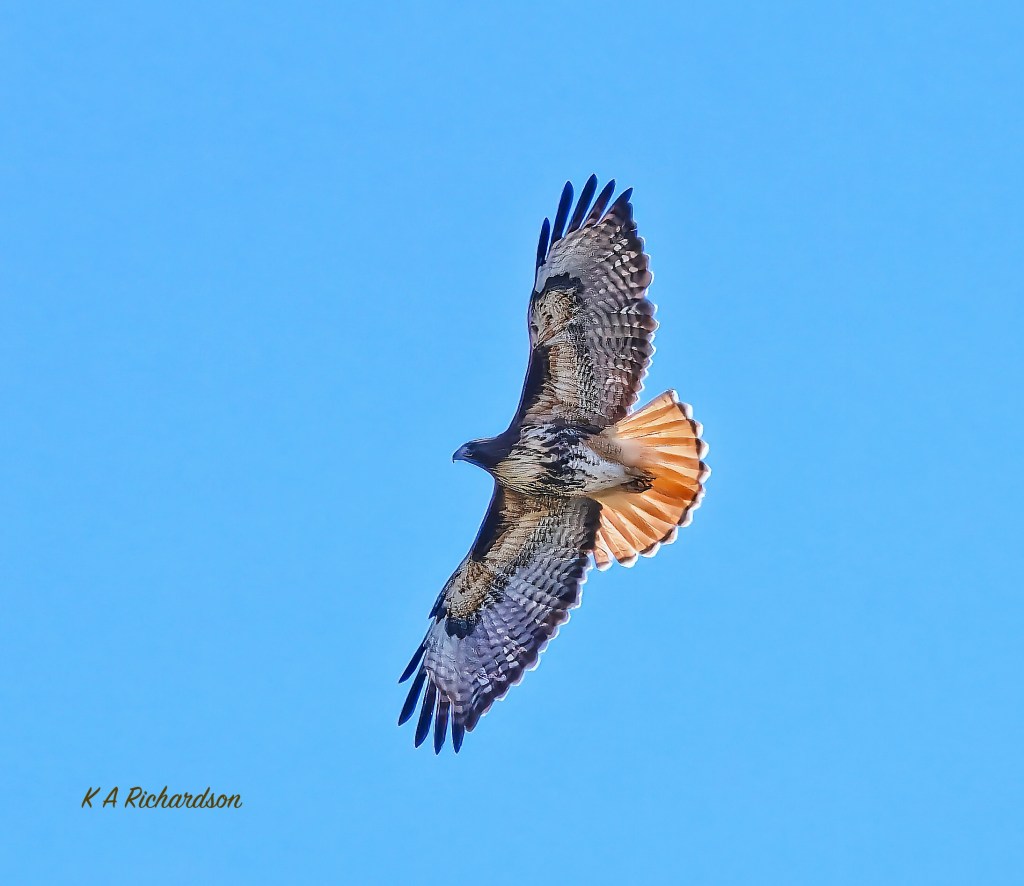
The Okanagan is blessed with an abundance of Red-tailed Hawks. Click here for my 2016 study of them.
An intriguing feature of this species is the great colour variability among its indvIduals. The harassed fella (posted above the kestrels above the bluebird), as you can see, has a white throat and overall lighter tones including a tail that’s not very ‘red’ compared to the one to the right here, soaring above Beaver Lake Road in Lake Country. This one has classic hues!
Some birds are more difficult to capture than others, of course.
Western Meadowlarks are often found in the same areas as our two bluebird species, but I find them much more flighty. Early spring, however, often brings opportunities as it did this April day. Of course, I’d prefer this bird to face me. S/he didn’t, but I would catch up with one more co-operative later in the month.


The Black-billed Magpie is another species I find challenging to photograph despite their relative abundance here. Finding them in the open in just the right light is certainly possible, yet I struggle to get my settings ‘just right’.
While this setting is far from pretty, it’s typical of where this youngster and his relatives hang out. He looks a little guilty about giving me as good an opportunity as even this!
One of our most colourful and controversial species, BBMAs never fail to get a reaction from onlookers. Personally, I like ’em and defend them against their detractors, which doesn’t make me very popular!
American Robins are one of the most familiar birds in North America. For many folks, the ‘first robin’ of a new year marks the beginning of spring.
Many bird photo-graphers I know don’t like to post images of commonplace birds.
I, contrarian, love the common birds with which, perhaps, I identify. And, as I’ve learned through travel to and living in ‘foreign lands’, what’s ‘common’ in one place is ‘exotic’ in another!


Pine Siskin (Spinus pinus) Belmont Park, Kelowna.
The Siskins in our area seldom pose for closeups.
This ‘keyhole shot’ has been edited to remove obstructions.
I must add, too, that, this bird was much lighter in colour than most Siskins.
The images below, while of low quality, were taken in low light as the bird was foraging in a shallow ditch.
On another day, I found a Pine Siskin sipping water from the ditch that runs through this part of Belmont Park. Very different ‘look’ in this spot, I think you’ll agree!


Red-breasted Nuthatches inhabit the same general area of Belmont Park. So, as promised above, here are three more images of them. They were sooo cooperative this year!


For reasons I find difficult to explain, I love Say’s Phoebes, despite their muted hues.
Perhaps it’s because they’re a western bird and it took me so many years to learn where they hang out. Regardless, I see several every year, now, and, again, why I don’t know, I have trouble getting the quality of image I want.
This bird was one of a pair nesting in the large back yard of a family dwelling near Vernon’s Swan Lake Nature Reserve.

For Part 1 of this series, click here.
For Part 3 of this series, click here.
 birds & musings