IMPORTANT NOTE: ALL PHOTOS IN THIS POST CAN BE OPENED, ENLARGED, IN A NEW TAB.
JUST CLICK THE IMAGE!

After five full years here in Kelowna, I’ve come to realize that every year is different from a birding/photography standpoint. Just when I think I’ve figured out a pattern, something happens to disrupt my generalization. This past winter was a doozy.
Start with the weather: December and January were wonderful, above average temperatures, no snow to speak of, the Marsh unfrozen: who didn’t appreciate climate warming?!
Click on the graphs below to open them, enlarged, in new tabs.
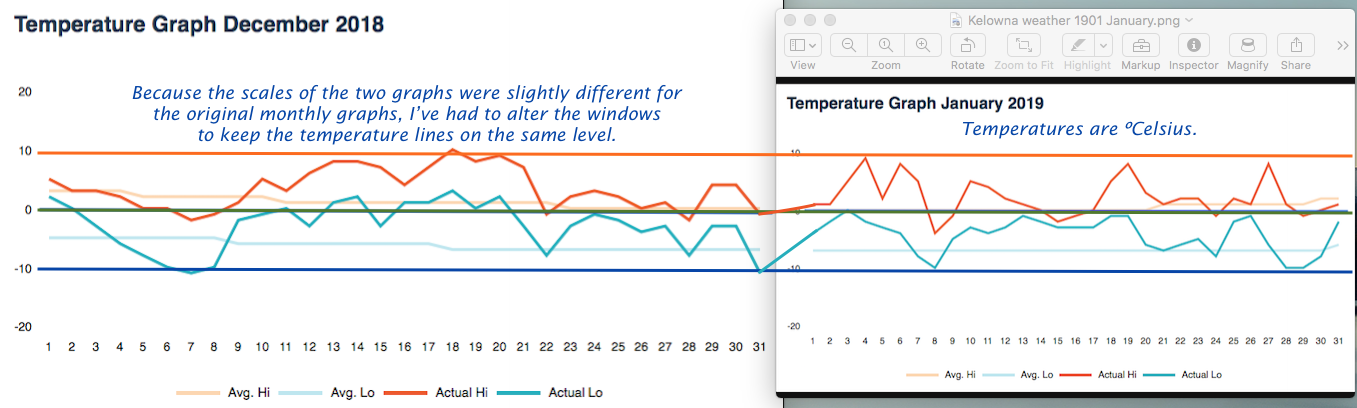
Then February arrived: this graph shows how our Feb. temperatures have changed over the last three years. We had only a little snow in 2019-, but, as you can imagine, it did not melt until mid-March. Click to enlarge.

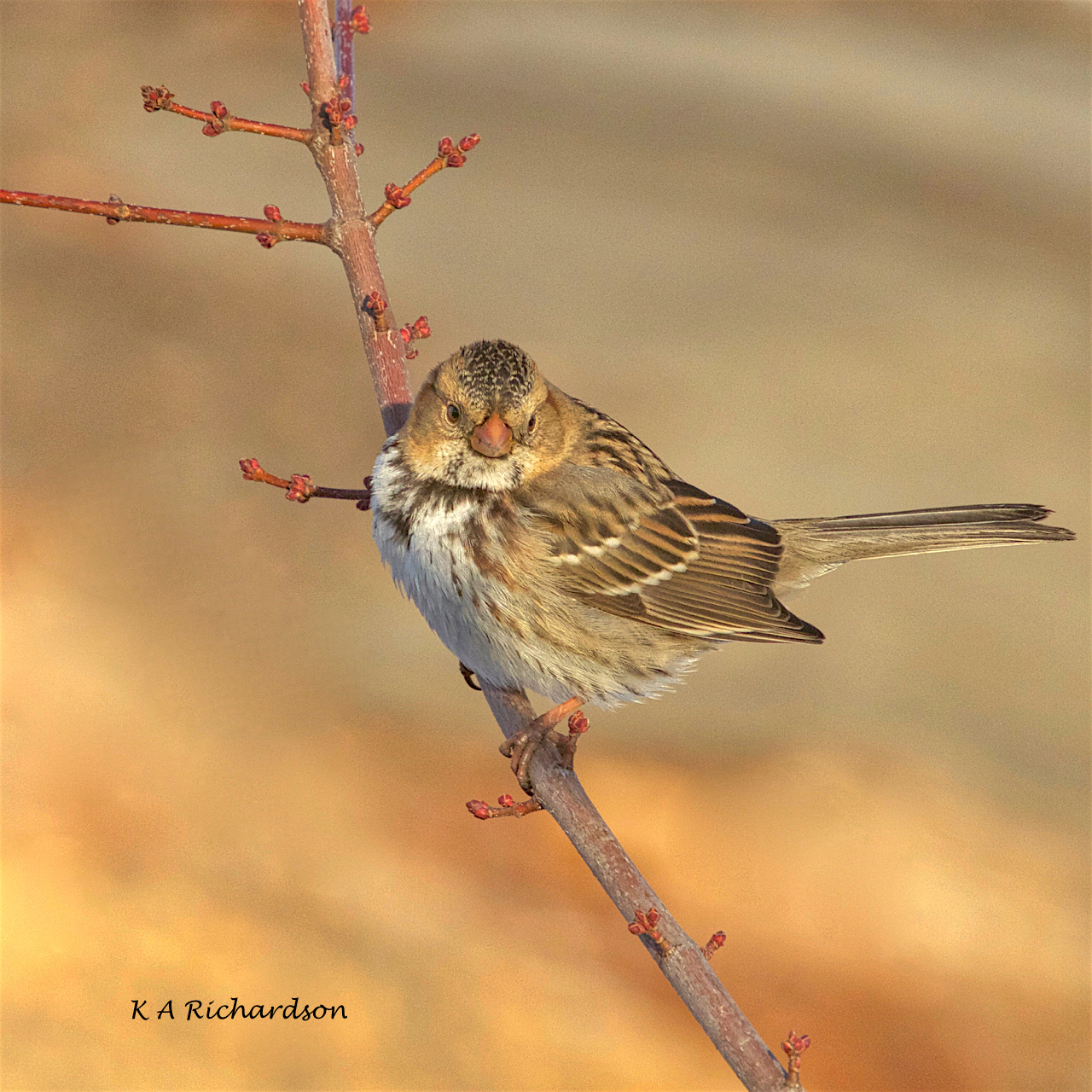
More important, from a birding/photography standpoint, was the accidental creation of an environment that was very much appreciated by our local Song Sparrows and White-crowned Sparrows, and four (some claim five) accidental tourists who normally spend their winters east of the Rockies — Harris’s Sparrows:


So how do we tell them apart? Well, as I indicated, Blackbeard and White Bib are pretty easy to differentiate. I came to know them first:
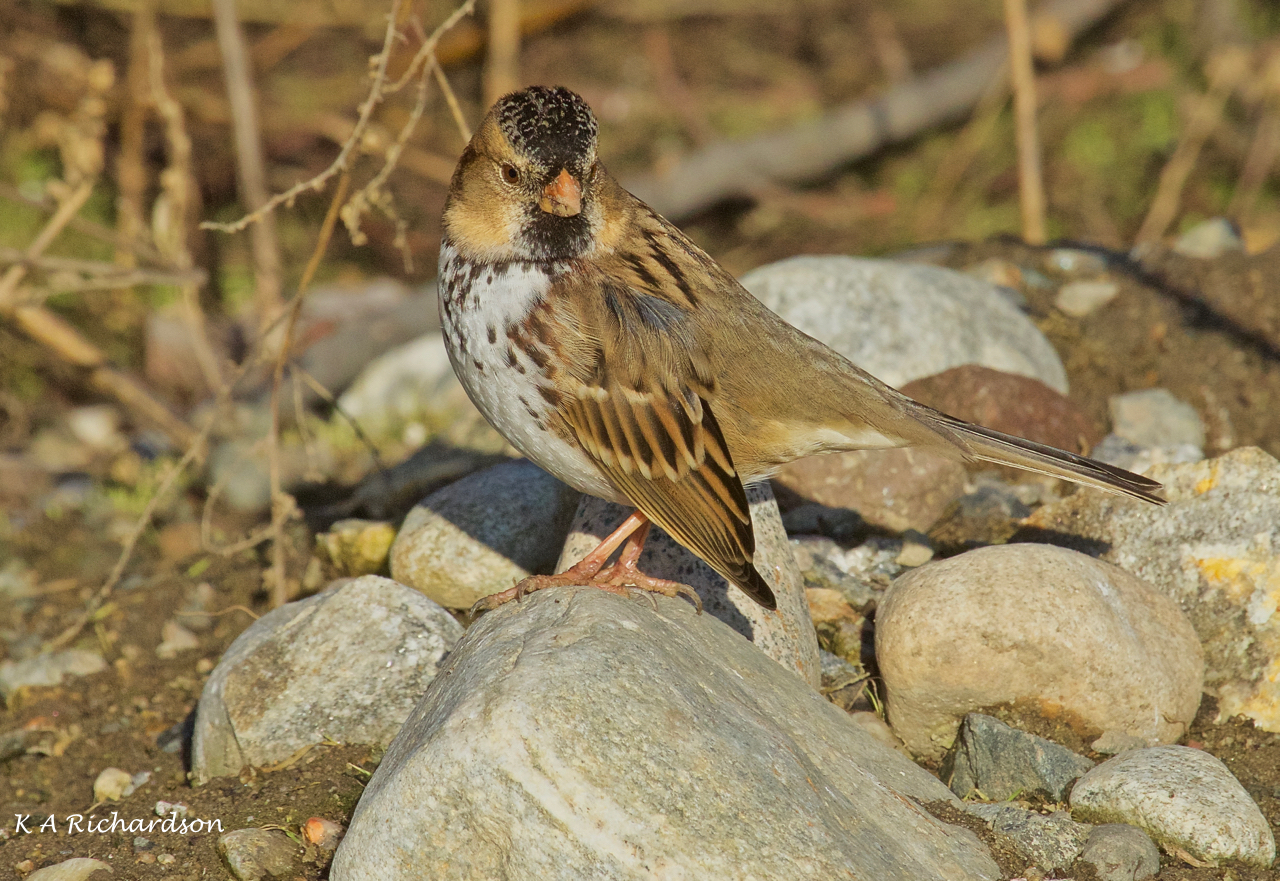
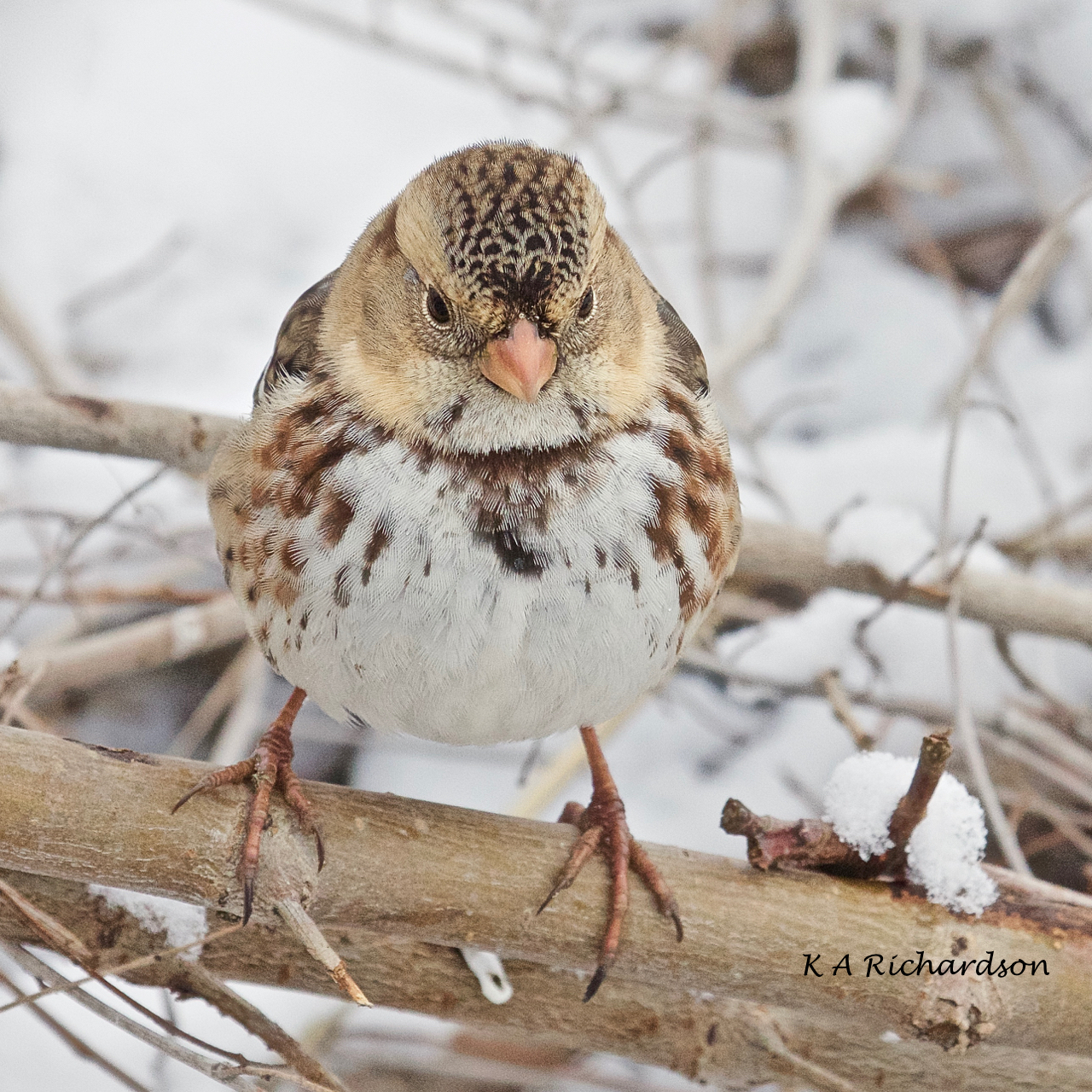
Whiskers was so named because in the bib area s/he from the beginning he had some darker streaks unlike White Bib who had none. In time, however, I also noticed two more distinguishing features: a small black dot below each eye and near the back of the bill, and a faint black spot on the breast just below the dark slash, which on Whiskers runs from right to left as we are facing him.

Here we can see Blackbeard and Whiskers together:
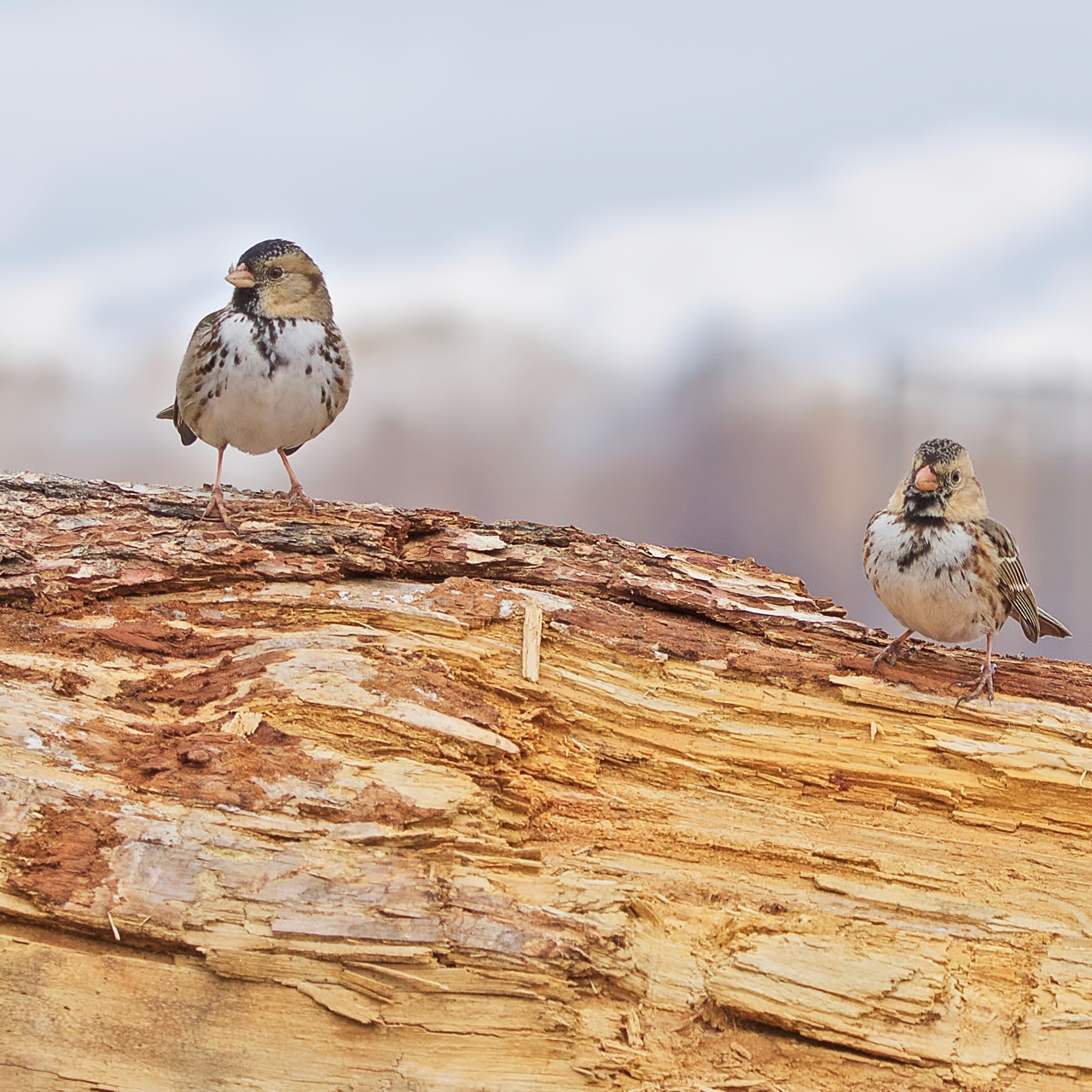
The faint spot on Whiskers’ breast (under the dark streak) has become darker as have his/her whiskers!
And finally, Tawny, the most difficult to distinguish from White Bib but easily distinguished from Blackbeard and Whiskers:
 birds & musings