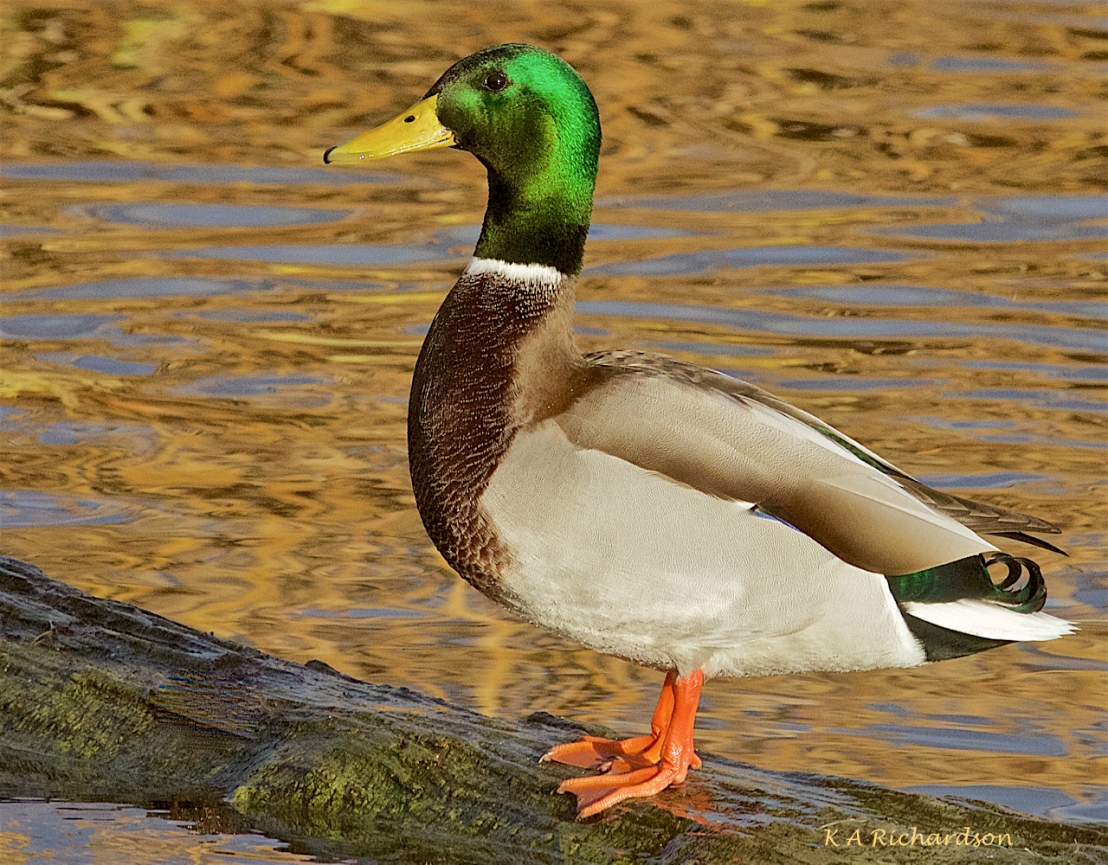
I’ve often remarked on the wonderful cooperation among diverse waterfowl species on a pond. I’ve also noted moments of remarkable conflict, frequently involving Mallard ducks. Usually, we see this in breeding season, often between male and females. Sometimes there are horrible conflicts between hens over whose brood is going to be raised on a particular pond. And, certainly, there plenty of anecdotes about rivalries among drakes.
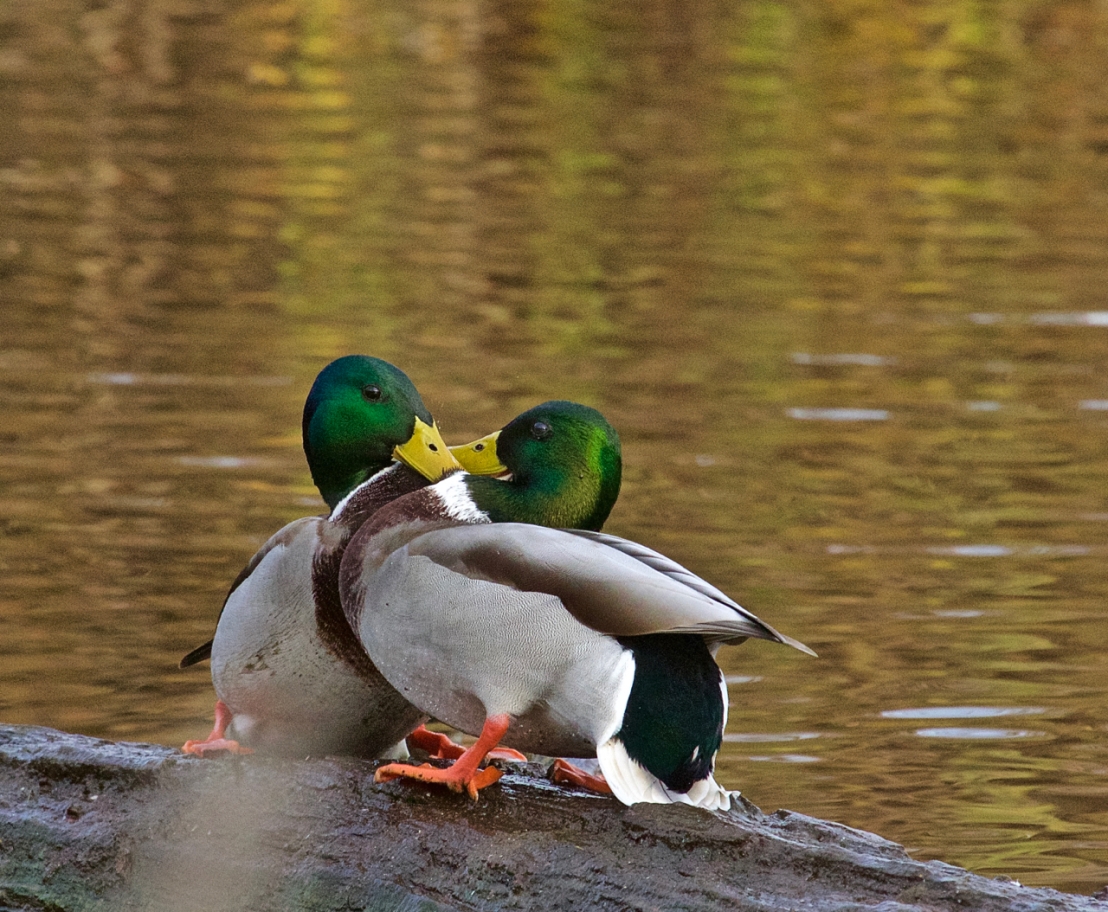
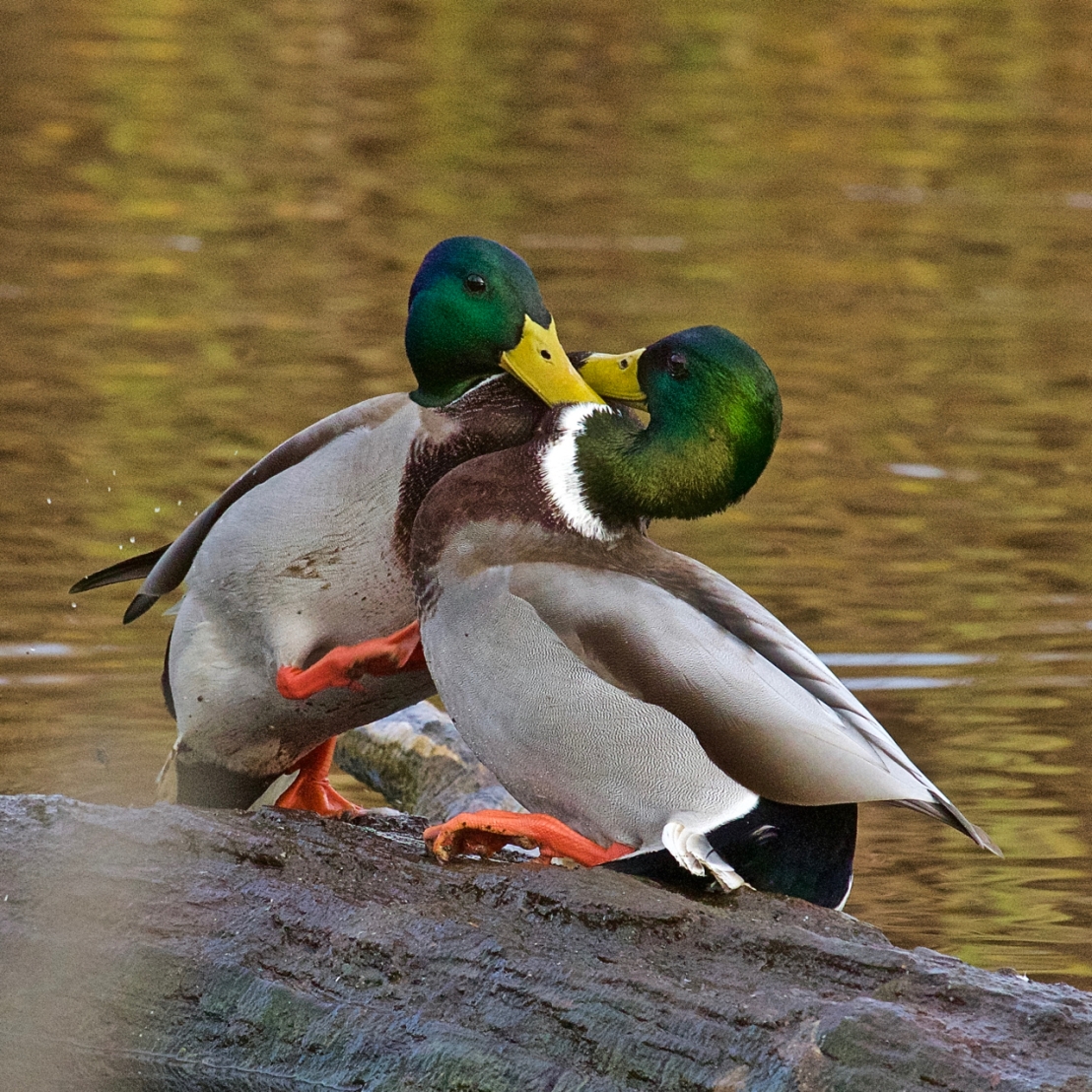
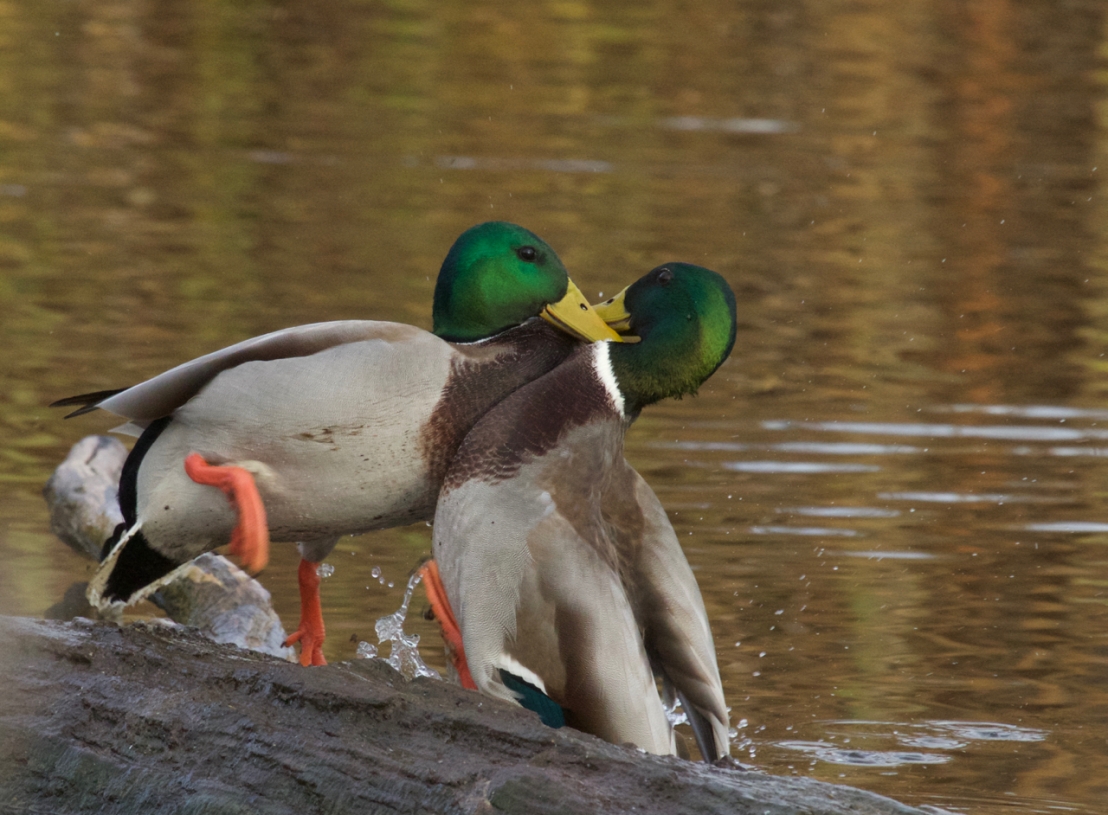
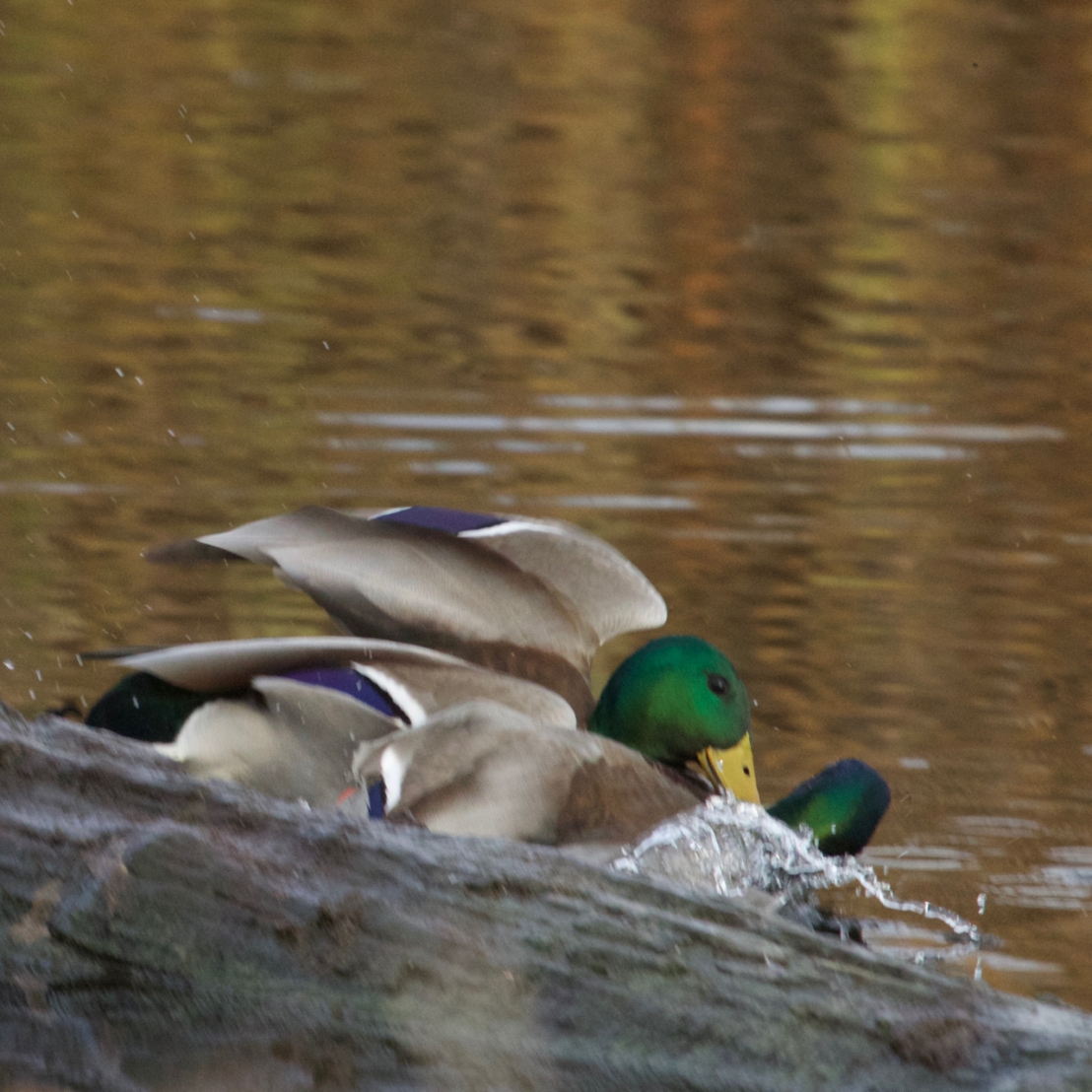
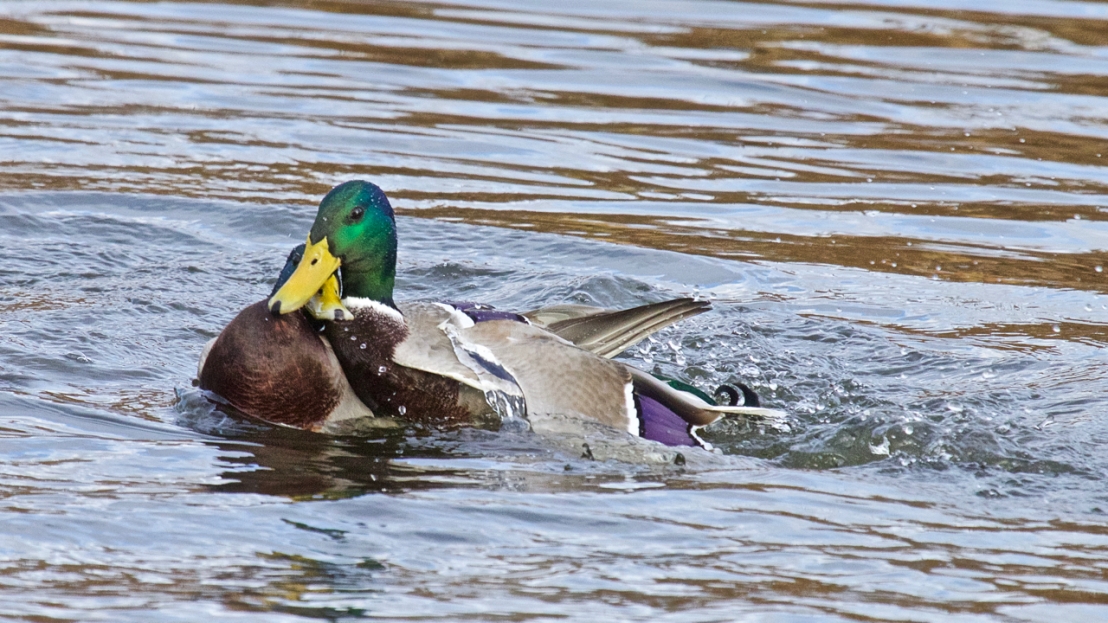
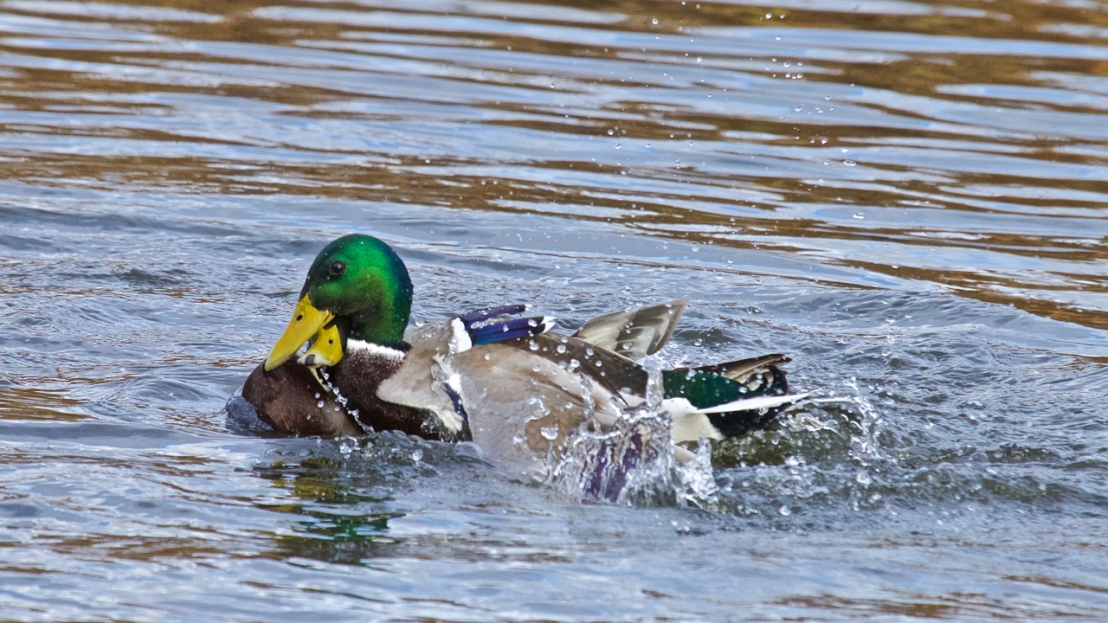
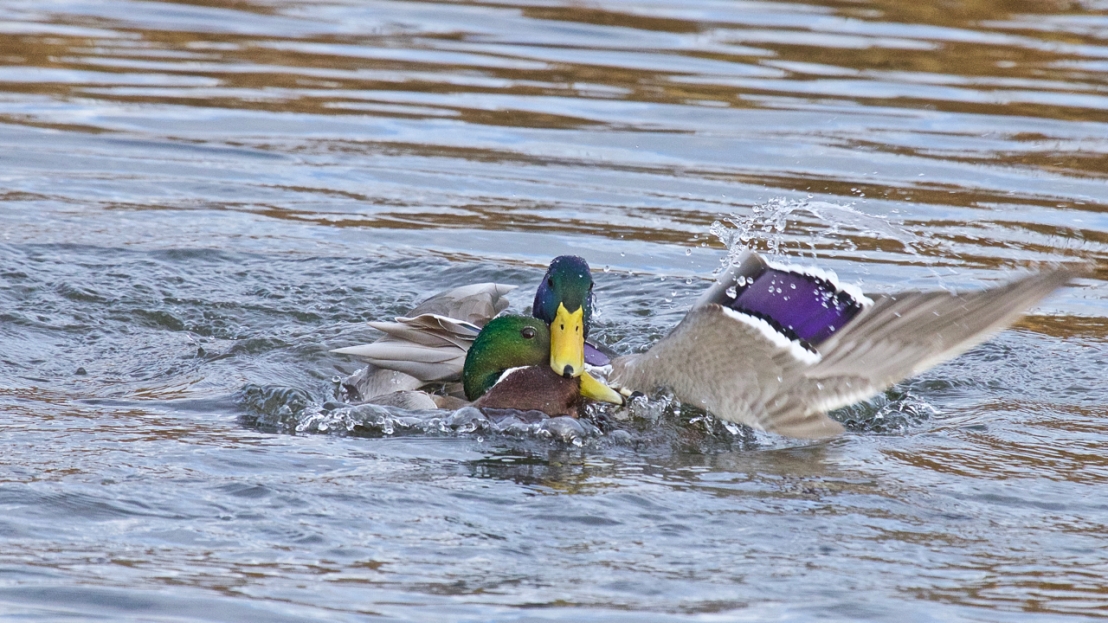
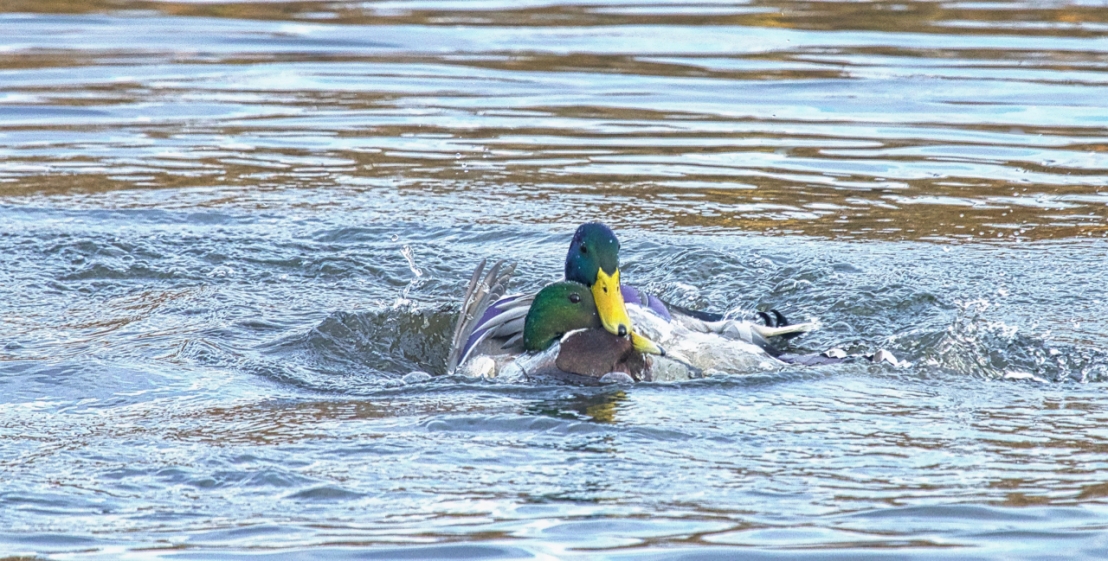
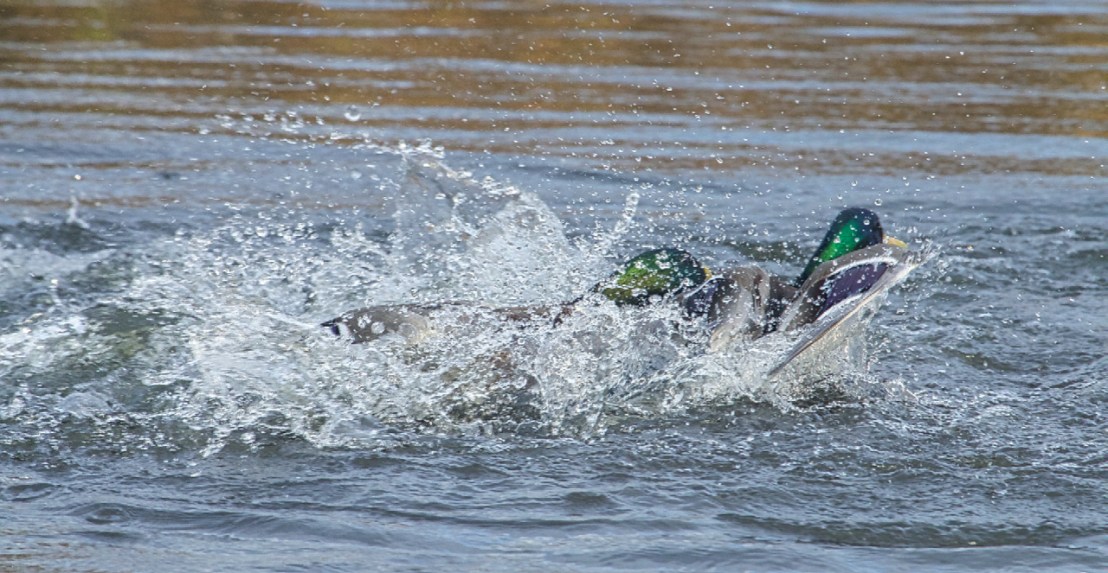
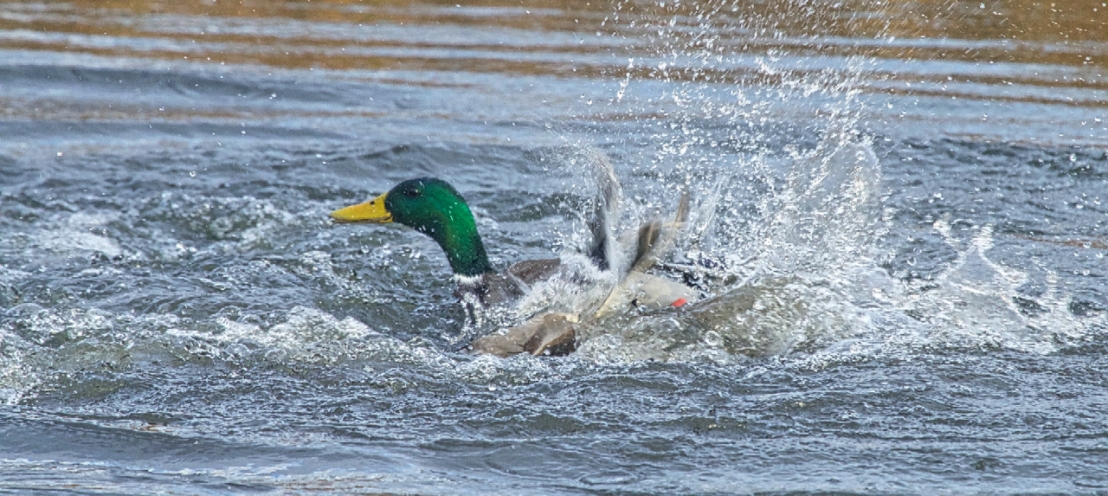
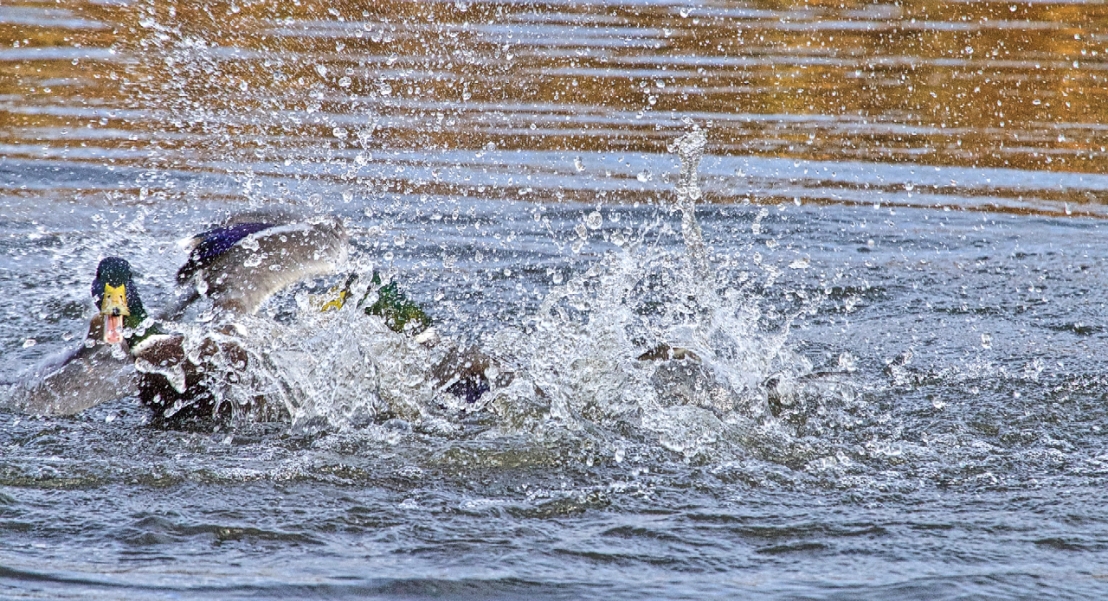
But it’s nearly the end of October, 2018, for goodness sake! What I witnessed the other day at Teal Pond, TMarsh, took me by surprise. A little quarrel rapidly escalated into a probable duckicide. To be sure, in the end, one drake was driven away and a Victor declared, but I have to admit I was holding my breath as I pressed the shutter….
As I hadn’t wanted to disturb the ducks on the log, I wasn’t as close as I could have been. That ghost of a cattail in the lower left of the frame is annoying and should have been avoided. But being too close might have kept the conflict from erupting. I’ll leave it to viewers to decide whether or not I did the best thing….
The aggressor is the drake on the left…. We’ll name him at the end of the series….Notice the leverage with both bill and foot…Over they go….It’s all a blur! Who’s got the upper bill, so to speak?The bill-neck clamp hold!It’s becoming very serious!Is a drowning about to happen?No question who’s in control!The victim makes a break….The Victor regains control and submerges the victim….Wild thrashing!Only a few moments later, Victor poses — revealing no signs of the near carnage just attempted!
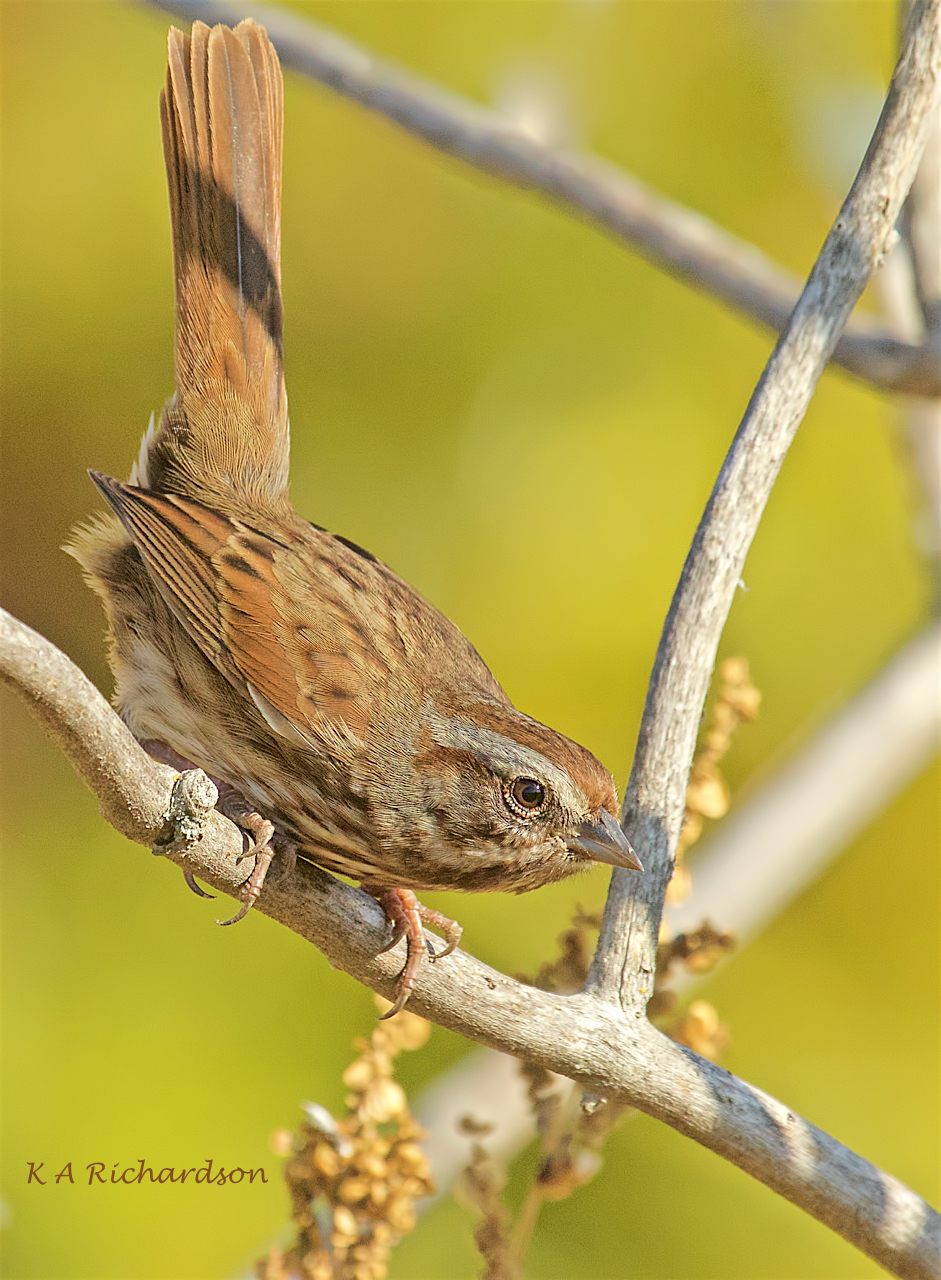
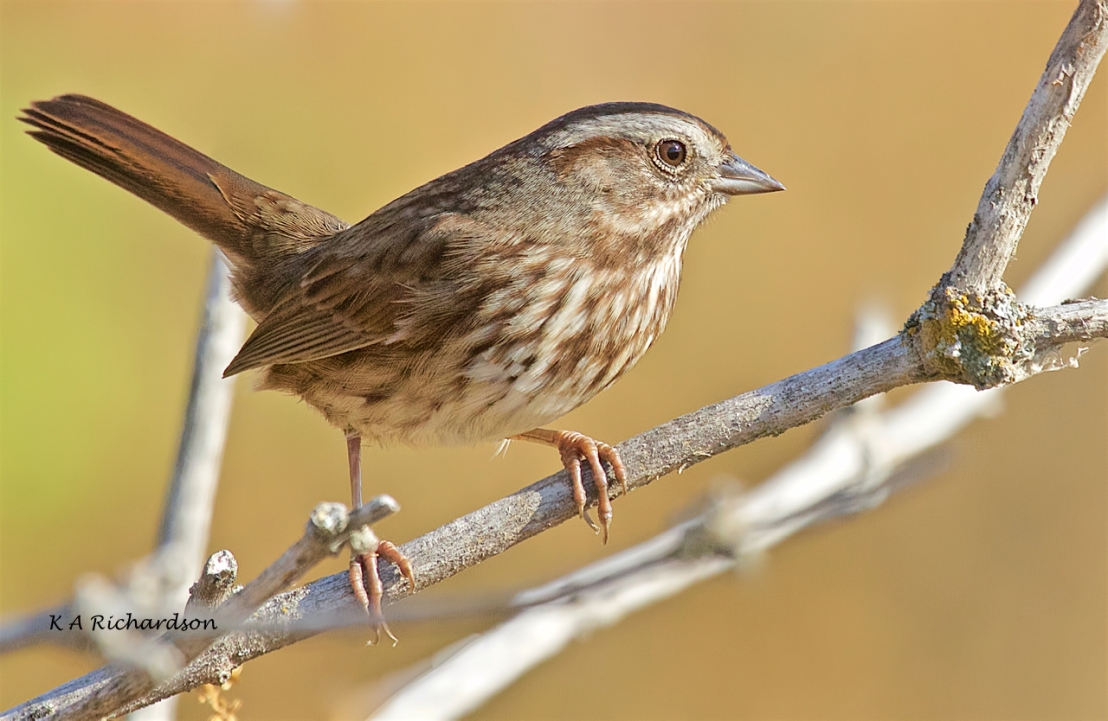
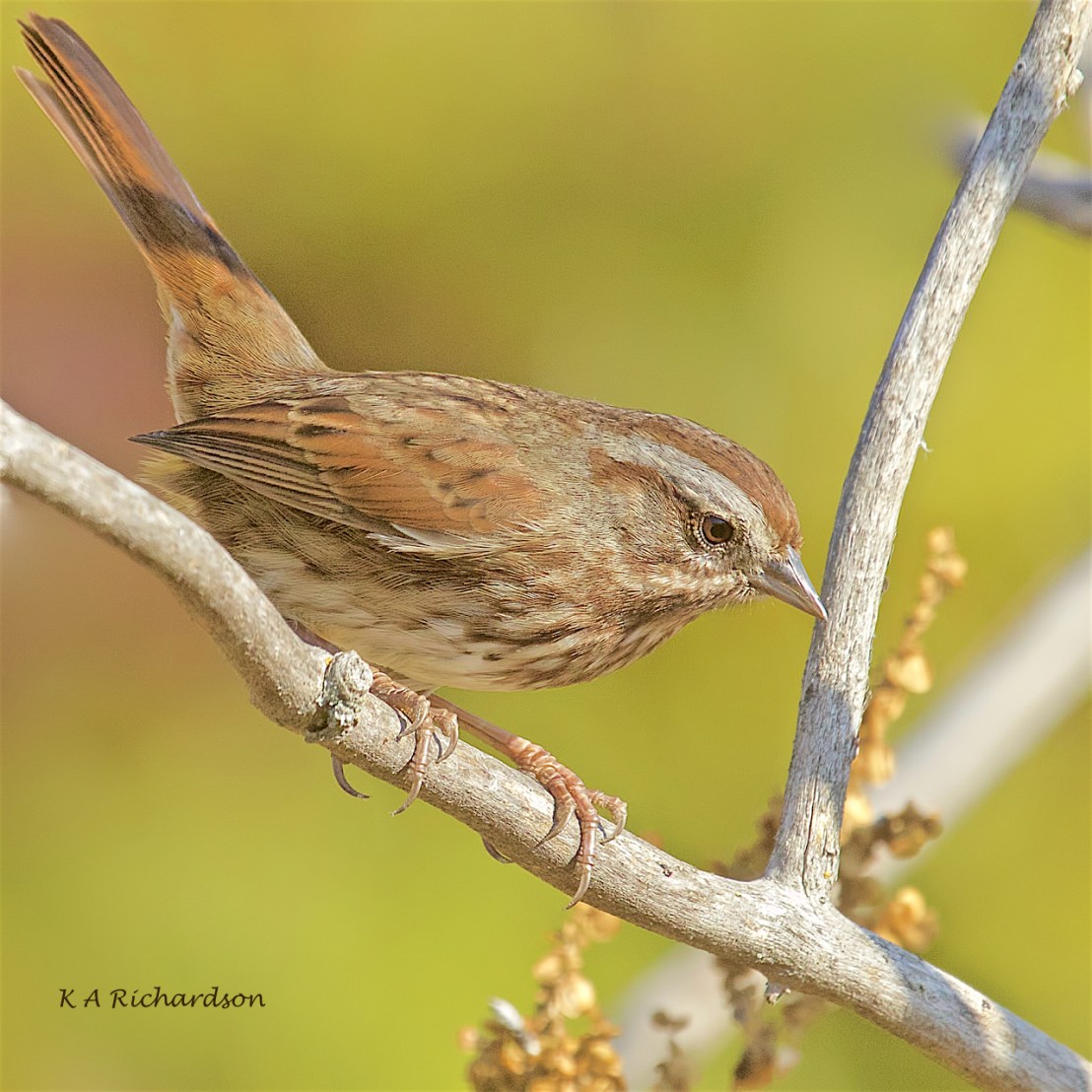
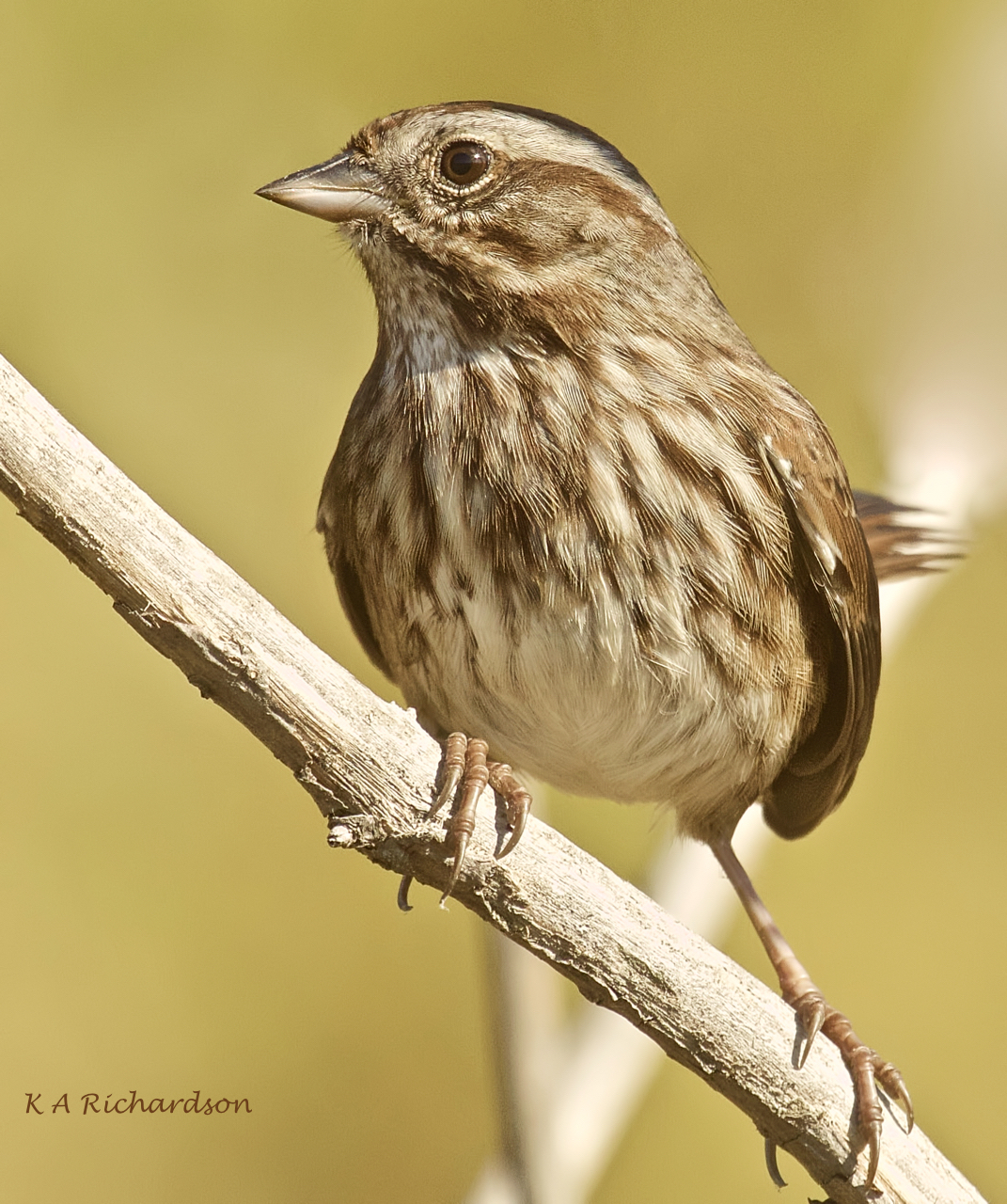
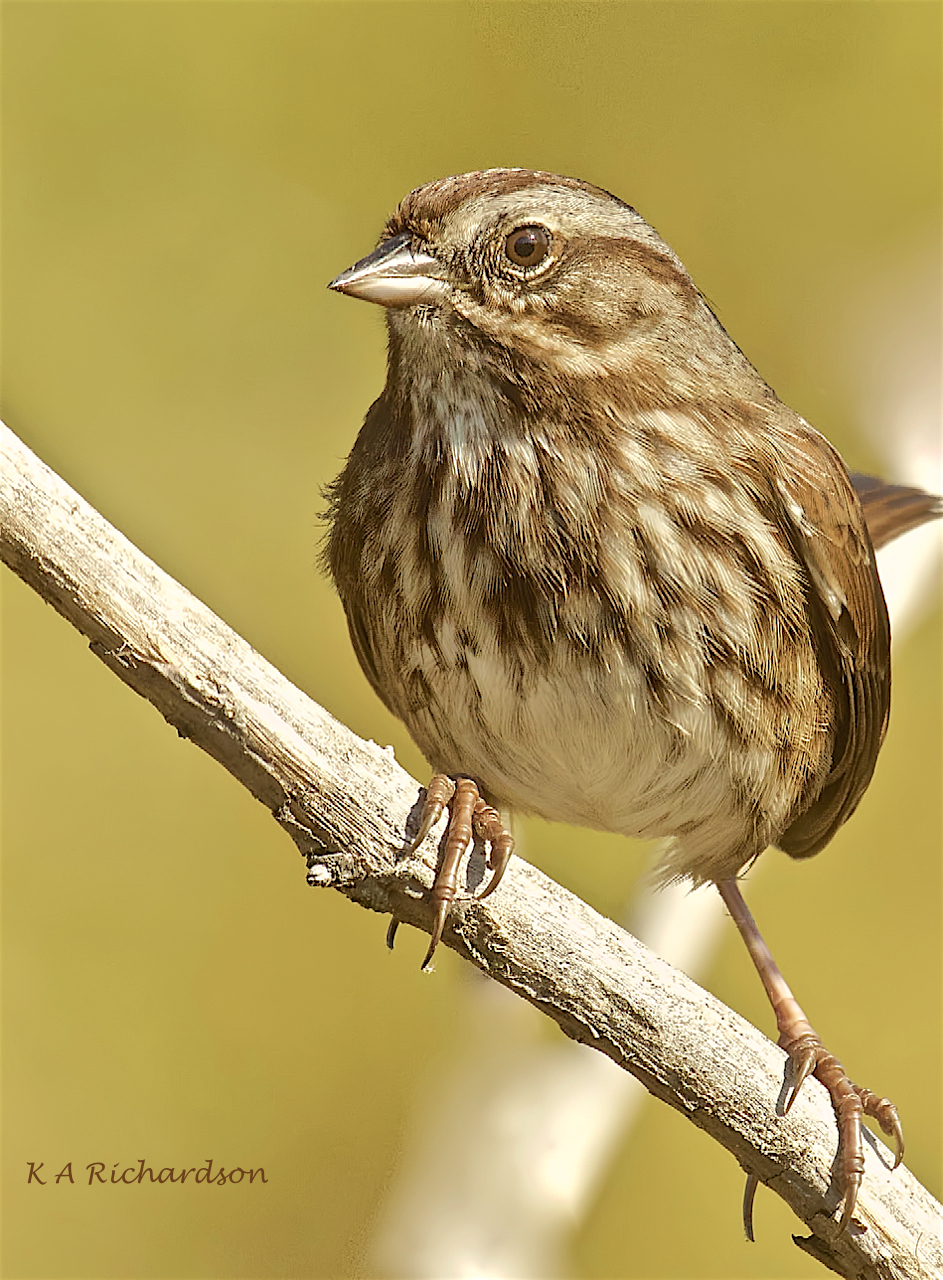
I’m often quite dissatisfied with the photos I take. This set, however, turned out quite well, in my opinion. I’ll add more about the species and this particular bird as I have time:
This little guy and most of the SOSPs I know tend to inhabit relatively small territories throughout the year, often in small groups that may or may not be family-based. Solomon is often accompanied by a less bold “mate” (take this in whatever way you like), but he is the one who comes out looking for action….
Here’s a note on Song Sparrow subspecies (and coloration) from Cornell’s All About Birds site:
Scientists recognize 24 subspecies of Song Sparrows and have described some 52 forms: they are one of the most regionally variable birds in North America. In general, coastal and northern birds are darker and streakier, with southern and desert birds wearing paler plumages.
As promised, as long as Patience is in the neighbourhood, I plan to keep updating B&M with recent shots. Probably, most will be quite similar; still, I’m interested in compiling a record of her over time…. The group of shots below were taken on October 24, 2018.
Click on any photo to enlarge it. To enlarge it furtherin a new tab, scroll down to the bottom of the enlargement and click “View full size.”
I’ve long been fascinated by hawks, especially Red-tails. Since coming to Kelowna in 2014, this species has been high on my list of great birding moments in our neighbourhood — Thomson Marsh. I’ve written about these experiences many times, especially here.
Spike, adult Red-tail who visited for a couple of days.
In the past four autumns, the hawks arrived back from their summer breeding locations earlier, it seems to me. I’ve noticed a few around Kelowna, and we did have one adult drop in for a visit back in August. Another, likely a returnee from last winter, turned up near Michaelbrook marsh in September (more on him later, probably), and I got some good shots of a juvenile at Munson Pond on September 25 as well. In October, we began seeing the familiar kettles of migrants drifting by, had quick glimpses of unfamiliar kestrels, a Merlin, and Cooper’s hawks. Kessie, the resident American Kestrel, is “around,” but not as prominent as she will likely become in a month or two.
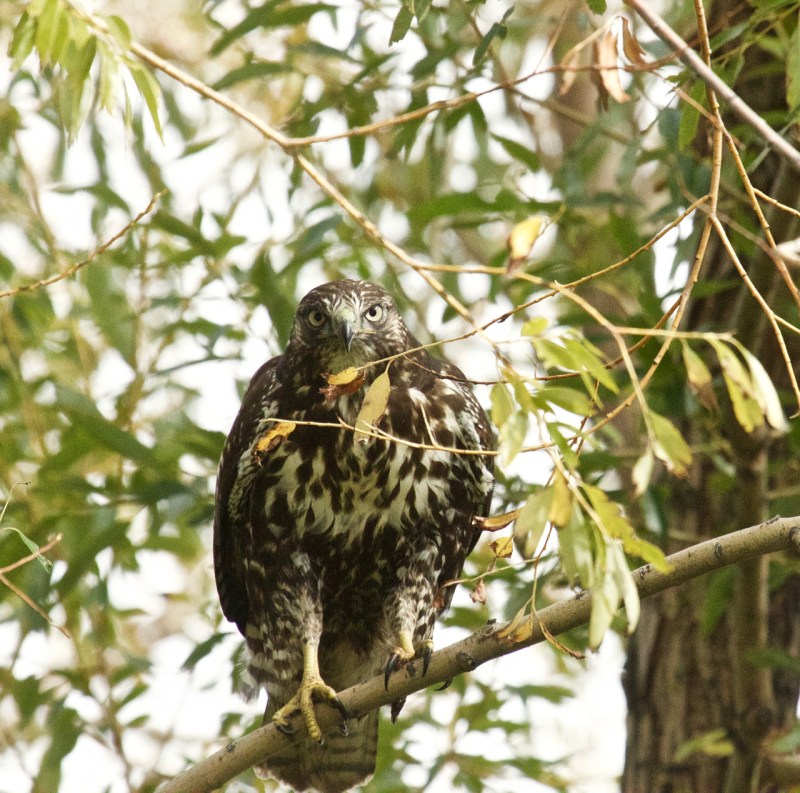
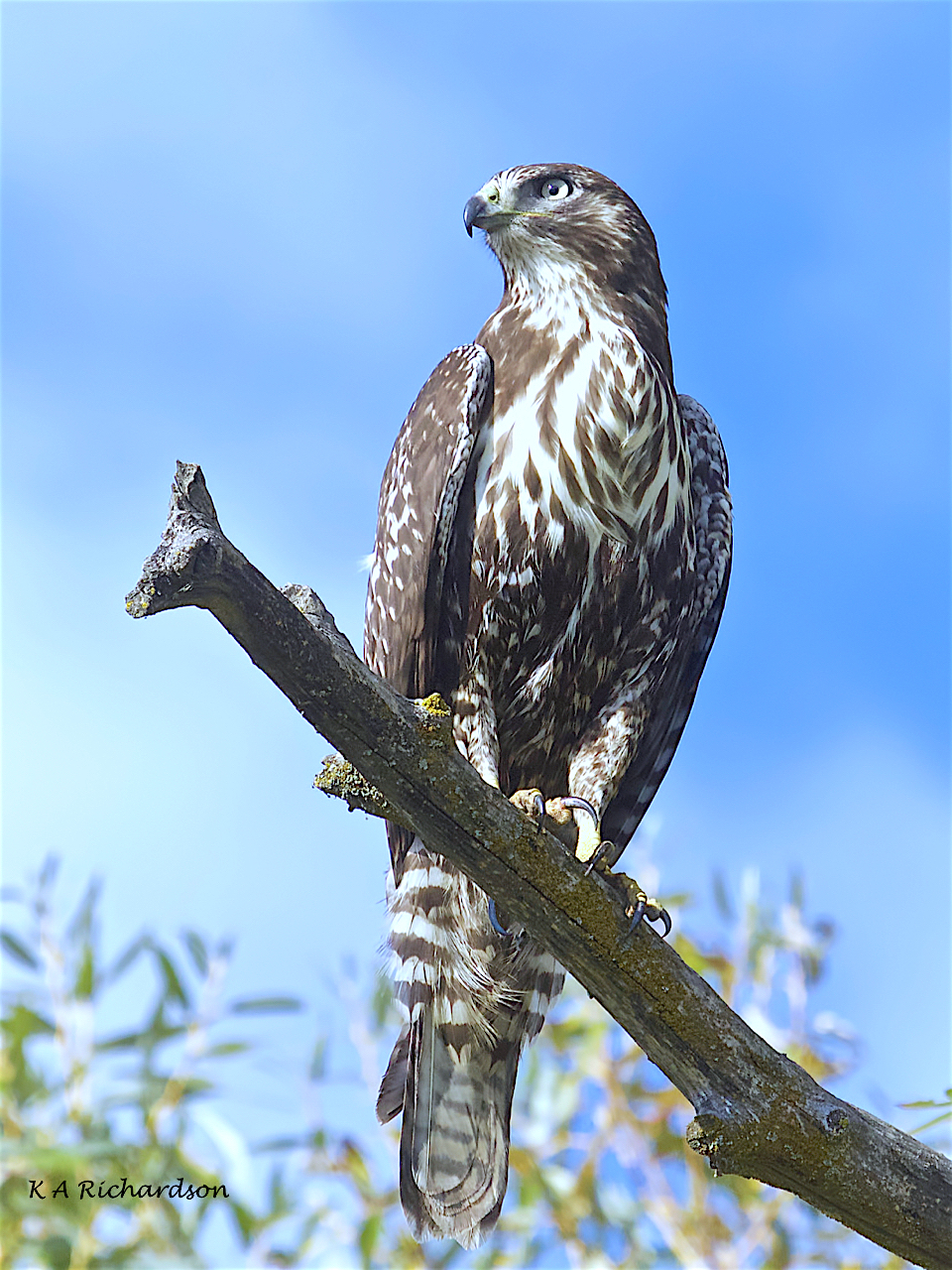
Patience, juvenile Red-tailed Hawk
But the real star of October, and, I hope, of this hawk season, is a beautiful juvenile that is affording all of us who walk the Thomson Marsh beat unparalleled views of her beauty and grace. She loves to pose, especially on lampposts, but occasionally on trees. She’s foraging successfully and appears to like it here. I have been guardedly optimistic that she’ll stay the winter, giving us the opportunity to watch her develop. I’ve named her, for her proclivity to tolerate people, Patience. I met her for the first time at our Community Garden plot on October 3. She flew in along the north edge of the gardens, across the road, and into the willows that line the north end of Thomson Brook. There she gave me the once-over you can see above.
When I took my eyes off her to check my camera, she left the tree and lit on a nearby lamppost, one frequently used by Kessie over the past four winters. I was surprised by her tolerance of the camera, and indeed, her willingness to pose.
A thinking hawk? October 3, 2018October 11: eight days since Patience first appeared, and I’ve been able to locate her every day I’ve gone looking, though not always on the first try.
Here are a few of my favourite images of her:
Patience in pine, October 6, 2018.
That tiny bit of red on her forehead needed some explanation, and that came about 30 minutes later, after she moved to a lamppost nearby and then disappeared for a few minutes.
October 6: Patience on a lamppost at the opposite end of the marsh walk from where I first encountered her.
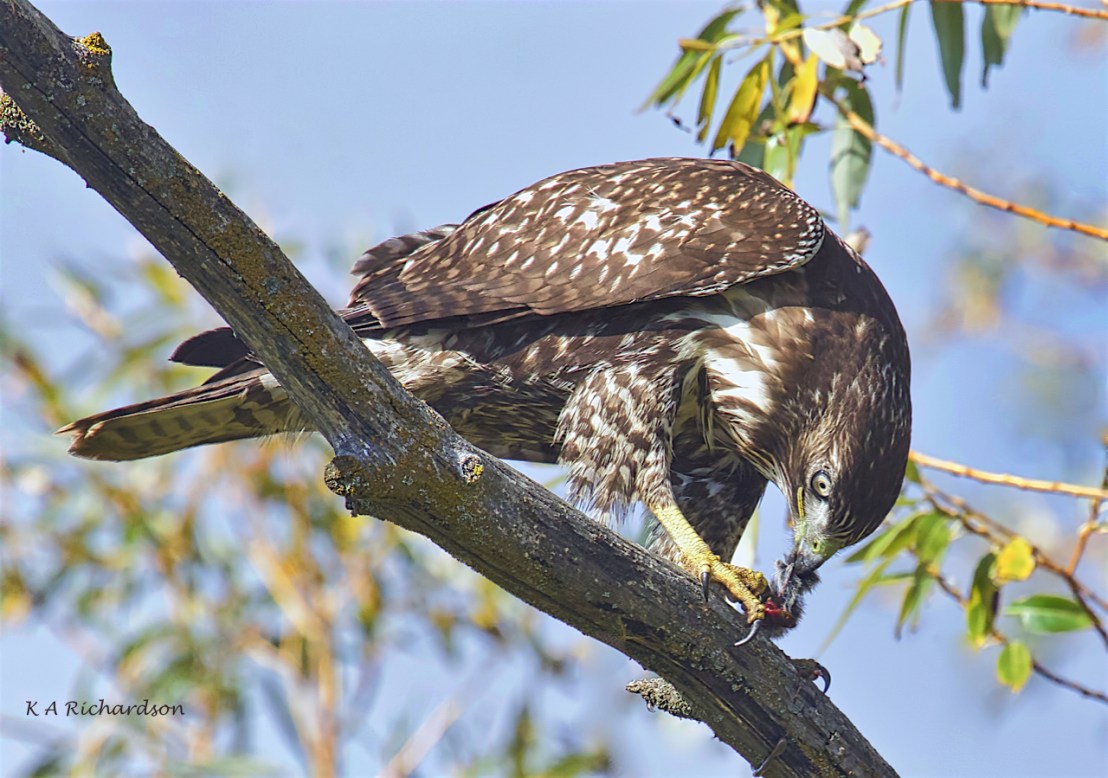
Having lost her to her hunting, I continued my walk counterclockwise around the marsh. When I entered the far southeast sector of the marsh, I spotted her again, and quickly ascertained the reason for the red spot mentioned above:
Patience at the kill site. How long since it happened is anyone’s guess, but by the time I got there, she had returned and was just finishing her last morsel, leaving nothing but feathers….
She showed no fear of me, indeed no concern for my presence or the camera. In fact, after finishing her last bite, she hopped up onto a nearby stump and posed for posterity:
One of many cool poses she struck while on her pedestal.
It was a great day! Clearly, she’d found a winter home. Or has she? I’ve seen hawks show up for a couple of weeks, only to decide that they could do better in another location. She won’t stay forever, I know, but I’m crossing my fingers that she’ll stick around until next spring and give the folks who frequent the marsh a chance to watch her grow.
I haven’t photographed her every day that I’ve seen her. Sometimes the light was poor, or the lamppost poses were pretty much the same as before. A couple of times when I checked in the morning, I didn’t see her, but there hasn’t been a day where I didn’t encounter her at some point.
On October 10, I missed her in the morning. After our anniversary lunch, Nana and I decided to stop by the garden, the marsh, and check again. And sure enough, she showed up, this time in the big Weeping Willows that line Lexington Road and Michaelbrook Creek — the same area where I had first seen her. Nana figures that this is where she roosts at night, which seems very plausible to me, too.
It was great to get shots of her in a natural perch, especially on a sunny day. She had just caught some lunch and allowed me to photograph her devouring it:
Yum!
My favourite portrait of Patience so far. Is she posing or just surveying?
Of course, it’s likely the latter, but I can’t be quite sure.
Take a look at the next shot, in a different perch, where clearly
she’s had enough of this playing for the paparazzo.
“Look, enough’s enough, don’t you think?!”Wednesday, October 10, 2018. Near the Community Garden, Kelowna Rec Field, Kelowna, BC.
Continued good hunting, Patience; I’m looking forward to keeping this connection going!
I will post, in separate entries, more photos of Patience as I acquire them.


![Patience (Red-tailed Hawk [Buteo jamaicensis]) -05.jpg](https://birdsandmusings.ca/wp-content/uploads/2018/10/patience-red-tailed-hawk-buteo-jamaicensis-05.jpg?w=1108)




 birds & musings