Month: January 2017

2016 Faves—Passerines, part 6: M–N

Trying hard to stick to the plan of highlighting only a very select number of shots of specific species is a challenge for me. So far, so good, I hope…. (Well, I know the writer of this blog, and he’s about to fail big time in this section!) Down alterego, down!

Some species you might expect to find here you won’t—because meadowlarks, out here, are actually Western Meadowlarks, and magpies are Black-billed Magpies. Both are dealt with in the sections featuring the first letters of their names: W and B.

So what have I got for you? Well, how about a species that I covered in some detail in an earlier post about bluebirds, namely the Mountain Bluebird? One of my all time favourites, it’s another western bird that I have seen in various parts of the BC Interior and as far east as Saskatchewan and Manitoba. I love the various shades of blue in the males and blue and grey in the females. As with many birds, their brightness varies with the season and location, the age of the bird and whether or not it’s a dominant member of flock or mix of species in its area.

mountain-bluebird-range-cornell

I like the way Cornell’s website describes the MOBL:

“Male Mountain Bluebirds lend a bit of cerulean sparkle to open habitats across much of western North America. You may spot these cavity-nesters flitting between perches in mountain meadows, in burned or cut-over areas, or where prairie meets forest—especially in places where people have provided nest boxes. Unlike many thrushes, Mountain Bluebirds hunt insects from perches or while on the wing, at times resembling a tiny American Kestrel with their long wings, hovering flight, and quick dives.”


So here they are, a reprise of a male in two poses and a female featured in the earlier post.

The larger image is my favourite MOBL ever. I was so blessed to have his undivided attention for several minutes. The female bird, at a different location and time was equally patient.

NOTE: ALTHOUGH DOVES ARE NOT CONSIDERED PASSERINES, I have included one here because it doesn’t fit into the other broad categories that I’m using. This is NOT intended to be a scientific blog; it’s a highly personal one. Please don’t get too bent out of shape by this issue.

Another “M” bird, though very common up here and throughout the country, is one I’ve come to enjoy since me moved up here. I love their delicate tones, and at various times of the year their friendly interaction. In 2016 I was lucky twice to stumble over a nest brimming with about-to-fledge chicks. The bird is the Mourning Dove:

Some interesting facts about MODOs from Cornell Lab of Ornithology:

“During the breeding season, [we] might see three Mourning Doves flying in tight formation, one after another. This is a form of social display. Typically the bird in the lead is the male of a mated pair. The second bird is an unmated male chasing his rival from the area where he hopes to nest. The third is the female of the mated pair, which seems to go along for the ride.

Mourning Doves tend to feed busily on the ground, swallowing seeds and storing them in an enlargement of the esophagus called the crop. Once they’ve filled it (the record is 17,200 bluegrass seeds in a single crop!), they can fly to a safe perch to digest the meal.

Mourning Doves eat roughly 12 to 20 percent of their body weight per day, or 71 calories on average.

Perhaps one reason why Mourning Doves survive in the desert: they can drink brackish spring water (up to almost half the salinity of sea water) without becoming dehydrated the way humans would.

The Mourning Dove is the most widespread and abundant game bird in North America. Every year hunters harvest more than 20 million, but the Mourning Dove remains one of our most abundant birds with a U.S. population estimated at 350 million.

The oldest known Mourning Dove was a male, and at least 30 years, 4 months old when he was shot in Florida in 1998. He had been banded in Georgia in 1968.”

The next group, the “N” birds, both have a name in common, yet they’re not at all related. That name is “Northern.” There are some ‘Northern’ birds in other categories besides passerines.
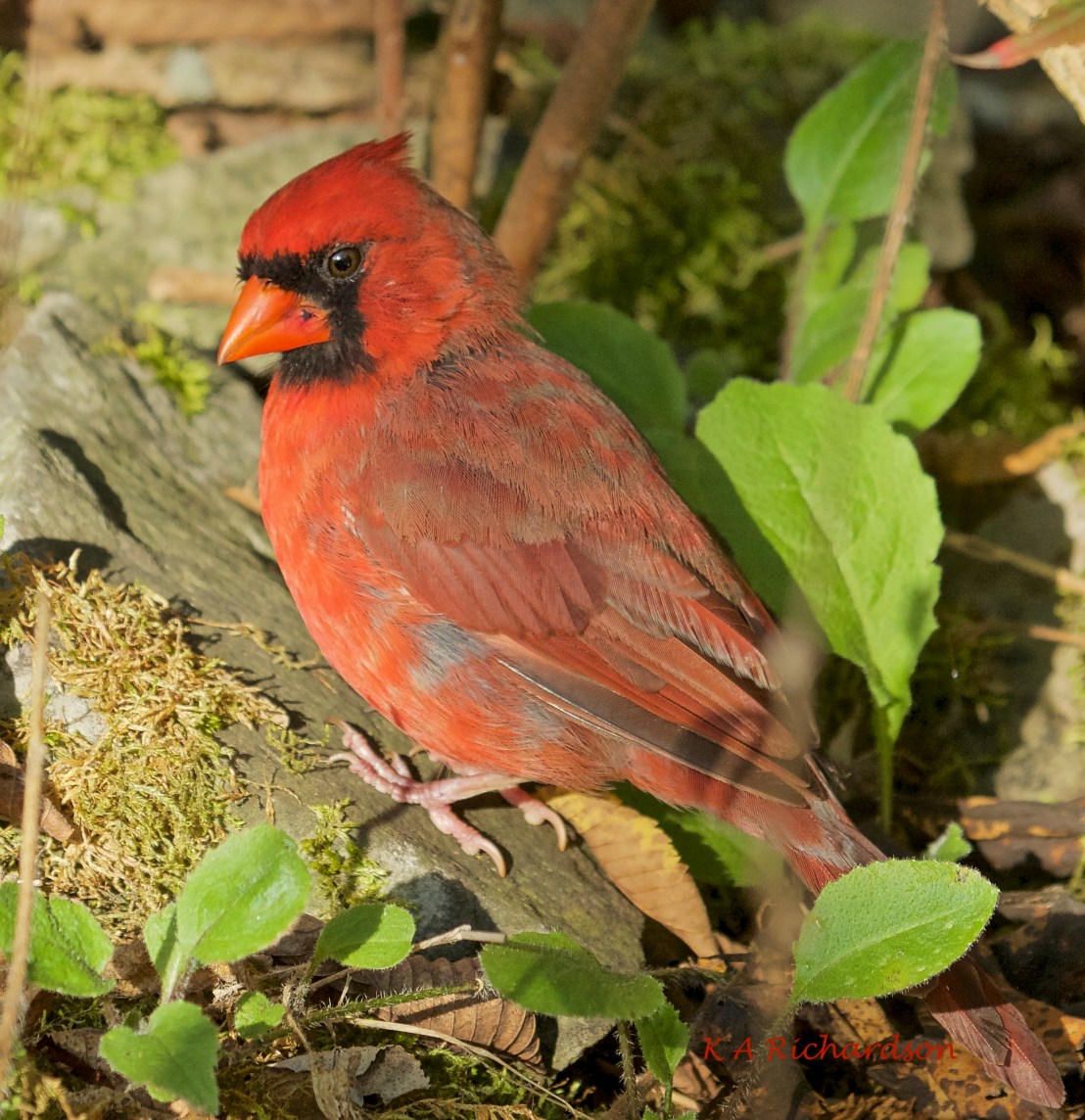
Northern Cardinal male.jpg
Northern Cardinal, a special find far from home in 2016. Click to enlarge.

In autumn 2016 Nana and I flew east and drove from Ottawa to the three western Atlantic provinces and then back to Ottawa via Maine, New Hampshire and Vermont. While birding was not a priority, we did hope to photograph two species, Blue Jays and Northern Cardinals. I covered the Blue Jay in Part 1 of this series. The NOCAs didn’t show up until we were departing Vermont, and I didn’t get the photos I wanted until our final day back to Ottawa, the afternoon before we returned home. Having done some homework and I was ecstatic to find a male and a juvenile right where I expected. And while I came down with a definite case of “buck fever,” I was able to claim this shot at least for my year’s favourites!


NOTE: ALTHOUGH WOODPECKERS ARE NOT CONSIDERED PASSERINES, I have included one here because it doesn’t fit into the other broad categories that I’m using. This is NOT intended to be a scientific blog; it’s a highly personal one. Please don’t get too bent out of shape by this issue.

The second Northern bird is one that, while found across our continent is particularly abundant at home. The Northern Flicker (Colaptes auratus) was once thought to be two different species because it looks different depending upon which part of the country you find them in. Again, from Cornell, “Northern Flickers are large, brown woodpeckers with a gentle expression and handsome black-scalloped plumage. On walks, don’t be surprised if you scare one up from the ground. It’s not where you’d expect to find a woodpecker, but flickers eat mainly ants and beetles, digging for them with their unusual, slightly curved bill. When they fly you’ll see a flash of color in the wings – yellow if you’re in the East, red if you’re in the West – and a bright white flash on the rump.” In addition, the red-shafted variety we see mainly west of the Rockies has a different face and back of the head from his eastern counterpart. Adding to the curiosity is the frequent occurrence, especially here, of Intergrade species with characteristics of both birds; ours still are most likely to have red-shafts. What marks them as Intergrades is the red flash on the back of the head which is characteristic of yellow-shafted birds but not red-shafts.

“Although it can climb up the trunks of trees and hammer on wood like other woodpeckers, the Northern Flicker prefers to find food on the ground. Ants are its main food, and the flicker digs in the dirt to find them. It uses its long barbed tongue to lap up the ants.”

2016 Faves—Passerines, part 5: skip to L….

No Indigo Buntings or juncoes to show, unfortunately. Besides, Juncoes, my nemesis bird up here (oh, there are plenty of them, I just can’t get great shots as I did at The Coast) are actually called Dark-eyed Juncoes, so when I do get a cooperator, (s)he’ll be in Part 2!

So, again, we skip to my Loo! Two of my favourite birds of the spring and early summer are the Lazuli Bunting and the Lewis’s Woodpecker. Both are distinctly western species. Although I often feel we’re shortchanged west of the Rockies and north of the 49th Parallel when it comes to colourful warblers and woodpeckers and even birds with blue, these two help considerably to make up for it:

The Lazuli Bunting is available at The Coast, but it’s really more of an Interior bird. By the way, pronunciation of this name varies among birders. While many say “La-ZHOO-lee,” I prefer “LAZ-you-lee,” as the name comes from the lapis lazuli gemstone of the similar blue colour. To be fair, I used to say LAZ-you-LIE, but that’s not approved, apparently!

It’s taken a while, but I now know where I can reliably look for them here, although the time window is a bit narrow. They’re more likely to be seen in the early breeding season. Cornell’s Lab of Ornithology offers some tips:

“Bushy hillsides, riparian habitats, wooded valleys, sagebrush, chaparral, open scrub, recent post-fire habitats, thickets and hedges along agricultural fields, and residential gardens.” (Don’t find many in town up here, but they’re out there on the periphery.)

When we know what to listen for, we can often hear Lazuli’s before we see them:

“Each male Lazuli Bunting two years of age and older sings only one song, composed of a series of different syllables, and unique to that individual. Yearling males generally arrive on the breeding grounds without a song of their own. Shortly after arriving, a young male develops its own song, which can be a novel rearrangement of syllables, combinations of song fragments of several males, or a copy of the song of one particular older male.

Song copying by young male Lazuli Buntings can produce song neighborhoods, in which songs of neighboring males are similar.” (Cornell LoO)

I am the target text.

NOTE: ALTHOUGH WOODPECKERS ARE NOT CONSIDERED PASSERINES, I have included one here because it doesn’t fit into the other broad categories that I’m using. This is NOT intended to be a scientific blog; it’s a highly personal one. Please don’t get too bent out of shape by this issue.

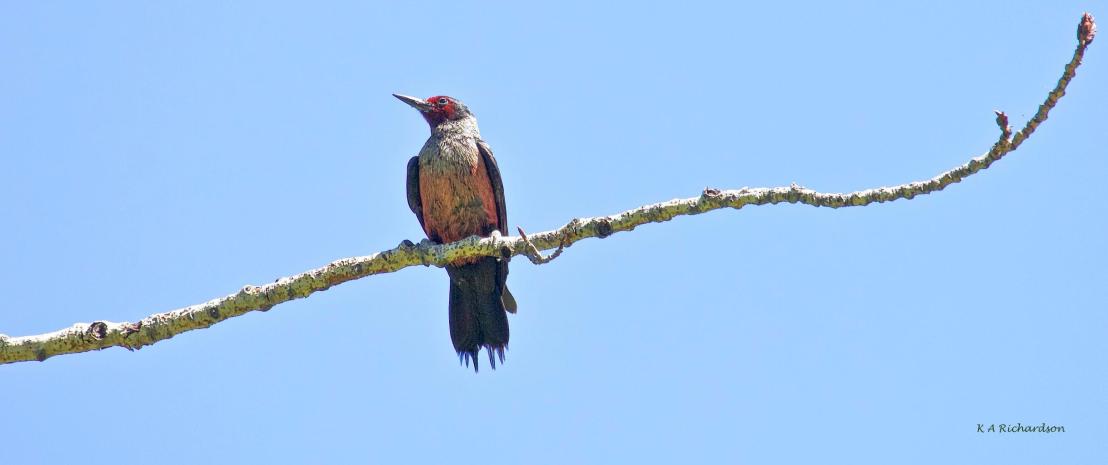
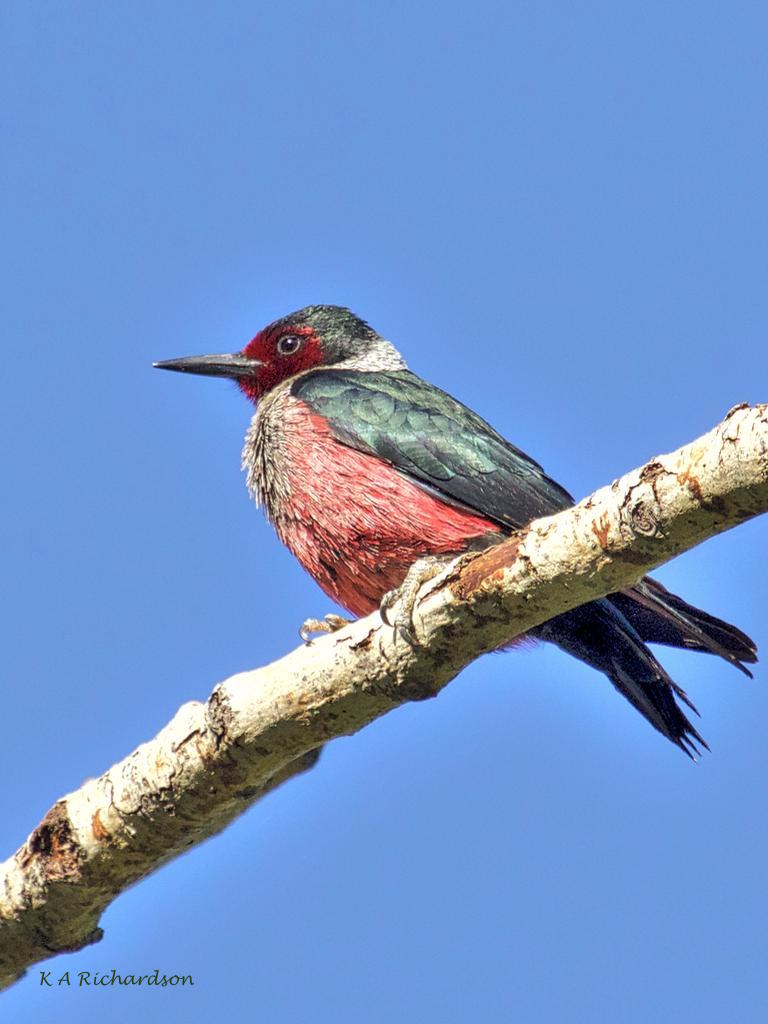
The Lewis’s Woodpecker, on the other hand, is not known for vocalizing, but for its distinctive colouring, and its flycatcher like hawking* (mixed metaphor? see below) of insects. We often see them interacting with other birds that forage in the same range of the food chain. One notable example, last year, involved Lewis’s, Eastern Kingbirds, Yellow Warblers, and Bullock’s Orioles in competition at Okanagan Lake Park, just south of Kelowna. My photo capture of a Lewis’s being dive-bombed by the EAKI are not good enough to publish, but the moment was one to cherish!

lewiss-woodpecker-on-the-long-branch
Lewis’s Woodpecker on the Long Branch
lewiss-woodpecker
LEWO closeup….

*Hawking: a feeding strategy in birds involving catching flying insects in the air. The term usually refers to a technique of sallying out from a perch to snatch an insect and then returning to the same or a different perch. This technique is called “flycatching” and some birds known for it are several families of “flycatchers”: Old World flycatchers, monarch flycatchers, and tyrant flycatchers. Other birds, such as swifts, swallows, and nightjars, also take insects on the wing in continuous aerial feeding. The term “hawking” comes from the similarity of this behaviour to the way hawks take prey in flight, although, whereas raptors may catch prey with their feet, hawking is the behaviour of catching insects in the bill. Many birds have a combined strategy of both hawking insects and gleaning them from foliage. (Wikipedia)

lewiss-woodpecker-range-cornel

The list above does not mention Woodpeckers! But it should mention Lewis’s Woodpeckers which really do exhibit this behaviour!

Last spring, on Beaver Lake Road, we ran into a couple of ardent middle-aged bird watchers from Alberta who had sneaked away from a wedding they were in town for and had found a single Lewis’s in the area. They were ecstatic because this species is very rare where they’re from. And their enthusiasm infected us, as well, for we had never seen one in the BLR area before. How great to learn from the visitors! Seen only occasionally at The Coast, the Lewis’s was one of several birds that brought us up here!


2016 Faves—Passerines, part 4: skip to H….

While there are numerous birds between E and H, none of the ones I’ve photographed fall into the perching / passerines category. AND, to be fair, the first one here doesn’t fit the passerine category either—to begin with, its feet are wrong .

“Most songbirds [passerines] have three forward-facing toes and one backward-facing toe. Most woodpeckers, however, have two toes facing forward and one [or two] facing back. This is known as a zygodactyl foot and allows woodpeckers to easily climb and grasp trees and other structures. Woodpeckers move up a tree by hopping and depend on their especially stiff tail feathers to serve as a prop. They work their way up a tree, peering and poking into every nook and cranny, and then either fly in an undulating fashion to a new area or glide down to a neighboring tree to begin their foraging anew.” (Cornell Lab of Ornithology)

So, for those who prefer bold print:
NOTE: ALTHOUGH WOODPECKERS ARE NOT CONSIDERED PASSERINES, I have included one here because it doesn’t fit into the other broad categories that I’m using. This is NOT intended to be a scientific blog; it’s a highly personal one. Please don’t get too bent out of shape by this issue.

So H brings us three birds, one a well-known woodpecker, a common but colourful finch, and last, but certainly not least, a somewhat drab but very entertaining wee performer.

hairy-woodpecker
Hairy Woodpecker at Harmon Lake, BC.

This handsome Hairy Woodpecker allowed me a front row seat to his excavation at Harmon Lake, BC.  Much larger than the similar Downy Woodpecker, portrayed in Part 2 of this series, the Hairy’s bill is nearly as long as the width of his head. This guy gave me a great look at his endeavours!

house-finch-range-cornell
The House Finch is taken for granted in southwestern BC, and southeastern Canada….

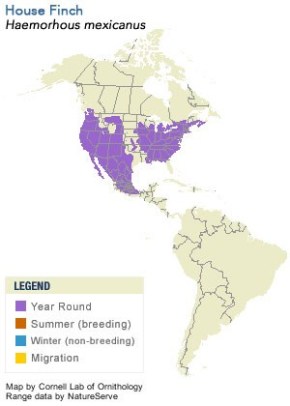
The following account from  the Cornell Lab of Ornithology website betrays an American (i.e. US bias. They’re not found in most parts of Canada.
“The House Finch is a recent introduction from western into eastern North America (and Hawaii), but it has received a warmer reception than other arrivals like the European Starling and House Sparrow. That’s partly due to the cheerful red head and breast of males, and to the bird’s long, twittering song, which can now be heard in most of the neighborhoods of the continent. If you haven’t seen one recently, chances are you can find one at the next bird feeder you come across.”

In actuality, the map may be changing more rapidly than I know. Certainly, HOFIs are common at The Coast and up here in the Okanagan, especially in our exurbs. We are particularly blessed in our neighbourhood where I’ve been able to take scores of photos like these. They are year-round residents, but on the coldest winter days they make themselves scarce. Give us a warm spell, however, and they soon reappear….

Our final “H” bird is the House Wren, which folks where I grew up in Manitoba used call the “Jenny Wren.” More widely distributed in Canada, chances are that you’ll hear one before you see it: Again from Cornell’s website:

“A plain brown bird with an effervescent voice, the House Wren is a common backyard bird over nearly the entire Western Hemisphere. Listen for its rush-and-jumble song in summer and you’ll find this species zipping through shrubs and low tree branches, snatching at insects. House Wrens will gladly use nestboxes, or you may find their twig-filled nests in old cans, boots, or boxes lying around in your garage….

In summer, House Wrens are at home in open forests, forest edges, and areas with scattered grass and trees. Backyards, farmyards, and city parks are perfect for them. In winter they become more secretive, preferring brushy tangles, thickets, and hedgerows.”

Ironically, here in the  Okanagan, I rarely see them in town. There are a couple of reliable locations, however, where they are wonderfully accessible: the amazing Beaver Lake Road area and Bertram Creek Park, both of which have provided many of the photos in this blog.

I’d love to post a lot more shots of each species, but that was not the plan, so I won’t….

2016 Faves—Passerines, part 3: E….

If I have to choose a favourite summer passerine, I would go with the Eastern Kingbird, partly because there are so many to study in the marsh/arboretum near home, but mainly because their so friendly and cooperative. I greatly admire the character of this species—determined yet laid back, excellent mates, and devoted parents. Watching them build their nests and raise their broods between May and July is an annual treat. Less colourful than Robins, perhaps, but elegant and proud to a greater degree. The more I observe them, the better I’m able to identify individual idiosyncrasies that endear some even more than others. Last summer we were treated to four pairs in Thomson Marsh, fairly evenly spaced around the walking path that borders Thomson Brook on the south and eastern sides of Mission Recreational Fields. Three of the four pairs successfully raised youngsters. Sadly, the pair that began the latest and that built what I thought was the most luxurious nest, had it destroyed by predators after the young had hatched. I didn’t see which predator, but I suspect magpies. It was very sad to see the adult birds, completely at a loss the day after the predation, hanging around in the area but too late in the season to make another attempt….

Sometime in the future I’ll write a post that follows the progress of the EAKIs’ summer….

ecdoveexpansion-greene
Eurasian Collared Doves spreading rapidly across North America! (Cornell Lab of Ornithology) …….Click to enlarge in a new tab.

Another “E” bird that is becoming more common in our neighbourhood is the European Collared Dove, an invader introduced into the Bahamas from Asia. When several ECDOs escaped captivity there in 1974, some found their way to Florida. Wikipedia tells the story below, but first, this important admission:

NOTE: Although DOVES  ARE NOT CONSIDERED PASSERINES, I have included one here because it doesn’t fit into the other broad categories that I’m using. This is NOT intended to be a scientific blog; it’s a highly personal one. Please don’t get too bent out of shape by this issue.

“The collared dove is not migratory, but is strongly dispersive. Over the last century, it has been one of the great colonisers of the bird world. Its original range at the end of the 19th century was warm temperate and subtropical Asia from Turkey east to southern China and south through India to Sri Lanka. In 1838 it was reported in Bulgaria, but not until the 20th century did it expand across Europe, appearing in parts of the Balkans between 1900 and 1920, and then spreading rapidly northwest, reaching Germany in 1945, Great Britain by 1953 (breeding for the first time in 1956), Ireland in 1959, and the Faroe Islands in the early 1970s. 

Subsequent spread was ‘sideways’ from this fast northwest spread, reaching northeast to north of the Arctic Circle in Norway and east to the Ural Mountains in Russia, and southwest to the Canary Islands and northern Africa from Morocco to Egypt, by the end of the 20th century. In the east of its range, it has also spread northeast to most of central and northern China, and locally (probably introduced) in Japan. It has also reached Iceland as a vagrant (41 records up to 2006), but has not colonised successfully there.

In 1974, less than 50 Eurasian Collared Doves escaped captivity in Nassau, New Providence, Bahamas. From the Bahamas, the species spread to Florida, and is now found in nearly every state in the US, as well as in Mexico. In Arkansas, the species was recorded first in 1989 and since then has grown in numbers and is now present in 42 of 75 counties in the state. It spread from the southeast corner of the state in 1997 to the northwest corner in 5 years, covering a distance of about 500 km at a rate of 100 km  per year. This is more than double the rate of 45 km per year observed in Europe. 

Interestingly, as of 2012, few negative impacts have been demonstrated in Florida, where the species is most prolific. However, the species is known as an aggressive competitor, and there is concern that as populations continue to grow, native birds will be outcompeted by the invaders. However, one study found that Eurasian collared doves are not more aggressive or competitive than native mourning doves, despite similar dietary preferences. 

Population growth has ceased in areas where they’ve been established the longest, such as Florida, but is still growing exponentially in areas of more recent introduction. Carrying capacities appear to be highest in areas with higher temperatures and intermediate levels of development, such as suburban areas and some agricultural areas.

While the spread of disease to native species has not been recorded in a study, Eurasian Collared Doves are known carriers of the parasite Trichomonas gallinae as well as Pigeon Paramyxovirus. Both Trichomonas gallinae and Pigeon Paramyxovirus can spread to native birds via commingling at feeders and by consumption of doves by predators. Pigeon Paramyxovirus is an emergent disease and has the potential to affect domestic poultry, making the Eurasian Collared Dove a threat to not only native biodiversity, but a possible economic threat as well.”

Eurasian Collared Dove
One of the two Eurasian Collared Doves that have located themselves in Belmont Park.

Finally, another species introduced from Europe that has now spread throughout North America—the European Starling. From a distance, their unattractive profile often provokes the “Oh, it’s just a Starling” response. Occasionally, when a large flock flies as a murmuration, they can be quite entertaining. But every so often, we get close enough to see a mature adult’s special colours and pattern, and we’re reminded that it’s usually a good idea to be fully informed before we jump to conclusions….


2016 Faves—Passerines, part 2: C and D….

For viewing instructions, see Passerines, part 1.

The first bird in this post is NOT one we would normally classify as a passerine or perching bird or song bird. to begin with, its feet are wrong . “Most songbirds [passerines] have three forward-facing toes and one backward-facing toe. Most woodpeckers, however, have two toes facing forward and one facing back. This is known as a zygodactyl foot and allows woodpeckers to easily climb and grasp trees and other structures. Woodpeckers move up a tree by hopping and depend on their especially stiff tail feathers to serve as a prop. They work their way up a tree, peering and poking into every nook and cranny, and then either fly in an undulating fashion to a new area or glide down to a neighboring tree to begin their foraging anew.” (Cornell Lab of Ornithology)

However, the California Quail does perch-er-roost in trees, and it does offer distinctive vocalizations that might, to some folks, pass as songs…. So, we’ll treat it here, for our purposes, as a passerine of sorts, even though it isn’t. Try not to get too bent out of shape about this. 😜

Environment Canada, in its inimitable taciturn prose, tells us this about the bird above:
“Native to Oregon and California, the California Quail is an introduced species in Canada. Most of the Canadian population is in the British Columbia interior, where Breeding Bird Survey data indicate that populations have shown large increases since 1973. Populations on the British Columbia coast are not faring as well. The reasons for the difference between the two population trends are unclear.

The California Quail was introduced to British Columbia several times between 1860 and 1912 (Campbell et al. 1990). Wet springs reduce breeding success (Calkins et al. 1999) and cold, snowy winters can have a significant negative impact on local populations (Cannings et al. 1987). There are no conservation concerns for this introduced species.”

For a far more engaging account (by journalist John Macdonald)  of this wonderful Okanagan transplant (can’t call it an invader if it was brought here to populate the area!) click the link below:
Everything you need to know about quail in the southern interior

CAQUs’ keys to survival here are the relatively dry climate and their prolific breeding—up to three enormous broods a year. Their numbers are held in check by predators, both mammals and raptors that eat them, especially the youngest, weakest members of the brood. Because it’s Nature’s Way, we can appreciate both the birds that survive and the creatures who harvest the non-survivors…. Certainly, visitors to the Okanagan almost always find this species an entertaining surprise!

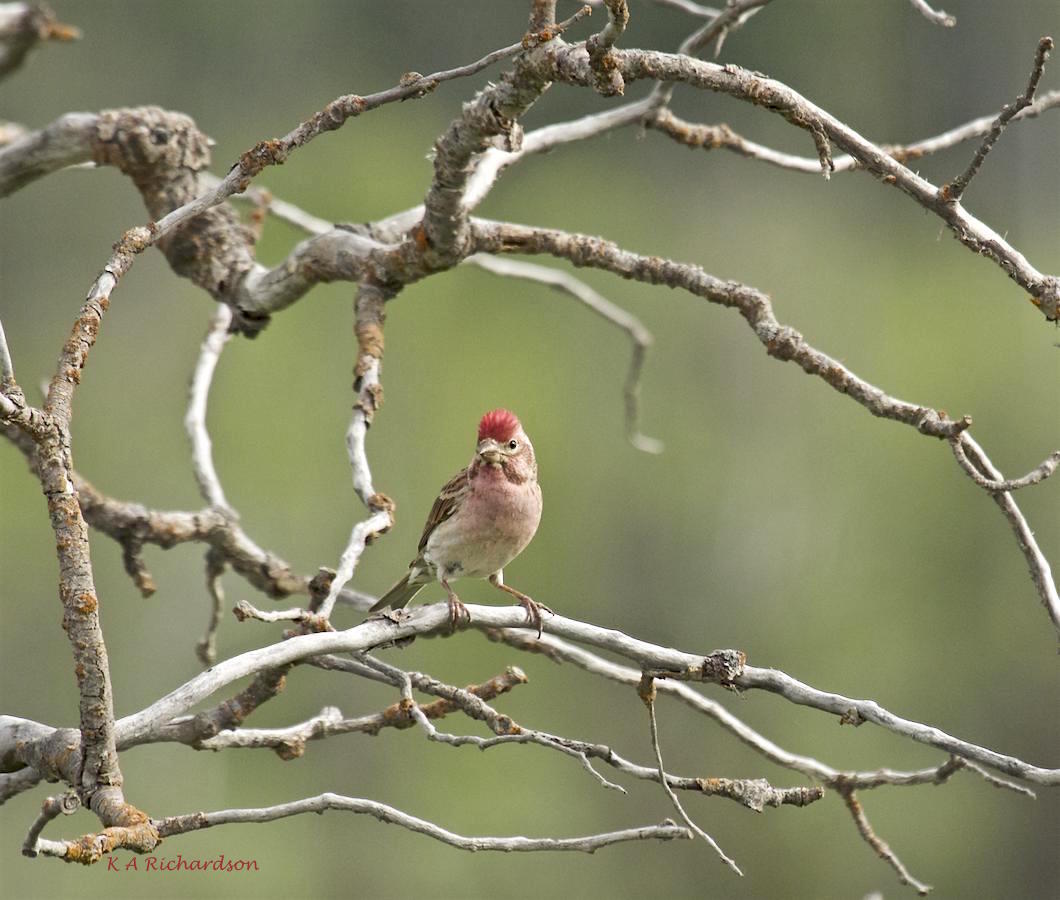
A bird that is less commonly seen, but thrives in the Interior, is a finch that is sometimes mistaken for species more common, the House Finch and the Purple Finch, both of which are quite familiar to British Columbians at The Coast. In my eyes, however, once we’ve seen a Cassin’s Finch in breeding season, we’re unlikely to mistake it for one of its cousins:

cassins-finch-male
Cassin’s Finch in breeding plumage…. It’s all about the cap!

Waxwings, in Kelowna, vary with the season. In winter, we’re blessed with Bohemians, which are a circumpolar species. I’ve covered them in a separate post. In spring, the BOWAs rather quickly give way to the CEWAs, Cedar Waxwings that breed locally and stick around through until their fledglings are ready to head south. Occasionally, one or two will try to stay through the coldest months.

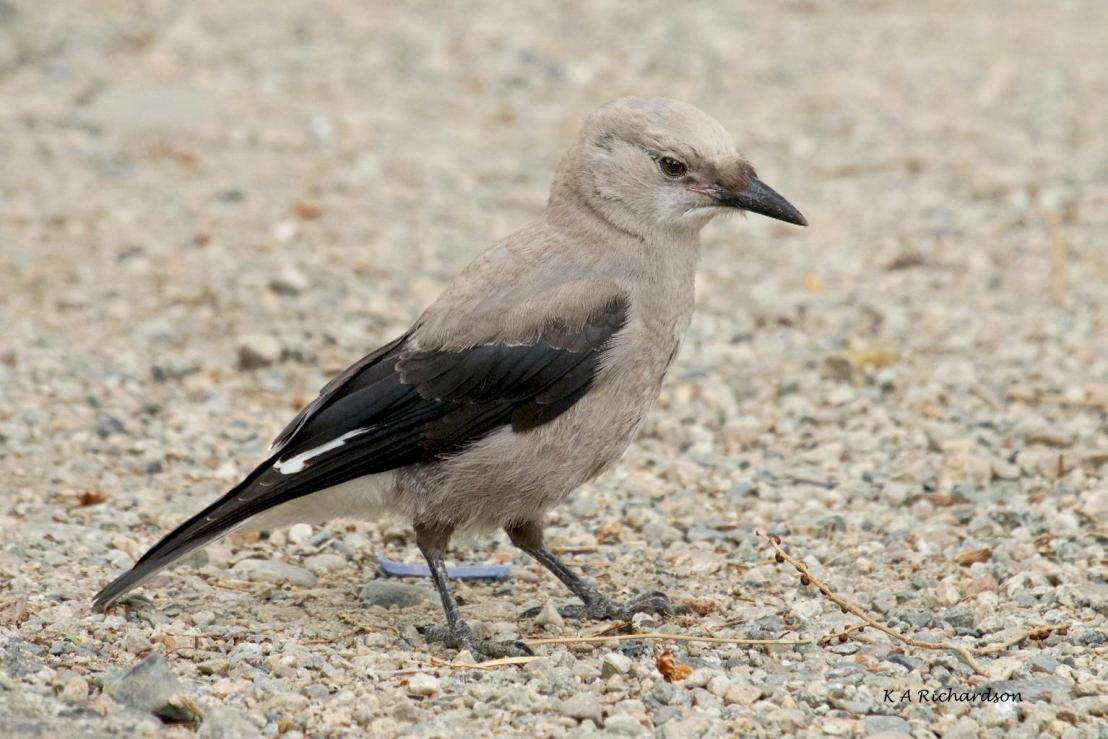
While the next species is found throughout the region and throughout the year, I see it mostly in spring and early summer. A corvid, the Clark’s Nutcracker often shows up in small, noisy flocks, as this individual did at Okanagan Lake Park in June.

clarks-nutcracker
Clark’s Nutcracker, probably a juvenile or second year bird….

NOTE: ALTHOUGH WOODPECKERS ARE NOT CONSIDERED PASSERINES, I have included one here because it doesn’t fit into the other broad categories that I’m using. This is NOT intended to be a scientific blog; it’s a highly personal one. Again, don’t get too bent out of shape by this issue.

downy-woodpeckers
An active pair of Downy Woodpeckers in Belmont Park.

I am the target text.

Downy vs Hairy Woodpeckers

While most of Canada is blessed with an abundance of woodpeckers, there are significant variations in the species east and west of the Continental Divide. Some, like these Downy Woodpeckers, however, are found in virtually all parts of Canada. For some reason, just seeing one makes me happy; when I get to see a pair interacting, cavorting, actually, the thrill is even greater. Males stand out with a flash of red on the back of their head. Downies resemble their larger cousins, Hairy Woodpeckers. A key diagnostic, if one is not sure which species (s)he’s seeing, is the length of the bill, which is less than half the width of the head in the case of the Downy, and much more elongated in the Hairy.

Find photos of other woodpeckers in series parts that contain their first names….
Hairy  ……..
Northern Flicker ……..Pileated